Two Burner Camp Stove Buying Guide: Mistakes to Avoid
Contents
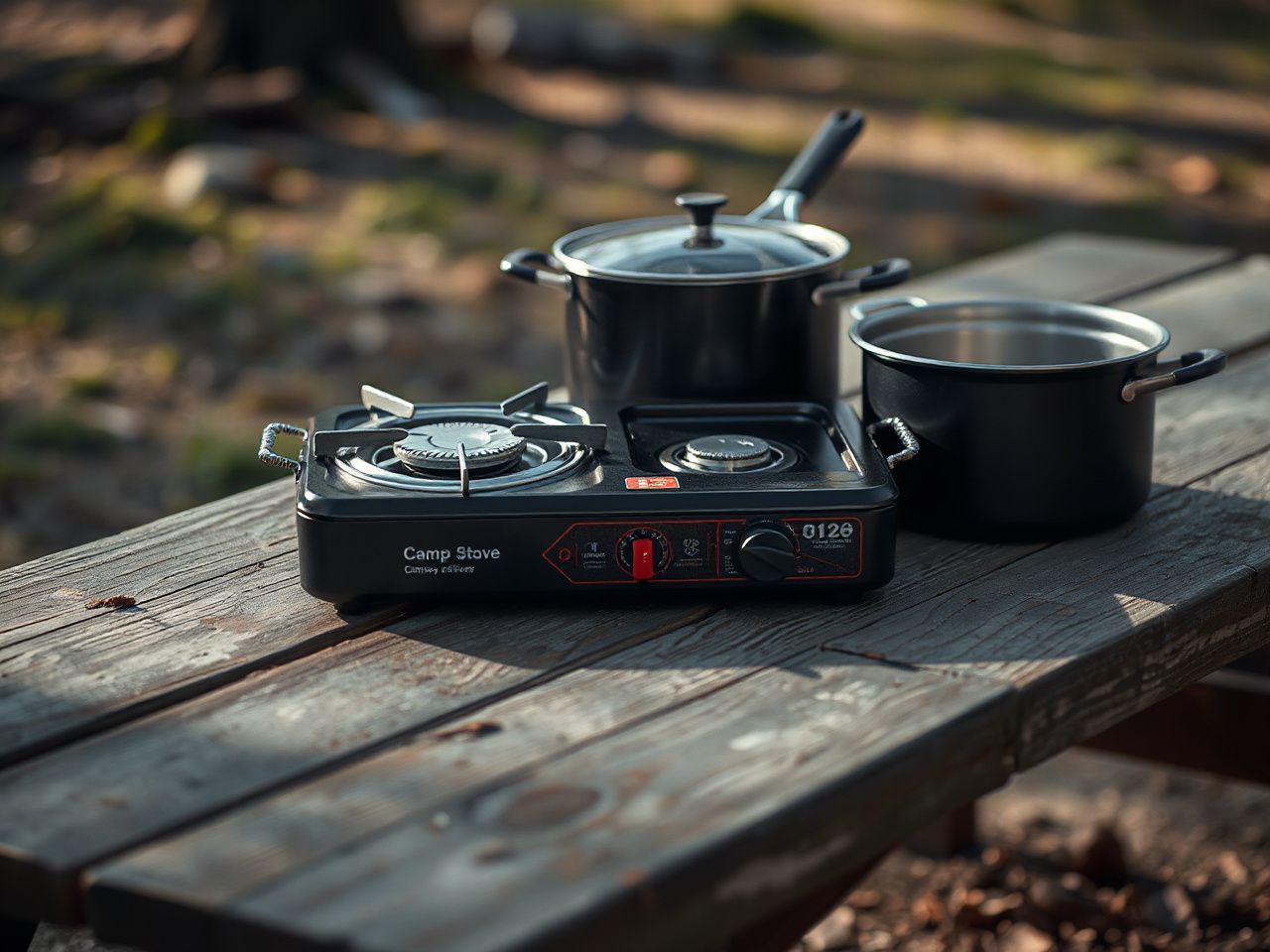
A single 1-pound propane cylinder, cranked wide open on a typical two-burner camp stove, empties in about 80 minutes — a detail that catches most weekend warriors off guard halfway through breakfast. When evaluating two-burner stoves, the BTU number painted on the box is less important than how evenly the burner head distributes flame across a pan’s base and how well the regulator maintains a steady flow in a breeze. Beginners forget that the flimsy-looking regulator is actually the heart of the stove; it dictates boil time, flame control on low, and whether that 1-pound cylinder empties in a week or a month. Checking the valve connection threads before using any off-brand cylinder is critical, because the exact spec is what separates a reliable connection from a leak you only smell after dinner.
Key Takeaways
- The regulator, not the BTU rating, determines real-world boil times and fuel efficiency on a two-burner camp stove.
- Wind screens are non-negotiable — an exposed stove can lose half its effective cooking output even in light gusts.
- Always soap-test the cylinder connection after attaching a new fuel canister to catch a leaking O-ring before it sparks a fire.
- Budget stoves often have non-serviceable regulators, so a sudden flame surge or drop usually means replacement, not a quick fix.
How a Two-Burner Camp Stove Actually Works (and Why It’s Not Just a Fancier Backpacking Stove)
Most riders I meet assume a two-burner stove is simply a bigger, heavier single-burner. The reality is far more nuanced, especially for anyone who has to cook a full dinner for two while a desert wind rakes across the campsite. A two-burner stove uses a single regulator to split propane flow into two separate gas trains, each with its own control knob and burner head. That shared regulator is the critical bottleneck. On a well-built unit, the regulator maintains steady pressure between 11 and 14 inches of water column regardless of which burner is lit, so your simmer doesn’t fade when you fire up the second side. On a budget model, you’ll feel the heat dip instantly.
The ANSI Z21.63 standard governs portable propane camp stoves in the U.S., setting safety requirements for burner stability, gas flow, and construction. A stove that meets this certification — and most sold at big-box stores do — will have passed tests for accidental flame blowout and regulator lock-up. If you’re eyeing a no-name deal online without that mark, the gamble isn’t worth the fifty bucks you’d save.
Beginner: Setting Up a Two-Burner Camp Stove the Right Way, Every Time
Choose a Surface That Won’t Turn Your Rig Into a Fireball
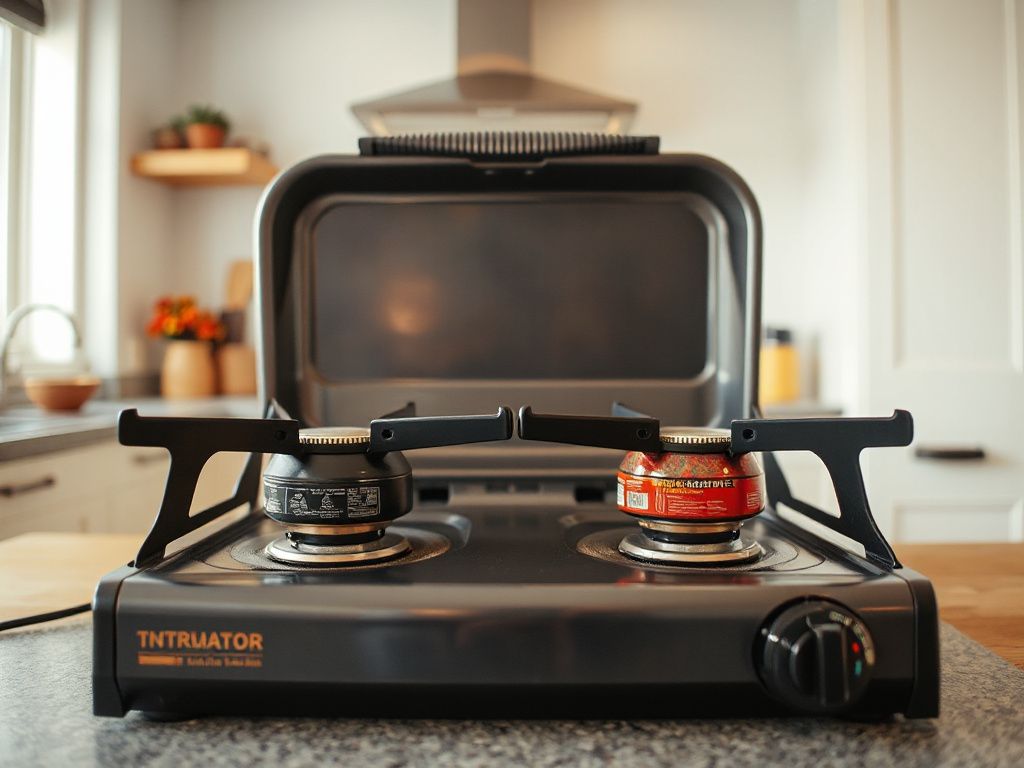
A lightweight aluminum table at a BLM site can wobble, and a plastic folding table from the big-box store can melt. The safest bet is a metal or wood picnic table with the stove placed as far from the motorcycling gear as the fuel hose allows. If you’re camping where only flat rock exists, a small welding blanket folded under the stove does double duty: it levels a few degrees of slope and contains spills before they hit the dirt.
Connect the Cylinder Without Guessing
The 1-pound propane bottle uses a CGA 600 connection, a precise thread standard. Off-brand cylinders sometimes ship with machining burrs that prevent the regulator nipple from seating fully. Before you screw anything together, run a finger around the bottle’s O-ring groove — any grit there will become a slow leak. Thread the regulator knob clockwise by hand until it’s snug, then give it no more than a quarter-turn with a wrench. Over-torquing crushes the O-ring and creates the exact leak you’re trying to avoid.
Leak Test — the Soapy Water Habit That Saves Groceries and Eyebrows
Mix a few drops of dish soap with water in a small squeeze bottle. After connecting the cylinder, squirt the soapy solution around the regulator connection and along the gas line. Open the valve. Bubbles that grow slowly are a leak. If you see them, close the valve, disconnect, and inspect the O-ring for a tear or flat spot. Swapping in a spare O-ring from a rebuild kit costs pennies; ignoring a hiss costs a tent vestibule or worse.
Wind Management Starts Before You Light the Match
A breeze over 5 mph cuts the effective heat reaching your pan by roughly 40%. Most built-in wind shields on budget two-burner stoves are more decorative than functional — a pair of hinged metal tabs that bend in confused directions. I tuck a foldable aluminum wind screen from a backpacking kit around three sides of the stove, leaving the rear open for the gas line. The difference in boil time is measurable: water that took fourteen minutes to boil in a breeze will roll in under eight behind a proper shield.
Even with a screen, the burner head design matters. A cast-aluminum ring with dozens of small flame ports delivers far more even heat than a cheap stamped-steel cap. The aluminum grate over the burner needs parallel, straight tines to hold a 10-inch skillet without wobble — a tilting pan pools oil on one side and scorches food fast.
Intermediate: Squeezing Real Cooking Power Out of a Budget Two-Burner Stove
Ignore Peak BTU, Watch the Taper
Big-box stoves love to print 20,000 BTU per burner on the box. What they don’t mention is that number comes from the burner running wide open in a laboratory with zero wind and a clean regulator. In the field, the actual BTUs reaching your pan can be half that. More instructive is the taper — how low can the flame go before it sputters and dies? A stove that simmers a stew for an hour without a flare-up is worth more than one that can rip through a gallon of water in five minutes but can’t hold a gentle bubble. I turn the knob to roughly 10% of its range and look for a clean, blue ring of flame. Orange tips mean incomplete combustion and wasted gas.
The regulator’s ability to hold constant pressure at low flow is what separates a $60 stove from a $30 disposable. A $60 unit might run a pound of propane for 3.5 hours at medium heat; a disposable unit, with a leaky regulator, burns through the same bottle in under two. Over a five-day motorcycle trip, that’s three extra cylinders you don’t have to stash in a saddlebag.
Connecting to a Bulk Tank — the Right Hose and the Right Filters
You can absolutely run a two-burner stove from a 20-pound propane tank (the kind on a home grill), and for basecamp cooking it’s a huge money-saver. The adapter hose you need has a CGA 600 end for the stove and a POL or QCC fitting for the tank. Look for a hose with a built-in excess flow valve — this safety device shuts down gas if a line ruptures. Without one, a pinched hose turns into a blowtorch.
When running a bulk tank, water condensation inside the hose becomes an issue in cold weather. I loop the hose in a loose coil under the stove’s body so any liquid propane (not water) boils off before it hits the regulator. If you hear a spitting sound from a burner, that’s liquid making it past the regulator, and you need to let the hose warm up or swap to a vapor-ready tank setup.
Leveling the Stove So Pancakes Come Out Round
A two-burner stove set at a 3-degree slope shifts cooking oil to the low corner instantly. I carry four small composite shims from the hardware store. Slide one under each foot of the stove, then check level with a pocket torpedo level. Takes thirty seconds. If you’re cooking on sand or loose gravel, a piece of scrap plywood as a base keeps the shims from sinking and the stove from tipping toward the propane cylinder.
For moto campers looking to pack a level, go with a magnetic post level — it sticks to the stove’s body and doubles as a fuel gauge reminder when you’re packing up. The budget trick: a small ziptie loop around one stove leg and a washer dangling from it. When the washer hangs dead center over the middle burner, you’re level.
Advanced: Field Repairs, Safety, and Real-World Longevity
When the Regulator Goes Bad — and Yes, It Will
The diaphragm inside a regulator flexes every time the cylinder pressure changes. After roughly 500 hours of use, that rubber disk stiffens. You’ll notice the flame pulse — high, low, high — even with a full cylinder. On most budget two-burner stoves, the regulator is a sealed unit attached with rivets or press-fit joints. It’s not field-serviceable. A flame surge that won’t stabilize usually means the regulator is dying. The fix: replace the entire stove assembly or, if the brand sells spare regulators, order one with the exact same part number. Swapping a camp stove regulator requires no special tools, just a pair of pliers and a long allen key for the manifold bolts.
A regulator that hisses constantly even with burners off points to a cracked diaphragm. That’s a dangerous condition — unburned propane pooling under the stove. Shut off the tank immediately, let the area ventilate, and disconnect the cylinder. Don’t try to epoxy the crack; just replace the regulator.
Cleaning Burner Tubes After the Grease Spill Heard Around the Campground
Bacon grease and stir-fry oil will find their way into the venturi tubes — the air intake ports below the burner head. A clogged tube starves the flame of oxygen, turning a blue flame into a sooty yellow candle. After the stove cools, remove the burner head (usually one screw) and run a pipe cleaner or a stiff nylon brush through the tube from the orifice end. A blast from a can of compressed air clears the last bits of carbon. Do not use a toothpick or wire that could break off inside the tube — that blockage becomes permanent.
For burned-on food on the grate, I soak the aluminum grate in a plastic bag with warm water and a squirt of degreaser at home, but in the field, a ball of aluminum foil scrubbed over the tines works surprisingly well without scratching the soft metal. A clean grate heats evenly; a dirty one creates hot spots that char the middle of your tortillas.
Carbon Monoxide and the “Just a Cracked Window” Myth
A two-burner camp stove burns propane, which produces carbon monoxide — an odorless, colorless gas. Even with a vestibule flap open, CO can accumulate inside a tent or motorcycle shelter to dangerous levels. The Consumer Product Safety Commission explicitly warns against using any portable combustion appliance inside an enclosed space. I cook at least 10 feet from the tent door and never under a tarp that’s less than six feet above the burners. The visible steam rising from a boiling pot isn’t just water vapor — it’s carrying trace combustion byproducts you don’t want inhaled all night.
Packing the Stove So the Regulator Survives the Baja Washboard
The most fragile part of a two-burner stove isn’t the aluminum case — it’s the regulator and the valve stems. Bungeeing the stove to a motorcycle rack without padding transfers every boulder hit straight to the gas manifold. I wrap the regulator knob in a mini terrycloth towel and secure it with a Velcro strap before sliding the stove into a padded dry bag. The fuel cylinder travels separately, always upright, in a well-ventilated saddlebag. Never store a connected cylinder during transport; a bouncing bike can fatigue the threads enough to cause a slow leak.
If you’re heading to a spot like the best places to camp in Grand Canyon, the dust is relentless. A fine silt will clog the piezo igniter — the clicky sparker — in a single day. A simple cover: a piece of blue painter’s tape over the igniter button when not in use. Peel it off before cooking, and you’ll get a spark on the first try.
Frequently Asked Questions
Can I hook my two-burner camp stove up to a 20-pound propane tank?
Yes, and it’s a smart move for multi-day basecamps. You need a high-pressure adapter hose with CGA 600 threads on the stove end and a POL or QCC fitting for the tank. Look for a hose rated for 350 PSI that includes an excess flow valve. Always open the tank valve slowly to avoid tripping the valve, and leak-test every connection point.
Why does my stove hiss or smell gas right after I connect the cylinder?
A hiss right at connection almost always means the O-ring inside the CGA 600 fitting isn’t seated fully against the cylinder’s valve face. Unscrew, inspect the O-ring for cracks, clean the mating surfaces with a soft cloth, and re-thread by hand until snug. Then soap-test. Never light the stove if you can smell propane before you open the valve — a loose connection is leaking.
How do I clean the burner tubes after a grease spill or a messy meal?
Let the stove cool completely, remove the burner head (usually held by a single screw), and clean the venturi tube with a stiff nylon brush or a pipe cleaner from the orifice end outward. A quick blast of compressed air clears remaining debris. Do not insert anything that can break off, like a wooden toothpick, into the tube — a blockage there creates a dangerous yellow flame.