10 Person Tent Buying Guide: Common Mistakes to Avoid
Contents
It never fits ten adults. The first thing to consider when picking a 10 person tent is to ignore the headcount and measure the floor plan in your head. A 10-person tent usually means 10 yoga mats squeezed in row-like a rat pack, but once you add cots, duffels, or a camp table, you’re really fitting six or seven people with any comfort. The real trade-off is between cabin-style tents with near-vertical walls, which give you full standing and walking room but act like a sail in the wind, versus dome tents that shed wind better but force you to hunch at the edges. A tent that lists its peak height and the actual wall angle—something like a 6’6″ center with steep sides means you can actually move around inside, whereas a 5’8″ peak with sloped sides is just a sleeping bag coop.
Key Takeaways
- A “sleeps 10” rating assumes 10 people on thin sleeping pads; with cots or air mattresses, capacity drops to 6–8 individuals.
- Cabin-style tents offer standing-height interiors and vertical walls, but they catch wind fiercely and require extra guying.
- Waterproof ratings above 1500mm mean little unless the rainfly has taped seams, full coverage, and a bathtub-style floor.
- Condensation in a tent this size can soak gear overnight; multiple roof vents and mesh windows are non-negotiable for airflow.
What a 10-Person Tent Actually Holds
The number on the box is pure marketing. Most manufacturers calculate capacity by laying out standard 20-inch-wide sleeping pads side by side with zero aisle space. That gives you a floor plan roughly 14 feet long by 10 feet wide in a typical 10 person tent, leaving about 14 square feet per sleeper. Add a single cot—most measure 25 to 30 inches across—and you instantly lose one or two spots. For groups bringing camp chairs, a folding table, and even modest duffel bags, the realistic comfort number drops to six adults, maybe seven if kids are mixed in. I once watched a scout troop wedge nine boys into a tent rated for a dozen. They slept. Barely. Nobody could roll over without elbowing someone in the ribs.
Camper vans and RVs aren’t the only ones who need to measure before booking. Many national forest campgrounds and state parks enforce strict maximum tent pad dimensions, often a 14-foot by 14-foot gravel square. Pitch a tent with a 15-by-12 footprint and you’ll be moving it in the dark after the camp host rolls by. Always check the park’s posted site dimensions before you buy; some older sites top out at 12 by 12, which forces you to angle the tent awkwardly or give up on staking the vestibule properly.
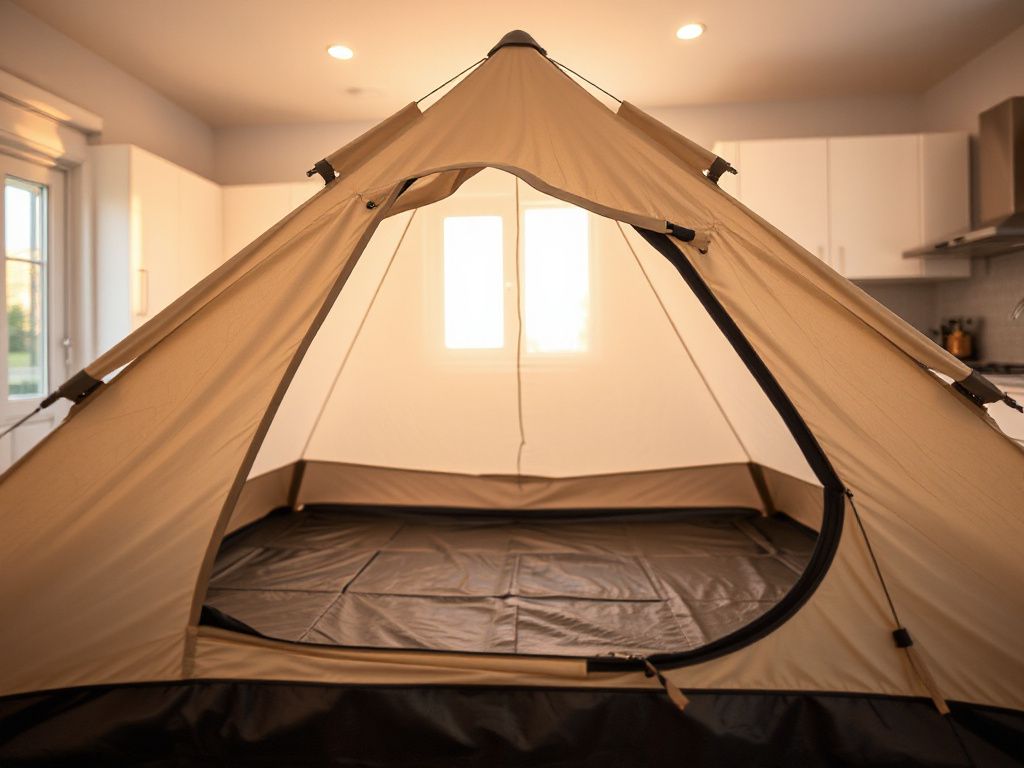
Cabin vs. Dome: Wall Angle Decides How You Live Inside
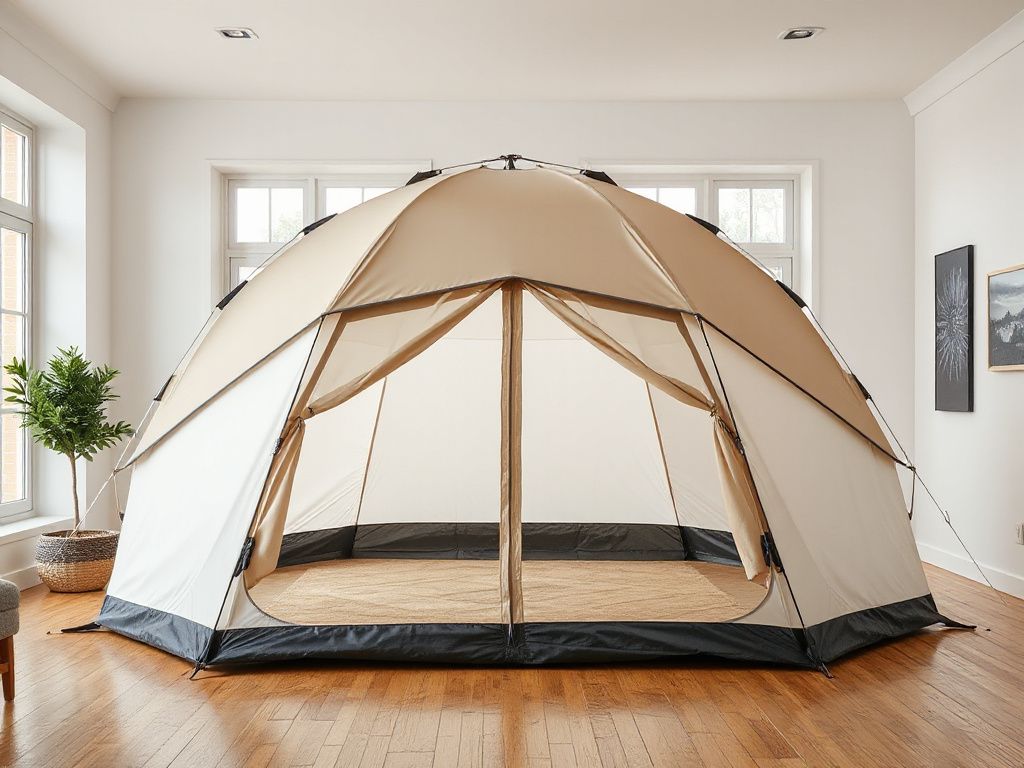
Wall geometry is the single most overlooked variable when people size up a tent for a large group. Cabin tents use near-vertical walls supported by a framework of fiberglass or steel poles that lock into elbow joints or hubs. This design maximizes usable floor space right up to the edges, so you can walk without stooping. A tent like the Coleman WeatherMaster 10 lists a peak height of 6 feet 8 inches, but because the walls stay steep until the roofline, you can stand at the foot of a cot without hunching. The trade-off: that vertical profile catches every breath of wind, and a sudden gust can snap a fiberglass pole if the tent isn’t guyed out from five or six points. Dome tents sacrifice edge-to-edge standing height in exchange for a curved, wind-shedding shape. With a dome rated for 10 people, the center might be 6 feet high, but three feet from the wall you’re on your knees. For a hunting camp where you spend most of the time outside, the dome works fine. For a family reunion where someone needs to change clothes standing up, the cabin style pays off.
Pole material matters just as much as shape. Most affordable cabin tents ship with fiberglass poles. Fiberglass is heavy, can splinter after repeated flexing, and fails suddenly in cold weather. Aluminum poles weigh roughly a third less, handle freezing temps without snapping, and bend rather than shatter. The Ozark Trail 10-Person Instant Cabin, popular for its fast setup, uses pre-attached fiberglass poles in an umbrella-style frame. It goes up in two minutes but demands careful storage—a cracked ferrule on that integrated frame means you’re replacing the entire tent body. The 40-pound packed weight of these tents makes multiple smaller tents split among several users more practical than one giant shelter, like the ones in our 2-person dome tent guide.
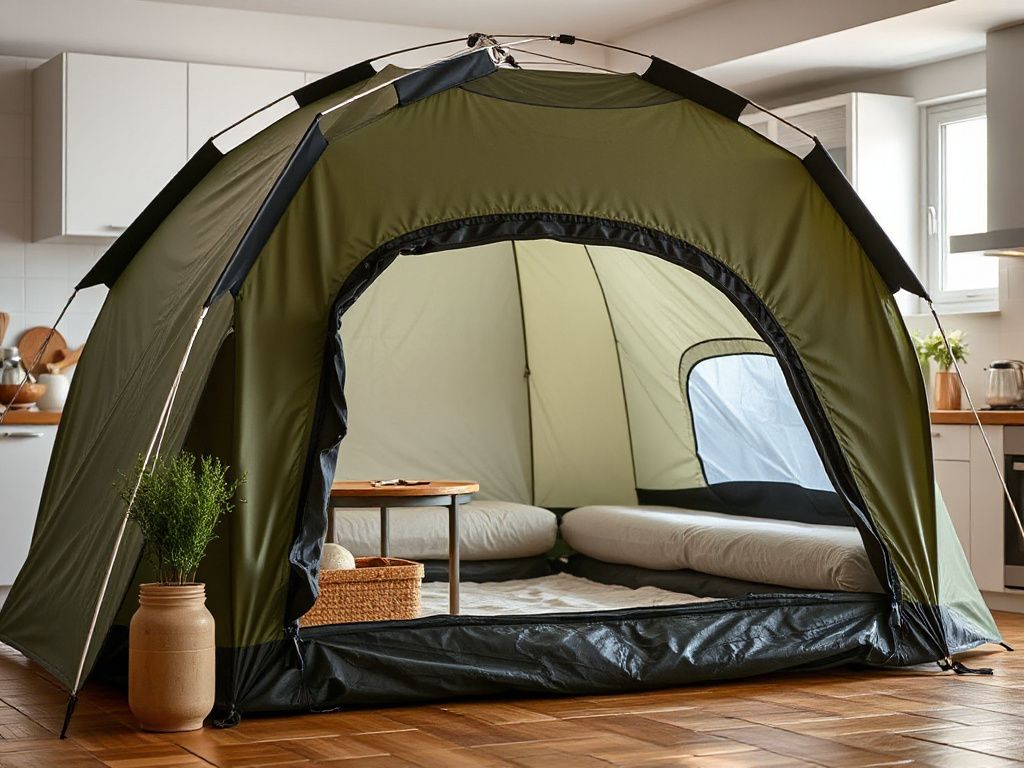
Weatherproofing: More Than Just a Number
A 1500mm hydrostatic head rating on polyester taffeta sounds impressive until you realize water pools on flat roof sections. The fabric might not leak, but the seams will unless they’re factory-taped and the needle holes sealed. Look for a tent whose spec sheet lists “inverted seams” or “thermally sealed stitching.” The rainfly needs to extend down close to the ground—a short cap-style fly that barely covers the roof mesh leaves the window panels exposed to blowing rain. A full-coverage fly with a vestibule, like the one on the Cabela’s Alaskan Guide 10-Person Tent, creates a dry entry zone for muddy boots and dripping jackets. That vestibule space also helps keep puddles from forming right at the doorway, which is a constant problem on sloped sites.
Condensation is a different beast. Ten breathing humans exhale a surprising amount of moisture overnight, and in a sealed-up cabin tent that vapor condenses on the ceiling by morning. Unless you have high-set roof vents and mesh panels on at least three walls, you’ll wake up to water dripping on your sleeping bag even on a clear night. I once camped in a borrowed 10 person tent with one tiny rear vent during a humid Michigan summer. By 3 a.m., the ceiling was raining on us like a light sprinkle. We opened the door, but the mosquitoes were merciless. Now I insist on tents with low-high cross venting—windows near the floor on one side, roof vents opposite—to create a natural chimney effect.
Fire Safety Standards You Shouldn’t Ignore
Any tent sold in the U.S. should meet CPAI-84, the voluntary industry standard for flame resistance. This regulation ensures the fabric self-extinguishes if it pulls away from a direct flame source, but it does not make the tent fireproof. A carelessly placed camp stove or a spark from a nearby campfire can still melt polyester instantly. Cooking inside a tent this large is a significant hazard, even when rain forces a group inside. Use the vestibule with the door fully open, or set up a separate tarp for the kitchen. For groups bringing multiple small tents instead of one giant shelter, a pop-up 4-person tent often serves as a quick-change gear shack while the kitchen stays outside.
Space Planning: Cots, Tables, and Room Dividers
A 10 person tent with a room divider sounds like a privacy win for families or co-ed groups. The divider—typically a thin fabric curtain hung from the ceiling—splits the interior into two roughly equal spaces. In practice, each “room” then holds two queen air mattresses or three cots, with a narrow centre aisle that quickly fills with gear. If you plan to use the divider, measure the divided half against your cot length; many cots are 75 inches long, so a 7-foot-deep room feels cramped. Better to leave the divider open and designate gear corners with storage organizers. The included gear loft in many models, such as the Ozark Trail Instant Cabin, keeps headlamps and phones off the floor but won’t hold heavy jackets.
Fitting a full-size camping table and chairs inside? It works with a cabin tent that has a large vestibule, but inside the main body, you’ll eat up walking room. A table measuring 4 by 2 feet plus four chairs consumes nearly 20 square feet. In a 140-square-foot tent, that’s a significant chunk. Some groups set up the table only during the day and fold it at night; others bring a screen house for meals and keep the tent for sleeping only. When I’m at a BLM site with unlimited space, I sometimes set up two smaller tents in a U-shape around a communal awning rather than forcing everyone into one giant fabric room. That strategy works well if half the group are riders packing lightweight gear—you can check out our picks for the best three-person tent for a balanced carry weight.
Setup and Takedown: Speed vs. Sturdiness
Instant cabin tents go up fast. The Ozark Trail 10-Person Instant Cabin unfolds from a collapsed disc into a framed tent in under two minutes with one person handling the roof hub. That speed is seductive after a long ride in the rain. But instant doesn’t mean finished: you still need to stake out the corners, guy the walls, and attach the rainfly. With a traditional pole-sleeve design, plan on 20–30 minutes for two adults threading fiberglass through long tunnels. Solo setup of a 10 person tent is possible but miserable—the fabric alone can weigh 30 pounds, and hoisting a half-erected frame while the wind catches it feels like wrestling a spinnaker. I always carry a few spare stakes and a roll of reflective guy line because the included hardware is almost always minimal and flimsy.
Cleaning, Drying, and Storing to Prevent Mold
Mildew is the silent killer of large tents. Packing a 10 person tent even slightly damp—dew on the fly, condensation from a cold morning—traps moisture in the carry bag and starts black mold within 48 hours in warm weather. I dry the tent by draping it over a clothesline or motorcycle when I get home, flipping it inside out to expose the floor. Never machine-wash the body; the agitation shreds seam tape. For spot cleaning, a mild soap and cold water with a soft sponge works. Store the tent loosely in a large mesh bag or old pillowcase rather than the tight stuff sack. That prevents creases in the waterproof coating and lets any residual moisture escape. If you camp near saltwater, rinse the poles and zippers with fresh water to prevent corrosion—salt eats aluminum poles and nylon zipper coils faster than you’d think.
Transporting a 10-Person Tent on a Motorcycle
Yes, it can be done, but it requires creativity. A typical packed tent of this size rolls up to roughly 30 inches long by 14 inches in diameter and weighs 35 to 45 pounds. That’s a bulk strapped across the pillion seat or laid flat on a rear rack, extending well beyond the tail. A Coleman WeatherMaster 10 will ride on a dual-sport strapped lengthwise over the passenger seat and saddlebags, but a bundle that wide sits square in the airflow, and the drag becomes noticeable above 55 mph. For group rides, splitting the weight among several bikes makes far more sense—one person carries the tent body, another the poles, the third the fly and stakes. Or you switch to a setup of multiple 3- and 4-person tents, which pack down smaller and give everyone their own dry space if the weather turns.
Frequently Asked Questions
How many people can actually sleep comfortably in a 10 person tent?
Realistically, six to eight. The manufacturer rating assumes 10 people lying flat on 20-inch-wide pads with no gear. Once you introduce cots, air mattresses, or even a few duffel bags, floor space shrinks fast. Expect about 14 to 18 square feet per person if you stay within the tent’s footprint.
How long does it take to set up a 10 person tent by yourself?
With an instant cabin model, you can raise the frame in two minutes, but full setup—staking, guying, and fly attachment—takes 10–15 minutes solo. Traditional pole-sleeve designs need a second person and 25–30 minutes. Wind makes both methods harder, so recruit help whenever possible.
Can I fit a full-size camping table and chairs inside a large tent?
In a cabin-style tent with a 14-by-10-foot floor, yes, but the table will dominate the centre. A table measuring 4 by 2 feet with four chairs eats up roughly 20 square feet, leaving less room for sleeping gear. Many groups use the tent only for sleeping and set up a separate screen shelter for meals.
Why does my 10 person tent feel damp inside every morning?
Condensation from breathing builds up overnight in a large sealed space. Without adequate roof vents and cross-ventilation, warm moist air hits the cooler tent fabric and turns to water droplets. A tent with mesh panels on multiple walls and high roof vents reduces this effect dramatically.