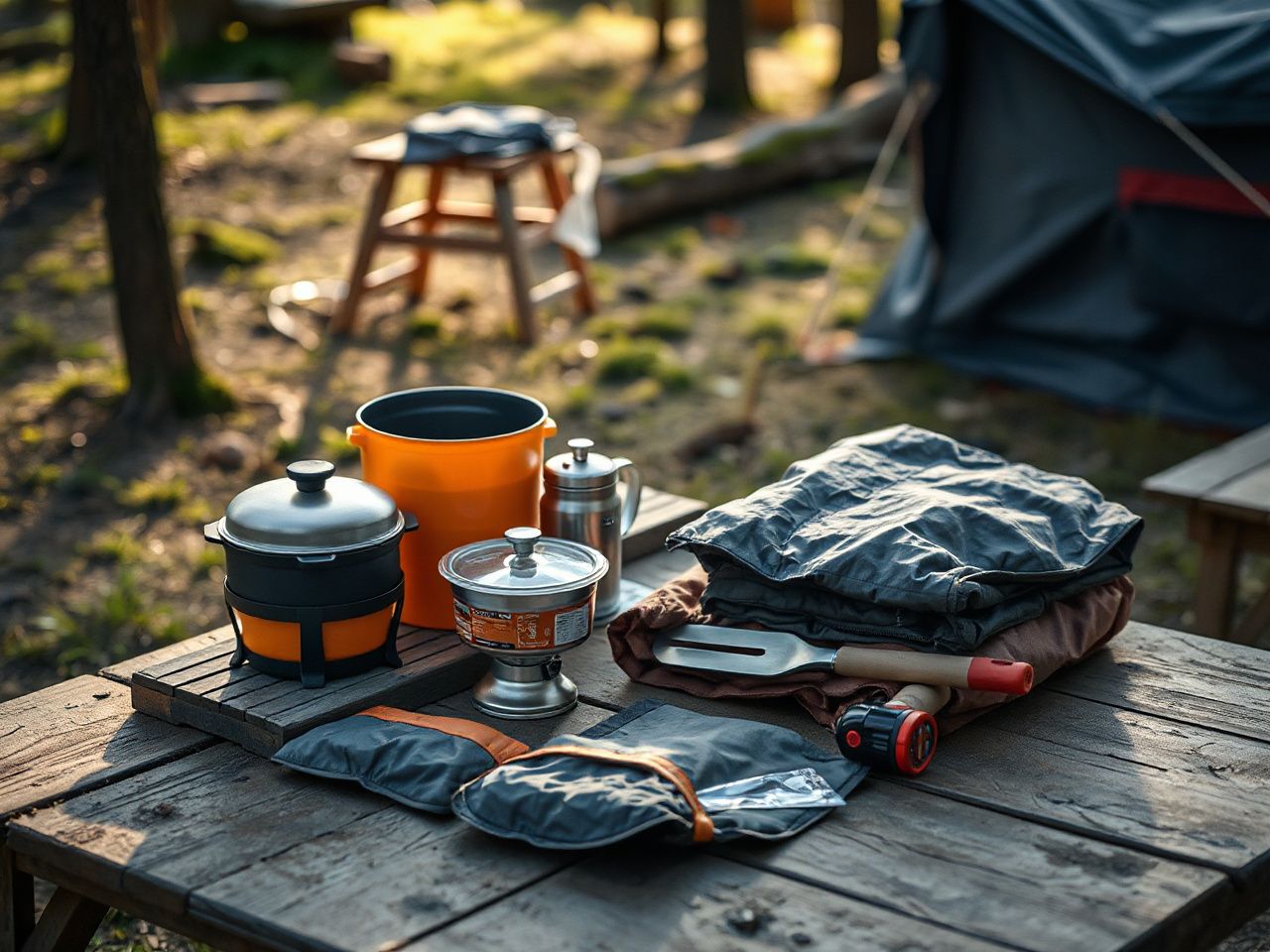
Flat Pack Camping Gear Mistakes to Avoid
Contents
Folding flat doesn’t make gear packable. I learned this the hard way somewhere north of Winnemucca, watching a riding partner wrestle a tapered tent into his aluminum panniers. The panels folded neatly—until they didn’t. The common mistake is assuming that if gear folds flat it’s automatically ultralight. In reality, flat pack design prioritizes volume reduction—so you can fit a tent in a pannier or overhead bin—but this often adds rigidity and fabric weight. The real measure is the ratio of packed volume to weight, and that’s what I evaluate before recommending any item as truly packable. That afternoon in the sagebrush, I decided it was time to talk honestly about flat pack camping gear.
Key Takeaways
- Flat pack design reduces packed volume but often adds structural weight—evaluate the liter-to-gram ratio, not the shape.
- Compression sacks can permanently crush down insulation fibres; store sleeping bags loose or use a stuff sack with light compression.
- Waterproof coatings on packable rain jackets degrade with heat, dirt, and washing—regular replenishment with a DWR spray doubles a jacket’s useful life.
- EN 13537 temperature ratings assume a sleeping pad and dry conditions; a bag rated to 30°F will feel chilly at 40°F without an insulated pad in damp weather.
Starting Out: What Flat Pack Camping Gear Actually Means
When you’re strapping down gear for a week-long motorcycle trip, every cubic inch matters. Flat pack camping gear gets its name from a construction method that allows tents, cookware, and sleeping pads to collapse into a low-profile, pancake-like shape. Most riders encounter it first in collapsible camp chairs that fold into a fabric panel, or in truncated silicone bowls that stack like Russian dolls. The advantage is immediate: you can slide a flat pack tent along the bottom of a dry bag or tuck a folded camp mat behind your saddle without creating a bulky hump.
The Volume-to-Weight Trap
My own first flat pack tent weighed six pounds two ounces—nearly a kilo heavier than a comparable dome-style backpacking tent. The packed shape was a tidy 2-by-12-by-14-inch rectangle, but the extra fabric and rigid struts that enabled the flat fold added ounces no ultralight hiker would accept. A tent can fold flat yet still tip the scales at over six pounds. I later swapped it for a silnylon tarp system that packed into a cylinder but weighed just 28 ounces. The move taught me that flat pack camping gear must be judged by its packed volume in litres divided by its weight in grams. Anything above a 0.04 litre-per-gram ratio is leaning heavily into convenience and away from efficiency.
For a rider who values space over weight, that trade-off makes sense. For someone climbing mountain passes at 9,000 feet, every gram counts. Many items from Sea to Summit and MSR use flexible silicone or titanium to hit a middle ground—staying under two pounds while folding completely flat. Their collapsible pots and kettles illustrate the design philosophy perfectly: the walls concertina down, but the silicone adds mass where a simple aluminum mug would be lighter and decidedly less packable.
Materials That Make or Break a Setup
Not all flat pack items are created equal. Dyneema Composite Fabric (DCF), once the darling of the ultralight crowd, offers an extraordinary strength-to-weight ratio and folds almost perfectly flat. But DCF degrades with UV exposure. Leave a DCF stuff sack or tent fly in direct sun for a week, and the outer Mylar layer begins to delaminate. I carry my DCF tent body in an opaque dry bag for exactly this reason, even though it adds a few ounces.
Ripstop nylon with a silicone coating—commonly called silnylon—is heavier than DCF but far more forgiving under UV. The silicone impregnation also gives silnylon a slippery hand that makes packing a fight until you learn to fold along the seam lines. Patagonia’s larger expedition duffels, for instance, use a 900-denier polyester ripstop with a TPU laminate that folds flat without cracking. These textiles, many carrying the bluesign certification, are engineered to withstand repeated creasing without losing waterproof integrity.
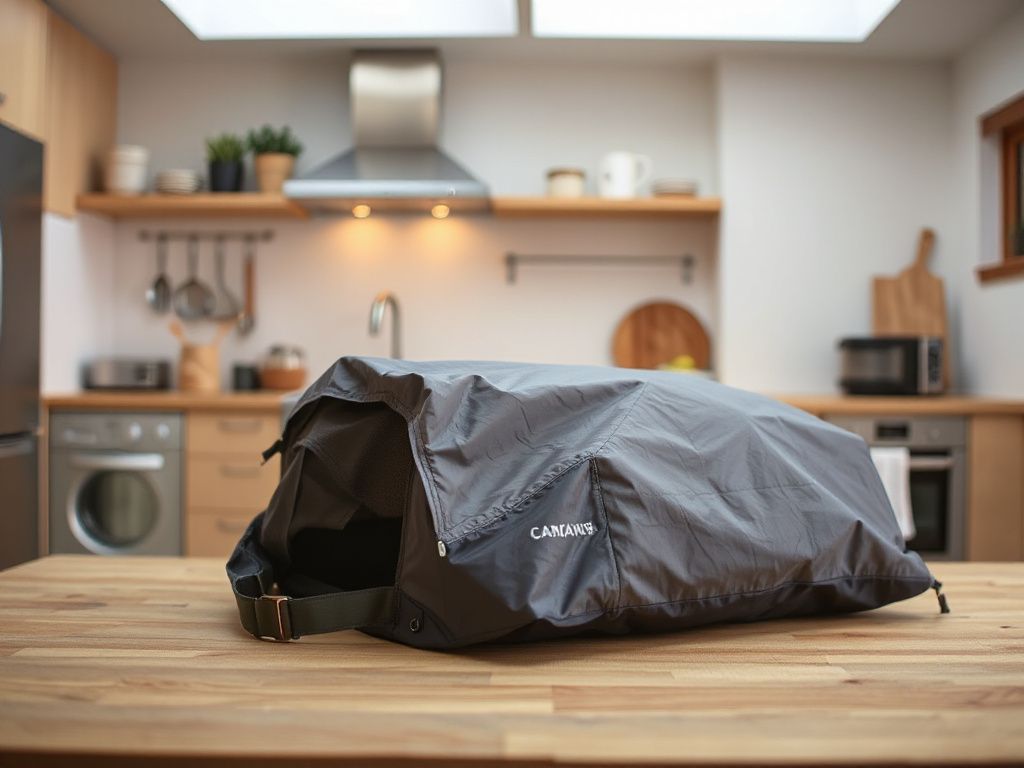
Intermediate: Packing Systems and Field Maintenance
Once you’ve stopped buying gear simply because it folds small, the next frontier is how you pack it. Motorcycle hard cases tempt you to stack flat items like files in a drawer. That works well for collapsible cookware but less so for compressible insulation that needs loft. Down sleeping bags and synthetic comforters are the most misunderstood category in the flat pack camping gear world.
Compression Sacks vs. Stuff Sacks
A compression sack with side straps can reduce a sleeping bag’s volume by 40 percent or more, transforming it from a lumpy bedroll into a dense brick. That looks brilliant when you’re loading panniers at dawn. But down clusters rely on trapped air to insulate, and excessive compression crushes the fine barbules that keep the down from matting. Over time, you lose loft, and with it, warmth. I use a compression sack only when I absolutely need the space—for example, if primitive camping gear and tools are already monopolizing my luggage. Otherwise, a simple stuff sack with a drawcord closure allows the bag to expand naturally into the available volume of my dry bag, preserving the insulation’s spring.
Therm-a-Rest’s self-inflating pads illustrate a related principle. Their open-cell foam must be stored unrolled and with the valve open whenever possible. I’ve met riders who religiously fold their pad along the factory seams, only to discover that permanent creases have killed the foam rebound after a single season. Storing the pad flat under a bed or along a closet shelf extends its life by years. On the road, I roll the pad loosely and place it at the top of a pannier where it won’t bear weight.
Saving a Punctured Inflatable Pad
No flat pack sleeping pad is invincible. A tiny puncture from a mesquite thorn or a sharp pebble will leave you on hard ground by 2 a.m. Field repair kits for Therm-a-Rest and Sea to Summit pads come with adhesive patches and alcohol wipes. The secret is locating the leak. Spread a thin layer of soapy water over the inflated pad and watch for bubbles; a pinhole can be nearly invisible in camp light. Clean the area aggressively, apply the patch, and hold firm pressure for two minutes. I always carry a 1-ounce tube of Seam Grip as a backup—its urethane bond remains flexible, which matters on a pad that flexes under body weight.
Rain Jackets That Stop Breathing
Packable rain jackets are the gateway to flat pack layering—and the most frequent point of failure. A jacket’s waterproof membrane is only as good as its face fabric’s water repellency. When the durable water repellent (DWR) coating wears off, the outer fabric wets out, trapping sweat inside. You’ll feel clammy even though the membrane is intact. Dirt, body oils, and the friction of being repeatedly folded accelerate DWR degradation. Most riders blame the jacket when they should blame the washing routine.
Wash your packable rain jacket in a technical cleaner like Nikwax Tech Wash after every week of heavy use. Tumble dry on low heat afterward—the heat reactivates the DWR treatment at a molecular level. If water still fails to bead, apply a spray-on DWR restoration product and dry again. I keep a small bottle of Grangers Performance Repel in my tool kit. This simple habit answers one of the most common questions I hear: why a packable jacket stops repelling water after a single season.
Materials also matter for condensation management. A low-denier ripstop nylon with a wicking mesh liner can dump sweat faster than a coated polyester shell. Patagonia’s H2No and Gore-Tex Paclite both use hydrophilic membranes that move moisture outward only when the inside is warmer than the outside—a condition hard to maintain on a motorcycle at speed, where wind chill cools the outer fabric rapidly. I prefer mechanical venting solutions like pit zips over chemically ambitious membranes for active riding.
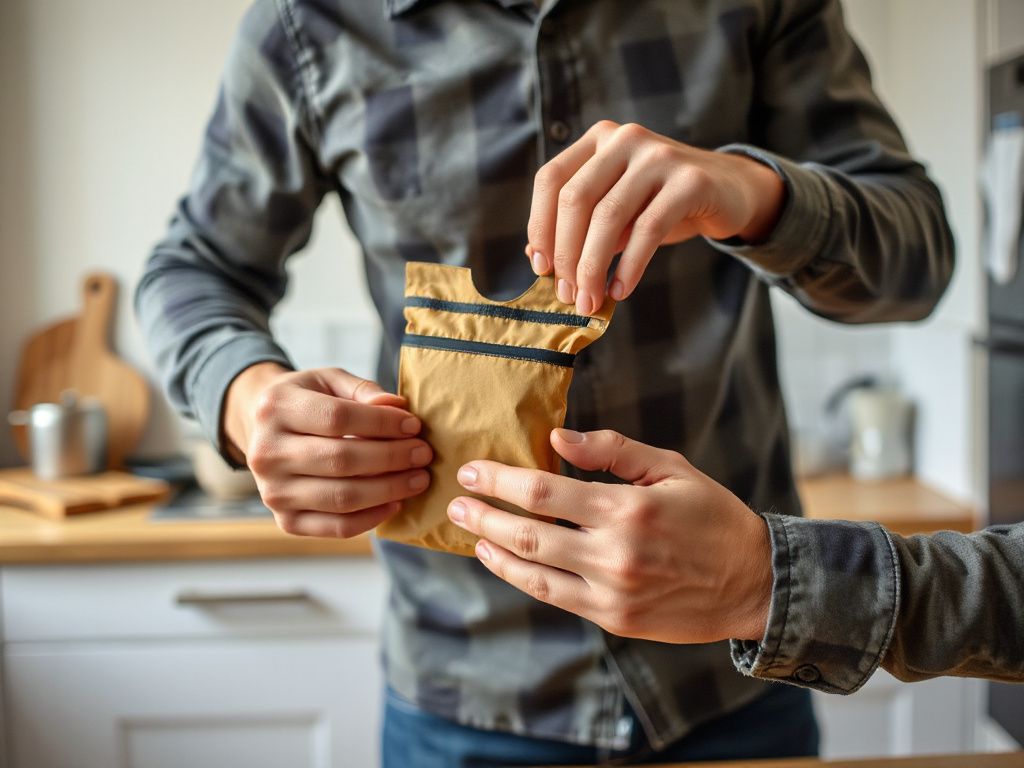
Advanced: Longevity, Cost, and Cross-Season Strategies
The most expensive flat pack camping gear isn’t always the lightest; it’s often the most durable. After a decade of chasing spec sheets, I’ve learned to calculate cost per night over anticipated lifespan, not sticker shock. A $500 DCF tent that lasts 150 nights in harsh UV costs $3.33 each time you pitch it. A $200 silnylon tent that gives you 250 nights because it shrugs off sun damage costs 80 cents per night. The upfront price tells you nothing.
The Real Cost of Ownership
Flat pack camping gear also demands particular storage habits that affect long-term expense. Down sleeping bags left compressed for months lose loft and require re-lofting or even replacement. Silicone-coated nylon stuff sacks degrade into a sticky mess if stored in a hot garage without ventilation. My personal rule: all flat pack gear gets unpacked, aired, and stored loosely the moment I return from a trip. That routine has doubled the life of my most expensive items. If you factor in state park camping fees and fuel, your per-night gear amortization is the smallest line on the ledger—unless neglect forces you to re-buy every two years.
Temperature Ratings Are a Starting Point
EN 13537 (now ISO 23537) ratings on sleeping bags assume a 25-year-old man wearing a single base layer, lying on an insulated sleeping pad with an R-value of at least 4, in a wind-free, dry environment. That’s not motorcycle camping. Your sleeping pad might have an R-value of 1.5. The ground might be frozen, and a cross-breeze will rob heat fast. I subtract 10°F from the listed comfort rating when I’m sleeping on a thin pad, and another 5°F if there’s any chance of dampness. A bag rated to 25°F using the EN 13537 protocol becomes a 10°F bag in reality, unless you add a closed-cell foam pad underneath. This isn’t marketing fluff; it’s what the fine print actually says.
Gear Storage That Prevents Mildew and Breakdown
Dry rot, mildew, and delamination are the silent killers of flat pack camping gear. Any synthetic fabric stored damp in a sealed bin will eventually host mold. I keep a reusable desiccant can in each pannier dry bag and change it out monthly during riding season. For off-season storage, I hang tents and sleeping bags in a cool, dark closet with airflow. Avoid attics and garages where temperature swings can crack polyurethane coatings. All my down items live in oversized cotton storage sacks that allow full loft expansion. A well-maintained set of flat pack camping gear should last a decade; a neglected one, barely two seasons.
When winter approaches and I’m stowing gear until spring, I go a step further: I wash everything. Not just the sleeping bag, but the tent body, the rain fly, and the stuff sacks. Sweat salts and trail grime are acidic enough to eat through polyurethane over time. A gentle cycle with a specialized cleaner like Atsko Sports Wash keeps fabrics supple. The next spring, everything deploys fresh and fully functional.
Camp Chairs and Cookware: The Weighty Truth
Flat pack camp chairs are among the most divisive items in the moto-camping world. They fold into panels that slide behind a backrest, but they rarely weigh under two pounds. A simple three-legged stool with a fabric seat packs into a narrow tube and weighs half as much. Carrying a heavy flat chair adds significant weight, yet many riders find themselves spending more time sitting on a bike’s seat or a log. Unless a chair is essential for a back condition, skip it and put the weight into a warmer sleeping bag instead. The comfort trade-off is personal, but it should always be a conscious one.
During my trips through bear country, I never place cookware or food inside a tent, regardless of how compact it is. Even a flat pack mess kit that looks sealed holds odours that attract curious wildlife. Keeping food and scented items in an approved bear canister well away from the sleeping area is non-negotiable. For more on that, camping with bears demands tested safety gear and a rigorous campsite layout that many flat pack enthusiasts overlook.
Collapsible silicone cookware from companies like Sea to Summit withstands heat up to 300°F without warping, but the silicone lip can trap soap residue if not rinsed thoroughly. I bring a tiny 2-inch scrub brush dedicated to that task alone. It’s an extra step, but skipping it leads to off-flavours that taint your morning coffee. A flat pack cooking setup makes sense when every inch of pannier space is contested, but don’t let the folding design trick you into thinking it’s maintenance-free.
Frequently Asked Questions
How do I choose flat pack camping gear without overpaying?
Evaluate each item by its volume-to-weight ratio and build quality, not its shape. A $30 folding bowl may last two seasons; a $25 titanium mug three times longer and pack just as small. Look for warranties and repair programs. Companies like Patagonia and Therm-a-Rest offer repair services that turn a $180 sleeping pad into a decade-long investment. Spending more upfront on durable flat pack camping gear often costs less per night of use.
Can a flat pack tent handle strong winds without collapsing?
Wind performance depends on pole architecture and the fabric’s ability to shed gusts, not on how the tent folds. A flat pack tent with substantial pole geometry can survive 40-mph winds if properly staked, but flat pack designs often sacrifice steep wall angles for a low packed profile. Always guy out the fly and orient the narrowest end into the wind. Silnylon stretches when wet, so re-tension guylines after rain to maintain wind integrity.
What’s the proper way to roll a down sleeping bag to keep its loft?
Don’t roll it. Fold it loosely or stuff it directly into a generously sized storage sack, avoiding compression straps whenever possible. The less you manipulate the down, the longer the clusters stay fluffy. If you must roll for a tight pannier, use a wide, gentle cylinder and never cinch it tight. After the trip, immediately hang the bag to let the down recover its full loft.
Why does my packable rain jacket stop repelling water after one season?
Durable water repellent (DWR) coatings wear off due to abrasion, dirt, and body oils. Repeatedly folding the jacket into a small pouch accelerates this. Wash the jacket with a technical cleaner and apply a spray-on DWR restorer each season. Tumble drying on low reactivates the treatment. Without this maintenance, even the best waterproof membrane will wet out, leaving you damp and cold.