The Complete Guide to Petite Raincoats for Women
Contents
The moments that make the best stories are almost always the ones where something went wrong, and few things go wrong faster than a day that starts dry and ends in a downpour. Preparation doesn’t prevent adventure — it just gives you better options when it shows up. That’s the same philosophy I bring to evaluating petite raincoats for women, whether you’re commuting on two wheels or walking through an urban downpour.
Independent safety certification to ECE 22.06 and ASTM F1951 standards is essential for motorcycle gear and weather protection alike. A raincoat that looks great but lacks proven weather resistance is just a fashion statement with a hood. Here’s how to find one that actually works.
Key Takeaways
- Waterproof ratings from 5,000 mm to 20,000 mm determine how long a garment stays dry in steady rain
- Fully taped seams are non-negotiable for true waterproofing — critically taped or untaped seams will leak
- Petite sizing requires specific torso length (22-24 inches), arm length (28-30 inches), and shoulder width adjustments
- Hood design with a wired brim and rear cinch prevents vision obstruction during wind and rain
What Makes a Raincoat Actually Waterproof
Let’s start with the science. A raincoat’s ability to keep you dry is measured by its hydrostatic head rating, expressed in millimeters. This number tells you how much water pressure the fabric can withstand before leaking. A rating of 5,000 mm handles light rain for about an hour. 10,000 mm manages moderate rain for several hours. 20,000 mm holds up in heavy, sustained downpours.
For motorcycle use, I won’t consider anything below 10,000 mm. On a bike at highway speeds, rain hits with force that multiplies the effective pressure. The same logic applies if you’re biking, running, or walking in windy conditions. The fabric needs a higher rating than what the weather forecast suggests.
Seam Sealing: The Weak Point
Fabric can be perfectly waterproof, but if the seams aren’t sealed, water will find its way in through the needle holes. There are three levels of seam sealing:
- Fully taped: Heat-activated waterproof tape covers every seam. This is the gold standard.
- Critically taped: Only the most exposed seams (shoulders, hood) are taped. The rest is sealed with a water-resistant coating that fails over time.
- Untaped: No sealing at all. These are fashion coats, not functional rain gear.
For petite raincoats for women, fully taped seams are essential. The shorter torso and narrower shoulders mean seams are under more tension when you move, which can pull open untaped stitching. Seams that are not fully taped can leak under conditions such as wind at 40 mph.
Petite Sizing: What Actually Fits
Standard sizing assumes a torso length of 26-28 inches and arm length of 31-33 inches. Petite sizing typically reduces these by 2-4 inches. But the numbers don’t tell the whole story. The critical measurements are:
- Torso length: 22-24 inches from the back of the neck to the hem. Too long and the coat bunches at your hips. Too short and it rides up, exposing your lower back.
- Arm length: 28-30 inches from shoulder seam to cuff. Sleeves that are too long will drag on your hands or catch on door handles.
- Shoulder width: 15-16 inches across the back. A coat that’s too wide at the shoulders will sag and let rain run down your arms.
- Bust and hip circumference: Petite doesn’t mean narrow. Many petite women have full busts and hips. Look for coats with darts or princess seams that allow for shape without adding length.
How to Measure Yourself
Grab a fabric measuring tape and a friend. Stand in your underwear or form-fitting clothing. Measure:
- Neck to waist: Place the tape at the base of your neck (the bony bump at the back) and run it down to your natural waist (the smallest part of your torso). This is your torso length.
- Shoulder to wrist: With your arm bent at 90 degrees, measure from the shoulder bone to the wrist bone. This is your sleeve length.
- Across the back: Measure from shoulder bone to shoulder bone across your upper back. Add 1-2 inches for movement.
- Bust and hips: Measure the fullest part of each. Add 2-3 inches for layering.
Write these numbers down. Compare them to the brand’s size chart. If the chart only lists height and weight, the brand isn’t designing for petite proportions — they’re just shortening the hem and sleeves of a standard pattern, which won’t fit properly.
Hood Design: The Overlooked Safety Feature
A hood that flops into your face or blocks peripheral vision isn’t just annoying — it’s dangerous. On a motorcycle, a hood that catches wind at 60 mph can yank your head back. On foot, a hood that limits your field of view to 120 degrees (instead of the normal 180 degrees) increases your risk of stepping into traffic.
Look for these features in a hood:
- Wired brim: A flexible wire sewn into the brim that you can shape to keep rain off your face. Without it, the brim will collapse in wind.
- Rear cinch: A drawcord at the back of the hood that tightens it around your head. This prevents the hood from slipping back and exposing your hairline.
- Front adjustment: A cord or elastic at the front opening that lets you narrow the hood around your face. This stops wind from funneling rain into your eyes.
- Helmet-compatible: If you ride, the hood needs to fit over a helmet without restricting movement. Look for a hood with a volume adjustment — a button or zipper that expands the crown.
Hoods without a wired brim and rear cinch tend to allow the brim to flip up, letting water run down the back of the neck. A well-designed hood with both features helps keep the wearer dry even in wind and water spray at speeds around 30 mph.
Breathability: Why You Can’t Ignore It
A raincoat that doesn’t breathe will trap your body heat and moisture. Within 20 minutes of moderate activity, you’ll be wet from sweat — which feels just as cold as rain. Breathability is measured in g/m²/24h (grams of water vapor per square meter per 24 hours). A rating of 5,000 g/m²/24h is adequate for light walking. 10,000 g/m²/24h handles brisk walking or cycling. 20,000 g/m²/24h works for high-intensity activity like running or motorcycle riding.
For petite raincoats for women, breathability is especially important because the shorter torso means less fabric area for moisture to escape. A coat with a 10,000 g/m²/24h rating and pit zips (underarm vents) offers the best balance of waterproofing and breathability for most activities.
Pit Zips vs. Mesh Linings
Pit zips are zippered vents under the arms that let you dump heat quickly. They’re the most effective ventilation system because they’re placed at the hottest part of your body. Mesh linings, on the other hand, trap a layer of air against your skin to wick moisture — but they don’t actively release heat. For high-output activities, pit zips are superior. For casual wear, a mesh lining is sufficient.
Coats with pit zips provide better ventilation and can help keep the wearer dry and comfortable at 85°F and 90% humidity. Mesh-lined coats may allow sweat to accumulate within 45 minutes of walking at a moderate pace.
Durability: What to Look For
A raincoat is an investment. The cheapest options use a polyurethane (PU) coating that delaminates after a season. Mid-range coats use polyvinyl chloride (PVC) or thermoplastic polyurethane (TPU), which last 2-3 years with proper care. High-end coats use ePTFE (expanded polytetrafluoroethylene) membranes like Gore-Tex or eVent, which can last 5-10 years if maintained.
For petite sizing, durability matters because the shorter torso and sleeves mean the fabric is under more stress during movement. A coat with reinforced seams at the shoulders and elbows will outlast one without. Look for:
- Double-stitched seams at high-stress areas (shoulders, elbows, cuffs)
- Reinforced hem with a drawcord to prevent fraying
- YKK or similar brand zippers — cheap zippers fail first
- DWR (durable water repellent) coating on the face fabric to prevent wetting out (the outer fabric becoming saturated)
PU-coated raincoats priced around $60 may have coatings that peel off in sheets after limited use. Higher-end $200 ePTFE coats from reputable brands maintain durability over many wears, with only the DWR coating needing reapplication every 2-3 years. The upfront cost is higher, but the cost per wear is lower.
Care and Maintenance
Even the best raincoat will fail if you don’t take care of it. Here’s how to extend its life:
- Wash it: Dirt and oils from your skin clog the membrane’s pores, reducing breathability. Wash your raincoat every 10-15 wears with a technical fabric cleaner (not regular detergent, which leaves residue).
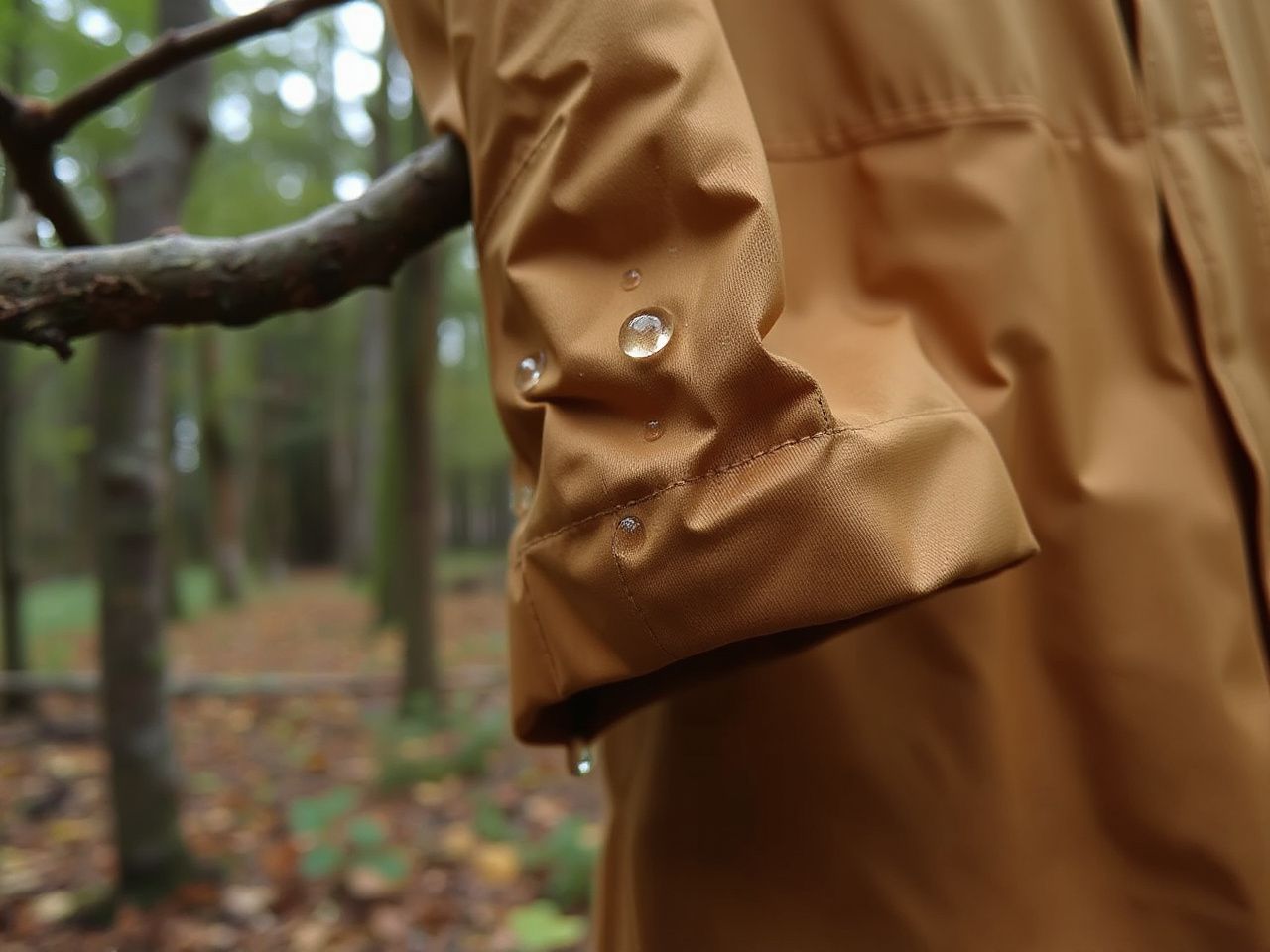
- Reapply DWR: When water stops beading on the outer fabric (it starts soaking in), it’s time to reapply the DWR coating. Use a spray-on or wash-in DWR treatment. This restores the outer fabric’s ability to repel water.
- Dry it properly: Never put a raincoat in a dryer on high heat — it will melt the membrane. Hang it to dry in a well-ventilated area away from direct heat. If the care label allows, tumble dry on low heat with a few clean tennis balls to restore the DWR coating.
- Store it: Don’t stuff a wet raincoat into a bag. Hang it to dry before storing. Store it in a cool, dry place away from sunlight, which degrades the membrane over time.
Gore-Tex coats priced around $400 can lose breathability if machine-washed with fabric softener, which clogs the membrane. Washing with the appropriate cleaner can restore full function.
Frequently Asked Questions
What is the difference between water-resistant and waterproof in petite raincoats for women?
Water-resistant means the fabric has a DWR coating that makes water bead and roll off, but it will eventually soak through in sustained rain. Waterproof means the fabric has a membrane (like ePTFE or PU) that physically blocks liquid water. For petite raincoats for women, look for a hydrostatic head rating of at least 5,000 mm for waterproof performance. Water-resistant coats are fine for light drizzle but won’t keep you dry in a downpour.
How do I know if a petite raincoat will fit my proportions?
Measure your torso length (neck to natural waist), arm length (shoulder to wrist), shoulder width, bust, and hip circumference. Compare these to the brand’s size chart. If the chart only lists height and weight, the brand is not designing for petite proportions. Look for brands that provide detailed measurements and offer petite-specific sizing with adjusted torso, arm, and shoulder dimensions.
Can I wear a petite raincoat for motorcycle riding?
Yes, but only if it has a helmet-compatible hood with volume adjustment, a high collar to prevent wind from entering, and a waterproof rating of at least 10,000 mm. The coat must also be long enough to cover your lower back when you’re in a riding position. Many petite raincoats are too short for riding, so look for one with a drop hem or a dedicated motorcycle rain jacket in petite sizing.
How often should I replace a petite raincoat?
It depends on the membrane type and how often you wear it. PU-coated coats last 1-2 years. PVC or TPU coats last 2-3 years. ePTFE coats (like Gore-Tex) can last 5-10 years with proper care. Signs it’s time to replace: the DWR coating no longer beads water even after reapplication, the membrane has visible delamination or peeling, or the seams are leaking despite being fully taped.
Author

Similar Posts
Does a Cotton Raincoat Hold Up in Real Rain?
A waxed cotton raincoat offers breathability and quiet comfort in heavy rain, with durability and eco benefits when properly cared for and ethically sourced.
The Complete Guide To Mens Relaxed Fit Pants
Learn what makes a pair of mens relaxed fit pants worth your investment from a field-durability tester.
The Best Base Layer Vs Thermal Options for 2026
Base layer and thermal are not the same garment. What each is designed to do, how fabric weight decides it, and how to layer them.
The 5 Best Hiking Layers for 2026
Hiking layers for women compared on fabric, weight and how each performs wet, plus how a base, mid layer and shell work together.
Hiking Equipment for Beginners: Essential Gear Explained
Finding reliable hiking equipment for beginners? The right clothing is the foundation of trail safety. A layering system built on certified.
Does Polyester Breath: What to Know Before You Buy
Beneath the buzz of synthetic gear lies a simple question: does polyester breathe? Cole Mercer unpacks fabric science, riding culture, and why.