Camping in Hawaii: What First-Time Visitors Should Know
Contents
A missed permit, wet sleeping gear, or campsite chosen beside an exposed cliff can turn a beautiful island trip into a serious problem. Camping in Hawaii needs more planning than a beach photograph suggests because weather, access, land rules, and facilities vary sharply across a small area.
A useful Hawaiʻi camping guide separates the island, land manager, and campsite type before discussing equipment, because rules and facilities can change more between those settings than the scenery suggests. Weather and water are planning constraints rather than inconveniences: a beach site, rainforest site, high-elevation site, and volcanic site each require different checks for exposure, access, hazards, and gear care.
Key Takeaways
- Camping is legal only in designated areas, and permits or reservations depend on the land manager.
- Check rain, wind, surf, flooding, shade, water, toilets, rubbish service, and phone coverage before leaving.
- Coastal, rainforest, upland, and volcanic campsites demand different clothing, shelter checks, and risk decisions.
- Secure food and scented items, obey fire and wastewater rules, and dry or clean gear promptly after the trip.
Beginner Planning: Start With the Island and Land Manager
Step 1: Identify the campsite authority
Choose the island and campsite before choosing equipment. Hawaiʻi State Parks, county campground systems, forest reserves managed through the Hawaiʻi Department of Land and Natural Resources, and National Park Service sites can have separate booking, vehicle-access, check-in, and camping rules.
Camping on state land is not a general right to stop wherever a quiet clearing appears. Legal camping takes place in designated areas, and a permit or reservation may be required before arrival. The Hawaiʻi Department of Land and Natural Resources provides state-land information, while the National Park Service sets rules for federal park sites and conditions can change with closures or hazards.
A campsite’s land manager determines which permit system applies. That single check prevents a common error: treating a county campground, state park, forest reserve, and national park as if they shared one reservation process.
Step 2: Match the trip to the campsite type
State park camping can suit travelers who want a defined site and a clear permit process. County campgrounds may be useful for travelers building an itinerary around towns, roads, and beach access, but local booking rules still need checking. National park camping places the trip inside volcanic or high-elevation terrain where closures, route conditions, weather, and park notices deserve close attention.
Haleakalā National Park and Hawaiʻi Volcanoes National Park are not interchangeable camping settings. A high-elevation park can bring exposure and cold conditions, while a volcanic landscape can involve rough ground, fumes, closures, and long stretches without ordinary campsite comfort. The campsite setting should shape the plan before the attraction list does.
Nā Pali Coast State Wilderness Park demands an especially careful approach to route access, permits, weather, and physical ability. The Kalalau Trail is a designated route spanning 11 miles, so a trip there requires more than carrying a tent toward the nearest attractive viewpoint.
Step 3: Confirm the reservation window and group limits
Booking details can be precise. Within the 17 campgrounds overseen by the Department of Parks and Recreation, 218 campsites are available, and camping slots open for booking each Friday at 5 p.m. for the two-week period ahead. Online reservations close at 11:59 p.m. HST on the Thursday before the camping period begins.
In-person bookings can be processed until 4 p.m. on the Friday of the camping period. Each campsite is restricted to a maximum of 10 people and three vehicles, so a large group should confirm that its reservation matches the stated limits rather than assuming extra cars or visitors can be added later.
Camping is prohibited from Wednesday afternoon until Friday morning in the system described above. Rules for other land managers may differ, so never carry one agency’s schedule into another agency’s campground.
Intermediate Planning: Read Weather, Water, and Exposure
Coastal camping
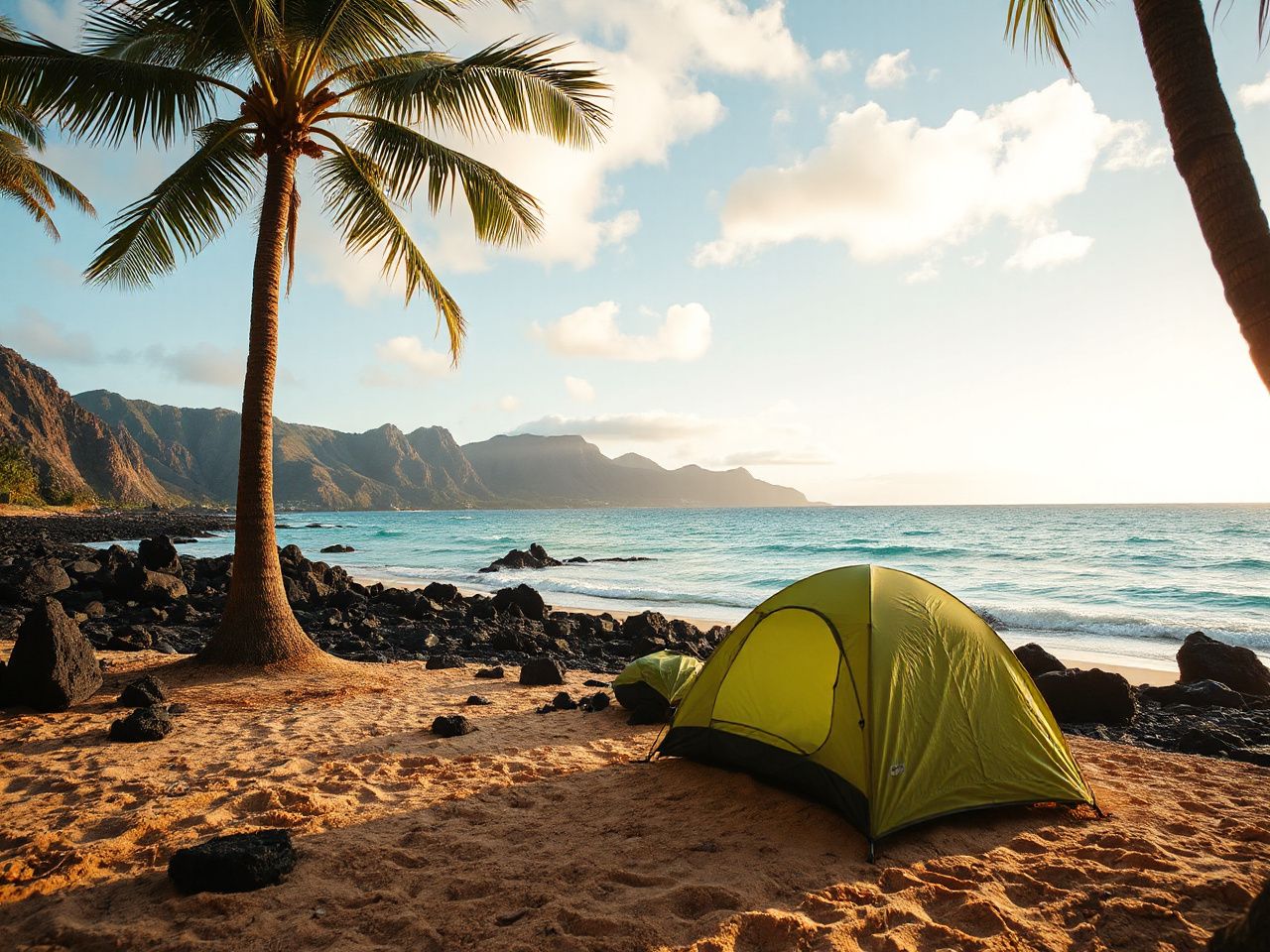
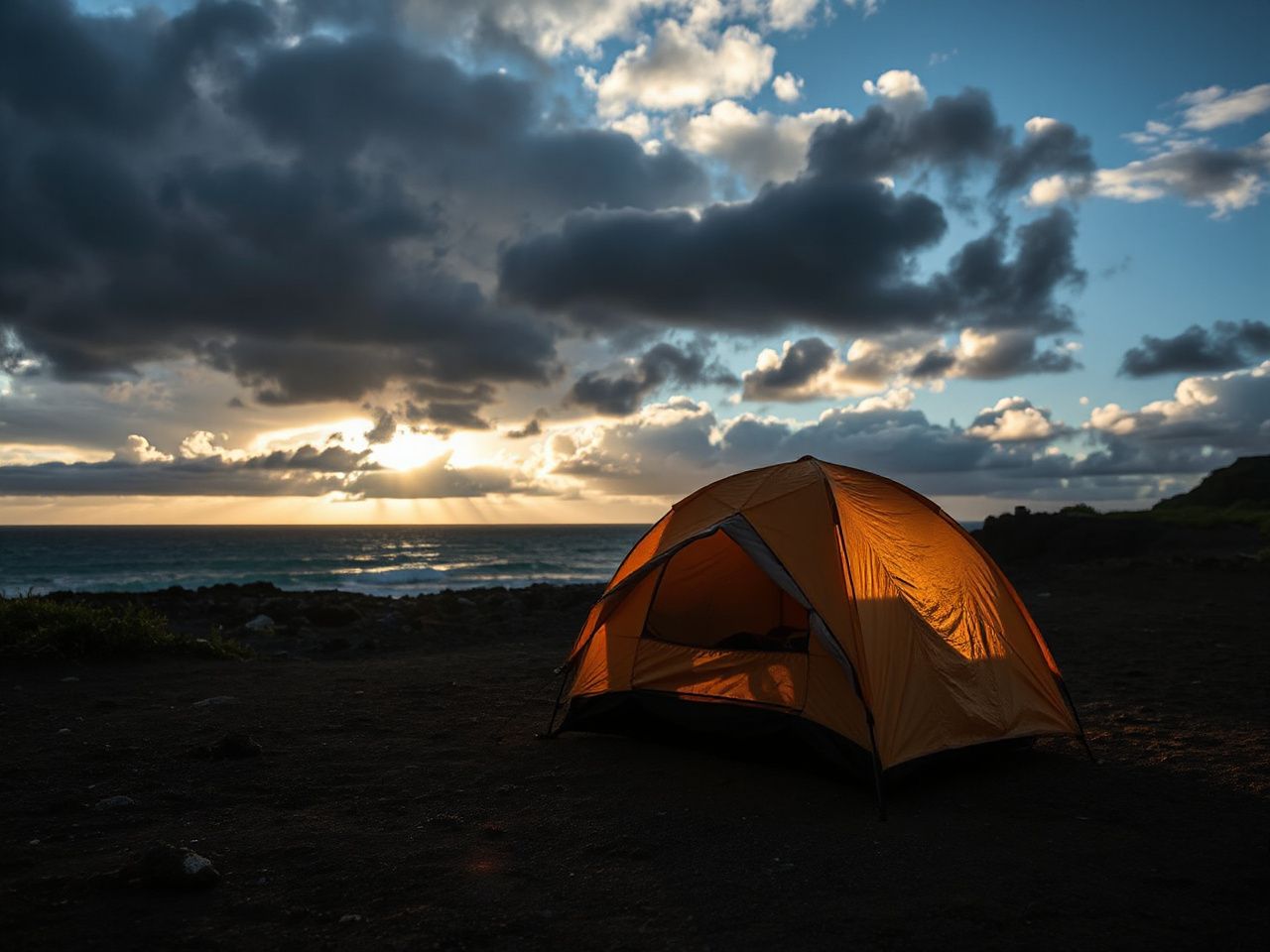
Beach camping can look easy because the route is often flat, but flat ground does not remove danger. Surf, tides, falling rocks, unstable cliffs, and tsunami evacuation areas all matter. A site beside the water may also have little shade, strong wind, blowing sand, and no dependable freshwater or rubbish service.
Do not pitch below a cliff face, close to the reach of waves, or inside an area marked for tsunami evacuation. Beach access and ocean safety information should be checked alongside the campground rules, not after the tent is up.
Coastal gear needs protection from salt, sand, and direct sun. Keep zippers and shelter closures free of grit, place a groundsheet under the tent, and use a rain fly even if rain seems unlikely when the site is chosen. Store food, rubbish, and toiletries securely rather than leaving them beside the sleeping area.
Beach camping is not automatically the easiest choice for a first trip. A designated campground with verified facilities and less exposure may reduce the number of problems a new camper has to solve at once.
Rainforest and wet-weather camping
Rain can arrive quickly in rainforest areas, and heavy rain may affect routes, stream crossings, soil stability, and campsite comfort. Flash flooding is a route hazard, not merely a reason to pack a second shirt.
Set the tent on ground that will not collect runoff, keep the rain fly properly tensioned, and protect clothing and sleeping gear inside waterproof bags or other sealed storage. A wet tent should be dried before long-term storage, because packing damp fabric away invites odor and material damage.
Phone coverage is not guaranteed. A group should know its route, campsite location, return plan, and alternative action before entering a wet or remote area.
Mountain and upland camping
High-elevation sites can be windy, exposed, and colder than coastal areas even on the same island. Strong wind can strain shelter points, scatter loose equipment, and make cooking or fire use more difficult. Secure every item that could blow away.
Sun exposure also remains a concern at elevation. Carry enough water for the facilities actually available, protect exposed skin, and avoid assuming that a cooler campsite has reliable shade or drinking water.
Haleakalā National Park camping requires attention to park notices, access conditions, exposure, and closures. A mountain campsite should be judged by wind shelter, water access, route condition, and safe retreat options rather than by scenery alone.
Volcanic terrain and closures
Volcanic areas can combine rough ground, sharp or uneven surfaces, fumes, exposed routes, and sudden access restrictions. Hawaiʻi Volcanoes National Park visitors should check current park information before setting out and should respect every closure.
Volcanic landscapes can damage tent floors and footwear through abrasive ground. Walk slowly, keep hands free on uneven sections, and avoid crossing closed or unstable terrain. A route that looks short on a map may require more care than its distance suggests.
Intermediate Field Skills: Food, Water, Facilities, and Waste
Verify facilities before departure
Fresh water, toilets, rubbish service, shade, and phone coverage are not guaranteed at every campsite. Read the current site information and make a written plan for what happens if one facility is absent or unavailable.
Water planning should follow the route and campsite facilities rather than a generic packing rule. If a site does not confirm potable water, carry the amount required for the people, activity, weather, and length of stay, then identify a lawful refill or resupply point before departure. Do not assume a stream is safe because it looks clear.
Food planning also needs a facilities check. A campsite with no rubbish service requires a pack-out plan, and a remote site may offer no convenient resupply. Choose meals that remain manageable in heat, rain, and wind without creating unnecessary waste or unsafe wastewater.
Secure food and scented items
Food, rubbish, toiletries, and other scented items should remain secured according to local campground rules. Rats, insects, and other wildlife are drawn to accessible food and odors, so leaving a packet or toiletry beside the tent creates a preventable problem.
Keep cooking areas separate from sleeping areas where the site rules and layout allow. Seal rubbish promptly, clean spills, and follow instructions for storage, wastewater, and disposal. Never leave scraps behind as an attempt to feed wildlife.
Local rules control fires, wildlife interactions, wastewater, and rubbish. A fire that is acceptable at one managed campground may be prohibited at another, so confirm the rule for the exact site instead of relying on past trips elsewhere.
Pack for the setting, not the postcard
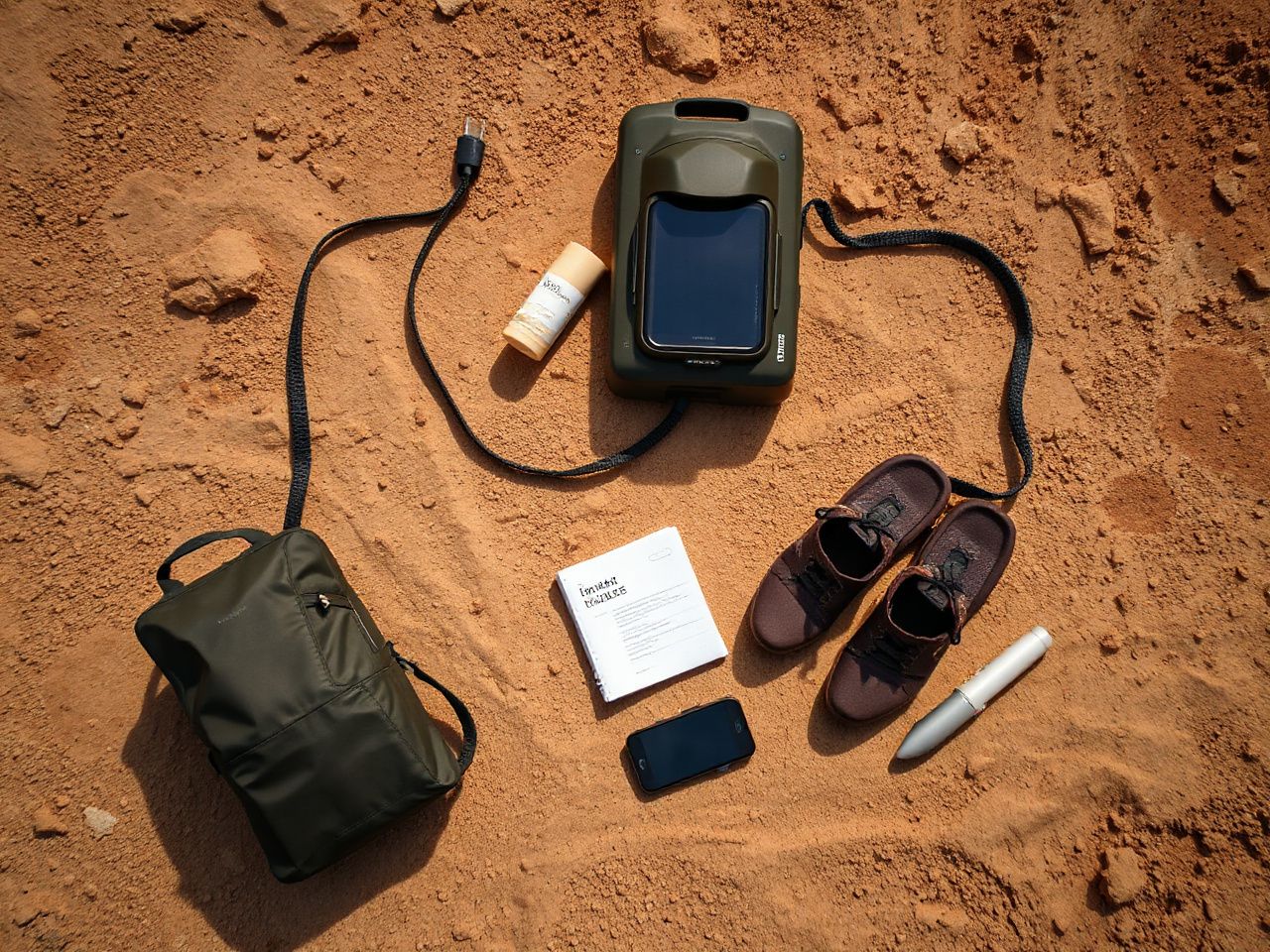
A practical tent-camping load should include shelter protection, a rain fly, a groundsheet, clothing that can handle wet conditions, food storage, water containers, navigation materials, lighting, and a plan for rubbish. The specific balance changes with access, weather, and facilities.
Coastal trips need more attention to sand, salt, glare, wind, and surf exposure. Rainforest trips need stronger moisture control and a drying plan. Mountain trips need shelter security and protection from sun and wind. Volcanic trips need careful foot placement and current closure information.
Advanced Preparation: Access, Transport, and Gear Recovery
Plan the road and arrival process
Inter-island transport, rental-car access, road restrictions, parking limits, and campground check-in procedures can change the practical shape of a trip. Confirm that the vehicle can reach the designated campground, that the reservation covers the vehicle, and that arrival is possible during the required check-in period.
A vehicle should not be treated as a storage room for food or toiletries if local guidance says otherwise. Keep important reservation details accessible, and make a backup plan for delayed transport or a closed route.
County camping permits, state park reservations, and federal park camping systems should be checked separately. One confirmation email cannot stand in for every authority involved in a multi-island itinerary.
Dry, clean, and store equipment after a wet or sandy trip
Shake sand from the shelter outside the sleeping area, rinse or clean gear according to its care instructions, and dry every fabric item fully before storage. Inspect floors, seams, poles, stakes, zippers, and storage bags for grit, moisture, or damage.
Salt and sand can work into moving closures and fabric folds. A careful cleaning routine protects the next trip more effectively than stuffing a damp tent into its sack and forgetting it.
Do not store food residue with camping equipment. Clean cookware and food containers, remove rubbish, and check pockets for crumbs or scented items before packing the kit away.
Understand the real cost
The price of camping includes more than the permit. Add transportation between islands or around the island, vehicle access, food, water, campsite fees, reservation charges, and equipment already owned or needed for the trip. The final amount depends on the itinerary and facilities, so a campsite advertised as inexpensive may still require substantial transport and food planning.
For the Department of Parks and Recreation system described earlier, fees are charged per campsite permit and change from time to time, so confirm the current amount on the City and County of Honolulu’s camping reservation site before you reserve. Those figures do not establish the cost of county, state wilderness, or national park camping, which must be checked through the responsible authority.
Free camping is not the same as unregulated camping. Guides to how free camping rules work in another state or planning a low-cost camping route in Maine may help with general trip budgeting, but Hawaiʻi rules still apply to every island campsite.
Use an off-road risk check before leaving the road
Off-road access, rough approaches, and hiking or backpacking trails demand a separate skill check. A route may require careful footing, route-finding, water management, or a safe turnaround decision even when the destination appears close.
Do not drive or walk onto a closed surface to save time. A closure can signal unstable terrain, hazardous fumes, flooding, rockfall, or another condition that is not obvious from the parking area.
Leave-no-trace practices and invasive-species protection also belong in the route plan. Clean mud and plant material from footwear and equipment where guidance requires it, pack out rubbish, and avoid moving soil or organisms between areas.
Frequently Asked Questions
Do I need a permit or reservation for camping in Hawaii?
Camping is legal only in designated areas, and permit or reservation rules vary between state, county, and federal land. State park, county campground, forest reserve, and National Park Service systems should be checked separately. Some state-managed bookings open on a set Friday schedule, while other sites use different processes. Confirm vehicle access, group limits, check-in requirements, and current closures before departure.
Is beach camping a good first choice?
Beach camping can be suitable when the site is designated and facilities are confirmed, but it is not automatically the easiest introduction. Surf, tides, falling rocks, unstable cliffs, tsunami evacuation areas, wind, sand, sun, and limited shade can create several risks at once. A sheltered campground with verified water, toilets, and access may give a first-time camper more control.
How much water and food should I carry?
There is no single amount that fits every Hawaiʻi campsite because facilities, route length, heat, shade, group size, and access differ. Check whether the site confirms usable water and rubbish service, then plan for the full stay plus the route in and out. If water is not confirmed, carry an appropriate supply and identify a lawful backup rather than depending on an unverified stream.
How should I handle food, rubbish, and toiletries?
Keep food, rubbish, toiletries, and other scented items secured according to local rules. Clean spills promptly, keep cooking and sleeping areas organized, and never leave scraps for wildlife. A campsite without rubbish service requires a pack-out plan. Before leaving, inspect the site for small wrappers, food residue, and wastewater that could attract rats, insects, or other animals.
What should I do after camping in rain or sand?
Clean sand and salt from shelter parts, dry the rain fly, tent body, groundsheet, clothing, and bags fully, and inspect zippers, poles, stakes, and seams. Remove food residue before storing cookware or equipment. Damp gear should not be packed away for long-term storage because moisture can lead to odor and material deterioration. Follow each item’s care instructions where they are provided.