Places to Visit by Train: What’s Worth Knowing First
Contents
The most attractive train route is not always the easiest way to visit a destination. A memorable rail journey and a convenient rail-based destination are different things: a scenic route may be the attraction itself, while a city trip depends more on station location, connection reliability, and onward transport. A sound guide therefore compares the complete journey from departure station to the sights, not just the headline train route or travel time. That distinction matters when choosing places to visit by train, especially if your idea of a rewarding trip includes rough edges, remote platforms, uncertain road surfaces, and a trail that becomes less marked after the station.
Key Takeaways
- Judge a rail destination by the full route from your departure station to the final sight.
- Separate scenic train journeys from cities that are simply easy to reach by rail.
- Check reservations, border rules, local transport, luggage arrangements, and disruption plans before booking.
- Choose remote regions when the railway opens access to tracks, ferries, buses, or rough roads that reward exploration beyond the station.
How to choose places to visit by train
A destination is genuinely easy to reach by train when the railway reduces the difficult parts of the trip rather than merely delivering you to a famous station. Start with the departure point, then trace every change, border, station transfer, and final connection. A direct service can be useful, but a route with one reliable change may place you much closer to a trailhead or old town.
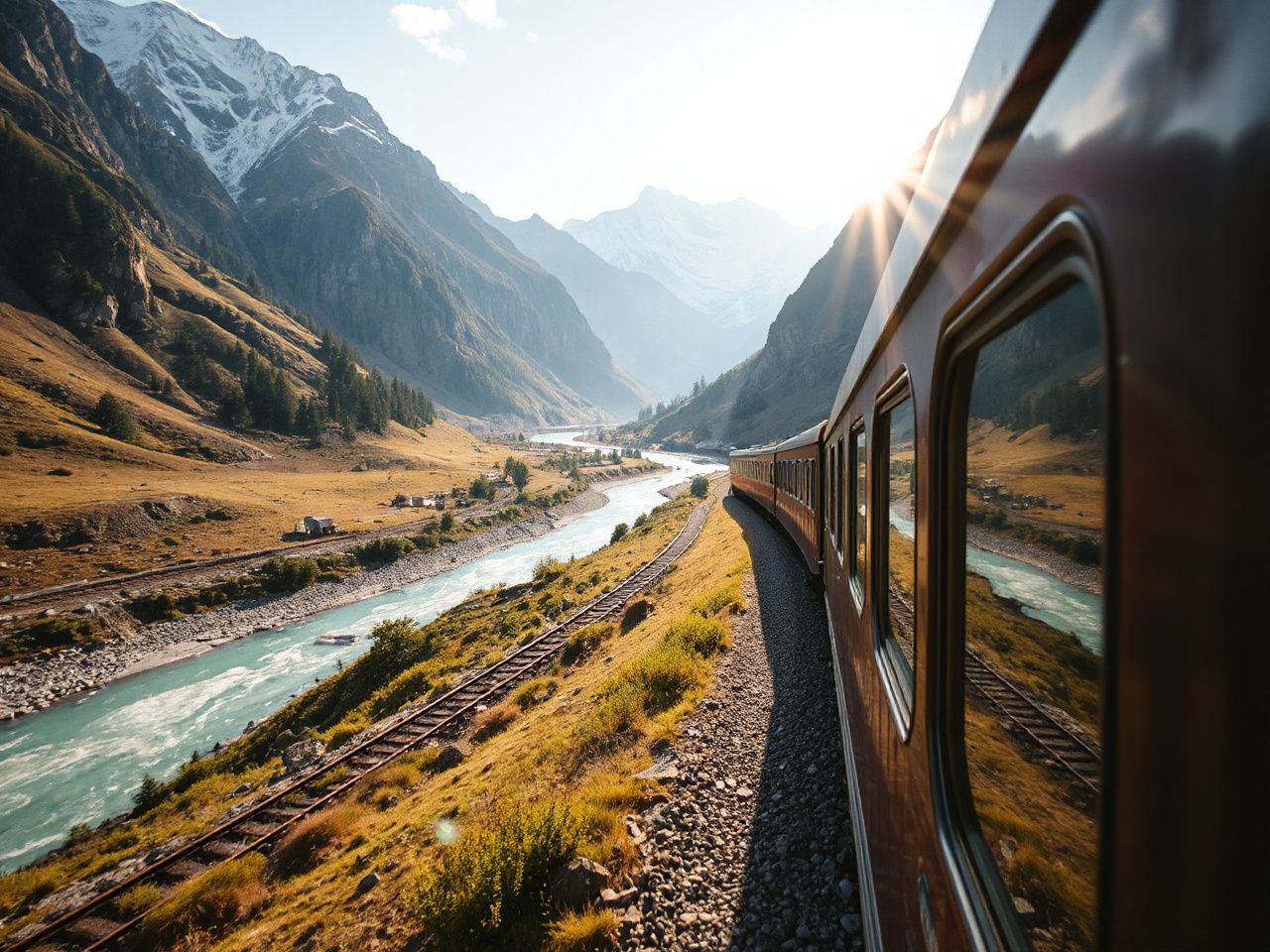
The character of the destination should guide the choice. Judge a rail journey by three things first: how unpredictable the road or trail becomes beyond the station, how much remoteness remains, and whether the railway creates a sense of discovery instead of removing it. A destination reached by a train that crosses a high valley, ends near a ferry, or follows an isolated line can offer more than a polished city stop.
A rail destination is convenient only when the complete journey remains workable after the train arrives. A station may sit beside the main sights, or it may leave you needing a local bus, tram, ferry, or taxi. Add that final movement before deciding that a route is simple.
Start with the station, not the postcard
List the places you want to see and mark the nearest useful station for each one. A central station can make a city break straightforward, while a rural station may be only the first stage of a longer crossing. For remote travel, that second stage often decides the value of the trip. A quiet platform beside an unmarked gravel road may be more interesting than a grand terminal surrounded by traffic, provided the onward route is practical.
European city breaks can work well with Eurostar, Interrail, Eurail, or national rail tickets, but each serves a different planning need. A point-to-point ticket may suit a simple route. A pass may help when the plan includes several countries or flexible changes. Neither assumption removes the need to inspect each train’s conditions.
Separate a scenic railway journey from a rail-accessible destination
The West Highland Line and Glacier Express belong in the scenic journey category because the route itself is a major part of the experience. The destination may still need local transport, but the railway provides the central memory. A city served by Amtrak or Swiss Federal Railways may instead be valuable because its station places you near museums, food, walking routes, or a connecting regional line.
Japan’s Shinkansen can make long-distance travel efficient, yet an efficient main line does not automatically reveal the most remote terrain. Use the fast train as a spine, then look for regional services and roads that lead beyond the obvious stops. Discovery often begins after the celebrated section ends.
Readers drawn to visual landscapes can also browse a guide to beautiful places around the world and then test each idea against station access, local transport, and the final approach.
Beginner planning: build a route that can survive real conditions
Step 1: Map every leg
Write the route in separate pieces: home to the first station, main train, each change, border crossing, final station, local transport, accommodation, and the return route. This exposes weak links quickly. A place may appear close on a map while requiring several changes and a long road transfer after arrival.
Timetables, ticket rules, and reservation requirements can differ between national rail networks. Holidays and engineering works can also alter a route after you have started planning, so check the operating railway shortly before departure and again during the trip. A timetable is a working document, not a permanent promise.
Step 2: Decide between a pass and separate tickets
Rail passes do not always include compulsory seat reservations, supplements, or every cross-border service. A pass therefore needs a second check for each train you intend to board. Interrail generally serves eligible travellers within Europe, while Eurail is aimed at travellers whose residence is outside the participating European countries; the current rules still need checking before purchase.
Separate tickets can be easier for a short itinerary with fixed trains. A pass can support flexibility, but flexibility has little value if a scenic service requires a reservation that is unavailable. Compare the full cost, including compulsory reservations, local transport, accommodation, and food, rather than comparing only the headline rail fare.
Step 3: Protect the connection plan
Leave sensible breathing room between trains, especially after a border crossing or a change between separate stations. A missed connection can turn a quiet journey into an overnight problem. If one ticket covers the whole itinerary, ask the operator or ticket seller what assistance applies. If separate tickets were bought, the responsibility may be divided, so keep the evidence of delays and speak with staff before leaving the station.
A missed connection should be handled at the station before a traveller boards an alternative service. Staff can explain whether the original ticket remains valid, whether a reservation must be changed, and whether the next available train follows a different rule. Do not assume that a rail pass alone settles the matter.
Step 4: Check borders and documents
Passengers should check passport, visa, transit, and border-control requirements for every country on the route. A route can cross several jurisdictions even when the trains appear to operate as one journey. The UK Government publishes country-specific travel information for relevant travellers, while the U.S. Department of State provides entry and travel information for U.S. citizens; other travellers should use the official authority for their nationality.
Keep passports and required documents accessible during changes. Border checks can occur away from the station you expected, and a scenic international route can still involve formal entry requirements. The most remote-looking platform is not outside the rules.
Intermediate planning: match the destination to your appetite for discovery
Remote rail regions
For a rawer journey, search beyond the station name that appears in travel headlines. Look for a railway that ends near a walking route, a ferry crossing, a mountain road, or a settlement where onward transport is limited. The less predictable surface beyond the rails becomes, the more important it is to establish the final access plan before travelling.
The Great Central Railway is the sole preserved British main line featuring a double track, which gives it a distinct place among heritage railway journeys. Its value for an exploratory traveller lies in the contrast between preserved railway infrastructure and whatever lies beyond the formal route: footpaths, local roads, and changing access conditions should be checked separately.
A successful railway may offer a service of four trains daily and may also possess as many as five or six steam locomotives. Those figures describe possible railway operations, not a guarantee for every visitor’s date, so verify the current timetable before shaping a wider itinerary around them.
City gateways with rougher edges nearby
Large cities can be useful launch points rather than final destinations. A station served by Eurostar may open a European city break, while a connection on Swiss Federal Railways can lead from an urban platform toward valleys, lakes, and roads that become less predictable outside the settled centre. The railway handles the long approach; the real sense of discovery may begin after the last stop.
Amtrak routes can similarly function as long-distance corridors between urban and rural areas. Check the exact arrival point and onward transport rather than assuming the train ends beside the attraction. A station label may represent a wider region, not a walkable cluster of sights.
When a scenic route deserves the extra time
A scenic route is worth choosing over the fastest direct connection when the landscape, railway engineering, and changing access are central to the trip. Choose the direct train when the route is mainly a way to reach a city and a delay would threaten a fixed booking. Choose the scenic option when the journey itself is the experience and the plan can absorb disruption.
The Glacier Express and West Highland Line are useful examples of routes where the railway is part of the destination. A Shinkansen journey may instead be the practical backbone that allows more time for remote regional travel. Neither type is automatically superior; the right choice depends on whether the train is the attraction or the bridge to it.
Plan the final road or trail honestly
Rail travel does not remove the need to understand the surface beyond the station. A paved road may become gravel, a marked path may fade, and a ferry or local bus may operate less often than the main railway. These changes are not defects for an off-road-minded traveller; they are the conditions that determine whether the destination feels discovered or merely advertised.
Check weather warnings, local access notices, and transport updates before leaving the station. Severe weather can affect trains, roads, ferries, and mountain paths at the same time. If the final approach is remote, keep food, water, and accommodation arrangements within the limits confirmed by the local operator rather than relying on a hopeful connection.
Advanced planning: manage money, luggage, and disruption
Calculate the whole trip cost
A rail fare is only one line in the budget. Include reservations, supplements, local buses, trams, ferries, taxis, accommodation, food, and any transport needed to reach a trailhead. A cheap main ticket can become an expensive route if the last station sits far from the actual destination.
Use a simple worksheet with one row for each travel leg and another for each night. Add a separate note for costs that depend on availability, such as reserved seats or local transfers. The point is not false precision. The point is to stop a visually attractive route from hiding the expensive or awkward parts.
The total cost of a train trip includes the journey between the final station and the actual destination. This is especially important for remote regions where local transport, accommodation, and food may be less frequent or less flexible than in a city.
Keep tickets and reservations organized
Store the rail pass, tickets, reservations, accommodation details, and border documents where they can be found without an internet connection. Keep a backup copy, but protect personal information and follow the instructions of each operator. A reservation tied to a particular train is not interchangeable with a pass that allows general travel.
Use a day-by-day order rather than filing documents by company. The practical sequence is departure, change, arrival, local transport, and accommodation. Mark which services require reservations and which tickets are flexible. This arrangement reduces the chance of presenting the right document for the wrong train.
Handle luggage during changes
Pack so that a change between platforms does not require unpacking the entire load. Keep documents, medication, food, water, and a warm layer accessible. Check the operator’s current luggage rules before departure because space, storage arrangements, and restrictions can differ between services.
Limited luggage space can materially change an otherwise workable itinerary. A bag that is manageable on a long-distance train may be awkward on a crowded local service, a ferry transfer, or a rough road beyond the station. Remote travel rewards a compact, organised load because the final approach may involve stairs, uneven ground, or a walk between transport modes.
Prepare for strikes and severe weather
Strikes, severe weather, missed connections, and limited luggage space can change a workable itinerary. Follow official operator updates and keep a fallback route that does not depend on the same disrupted line. If the alternative requires a different station, confirm how to reach it before accepting the change.
Overnight travel can protect daytime hours, but a sleeper train still connects only the stations served by its timetable. The Prague to Budapest sleeper train guide is useful as a planning reference for readers considering overnight rail, though every traveller should confirm current service details directly before booking.
Rail routes worth considering by travel style
For a city-first trip
Choose a destination where the main station sits near the sights or where local public transport is clear and frequent enough for the planned itinerary. Eurostar can support cross-border city travel, while Interrail or Eurail may fit a wider route that links several urban stops. The decision should rest on the full chain of tickets, reservations, and local connections.
Italy is particularly useful for a route that combines major cities with smaller stops, but the details of each service matter. A reader planning that style of journey can consult the complete guide to Italy by train and then verify current timetables, reservation rules, and local transport with the relevant operators.
For a scenery-first trip
Choose the West Highland Line, Glacier Express, or another scenic railway when the changing landscape deserves unhurried attention. Treat the train as the principal attraction and avoid placing a fixed event immediately after arrival. Scenic routes can be more rewarding when the timetable has room for weather, delays, and an unplanned stop.
For a remote-region trip
Choose a rail line that places you near a landscape where the road surface, trail marking, and local transport become less predictable. The railway should provide access, not erase the uncertainty that makes the region compelling. Confirm the last bus, ferry, or taxi before committing to a remote overnight stay.
Camping can extend the feeling of distance, but campground access and local rules must be confirmed for the exact area. A separate guide to camping near the Grand Canyon can help readers think through the relationship between a transport arrival point and a more remote overnight base.
Common planning mistakes to avoid
- Booking the train before checking the station: The named destination may still require a long local transfer.
- Assuming a pass covers every service: Reservations, supplements, and cross-border exclusions can remain.
- Using a fast train for a scenic trip: A direct connection may remove the landscape that made the route appealing.
- Using a scenic train for a fixed appointment: A route designed for views may leave less room for disruption.
- Ignoring border requirements: Every country on the route can impose its own passport, visa, or transit conditions.
- Overloading the itinerary: Frequent changes become harder when luggage, stairs, ferries, or rough roads are involved.
- Keeping documents in separate apps: A missed connection is harder to solve when tickets and reservations cannot be found quickly.
Rail travel is often preferable to flying when the station is central, the route crosses several useful destinations, and the journey itself has value. Renting a car may offer more control beyond the station, but it also shifts responsibility for navigation, road conditions, parking, and fatigue to the traveller. For an off-road-minded itinerary, the strongest plan may combine train travel for the long approach with local transport or walking for the final, less predictable section.
Frequently Asked Questions
How do I choose a destination that is genuinely easy to reach by train?
Trace the whole journey from your departure station to the actual sight, including every change, border, local bus, ferry, taxi, and walk. A central arrival station usually simplifies a city trip, while a remote station may be worthwhile if the onward route is confirmed. Compare reliability and final access, not just travel time or the fame of the railway.
Are scenic train routes worth choosing over the fastest connection?
A scenic route earns its place when the railway itself is a major part of the experience, as with the West Highland Line or Glacier Express. A direct train is more sensible when you need to reach a city or protect a fixed booking. Leave extra room after a scenic service because delays can affect the onward plan.
What should I do if a delay makes me miss a connecting train?
Speak with railway staff at the station before boarding another service. Ask whether the original ticket remains valid, whether a reservation must be changed, and what assistance applies. Keep proof of the delay. Separate tickets and through tickets can follow different rules, so do not assume that a rail pass or booking automatically covers the missed connection.
How much luggage can I take on a train?
The answer depends on the operator and service, so check the current luggage conditions before departure. Keep documents, essential medication, food, and a warm layer accessible during changes. A compact bag is particularly useful when the route continues by local bus, ferry, taxi, stairs, uneven ground, or a rough road beyond the railway station.
How can I keep tickets and reservations organized?
Arrange them in travel order: departure, change, arrival, local transport, and accommodation. Mark which trains require reservations and which tickets are flexible, then keep an offline backup. Store passport and border documents separately but accessibly. A pass does not necessarily replace a reservation, and a reservation may apply only to the named train.
Is train travel better than flying or renting a car?
Train travel suits journeys where stations are central, several destinations lie along one corridor, or the landscape is part of the experience. Flying may shorten a long gap, while a car can help with isolated sights after the railway ends. For remote exploration, combining rail with local transport can preserve the quieter, rougher approach without forcing a car journey for the entire route.
The strongest places to visit by train are not always the ones with the grandest station or the fastest service. They are destinations where the railway creates a useful approach, the final connection is understood, and the landscape beyond the platform still holds some uncertainty. Start with the full journey, check every rule, and leave enough space for the route to reveal more than the timetable promised.