The Origin of Bungee Jumping Explained
Contents
Bungee jumping started as a test of courage, not a thrill ride.
The origin of bungee jumping can be traced back thousands of years to the Pacific islands. The gear you skip buying to save money is almost always the gear you regret not having when you need it most. Invest once, invest right. That lesson applies to every adventure, from dirt trails to bridge jumps.
Understanding where bungee jumping comes from changes how you approach it. You see the roots in ritual, the leap of faith, and the engineering that turned a vine into a cord. Here is the real story, based on historical accounts and technical development.
Key Takeaways
- The first bungee jumps were land-diving rituals on Pentecost Island, Vanuatu, using tree vines.
- Modern bungee cords are made from thousands of latex strands, engineered to stretch and recoil safely.
- The sport became commercial in the 1980s after the Oxford University Dangerous Sports Club popularized it.
The Land-Diving Origins: Where the Roots Lie
The true origin of bungee jumping is a ritual called Naghol, or land diving, performed by the men of Pentecost Island in Vanuatu. Young men leap from wooden towers up to 100 feet high with only vines tied around their ankles. The goal is to brush the ground with their hair, proving their bravery and ensuring a good yam harvest.
Footage of these jumps shows incredible precision. The vines stretch just enough to stop the diver inches from the dirt. One miscalculation, and you’re hitting the ground. That’s not a sport you learn from a manual.
How the Ritual Works
Each tower is built from logs and branches, lashed together without nails. The diver selects his own vine, cutting it to a length based on the tower height and his own weight. There’s no second chance.
- Tower height: 65 to 100 feet
- Vine type: Liana vines, which have a natural elasticity
- Timing: Annual harvest season, typically April to May
The Oxford University Dangerous Sports Club: Bringing It to the West
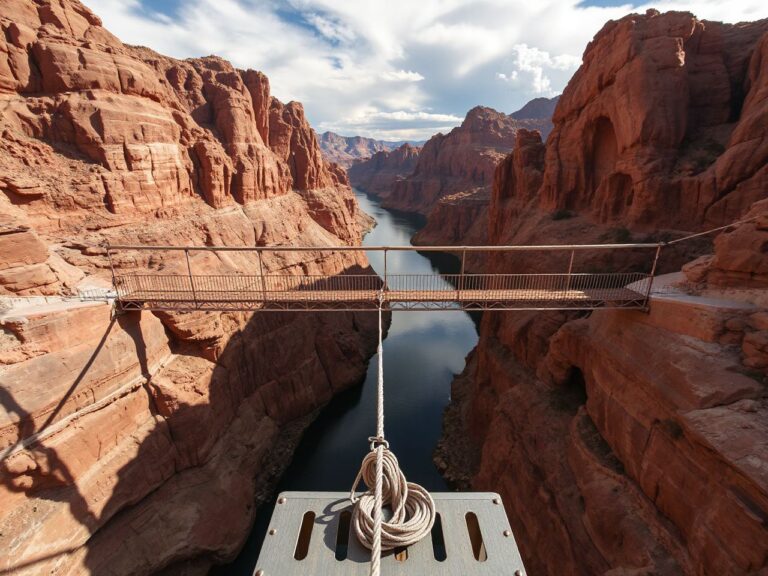
In 1979, members of the Oxford University Dangerous Sports Club, including David Kirke and Simon Keeling, performed the first modern bungee jump from the Clifton Suspension Bridge in Bristol, England. They used a military-grade shock cord and a set of webbing harnesses. The jump was illegal, but it ignited a movement.
It’s only 250 feet, but the history hangs in the air. You can feel it.
The First Commercial Operations
By the late 1980s, A.J. Hackett and Henry van Asch opened the first commercial bungee site at the Kawarau Bridge in New Zealand. That bridge is 141 feet high, and it’s still operating today. Hackett’s innovations included the body harness and the elastic cord tailored for repeated jumps.
If you’re looking for the right place to start, our guide to Best Bungee Jumping Atlanta Georgia: Top 5 Spots includes sites that follow Hackett’s safety standards.
How the Cord Evolved
The modern bungee cord is a piece of engineering. It’s not just a rubber band. A typical cord consists of thousands of latex strands, each about 0.5 millimeters thick, wrapped in a nylon or polyester sheath. The sheath protects the latex from UV light and abrasion.
The cord’s elasticity is measured by its stretch ratio, usually 2:1 to 3:1. That means a 100-foot cord can stretch to 200 or 300 feet under load. The force on your body at the bottom of the jump is about 3.5 Gs, similar to a roller coaster.
Safety Standards and Regulations
Bungee jumping is regulated differently in every country. In the United States, there’s no federal oversight, but many states have their own codes. For example, California requires operators to have a third-party inspection every year. New Zealand has the strictest standards, with the Adventure Activities Licensing authority requiring annual audits.
ASTM F2291 compliance covers bungee equipment. That’s the standard for recreational bungee jumping.
What to Look For in a Jump Site
- Equipment age: Cords should be less than 12 months old.
- Harness condition: No frayed webbing or cracked buckles.
- Operator certification: Look for training from the Bungee Safety Association.
- Jump height: Most commercial jumps are between 100 and 300 feet.
For the biggest drop in North America, check out The Highest Bungee Jump in North America: Complete Guide.
The Physics of the Fall
When you jump, you accelerate at 9.8 meters per second squared until the cord starts to stretch. The cord converts your kinetic energy into elastic potential energy, slowing you down. The deceleration is not constant; it peaks at the bottom, then releases.
A good jump gives you a freefall of about 2 seconds before the cord engages. That’s enough to feel the rush without blacking out. Higher jumps can have 4 to 5 seconds of freefall, but the forces increase.
Bungee Jumping Around the World in 2026
Today, you can find bungee jumping on every continent except Antarctica. The highest commercial jump is at the Bloukrans Bridge in South Africa, at 708 feet. The longest bungee swing is at the Nevis Swing in New Zealand, with a 360-foot arc.
If you’re traveling to Spanish-speaking countries, our list of The Best Salto en Bungee Locations for 2026 covers the top sites in Latin America and Spain.
Frequently Asked Questions
What is the bungee jumping origin in Vanuatu?
The origin of bungee jumping in Vanuatu is the Naghol land-diving ritual. Men jump from wooden towers with vines tied to their ankles. The ritual dates back over a thousand years and is still performed annually. It was first filmed by Western explorers in the 1970s, which inspired the modern sport.
Who invented the modern bungee jump?
Modern bungee jumping was invented by the Oxford University Dangerous Sports Club in 1979. David Kirke, Simon Keeling, and others jumped from the Clifton Suspension Bridge using a military shock cord. A.J. Hackett later commercialized the sport in New Zealand in the 1980s.
How safe is bungee jumping in 2026?
Bungee jumping is safe when done with certified operators. The injury rate is less than 1 in 500,000 jumps, according to the Bungee Safety Association. Always check the equipment age and operator credentials.