Paramotor Flying: What Part 103 Actually Requires
Contents
In the United States, a foot-launched paramotor is not an aircraft. Federal law calls it an ultralight vehicle and puts it under 14 CFR Part 103, a rule of thirteen short sections that hands the pilot an extraordinary exemption and then fences it in with hard operating limits. Under Part 103 there is no airworthiness certificate, no registration, no markings, no pilot certificate, no medical and no minimum age. That is not an oversight; it is written into the regulation.
“Powered parachute” is where the confusion starts, because it is not a synonym. In FAA language a powered parachute is a specific certificated aircraft: FAA regulation defines it as having a fuselage that “contains the aircraft engine, a seat for each occupant and is attached to the aircraft’s landing gear,” and lists powered parachute as a pilot-certificate category with land and sea class ratings. A seat, wheels and an engine bay flown by a certificated pilot is a powered parachute. A motor on your back under a paraglider wing, launched by running across a field, is a Part 103 ultralight vehicle.
Key takeaways
- A paramotor is regulated as an ultralight vehicle under 14 CFR Part 103, and 103.7 exempts it from airworthiness certification, registration and markings.
- Section 103.7(b) states operators “are not required to meet any aeronautical knowledge, age, or experience requirements” or to hold airman or medical certificates.
- The machine must weigh less than 254 pounds empty if powered, hold no more than 5 US gallons of fuel capacity, and be incapable of more than 55 knots calibrated airspeed at full power.
- Part 103 is single occupant, recreation or sport only: passengers are illegal without an FAA exemption, and the USPPA holds one that requires its own tandem rating.
- The USPPA publishes an entry estimate of $1,500–$3,500 for training, and separately says industry experts recommend 5–8 full days; those are association figures that drift over time.
Three sports, three rule books
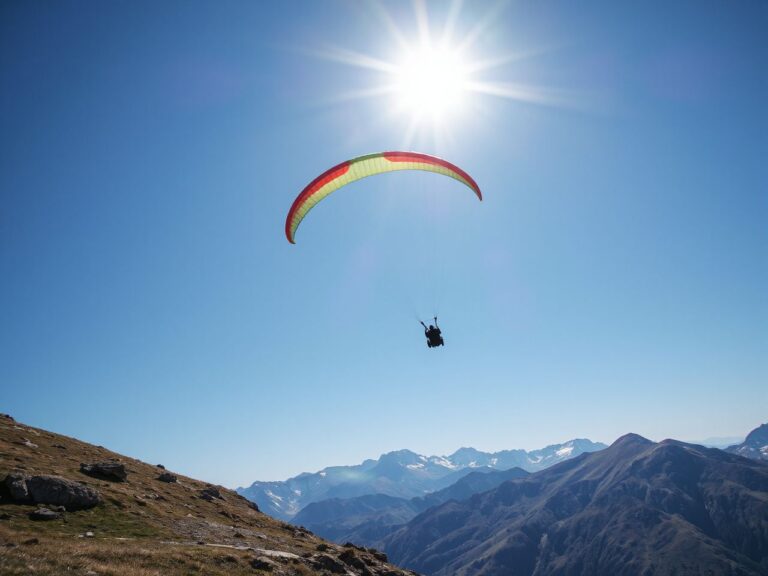
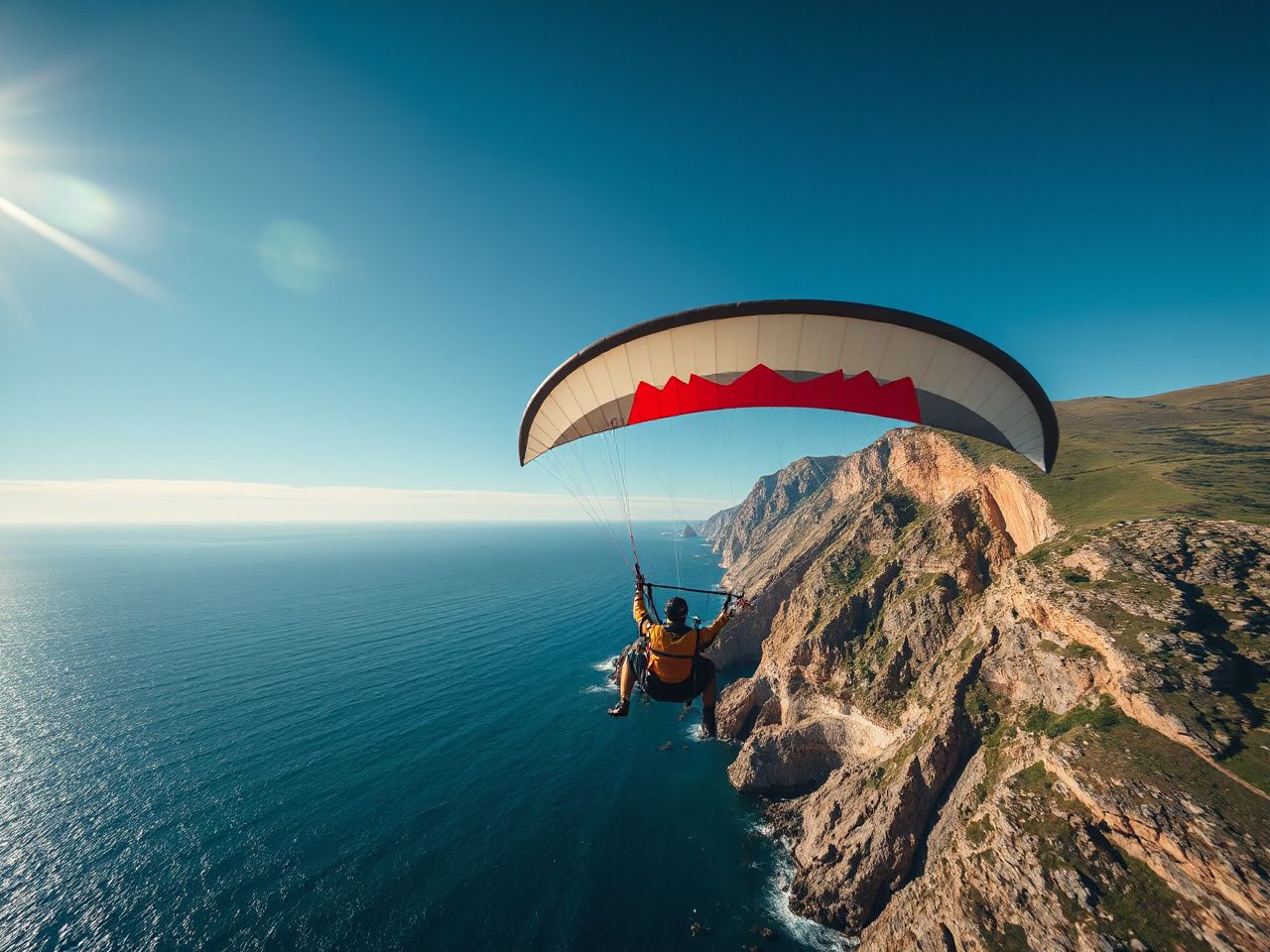
Paramotoring, or PPG, is a paraglider wing flown with a motor on the pilot’s back. Meet the Part 103 numbers and it is an ultralight vehicle: no certificate of any kind.
Powered parachute flying is the certificated cousin: powered parachute is an FAA pilot-certificate category rating, so flying one means holding a pilot certificate. For contrast with Part 103, a sport pilot flying a light-sport aircraft may carry one passenger, but not at night and not in Class A airspace.
Unpowered free flight is a third world: the USHPA governs hang gliders, paragliders and speedwings, which is why US paramotoring grew a separate association. Under Part 103, an unpowered ultralight is judged on weight alone — less than 155 pounds.
What the regulation actually says
Section 103.1 defines an ultralight vehicle as one that “is used or intended to be used for manned operation in the air by a single occupant,” is used “for recreation or sport purposes only,” and “does not have any U.S. or foreign airworthiness certificate.”
Section 103.7 is the part that makes the sport possible. It states that ultralight vehicles “and their component parts and equipment are not required to meet the airworthiness certification standards specified for aircraft or to have certificates of airworthiness”; that they “are not required to be registered or to bear markings of any type”; and that operators “are not required to meet any aeronautical knowledge, age, or experience requirements to operate those vehicles or to have airman or medical certificates.” Read it as an express grant, not a gap. The rule traces to Docket 21631, 47 FR 38776, and took effect on October 4, 1982.
| Part 103 test | The limit | What it means in practice |
|---|---|---|
| Empty weight, powered | Less than 254 pounds | FAA guidance excludes up to 24 pounds of parachute system and 30 per float; seatbelts and instruments count |
| Fuel | Capacity not exceeding 5 US gallons | A capacity limit, not a fuel-load limit: an oversized tank flown half full fails |
| Top speed | Not capable of more than 55 knots CAS at full power | A test of the machine, not a limit on the flight |
| Stall speed | Power-off stall no more than 24 knots CAS | Keeps the airframe in the rule’s low-energy envelope |
| Unpowered ultralight | Less than 155 pounds | The only criterion for hang gliders and paragliders |
| Occupancy | Single occupant | A second-occupant provision disqualifies it, occupied or not |
| Purpose | Recreation or sport only | Compensation, a task, task equipment or advertising voids it |
What Part 103 does not require
Read all thirteen sections, 103.1 through 103.23, and the absences stand out. There is no requirement for a helmet, reserve parachute, radio, transponder, emergency locator transmitter, insurance, or any logged training. The rule’s only equipment mandate is an anticollision light, and only for twilight flight.
FAA guidance concedes the point. FAA guidance states that pilots subject to Part 103 “are not required to have training or previous experience prior to the operation of these vehicles,” then adds: “You should consider receiving adequate training prior to participation.” It is blunt about the hardware too: because ultralights escape certification and maintenance standards, there is “no assurance that a particular ultralight vehicle will have consistent performance, controllability, structural integrity, or maintenance.” ACs 103-6 and 103-7, dated 1983-06-23 and 1984-01-30, were listed Active in the FAA’s advisory circular library when checked in 2026.
What the sport asks of you anyway
The USPPA, the national association for US paramotoring, states directly that no licence, medical, registration or training is legally required, and recommends quality training anyway. Its ratings — PPG1 through PPG3, plus instructor grades — are voluntary, but they put numbers on the learning curve: PPG2 asks for a minimum of 25 flights, commonly 40 or more; PPG3 for a minimum of 90, commonly 200 or more.
On time and money, the association says industry experts recommend 5 to 8 full days of training from a certified trainer, which with weather and weekend-only flying typically becomes 2 to 3 months by calendar. Its published estimates: $1,500 to $3,500 for training, $8,000 to $12,000 for a new motor and wing, $6,000 to $9,000 used.
There is a physical gate too. The USPPA notes paramotors generally weigh 45 to 80 pounds, and that a foot-launch pilot must be able to run with that weight on their back until takeoff. It identifies propeller contact as the mechanism behind more than half of serious accidents in the sport and calls it among the most preventable — the association’s characterisation, not a counted rate. Its incident database held 574 records when checked in 2026; reporting is voluntary, so that is a floor. Fatal accidents still reach the federal record: the NTSB investigates all fatal powered ultralight accidents.
Pro tip
Keep the weight arithmetic for your machine written down, including which components you exclude and why. Section 103.3 lets an FAA inspector ask to see the vehicle and requires the operator to furnish satisfactory evidence that it is subject only to Part 103. With no certificate or registration to point at, that evidence is paperwork you assembled yourself.
Where you may and may not fly
Flying over any congested area of a city, town or settlement, or over any open air assembly of persons, is prohibited outright — no altitude makes it legal. Class A, B, C and D airspace, and the surface area of Class E designated for an airport, all require prior authorization from the ATC facility with jurisdiction. Part 103 is a daylight rule: twilight flying is allowed 30 minutes either side of official sunrise and sunset, only with an anticollision light visible for at least 3 statute miles, and only in uncontrolled airspace.
Visibility minimums sit in a table inside the rule: in Class G airspace 1,200 feet or less above the surface, 1 statute mile and clear of clouds; at or above 10,000 feet MSL, 5 statute miles. Over all of it sits 103.21 — no person may operate an ultralight vehicle except by visual reference with the surface, which rules out climbing through a layer to fly on top. In shared airspace the paramotor is bottom of the order: ultralights must see and avoid aircraft and yield right-of-way to all of them, and powered ultralights yield to unpowered ones.
Part 103 sets no altitude number of its own. The practical ceiling is the floor of Class A airspace, which 14 CFR 71.33 places at 18,000 feet MSL, and entering it requires ATC authorization under 103.17. The USPPA describes that same 18,000-foot limit, and notes most powered paragliding happens between 100 and 2,000 feet. FAA guidance states Part 103 does not prohibit takeoff and landing from open areas, provided the flight does not overfly congested areas; landowner permission is framed as good judgement, not a federal requirement. Any deviation from the rule needs a written waiver from the Administrator.
Common mistake
Assuming “no licence required” also means “no rules about what you do up there.” FAA guidance applies a four-part test to the recreation-or-sport-only clause: performing a task with the vehicle, carrying equipment for a task, advertising your services with it, or taking any form of compensation each remove the flight from Part 103. Selling the aerial photographs does not bend the rule — it exits it, and the exemption from certification goes too.
The single-occupant rule and the tandem trap
Of all the Part 103 limits, the one people most want to negotiate is single occupant. The FAA explained the logic in its 1982 preamble: because pilot qualifications are not controlled or monitored, the single-occupant requirement is a necessary component in the continuation of the policies that allow ultralight operation at all. A solo pilot accepts his own risk; a passenger cannot be assumed to know the pilot is unqualified by design.
That bargain pays for everything else, which is why the FAA polices it at the design stage: guidance states any provision for more than one occupant automatically disqualifies a machine, whether or not the second seat is filled. The USPPA states plainly that flying a paramotor with a passenger in the US is not legal unless the flight operates under an FAA exemption such as the one granted to the association, whose own tandem rating is then required. A tandem flight is a different legal act, not a bigger solo flight.
Frequently asked questions
Is a licence needed for paramotor flying in the United States?
No. Section 103.7(b) states that operators of ultralight vehicles need meet no aeronautical knowledge, age or experience requirements and hold no airman or medical certificate. The USPPA and FAA guidance both urge training anyway.
How high can a paramotor legally fly?
Part 103 sets no altitude figure. The practical ceiling is the floor of Class A airspace at 18,000 feet MSL under 14 CFR 71.33, since entering Class A needs prior ATC authorization under 103.17.
Does a paramotor need registration or an N-number?
No. Section 103.7(c) states ultralight vehicles need not be registered or bear markings of any type. Section 103.3 still lets an FAA inspector ask for evidence that the vehicle qualifies under Part 103.
Can a paramotor be flown at night?
Not in darkness. Part 103 permits flight between sunrise and sunset, extended 30 minutes either side only with an anticollision light visible for at least 3 statute miles, and only in uncontrolled airspace.
Can you take a passenger on a paramotor?
Not under Part 103, which covers single-occupant vehicles only. The USPPA states that carrying a passenger is legal only under an FAA exemption like the one granted to the association, whose tandem rating is then required.
How long does training take, and what does it cost?
The USPPA’s guidance is 5 to 8 full days from a certified trainer, typically 2 to 3 months by calendar with weather and weekends. Its published estimates are $1,500 to $3,500 for training, $8,000 to $12,000 for a new motor and wing, and $6,000 to $9,000 used.