Are Windbreakers Water Resistant? The Short Version
Contents
Most windbreakers lose their factory water resistance after ten to twenty machine washes. That is not an accident of cheap construction—it is the result of how Durable Water Repellent coatings are engineered to work. If you have ever asked, ‘Are windbreakers water resistant?’ the honest answer is yes, but only in a limited, temporary sense.
Key Takeaways
- Water resistance in windbreakers comes from a DWR coating on top of tightly woven nylon or polyester, not from a waterproof membrane.
- That coating degrades with washing, abrasion, and time—expect it to fade after roughly 10 to 20 washes.
- Seams and zippers are the most common leak points even when the fabric still beads water.
- Windbreakers handle light drizzle and wind; they are not a substitute for a rain jacket in sustained downpours.
The Real Difference Between Water-Resistant and Waterproof
A water-resistant windbreaker repels light moisture from its surface. A waterproof jacket stops water from passing through entirely, even under pressure. Those are two different engineering tasks, and a windbreaker only tackles the first one.
Water resistance in a windbreaker typically comes from a Durable Water Repellent (DWR) coating applied to the outer fabric. The benchmark for coated fabric waterproofness is set by ASTM D3393, which measures how much water pressure a coated textile can take before leaking. That standard exists because coatings alone are not barriers—they are surface treatments that force water to bead and roll off rather than soak in.
What DWR Coating Does (and Does Not Do)
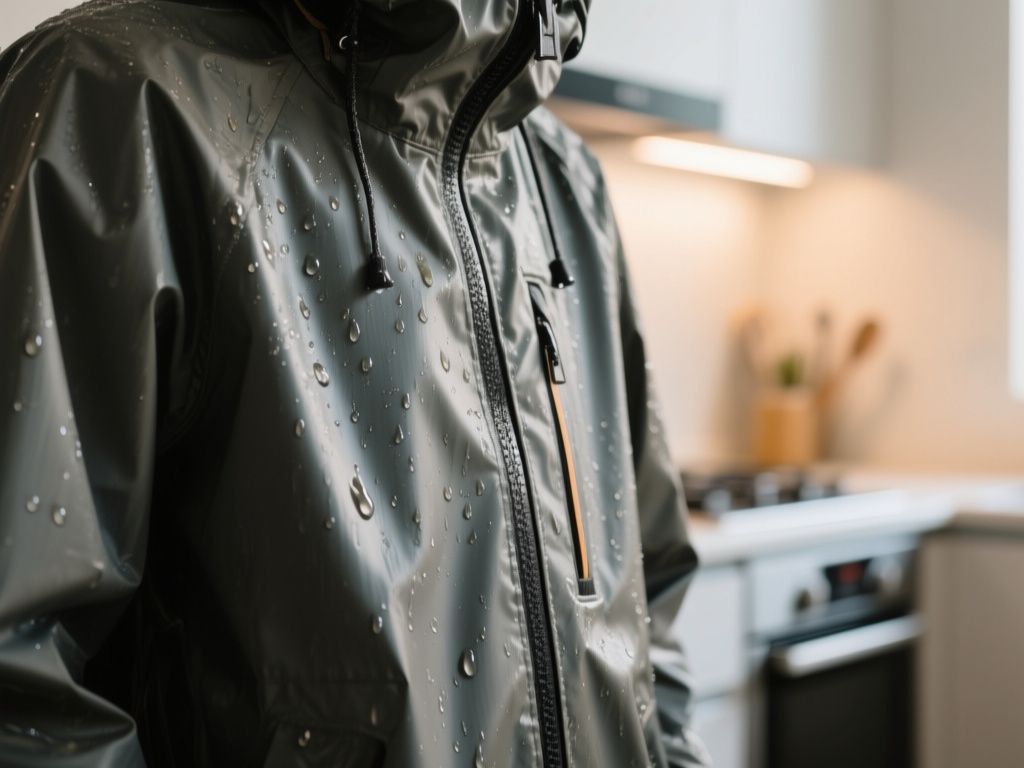
DWR is a chemical treatment that changes the surface energy of the fabric. Water hits the coating, forms into beads, and runs off instead of spreading out. The coating does not close the microscopic gaps between woven fibers; it simply prevents those fibers from absorbing moisture immediately.
Most windbreakers use nylon or polyester with a tight weave. Those synthetics dry fast and hold their shape, but the weave is not waterproof on its own. The hydrostatic head rating—the column of water a fabric can support before leaking—tells the story. A windbreaker’s hydrostatic head rating usually falls below 1,000 millimeters, while a dedicated rain shell often exceeds 5,000 millimeters. That number is not marketing fluff; it is the difference between a drizzle and a downpour.
Fabric and Construction: Why Seams and Zippers Matter
Even when a windbreaker’s fabric is still beading water, the garment can leak. Sewing creates thousands of tiny holes at the seams. Every stitch is a potential entry point for moisture. Unsealed seams leak at the stitching long before the body fabric wets out, which is why any windbreaker used in real rain needs taped seams or a waterproof alternative.
Zippers are the other weak point. A standard zipper has gaps between the teeth that water can pass through. Some windbreakers use a storm flap—a strip of fabric covering the zipper—to deflect rain, and higher-quality models use YKK zippers with tighter tolerances. But neither makes the zipper waterproof. Pit zips, while great for ventilation, add two more unsealed openings that will leak in sustained rain.
How Long Does Water Resistance Last on a Windbreaker?
DWR does not last forever. The factory treatment on most windbreakers fades after ten to twenty wash cycles, and often sooner if the jacket sees heavy use. Abrasion from backpack straps, seatbelts, and even the repeated motion of your arms rubbing against your torso all wear down the coating.
The Washing and Abrasion Problem
Three things kill DWR faster than anything else: fabric softener, high heat, and mechanical abrasion. Fabric softener leaves a residue that clogs the microscopic texture of DWR, reducing water beading after a single use. High dryer heat breaks down the chemical structure of many coatings, making them brittle and less effective. And abrasion from daily carry physically scrapes the coating off the surface fibers.
Signs Your DWR Is Gone
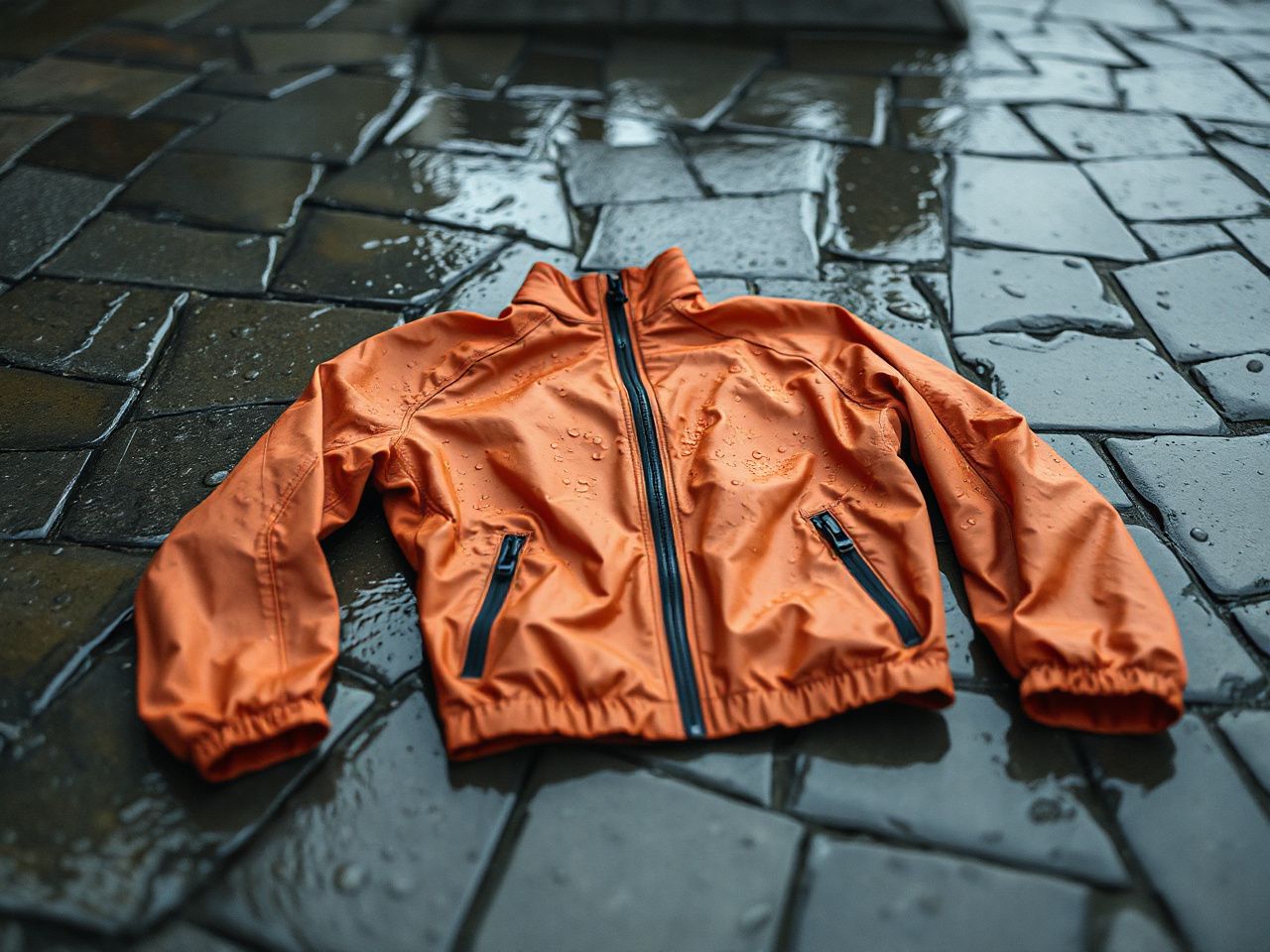
You do not need a lab test to know when a windbreaker has lost its water resistance. Sprinkle a few drops of water on the shoulders. If the water soaks in and darkens the fabric within a few seconds, the DWR is shot. If it beads up and rolls off, the coating is still working. Another telltale sign: the fabric feels heavier when wet and takes much longer to dry than it used to.
Restoring and Maintaining Water Resistance
You can extend the useful life of a windbreaker’s water resistance with proper care, and you can restore it after the DWR has worn off. The process is not complicated, but it requires attention to detail.
Cleaning Without Ruining the Coating
Wash a windbreaker in cold water with a mild detergent—no fabric softener, no bleach, no heavy-duty formulas. Use a gentle cycle or hand wash. After washing, air dry or tumble dry on low heat. Heat reactivates many DWR coatings: ten minutes in a dryer on low heat often restores beading after a careful wash. Do not use dryer sheets, as they leave a waxy film that reduces beading.
Reapplying DWR at Home
When washing and low heat no longer bring back the beading, you can reapply a DWR treatment yourself. Two forms exist: spray-on and wash-in. Wash-in products treat the entire garment evenly but can slightly reduce breathability if over-applied. Spray-on products let you target high-wear areas like the shoulders, hood, and upper back. For either method, the fabric must be clean and slightly damp. Apply the product, then tumble dry on low heat to set the treatment. Reapplication is temporary—expect to repeat it every few washes or after heavy use.
Practical Limits: When a Windbreaker Stops Working
A windbreaker is not a rain jacket. It is a wind shell with a light moisture-shedding ability. Understanding that limit will save you from being soaked on a trail or a ride.
Light Drizzle vs. Downpour
In a light drizzle or mist, a windbreaker with intact DWR will keep you dry for twenty to thirty minutes. The fabric beads water, and the tight weave blocks the fine droplets. But in a sustained downpour, water pressure builds up. The DWR eventually fails to bead fast enough, and water starts forcing its way through the weave and the unsealed seams. A windbreaker with a hydrostatic head under 1,000 mm will fail in any rain lasting longer than a few minutes, because the fabric itself cannot hold back that much water pressure.
Windbreakers vs. Rain Jackets in the Field
A dedicated rain jacket uses a waterproof membrane such as Gore-Tex or a PU (polyurethane) coating, and its seams are taped. That is why a rain jacket keeps you dry in a downpour while a windbreaker soaks through. The trade-off is breathability: a membrane blocks water vapor moving outward, so a rain jacket feels clammy during high exertion. A windbreaker breathes better, which is why it works as a layering piece or a packable emergency shell for short showers. If you are sorting out what gear to keep dry in a storm, our look at whether hiking boots are good in water applies the same water-resistance logic to footwear.
Frequently Asked Questions
Are all windbreakers water resistant?
No. Some windbreakers are purely windproof with no DWR coating at all. Check the product description for terms like ‘water-repellent finish’ or ‘DWR coated.’ If the listing does not mention any water resistance, assume the jacket will soak through immediately in rain.
Can I wear a windbreaker in heavy rain?
No. A windbreaker will wet out and leak within minutes in heavy, sustained rain. The DWR coating and tight weave cannot hold back significant water pressure, and unsealed seams will let water in. Use a waterproof rain jacket with taped seams and a membrane. For camp water safety, a good water filter for camping matters more than a windbreaker’s coating.
How do I reapply DWR to my windbreaker?
First wash the jacket with a mild detergent and no fabric softener. While the fabric is still damp, apply a spray-on or wash-in DWR product according to the label. Then tumble dry on low heat for about ten minutes to set the treatment. Repeat after every few washes or whenever water stops beading.
Why does my windbreaker leak after a few months?
The DWR coating has worn off from washing, abrasion, or heat exposure, and the unsealed seams have always been weak points. Reapplying DWR will restore surface beading, but the seams will still leak unless they are taped. For sustained rain, you need a waterproof jacket, not a windbreaker.
The Federal Trade Commission requires that any garment labeled ‘water-resistant’ meet specific performance criteria, and you can read those guidelines on the FTC’s site. That is why honest brands describe windbreakers as water-resistant rather than waterproof—the words mean different levels of protection.