Best Hiking Shoes with Arch Support: The Honest Picks
Contents
Sagging arches after a few miles make a good trail feel like a limp back to the car. Finding the best hiking shoes with arch support starts with checking midsole structure, heel cup, and toe-box room before colour or style. Five orthopedic-style options are compared below, and several are sneaker-style, so each one’s limits are spelled out. Short first checks keep it clear.
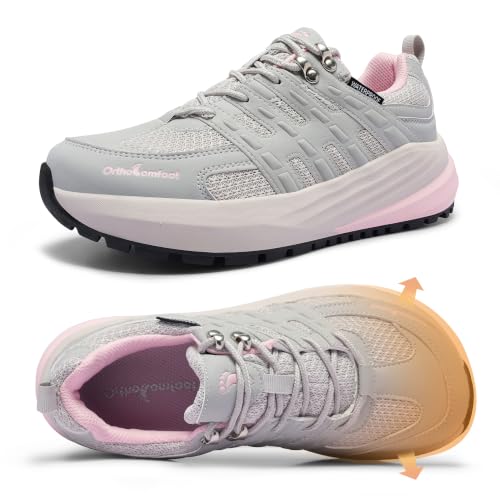
The OrthoComfoot Women’s Arch Support Orthopedic Hiking Shoes lead the list, pairing a wide toe box and rocker sole with a deep-lug outsole at a listed 1.1 pounds.
| Product | Best for | Listed weight | Fit and closure |
|---|---|---|---|
| OrthoComfoot Women’s Arch Support Orthopedic Hiking Shoes | Best overall | 1.1 pounds | Women’s, listed 9.5 Wide, wide toe box |
| CC-Los Women’s Waterproof Hiking Shoes | Best value | 1.88 pounds | Women’s, listed 9-9.5, medium arch zone |
| OrthoComfoot Women’s Orthopedic Breathable Hiking Boots | Swollen feet, bunions | 1.43 pounds | Women’s, listed size 8 Wide, wide toe box |
| FitVille Men’s Wide Slip-On Hiking Shoes | Easy on-off, wide feet | Not listed | Men’s, listed 14 X-Wide, slip-on |
| OrthoComfoot Men’s Waterproof Orthopedic Hiking Shoes | Trail-to-town heel support | 0.55 pounds | Men’s, listed 8.5 Wide, deep heel cup |
RedSky Adventures is funded by affiliate commission. Our picks come from comparing published specifications and documented features against what matters in the category — no brand pays for a place on this page. If you buy through a link here we may earn a commission at no extra cost to you, and it pays for the research behind the next guide. Full disclosure.
As an Amazon Associate we earn from qualifying purchases. This does not affect the price you pay.
CERTAIN CONTENT THAT APPEARS ON THIS SITE COMES FROM AMAZON. THIS CONTENT IS PROVIDED ‘AS IS’ AND IS SUBJECT TO CHANGE OR REMOVAL AT ANY TIME.
OrthoComfoot Women’s Arch Support Orthopedic Hiking Shoes (Rocker Sole and Wide Toe Box)
CC-Los Women’s Waterproof Hiking Shoes (Midweight EVA Cushioning)

OrthoComfoot Women’s Orthopedic Breathable Hiking Boots (Sealed-Seam Waterproof Upper)

OrthoComfoot Women’s Arch Support Orthopedic Hiking Shoes (Rocker Sole and Wide Toe Box)
- BrandOrthoComfoot
- Model26DS52GOF-10-K2-41
- Weight1.1 pounds
- Size / capacity9.5 Wide
- ColourK2-greypink
Quick take: The most complete spec sheet of the five for a woman with flat feet, overpronation or a bunion who wants one shoe to cover trail and town.
The listing points to a built-in orthotic insole, a curved rocker bottom, and a waterproof upper. It also lists a deep-lug non-slip rubber outsole. The listed weight is 1.1 pounds, and the sample size is 9.5 Wide in grey-pink. That weight is well under the CC-Los at 1.88 pounds. It matters when the shoe swings thousands of times a day. The wide toe box is pitched at bunions and swollen feet, and that priority fits when someone plans to add an orthotic or a thicker sock.
Among the best hiking shoes with arch support for flat feet, the useful feature is the combination: structure under the arch, a rocker to reduce Achilles strain, and room up front. The seller’s claims that it ‘corrects overpronation’ and relieves plantar fasciitis are marketing language, not treatment. The listing also gives no shank length, membrane type or lacing details, and these decide how stiff and how breathable the shoe really is. A rocker sole suits long, mostly even paths better than technical scrambles, where a flat, precise platform is easier to place.
Pros:
- Orthotic insole built in — the listing claims it lifts flat arches and balances high-arch strain, so no separate insole purchase is needed to start.
- Low listed weight — 1.1 pounds is the lighter end of the women’s picks and cuts fatigue on long days.
- Wide toe box — leaves room for toe splay, bunions and end-of-day swelling.
- Rocker sole — the curved bottom is meant to roll the stride forward and ease load on a tight Achilles.
- Deep-lug rubber outsole — lug depth is what grips dirt and damp rock, and the listing promotes both.
Cons:
- Key construction details missing — no shank length, midsole material or waterproof membrane is named, so stiffness and breathability are guesses.
- Rocker is not for technical ground — a curved sole feels less planted on loose scree or narrow ledges.
Who Should Buy This
Best overall: Women with flat feet, overpronation or wide forefeet who hike moderate trails and walk in the shoes daily. Skip if: The route involves heavy packs or rock scrambling, or high arches need a firmer, more structured platform than a rocker provides.
CC-Los Women’s Waterproof Hiking Shoes (Midweight EVA Cushioning)
- BrandCC-Los
- ModelC50
- Weight1.88 pounds
- Size / capacity9-9.5
- ColourBlack/Pink
Short version: A midweight waterproof trail sneaker with a moderate arch zone, and the sensible budget-friendly choice for casual hikers.
The model C50 is listed at 1.88 pounds in black/pink, size 9-9.5. The listing calls out a high-resilience EVA insole with arch support. It also notes a medium arch zone in the midsole for all-day standing comfort. A medium arch is a compromise. It should suit neutral feet and many mild flat feet. A person needing strong correction may find it too gentle.
Among budget options for the best hiking shoes with arch support, the case rests on a waterproof barrier. It also uses an engineered tread outsole and a breathable inner lining that claims to wick sweat. The heft counts against it. That extra mass suggests more material. More material can mean durability. Still, the listing names no membrane, no shank, and no lug depth. Waterproof and breathable pull in opposite directions. The lining claim is something to treat cautiously.
Pros:
- Waterproof barrier — blocks rain and trail moisture, useful for wet-season walks.
- High-resilience EVA insole — foam cushioning absorbs impact on uneven ground.
- Medium arch zone — gentle, consistent support that should be tolerable from day one.
- Engineered tread outsole — marketed for grip on rock and slick surfaces.
- Midweight construction — heavier build leans toward stability over a lightweight sneaker feel.
Cons:
- Heaviest women’s pick — 1.88 pounds adds up over many miles.
- Moderate arch support only — not a match for severe overpronation or demanding high arches.
Our Take
Ideal for: Weekend walkers on a budget who want waterproofing and light structure without spending on a specialist shoe. Pass on this if: A podiatrist has recommended firm correction, or weight is a priority.
OrthoComfoot Women’s Orthopedic Breathable Hiking Boots (Sealed-Seam Waterproof Upper)
- BrandOrthoComfoot
- Model25DS01GOR-K2-38.5
- Weight1.43 pounds
- Size / capacity8 Wide
- ColourK2-purple
In a nutshell: A roomy, waterproof option aimed at swollen feet, bunions and hammer toes, with a name that promises more boot than the listing proves.
The model is listed at 1.43 pounds in purple, size 8 Wide. The copy claims a waterproof upper with sealed seams, a wide toe box, and multi-directional deep lugs on a rugged rubber outsole. Sealed seams matter because stitching is where water wicks in first. The title also says ‘Fashion Sneakers’. No cuff height is stated, so a buyer expecting ankle coverage for overpronation can’t confirm it from the listing. Cuff height stays missing.
At 1.43 pounds, the shoe sits between the lighter OrthoComfoot shoe and the heavier CC-Los. The pitch is arch support for long hikes, with pressure spread evenly. Hammer toes and bunions land in the exact area a deep, wide toe box earns its keep. The catch is the claimed breathability. A sealed waterproof upper keeps rain out, and sweat has less exit. Water entering over the collar also undermines the whole system. A taller cut would have been worth stating.
Pros:
- Sealed seams — cuts down the moisture path at the stitching.
- Spacious wide toe box — designed for bunions, hammer toes and swollen feet.
- Built-in arch support — claimed to spread pressure across long outdoor days.
- Multi-directional deep lugs — grips wet rock and mud in more than one direction.
- Mid-range weight — 1.43 pounds is manageable for a waterproof build.
Cons:
- Cut height unclear — a boot name with a sneaker label leaves ankle support unverified.
- Breathability is a trade-off — waterproof builds run warm in dry, hot conditions.
The Real Deal
Perfect for: Women with bunions, hammer toes or swollen feet who hike in wet, muddy conditions. Not great if: Ankle pain is the main problem and a confirmed mid-height cuff is required.
FitVille Men’s Wide Slip-On Hiking Shoes (Elastic Collar and High Instep)

- BrandFitVille
- ModelMHLTLV6GB14EW
- Size / capacity14 X-Wide
- ColourGrey Black
Why it earns a spot: The only slip-on in the group, built for men with wide feet and high insteps who dislike lacing.
FitVille’s model MHLTLV6GB14EW is listed in grey black, size 14 X-Wide, and the weight is not listed. The copy mentions an elastic collar and a heel pull tab. It also points to an upgraded rubber outsole with 5mm deep lugs. There’s an EVA ankle cup meant to stop side-to-side wobble, plus a high-arch cushioned midsole. An elevated instep helps high arches that tend to rub against low, stiff uppers. Readers who need roomier everyday options may also like walking shoes designed for wide feet.
Slip-on construction has a real limit. Without laces, heel lock depends on the elastic collar and the ankle cup, and downhill miles with a pack test that harder than anything. These fit light trails, travel days, and daily wear, not heavy loads or technical terrain, where laces, torsional stiffness, and lug depth matter. At 5mm, lug depth is reasonable for packed dirt, gravel, and grass, per the listing. The copy also mentions rain-slick pavement, so it points to where this shoe is meant to live.
Pros:
- Slip-on design — elastic collar and pull tab remove the lacing step.
- Wide toe box with high instep — gives splay room and relieves pressure on high arches.
- 5mm deep lugs — a stated lug depth that handles packed dirt, gravel and grass.
- EVA ankle cup — aims to cradle the heel and limit side-to-side roll.
- Mesh and synthetic leather upper — a breathable pairing for warm-weather walks.
Cons:
- No laces for lockdown — heel hold on steep descents depends on elastic alone.
- No waterproofing or weight stated — the listing gives neither, unlike the other four.
Final Thoughts
Great match for: Men with wide feet or high arches who want easy entry for light trails, travel and daily walking. Think twice if: The plan includes a loaded pack, steep descents or wet weather.
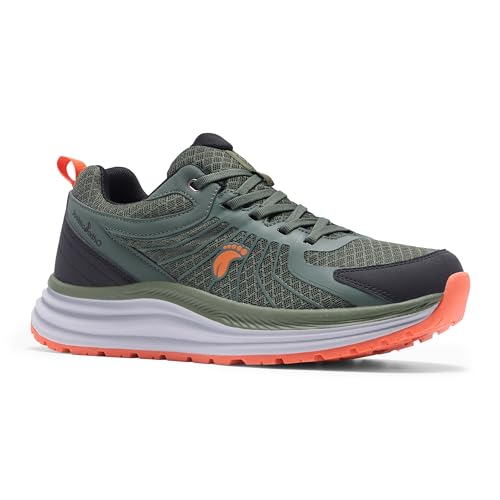
OrthoComfoot Men’s Waterproof Orthopedic Hiking Shoes (Deep Heel Cup Trail Runner)
- BrandOrthoComfoot
- Model24HW03BOF-8-WK2-42
- Weight0.55 pounds
- Size / capacity8.5 Wide
- ColourW2-army Green
The short version: A trail-running-style shoe with a deep heel cup and a waterproof mesh upper, closer to a gym-and-trail hybrid than a true hiker.
The listing is model 24HW03BOF-8-WK2-42, army green, size 8.5 Wide, with a listed weight of 0.55 pounds. The copy highlights waterproof breathable mesh, targeted orthotic arch support, a deep heel cup and a thick cushioned midsole. Treat the weight with caution. It is far below every other entry. The listing also doesn’t say whether it is per shoe or per pair. A deep heel cup is a real asset for plantar fasciitis-type heel discomfort. It holds the heel pad in place.
The marketing leans on running, gym and errands as much as hiking. So cushioning comes first and structure comes second. Anyone leaning this way should compare with cushioned trail running shoes before deciding. The mesh keeps the shoe airy. Waterproof mesh claims deserve caution, though. No membrane is named, and water over the collar still gets in.
Pros:
- Deep heel cup — keeps the heel pad seated, a plus for heel pain.
- Targeted orthotic arch support — built in, aimed at flat feet and plantar fasciitis discomfort.
- Thick cushioned midsole — shock absorption for pavement-heavy days.
- Waterproof breathable mesh — marketed to shed rain while still moving air.
- Versatile styling — passes for a gym or errand shoe.
Cons:
- Running-shoe construction — likely less torsional stiffness than a dedicated hiker for rocky terrain.
- Ambiguous weight figure — 0.55 pounds cannot be checked from the listing.
Who Should Buy This
Best for: Men with heel pain who split time between easy trails, the gym and daily wear. Skip if: Heavy packs, rough terrain or serious ankle stabilisation are the goal.
How We Chose These Hiking Shoes with Arch Support
These picks come from comparing published specifications, materials and documented features on each listing. They also match patterns buyers often mention, like sizing and fit complaints. None were tested hands-on. The heaviest weight went to arch structure, heel cup, toe-box room and whether the shoe can take an orthotic. Next came outsole lugs and waterproofing relative to the stated use. Several listings omit shank, midsole and membrane details, so those were marked as unknowns. Before ordering, check width, gender cut and the size actually in stock. Several are sold in limited sizes.
How to Choose Hiking Shoes with Arch Support
Match the arch profile to the foot
Flat feet, neutral arches and high arches need different support. The wrong profile can cause pain instead of relieving it. Marketing lines like ‘fixes overpronation’ are not medical treatment. Persistent heel or ankle pain deserves a professional evaluation. The FDA, which regulates medical devices in the United States, treats treatment claims differently from comfort claims.
Hiking shoes for high arches
High arches need cushioning plus instep room. A low, stiff upper presses down on the top of the foot. The FitVille’s elevated instep and the OrthoComfoot’s deep heel cup address this better than a medium arch zone like the CC-Los.
Stiffness, shanks and lugs
A shank can run full, three-quarter or half length. A longer one makes the boot more rigid. Rigidity matters on rock and under a pack. These listings never state it, though. Durable rubber soles with deep lugs give grip across terrain. So lug depth should be a deciding spec. Only the FitVille gives a figure at 5mm. Slip-resistance claims should ideally cite a test. ASTM International publishes footwear test standards that none of these listings name.
Built-in support versus a separate orthotic
Standard orthotic fitting methods, like plaster casts, 3D imaging and foam box impressions, can make a proper fit in fewer than 80% of cases. Off-the-shelf built-in support is a rough match at best. Soft orthotic materials such as EVA, memory foam and silicone gel are common, and a removable insole lets a podiatrist swap in an orthotic.
Waterproof or breathable
Waterproof doesn’t automatically mean breathable. Weakly vented uppers can trap sweat. Pair any waterproof pick with moisture-wicking hiking socks, and keep a shell handy, since good rain gear keeps water from running down into the collar.
Our Final Recommendation
The OrthoComfoot Women’s Arch Support Orthopedic Hiking Shoes are the overall winner. They offer the best mix of orthotic insole, rocker sole, wide toe box, and a listed 1.1-pound weight. The CC-Los Women’s Waterproof Hiking Shoes are the best value for casual hikers, since they add waterproofing and moderate support. For swollen feet, the OrthoComfoot boots fit. Men needing easy entry should consider the FitVille, and men needing heel support should look at the OrthoComfoot men’s pair. None replaces a podiatrist’s advice.
Frequently Asked Questions
What are the best hiking shoes with arch support for wide feet?
The best hiking shoes with arch support for wide feet are the OrthoComfoot women’s shoes and boots. They are listed in wide sizes with generous toe boxes. The FitVille slip-on is listed in X-Wide. Check the stocked width before ordering. Bring along any orthotic you plan to use.
Do slip-on hiking shoes give enough support and heel lock for real trails?
Slip-ons suit light trails and daily wear. Without laces, heel hold relies on elastic and an ankle cup. That setup struggles on steep descents or under a heavy pack. For technical terrain, lacing and torsional stiffness matter more. So a laced shoe is the safer choice.
Are hiking shoes with arch support enough for plantar fasciitis?
Supportive footwear can ease heel strain. But listing claims about relieving plantar fasciitis are not treatment. Stretching and strengthening help next, but a professional diagnosis comes before anything else. Heel or ankle pain that persists calls for a podiatrist. A podiatrist can recommend custom or over-the-counter orthotics.
Will waterproof hiking shoes make my feet sweat?
They can. Waterproof builds block moisture both ways. That means sweat has fewer ways out. Moisture-wicking socks help too. For hot, dry trails, a breathable mesh shoe like the FitVille may be the more comfortable choice.