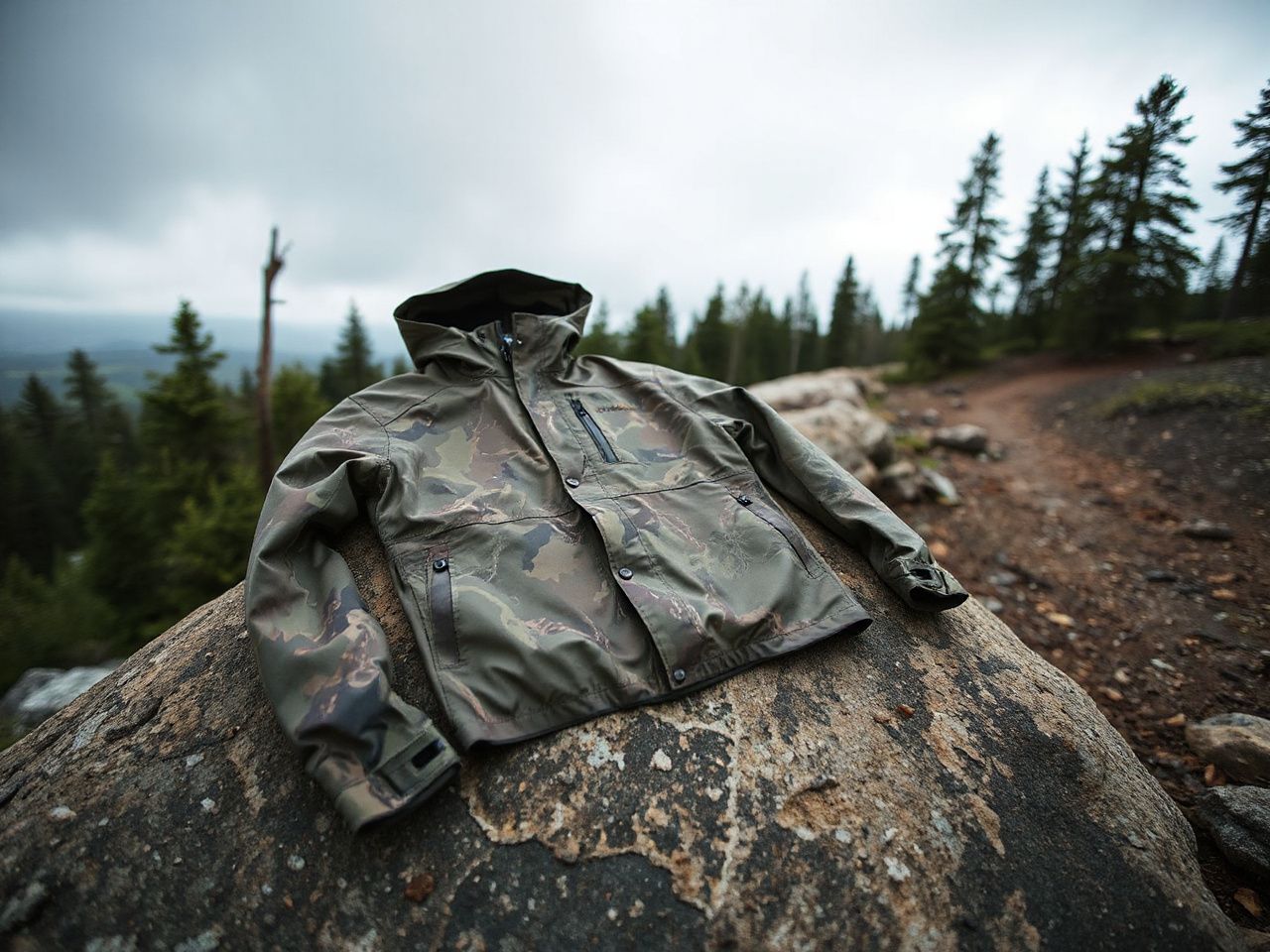
Camouflage Rain Jacket: How to Choose the Right One for You
Contents
Camouflage rain jackets fail for predictable reasons. Membrane and seam integrity matter far more than the pattern printed on the face fabric. A jacket that cannot breathe under exertion will leave you wetter from sweat than from rain. The focus is on how these pieces perform when you are moving, sitting still, and packing them away.
That perspective shapes everything below. A camouflage pattern might help you disappear into the treeline, but a leaking seam will betray you in the first ten minutes of real weather. Before getting into pattern selection and maintenance, you need to understand what separates a shell that actually keeps you dry from one that only looks the part. For a broader look at how rain shells are built, the complete guide to transparent rain jackets covers construction fundamentals that apply across shell types.
Key Takeaways
- A camouflage rain jacket is only truly waterproof if the seams are taped or sealed; untaped seams leak within minutes of steady rain.
- DWR treatments wear off from abrasion, dirt, and body oils, and can be reactivated with heat or reapplied with a spray-on treatment.
- Membrane breathability depends on the humidity gradient between your body and the outside air; the best membrane underperforms if the face fabric is soaked.
- Pattern choice should match your environment’s dominant vegetation and light level, not just personal preference or brand reputation.
Why Camouflage Rain Jackets Fail: Waterproof vs. Water-Repellent
Most people use the terms waterproof and water-repellent as if they mean the same thing. They do not, and the difference explains why some camo jackets soak through while others shrug off an all-day downpour. A waterproof fabric has a membrane or coating that physically blocks liquid water from passing through, regardless of how long the fabric is exposed. A water-repellent fabric has a surface treatment that makes water bead up and roll off, but only for a limited time and under limited pressure.
The Membrane Is the Real Barrier
A camouflage rain jacket built around a membrane like GORE-TEX or eVent uses a thin film with microscopic pores. Those pores are roughly 20,000 times smaller than a water droplet but about 700 times larger than a water vapor molecule. That size differential lets sweat vapor escape while blocking liquid rain from getting in. The catch is that a membrane only works as well as the face fabric above it and the seams that hold everything together.
Some budget camo jackets skip the membrane entirely and rely on a polyurethane coating. A coated jacket can keep light rain out for a season or two, but the coating cracks under repeated folding, flexing, and UV exposure. A membrane jacket from a brand that actually tests in the field will outlast a coated jacket by years. A waterproof rating, measured as a hydrostatic head in millimeters, tells you how much water pressure the fabric can handle before leaking. What that number does not tell you is how comfortable you will be when sweat starts building up inside.
Taped Seams: The Detail That Separates Dry from Damp
Every needle puncture in a sewn garment creates a tiny channel for water. That is why taped seams are non-negotiable in a rain jacket meant for real use. Seam tape is a thin strip of heat-sealed waterproof material applied over every stitched seam on the inside of the jacket. Without it, water works through the stitch holes within ten minutes of steady rain. With it, the jacket’s waterproof envelope stays intact even at the shoulders and along the hood, which take the most direct rainfall.
A camouflage rain jacket with taped seams costs more than one without them, and that cost difference reflects a real performance gap. If you plan to ride or hike in actual rain rather than occasional drizzle, skip anything without sealed seams. The money you save will not feel like savings when your shoulders are soaked.
How Membrane Breathability Works in Wet Conditions
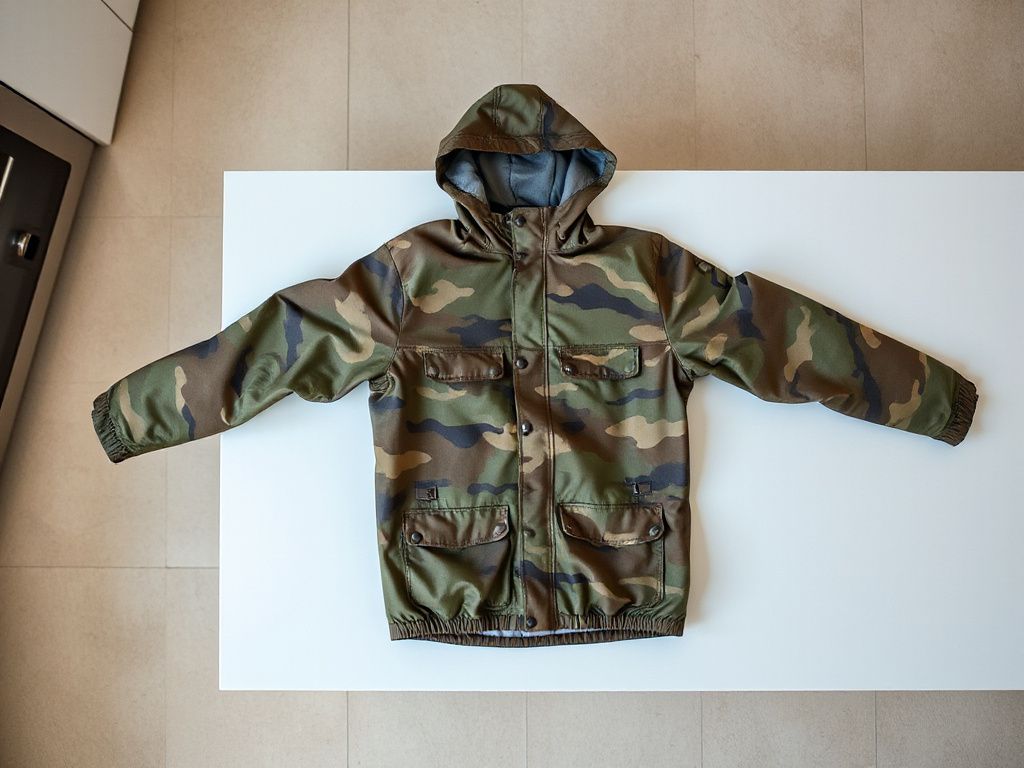
Breathability in a rain jacket is not a magic property. It is a physical process driven by the difference in humidity between the inside of your jacket and the outside air. Warm, moist air near your body naturally moves toward cooler, drier air outside through the membrane’s micropores. When that gradient flips, such as when the outside air is saturated and warm, breathability drops to nearly zero. On a humid 80-degree day in a rainstorm, no membrane can move much sweat vapor. You will feel clammy regardless of what the marketing materials claim.
For riders and field users, this matters because exertion generates a lot of body heat and moisture. A three-layer construction bonds the membrane directly to the face fabric and an inner liner, which improves durability and reduces internal abrasion. If you want a deeper breakdown of that construction method, our guide to three-layer GORE-TEX jackets walks through each layer and what it does during hard use.
The DWR Layer: Your First Line of Defense
A membrane cannot do its job if the face fabric is soaked. Water sitting on the outer surface blocks the micropores and prevents vapor from escaping, which is why most camouflage rain jackets are treated with a DWR coating. DWR, short for durable water repellent, makes water bead on the surface instead of wetting out the fabric. The treatment bonds to the outer fibers and lowers the surface energy of the textile, causing water to form droplets that roll off rather than spreading.
The problem is that DWR wears off. Abrasion from pack straps, seatbelts, brush, and even repeated folding degrades the treatment over time. Body oils and dirt accelerate the process by contaminating the fiber surface. A jacket that beaded water beautifully on day one may wet out across the shoulders and sleeves after a few hundred miles of riding. This does not mean the jacket is ruined. The membrane underneath is often still fully functional. The DWR simply needs to be reactivated or reapplied.
Choosing a Camouflage Pattern for Your Environment
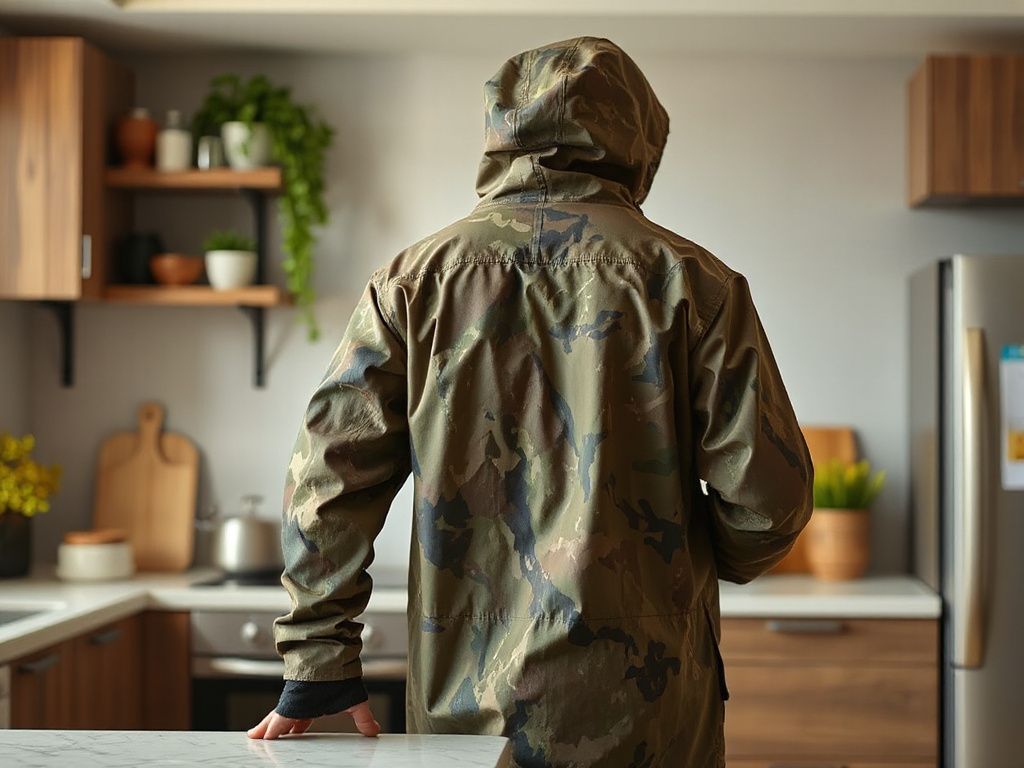
Pattern choice matters, but it matters for a practical reason that goes beyond aesthetics. A camouflage pattern works by breaking up your silhouette against the surrounding terrain, and the effectiveness of any pattern depends on how closely it matches the dominant vegetation, ground cover, and light conditions where you ride, hike, or work. Multicam, for example, was designed to adapt across multiple environments by blending green and brown tones in a way that reads as a neutral at distance. Woodland M81 uses large, high-contrast shapes that perform best in dense, shadowed forests. Flecktarn, the German pattern with small dots over irregular shapes, excels in dappled light and mixed undergrowth.
Matching Pattern Scale to Terrain
Large patterns like Woodland M81 can actually stand out in open, arid environments where small, sparse vegetation dominates. The large dark shapes read as a solid blob against pale ground. Small patterns like Flecktarn disappear in brush and leaf litter but look dark and blurry from a distance. The right choice depends on where you spend most of your time. A camouflage rain jacket for Pacific Northwest forest riding will look different from one meant for high-desert trail work.
One thing riders often overlook is how a camo pattern behaves when wet. Some darker patterns become nearly black when saturated, which eliminates the contrast that makes the camouflage work. Lighter patterns hold their breakup better under rain, which is worth considering when your primary use case is riding in the wet rather than sitting in a blind.
Maintenance That Extends Jacket Life
The average lifespan of a quality camouflage rain jacket is five to eight years with proper care and regular DWR reapplication. Neglect that maintenance, and the same jacket may fail functionally within two seasons. The good news is that most of the upkeep is straightforward and takes less time than people assume.
Reactivating and Reapplying DWR
DWR can sometimes be reactivated with heat alone. Washing the jacket with a technical cleaner and then running it through a tumble dryer on low heat reorients the water-repellent molecules on the fabric surface. This works because many modern DWR formulations are heat-activated. If reactivation fails, a spray-on or wash-in DWR treatment restores the water-beading effect. How often you need to reapply depends on usage. A jacket worn daily behind a windshield will need treatment every three to six months. A jacket worn occasionally for weekend hikes might go a full year between applications.
Washing Without Ruining the Membrane
Regular detergents leave residues that clog membrane pores and strip DWR. Use a technical cleaner designed for waterproof breathable fabrics, wash on a gentle cycle with cold water, and run an extra rinse to remove all soap. Fabric softener is absolutely forbidden. It coats the fibers with a waxy layer that destroys both DWR performance and membrane breathability in a single wash.
Zippers deserve attention too. Most quality rain jackets use YKK zippers because they hold up to repeated use and resist corrosion. A zipper that sticks or refuses to close turns a good jacket into a wind funnel. Wipe zipper teeth clean after muddy rides and apply a small amount of zipper lubricant to keep them running smoothly through the winter.
Buying Pitfalls to Avoid
The most common mistake I see is chasing the highest waterproof rating while ignoring breathability and fit. A 30,000mm hydrostatic head rating means nothing if the jacket traps sweat and leaves you soaked from the inside. The second most common mistake is buying a camo jacket without a hood, or with a hood that does not fit over a helmet. For riders, a hood must be large enough to fit over a full-face or adventure helmet when needed, with a stiff brim that holds its shape in wind. A hood that collapses over your face in rain creates a visibility hazard.
Poncho vs. Jacket for Staying Dry
A poncho offers more ventilation and covers more of your body, including the tops of your legs. A jacket offers more freedom of movement and does not flap in the wind at speed. For riders, the jacket wins almost every time. A poncho catches wind like a sail, and the loose fit makes it dangerous on a motorcycle. For slow-moving woodland use, a poncho or a more open rain shell design might work if your priority is airflow over mobility. For anything involving speed, stick with a fitted jacket.
Softshell Comparison
A softshell is not a substitute for a camouflage rain jacket in sustained wet weather. Softshell fabrics prioritize stretch and breathability, and they shed light rain for a short time before wetting through. A hardshell with a membrane and taped seams keeps water out indefinitely. Many riders pair the two: a softshell for dry, cool days and a camouflage rain jacket for actual precipitation. Trying to make one garment do both jobs means compromising on both ends of the spectrum.
Frequently Asked Questions
Can I reapply DWR treatment to my camouflage rain jacket at home?
Yes. Wash the jacket with a technical cleaner, let it air dry partially, then apply a spray-on DWR treatment to the outer fabric while it is still damp. Follow with a short tumble dry on low heat to activate the treatment. A wash-in DWR product also works, but spray-on application gives you control over high-wear areas like shoulders, hood, and sleeve cuffs.
Is a camouflage rain poncho better than a jacket for staying dry in the woods?
For slow walking in heavy rain, a poncho ventilates better and covers more of your body. However, a poncho is useless on a motorcycle or in strong wind, and it catches on brush constantly. If your use is mostly riding or mixed movement, a camouflage rain jacket with a hood and taped seams is the better investment. Ponchos have their place, but they are not a like-for-like substitute.
How often should I wash a camouflage rain jacket?
Wash it when it looks dirty, when it starts wetting out instead of beading water, or after every 10 to 15 hard-use days. Washing too frequently accelerates DWR breakdown, but dirt and body oils contaminate the fabric faster than washing does. Use a technical cleaner, cold water, and an extra rinse cycle every time. Never use fabric softener or regular detergent.
If you ride with a passenger or want to explore additional rain shell options for urban commuting, Bodbrella rain jacket product information and reviews offers another perspective on rain protection designed for two-up riding.