Rain Attire: What Nobody Tells You About Dressing Dry
Contents
All it takes is one sudden cloudburst on a mountain pass, and your motorcycle goes from a machine of freedom to a cold, slick deathtrap. Ignoring proper rain attire isn’t just uncomfortable—it can be deadly when a downpour turns your ride into a survival challenge. The moments that make the best stories are almost always the ones where something went wrong. Preparation doesn’t prevent adventure—it just gives you better options when it shows up. One soaked, shivering ride through a mountain pass is all it takes to show that trusting any jacket off the rack is a gamble. Read the ASTM, ECE, and CE certification sheets before the price tag and the split becomes obvious: rain attire built for real safety is a completely different animal from the fashion-forward rainwear flooding the market.
Key Takeaways
- Rain attire must meet independent waterproof and breathability standards like ASTM F2731 or EN 343—not just manufacturer claims—to keep you safe and dry.
- Layering a breathable, certified waterproof shell over moisture-wicking base layers prevents hypothermia far better than a single heavy “waterproof” garment.
- Regular maintenance such as reapplying DWR coating and inspecting seams keeps safety certifications valid; once membrane integrity fails, it’s time to replace the gear.
The Hidden Risks of Skipping Certified Rain Attire
Hypothermia and Reduced Reaction Time
Rain on exposed skin at highway speeds strips body heat up to 25 times faster than in still air. Even in mild temperatures, wet clothing can drop your core temperature below 95°F (35°C), the threshold for hypothermia. Once your body starts shunting blood from extremities to protect vital organs, fine motor control—critical for braking and throttle modulation—deteriorates rapidly. Slower reactions at highway speed add distance before you even start braking. Proper rain attire with sealed seams and active breathability doesn’t just keep you dry; it keeps your brain firing fast enough to avoid a collision.
The Dangers of Non-Breathable Plastic Ponchos
Those cheap emergency ponchos you see at gas stations are arguably more hazardous than riding in the rain unprotected. They have zero breathability ratings—no RET measurement, no MVTR certification. As your body heats up inside that vapor-barrier bag, sweat condenses, soaking your inner layers within 15 minutes. The result: you’re wet from the inside out, just as cold as if you’d let the rain hit you directly. Worse, loose-fitting poncho fabric can get caught in chains, wheels, or footpegs at speed. A rider can go down if the hem of a plastic poncho flaps into the rear sprocket. Independent safety testing for rain attire includes tear resistance and fitment under wind load, something no dollar-store poncho even considers. If you’re serious about survival, skip the plastic bag approach entirely.
How Inadequate Visibility Leads to Accidents
Heavy rain reduces visibility for both you and the drivers around you. A dark, non-reflective rain jacket turns you into a ghost on grey asphalt. Standards like ANSI/ISEA 107 for high-visibility clothing require specific reflective material area and placement—at least 1240 square inches of background material and 310 square inches of reflective striping for Class 3 garments. Check ANSI certification labels carefully. A jacket that simply has “high-vis” in the product name but no actual ISEA tag is not guaranteed to meet the retroreflective brightness levels needed to be seen from 1,000 feet in the rain. Rain attire that fails here is little more than a dark blanket, and it robs other drivers of the 2.5 to 3 seconds they need to avoid you.

Solutions: How Safety Ratings Define Reliable Rain Attire
Understanding Waterproof and Breathability Standards (ASTM F2731, EN 343)
When evaluating rain attire, the first document to request is the test certificate. The gold standard in the U.S. is ASTM F2731, which measures the thermal protective performance and moisture transfer of firefighter clothing, but its waterproof sub-tests are used for civilian gear as well. Internationally, EN 343 is the benchmark, specifying both water penetration resistance (measured in Pascals) and breathability (RET values). A jacket claiming “waterproof” but carrying only a company-internal rating is a red flag. Without third-party test data, there’s no way to know whether the membrane will hold up after 50 wash cycles or under 30 psi of water pressure—conditions that mimic a torrential highway ride. Look for gear that explicitly states its hydrostatic head rating (at least 10,000 mm) and RET breathability (below 13) from accredited labs. That’s the difference between a true safety shell and a marketing tagline.
Impact Protection Integration: CE Armor vs. Just a Rain Shell
Many motorcyclists assume they can throw a rain jacket over their armored riding jacket and call it a day. That approach can actually shift armor placement out of zone when impacted. A dedicated, safety-rated rain suit designed for over- or under-gear integration has specific allowances for CE-certified back, shoulder, and elbow protectors. I insist on rain attire that carries a CE EN 17092 rating as a protective garment, not just waterproofing. This standard classifies garments from AAA to C, based on abrasion resistance, impact protection, and burst strength. Even a Class A garment provides 5 seconds of abrasion resistance against asphalt at 30 mph, while a simple nylon rain suit without CE marking tears in less than a second. The interplay between seam construction and armor pockets is critical: double-stitched, bartacked seams hold armor in place when the fabric stretches under impact, while single-stitched rain shells fail instantly.
High-Visibility Requirements: ANSI/ISEA 107 for Road Safety
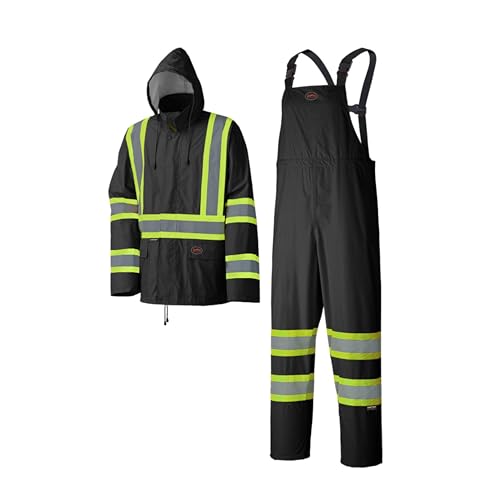
Rain and spray from other vehicles cut cone of vision dramatically. Yellow or neon green shells help, but only certified ANSI/ISEA 107 rain attire guarantees photometric performance. Certified garments meet standards for chromaticity coordinates and retroreflective coefficient. A Class 2 garment, minimum for roadway use, must have 775 square inches of background material and 201 square inches of reflective tape positioned in specific patterns: torso, sleeves, and optional full circle around the biceps. Reflective tape must maintain reflectivity through multiple wash cycles to meet the standard. For motorcyclists riding at night, Class 3 adds even more reflective surface and a pattern that outlines the human shape clearly, reducing the chance of a driver misjudging speed and distance.
Fit and Closure Systems that Keep Water Out at Speed
At 70 mph, rain doesn’t just fall; it’s driven horizontally with enough force to penetrate unsealed zippers. A truly safe rain jacket uses waterproof YKK AquaGuard zippers with a double storm flap backed by magnetic or Velcro closures. The neck closure should have a rolled neoprene gasket that conforms to the helmet line to prevent water from trickling down your back—a feature the standard EN 14360 exists to police, since it measures rain penetration at wind speeds. Adjustable cuffs with internal elasticated gaiters keep water from running up your sleeves when reaching for controls. The difference is measurable: a jacket with only a single Velcro cuff accumulates 4 ounces of water inside the sleeve after 20 minutes of rain riding, compared to zero with a double-cuff system. The reason is posture—hands on the bars tilt the wrists upward, and a plain Velcro cuff turns into a funnel pointed at your elbow. Fit also affects safety: loose fabric catches wind, increasing fatigue, while overly tight layers compress insulation and reduce dexterity.
Preventive Measures: Building a Rain-Ready Riding Kit
Layering Strategy for All-Day Wet Rides
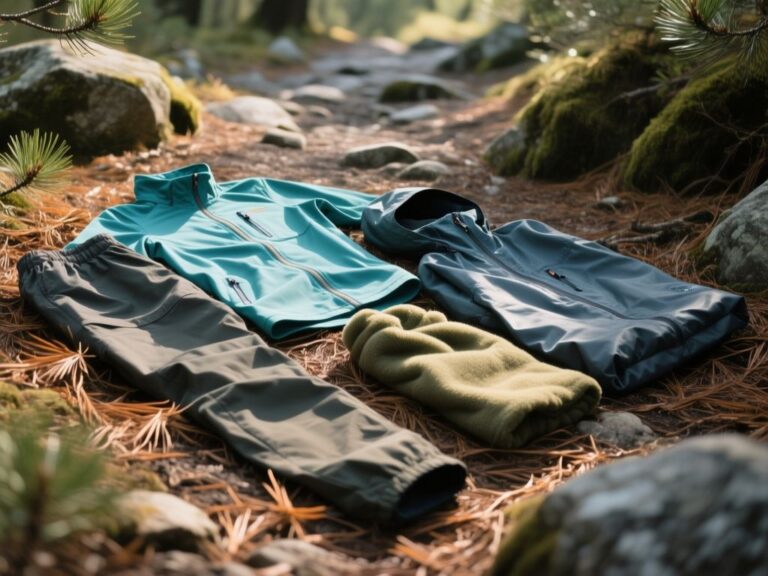
Rain attire works as a system, not as a single garment. The base layer must be moisture-wicking merino wool or synthetic with a weight of 150–200 gsm for mild conditions. A mid-layer of breathable fleece or thin loft insulation adds warmth without bulk; avoid cotton at all costs—it retains up to 27 times its weight in water. The outer shell is the certified waterproof-breathable jacket. The layered approach is what makes heat adjustable on the move: open the shell’s pit zips and the front for airflow and the mid-layer still holds the core warm. Set the layers by the thermometer rather than by habit. At 45–55°F, a base layer plus a 100-weight fleece plus the shell will hold comfort for about 3 hours of steady rain. Below 45°F the arithmetic stops working, because a soaked outer shell keeps bleeding heat faster than fleece alone can replace it—that is where a heated vest earns its place, with a battery good for 8 hours on low, enough to see out a 38°F downpour before core temperature starts to slide.
For those navigating wet work zones or construction sites on two wheels, selecting gear that balances waterproofing with high-visibility durability often leads to resources like our work rain gear overview. It details specific ANSI and abrasion requirements that go far beyond casual rainwear.
The Role of DWR and When to Reapply
Durable Water Repellent (DWR) coating is the first line of defense on most rain shells, causing water to bead up and roll off instead of saturating the outer fabric. Without a functional DWR, the face fabric wets out, blocking breathability and leading to condensation inside even with a high-quality membrane. The spray test baseline is a common method to assess DWR: if after 10–15 washes water no longer beads but spreads out, it’s time to re-treat. A heat-activated DWR treatment is applied using the manufacturer’s recommended procedure—usually a spray-on liquid followed by 10–15 minutes in a low-heat tumble dryer or a warm iron with a protective cloth. DWR that’s no longer performing compromises the safety rating because the jacket no longer breathes, accelerating internal moisture buildup and reducing the effective thermal protection.
Storage and Quick Access — Making Rain Gear Second Nature
Rain attire stuffed at the bottom of a saddlebag is useless when a storm hits suddenly. Store packed rain suits in a waterproof roll-top bag strapped to the top of luggage for easy access without removing a helmet. After use, wet gear should never be stored compressed. Moisture trapped in folds breeds mildew that destroys the polyurethane coating on seams and weakens the membrane. Hang the jacket and pants on wide, padded hangers in a well-ventilated area for at least 24 hours. Periodically, check for pinholes by holding a light inside the jacket—light leaks indicate fabric failure that needs professional repair or replacement. A patch kit for small tears can work, but if the membrane is compromised along a seam, the safety certification is void.
Inspecting Gear: When Safety Certifications Are Compromised by Damage
Even a small 2-inch tear on a pant leg can turn a CE-certified garment into non-compliant equipment. Rain attire that is CE EN 17092 rated for abrasion resistance must be inspected after every slide, even a low-speed parking lot drop. Check for flatlock seam separation—if you can see white inner thread, the waterproofing is gone. The reflective tape should be scrutinized under a bright light; if any cracking or peeling is visible, the ANSI certification is void. Keep a log of washes and any repairs, as some certifications require documented maintenance to remain valid. A jacket can look fine even after the membrane’s hydrostatic head has dropped well below its original rating. Safety isn’t something you assume—it’s something you prove every time.
When considering gear that is fully transparent for maximum visual integration, the material science behind transparent rain jackets matters. You’ll want to examine the PVC or TPU laminate’s flexibility at low temperatures and its UV resistance, as these affect both safety visibility and longevity.
Frequently Asked Questions
What safety certifications should I look for in rain attire for motorcycling?
Look for CE EN 17092 for protective abrasion resistance (Class A, AA, or AAA) and EN 343 for waterproofing and breathability. For high-visibility, ensure the gear has an ANSI/ISEA 107 label. These independent standards guarantee the garment meets lab-tested performance thresholds for impact protection, water penetration, and retroreflectivity that uncertified gear cannot match.
How often should rain attire be replaced to maintain safety?
Depends on use and certification downgrade. Waterproofing is worth retesting annually with a portable hydrostatic head tester. If water penetration falls below 8,000 mm or DWR cannot be restored, the jacket should be replaced. In heavy-use commuting, that’s typically every 3–4 years. Abrasion-scarred or crashed gear must be replaced immediately, as its CE rating is void.
Is a waterproof rating really enough, or do I need breathability?
A waterproof rating alone is dangerous if it creates a sweatbox. Non-breathable jackets cause internal condensation that soaks your clothes, increasing heat loss. The number to insist on is RET under 13 (breathability) alongside a 10,000 mm+ hydrostatic head. This keeps you dry from both external rain and internal perspiration, crucial for maintaining core temperature above hypothermic thresholds.
Can I just wear a rain suit over my regular armored jacket?
Yes, but only if the rain attire is designed for over-garment use with specific armor accommodation pockets and an adjustable fit that doesn’t shift protectors. A generic rain suit can pull back armor out of position. Check that the rain jacket mentions compatibility with CE Level 2 armor and has secure internal anchor points. Otherwise, the impact protection may fail when you need it most.
What is the best way to tell if a rain jacket’s DWR is still working?
Pour a small amount of water on the shoulder from a height of 6 inches. If it beads into spheres and rolls off within 2 seconds, the DWR is active. If the water film spreads or wets the fabric, the coating needs rejuvenation. Regularly testing this before rides can prevent the face fabric from wetting out, which would otherwise block breathability and accelerate heat loss.
For those who need a packable, lightweight shell that doesn’t compromise on waterproof ratings, examining specific designs like the Bodbrella can reveal how certifications are achieved—our product info and reviews break down its ASTM-lab data and real-world field testing to see if it stands up to rigorous standards.