Base Jumping Classes: What Beginners Should Know First
Contents
In 2023, the BASE fatality index tracked one death for every 2,317 jumps — and that doesn’t account for the life-changing injuries that go unreported. The moments which make the best stories are almost always the ones where something went wrong. Preparation doesn’t prevent adventure — it just gives you better options when it shows up. That is the lens worth turning on every extreme activity, and no sport demands that kind of honest preparation like BASE jumping. So the honest answer to a question about base jumping classes is not a link to the nearest school. It is a walk through exactly what it takes to survive the learning curve.
Key Takeaways
- A legitimate BASE jumping course isn’t a weekend thrill ride; it’s an intense, multi-day program that demands at least 200 skydives before you even show up.
- The right instruction teaches you to read a landing area, pack your own canopy under pressure, and make split-second decisions that a parachute system won’t forgive.
- Any school that rushes you toward a solo jump without drilling emergency procedures and ground launches is a red flag you can’t afford to ignore.
The Reality Check: What BASE Jumping Actually Demands
Before you even search for a class, you need to understand that BASE is not skydiving. Skydiving gives you altitude, time, and a reserve parachute. BASE removes all three. When you step off a 400-foot cliff, you have roughly 3 to 5 seconds before impact if nothing works. That compressed timeline changes every calculation. People who treat a BASE course as an extension of their AFF (accelerated free fall) training are the ones who end up in incident reports.
The real requirements break down into three pillars: physical readiness (can you handle the hike out and the impact?), mental resilience (can you make a clear decision 2 seconds from the ground?), and technical currency (have you flown a 7-cell canopy in a tight landing area recently?). Beginning BASE courses assume you show up with these pillars already standing. They don’t teach you to overcome fear; they teach you to manage it while executing a procedure that has zero slack.
Phase 1: Meeting the Minimum Prerequisites
Every reputable instructor will screen you before they take your deposit. The industry standard, set by experienced mentors who’ve lost too many friends, requires a minimum of 200 skydives. Some schools nudge that to 150 if you have a strong background in canopy piloting, but be wary of any school that drops below that floor. The reason isn’t gatekeeping — it’s muscle memory. After 200 jumps, your body responds to a malfunction or an off-heading opening without conscious thought. In BASE, you don’t have the altitude to think through the process; you react or you hit the wall.
Skydiving Currency and Canopy Skills
The 200 jumps need to be recent. Most schools look for at least 50 jumps in the last 12 months. But numbers on a logbook mean nothing if you can’t fly a small, highly loaded canopy. When auditing a school’s curriculum, ask what wing loading they require. A solid answer is 1.5 or higher on a 7-cell main. That’s a canopy that dives aggressively, stalls easily, and demands constant input — exactly what you’ll face during a BASE exit when the canopy opens off-heading into a cliff face.
Don’t skip the accuracy drills. You should be able to land consistently within 10 meters of a target from a full-altitude deployment. In many BASE sites, the landing area is a patch of talus the size of a tennis court, surrounded by trees or water. If you’ve only ever landed on a 300-meter-wide drop zone, a first jump course won’t fix that. Bungee jumping in Atlanta Georgia might give you a taste of the freefall drop, but it won’t teach you how to fly a canopy toward a pinpoint landing. That precision comes only from disciplined skydiving practice.
Physical Fitness and Mental Stamina
A typical day during a BASE course involves a pre-dawn hike carrying 15 to 20 kilograms of gear, multiple jumps with steep exits, and detailed debriefs that stretch into the evening. Your legs and core take a beating from the landings, especially on uneven terrain. Fit rock climbers often gas out by midday because they underestimate the aerobic demand of three exits in steep, high-altitude terrain. Train specifically: wear a loaded pack up stadium stairs, practice balance drills, and get comfortable with the “PLF” (parachute landing fall) until it’s instinct. A sprained ankle 2 kilometers from the trailhead isn’t a minor inconvenience — it’s a rescue mission.
Phase 2: Finding and Vetting a BASE Jumping Course
Not all classes are created equal, and in an unregulated sport, the responsibility for vetting a school falls squarely on you. Approach this like an off-road expedition: map the route, check the credentials of everyone involved, and always have an exit strategy if things don’t feel right.
Instructor Credentials That Matter
A legitimate instructor won’t just wave a USPA rating at you. They’ll have at least 500 BASE jumps, a documented history of mentoring under someone more experienced, and a low incident rate that they can discuss openly. Ask them: “How many of your students have needed rescue or medical attention in the last two years?” and “What’s your personal injury history?” If they get defensive, walk away. The best mentors in adventure sports are the ones who talk about their close calls and the mistakes they made early on. That transparency is the safety net no gear can replace.
Before traveling to a location like Phoenix, it’s worth understanding the difference in altitude and exit types you might face. Bungee jumping in Phoenix Arizona involves a completely different risk profile, but the importance of local knowledge is the same — you want an instructor who knows every rock on the exit point.
What to Look for in the Syllabus
A complete first-jump course should cover ground training, gear preparation, exit technique, and emergency response. Request a written syllabus. It needs to include at least 4–6 hours of dedicated ground school before anyone stands on an exit, plus multiple practice exits at low height (body position drills on the ground or from a low platform). Also look for mandatory canopy control exercises done with a “PC” (pilot chute) assist on flat ground, where you learn how your canopy reacts to harness input without the distraction of an impending landing.
Any school that promises a solo jump on Day 1 hasn’t integrated enough muscle memory into your spine. The best courses spread the training over 4 to 5 days, with each morning dedicated to packing, inspecting gear, and talking through the flow of the exit. By the time you make your first real jump, you should have rehearsed the sequence mentally at least 20 times, with an instructor checking your canopy packing every single time.
Phase 3: Inside a Typical First Jump Course
Having shadowed and participated in risk audits of several courses, the structure tends to follow a predictable rhythm. The details vary by location and exit type, but the core blocks remain the same. Day 1 always starts with packing — endlessly, meticulously. If you can’t pack a BASE canopy consistently in 15 minutes with zero errors, you aren’t ready to trust your life to it.
Day 1–2: Gear, Packing, and Ground Launching
You’ll dissect every component: the container, bridle, pilot chute, lines, and canopy. An instructor will make you pack and unpack a system until you can close your eyes and feel whether a line is stowed correctly. Then you’ll move to ground launching — holding the canopy overhead in wind, learning to bring it to trim and control it through brakes and rear risers. This isn’t a formality. Experienced skydivers can get dragged across rocks if they treat the ground launch as optional. It’s where you build the subtle harness inputs that keep a BASE canopy from surging into the cliff.
Day 3–4: Low Exit Practice and First Jumps
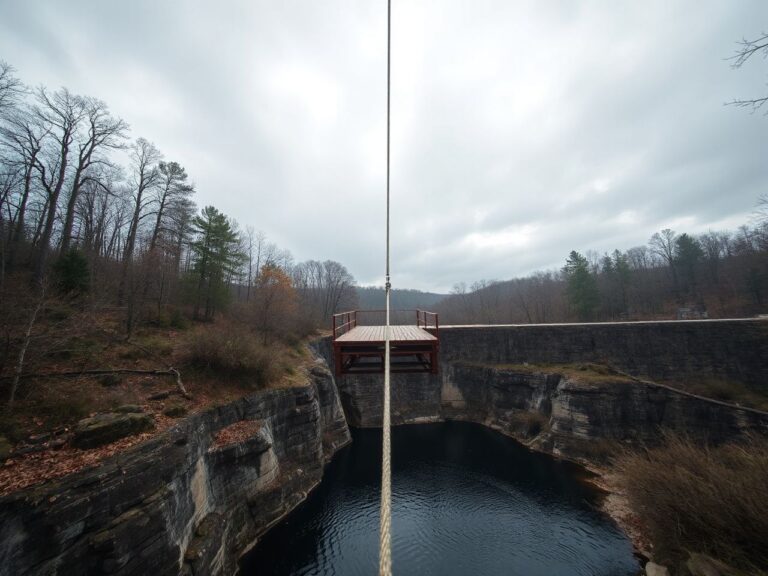
By mid-course, you’ll be on a low exit — often a bridge or a training span 100 to 200 feet (30 to 60 meters) above water. The water softens the landing but doesn’t forgive a bad exit. You’ll practice the exact body position: chest forward, arms relaxed, eyes on the horizon. On the count, you push off steadily, not jumping, not hesitating. The canopy opens within 2–3 seconds. Your training kicks in, and you fly a short pattern to splash-down. It’s the instructor’s job to radio you feedback and decide whether you’re ready for progressively higher exits. Each jump is logged with wind speed, direction, exit time, and landing accuracy.
Emergency Procedure Drills
In a class worth paying for, the words “emergency procedure” are not whispered once and forgotten. You’ll simulate a line twist, an off-heading opening into an object, and a total malfunction at low altitude. For a total low-altitude mal, your only option is to cut away and hope, or ride it into the most forgiving surface you can steer toward. A good instructor forces you to make that call in a simulated drill, standing on the platform with your heart pounding, so you’re not meeting that decision for the first time in freefall. Some instructors put students through 10–15 such simulations before the first real cliff exit.
Students in the Midwest who have progressed through a bungee jumping program, like those at Indiana’s best bungee jumping sites, already understand how different exit heights change the mental game. That familiarity helps, but the gear load and independence of BASE are a completely different animal.
Phase 4: The Progression to Solo Jumps
Finishing a class doesn’t make you a BASE jumper. It gives you a license to practice under strict supervision. The first solo jump after a course — often from an object you’ve already jumped with an instructor — will feel like starting over. You’ll do the pack job alone, walk to the edge alone, and the internal monologue gets very loud. This is where the quality of your training becomes the difference between a smooth descent and a Helicopter to the nearest trauma center.
Mentorship and the Post-Course Follow-Up
The best students stick with their instructor for at least 10–15 supervised jumps after the course. That allows you to dial in your body position on slightly different exits, learn to judge wind a bit more intuitively, and get real-time feedback after each landing. Many injuries happen on jumps 5 through 20, when confidence outpaces skill. A good mentor doesn’t just critique your technique — he checks your mental state before each jump and has the guts to call it off if something seems off.
Building Your Own Risk Checklist
By now you’ve internalized the truth that a BASE canopy doesn’t have an automatic activation device or a reserve. You’re the redundancy. Before any solo jump, run a personal checklist: gear inspected and packed with zero distractions; exit area clear and the landing zone reconnoitered; wind steady and within your personal minimums; body rested; mind focused. Write it down. The act of physically checking boxes has prevented more accidents than any piece of tech ever could.
The day you stop learning is the day you should walk away from the exit point. People at the top of their game in off-road riding often make exactly that mistake — they forget that the terrain always has a vote. The same holds true in BASE. Every jump you walk away from safely is a successful negotiation with gravity, not a victory over it.
Final Thoughts on Choosing a Path That Keeps You Alive
Evaluate base jumping classes the same way you would assess a new off-road route through Baja: find the guide who respects the danger, knows the escape roads, and doesn’t pretend the risks are lower than they are. The sport demands an honesty that social media rarely shows. For every spectacular canyon exit video, there’s a jumper who limped away from a cliff strike with a broken pelvis because they skipped a critical step in training. Don’t be that statistic.
Start with skydiving. Log the jumps. Downsize carefully. Find a mentor who talks about close calls. Then — and only then — search for a course that treats every packing cycle, every ground launch, and every emergency drill as a life-or-death exercise. Because in BASE, it is.
Frequently Asked Questions
How many skydives do I really need before taking a BASE jumping course?
The widely accepted minimum is 200 jumps, though a small number of schools accept 150 for experienced canopy pilots. Shortcuts are not worth it. Those jumps need to be concentrated within the last 12 to 18 months so your canopy control instincts are still razor-sharp. The number isn’t about looking good on paper — it’s about giving your nervous system the chance to react correctly when things go wrong at 300 feet.
Can I learn BASE jumping without a formal course?
Technically, no one stops you from buying a rig and jumping off your local cliff, but self-teaching is the fastest route to a permanent injury. A proper class instills gear packing, emergency response, and site evaluation habits that you simply can’t absorb from YouTube. Line-overs on a jumper’s first packed canopy are a known result of skipping hands-on mentorship. A formal base jumping course is non-negotiable if you want a career measured in decades, not days.
What does a typical entry-level BASE class cost?
In 2026, a thorough 4-to-5-day course usually runs between $1,500 and $2,500. That includes gear rental, multiple supervised jumps, and extensive ground training. You’ll often need to supply your own transport, food, and lodging near the training site. A price that seems too low almost always means fewer practice jumps and less instructor time — and in this sport, both of those are worth more than any savings.