Cloudland Canyon Mistakes to Avoid: A Practical Guide
Contents
Rushing ruins Cloudland Canyon. The steep trail descents, the quiet yurt village, the sprawling dark sky overhead—none of it rewards speed. This Georgia state park, spread across 3,485 acres on Lookout Mountain, is a place that asks you to slow down. If you show up with a checklist mindset, you will miss the point. The proper way to camp here is to pick one experience, settle in, and let the landscape set the pace.
For anyone who has only camped at bigger, busier national parks, camping at the Grand Canyon involves shuttle buses and crowded overlooks. Cloudland Canyon offers a smaller, quieter alternative, but it still demands planning. The four distinct camping options—yurts, RV sites, walk-in tent sites, and backcountry campsites—each require a different level of preparation. A comprehensive guide must separate them clearly, because showing up with the wrong gear or the wrong reservation turns a peaceful stay into a stressful scramble.
Key Takeaways
- Four camping styles, four preparation levels: yurts need only bedding and food; backcountry campsites require a 2-mile hike with all water carried in.
- The waterfall trail is not a stroll: the out-and-back to Cherokee Falls and Hemlock Falls covers 5 miles and drops 1,000 feet in elevation.
- Cloudland Canyon is an International Dark Sky Park: stargazing is a core activity, and white-light headlamps are actively discouraged.
- Reservations are mandatory for yurts and RV sites on summer weekends: walk-up availability is rare, especially between May and September.
Four Ways to Sleep at Cloudland Canyon (And How to Choose)
Most campgrounds offer one style of camping. Cloudland Canyon offers four, and each one changes the trip entirely. Your choice determines how much you carry, how far you walk, and how dark your nights get.
Yurts at Yurt Village: Comfort Without the Canvas
The yurts at Cloudland Canyon’s Yurt Village are the easiest way to camp without owning a tent. Each yurt is a round, wood-framed structure with a solid door and a skylight, but they are not empty shells. The yurts come furnished with beds and basic furniture, and they sit on platforms with a porch. You still need to bring your own bedding, cooking gear, and food, but you will not be sleeping on the ground.
The listing for the park’s yurts does not include a kitchen, so plan on a camp stove or the fire ring outside. Electricity is available in the yurts, which means you can charge devices and run a small fan in warmer months. This is the right choice for slow-travel campers who want a soft bed and a solid roof without hauling a tent.
A self-contained fact: The yurts at Yurt Village are the only lodging option inside the park that includes beds, but they do not include linens, so you must bring sheets or sleeping bags.
RV and Tent Sites on the Rim: The Classic Loop
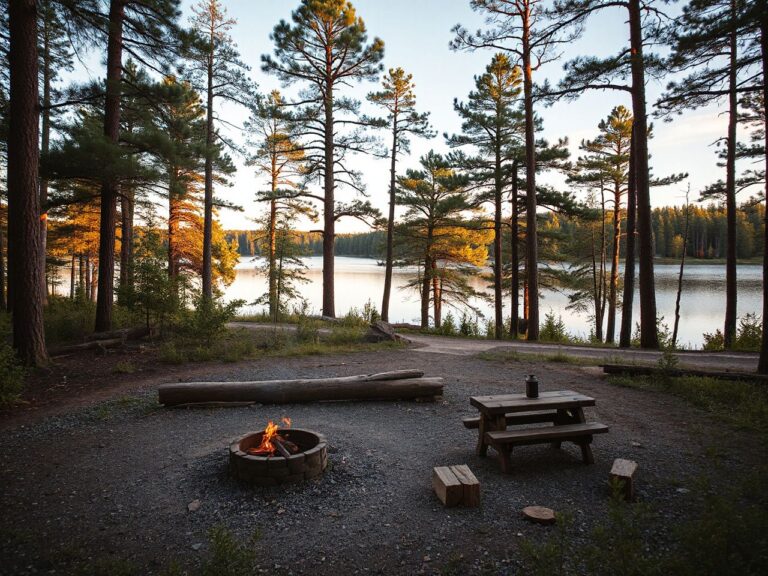
The main campground is split between the East Rim and West Rim, with roughly 48 sites on the West Rim and 24 on the East Rim. These sites accommodate RVs, trailers, and tents, and they are arranged along loop roads with gravel pads and picnic tables. Each site has a fire ring and access to nearby water spigots.
The East Rim loop sits closer to the canyon overlook and the trailhead for the West Rim Loop, so tent campers who want early morning views often prefer it. The West Rim loop is larger and tends to feel a bit quieter, though both loops fill up fast on weekends. If you are pulling a trailer or driving a larger RV, check the site length before booking, because some pads are better suited to smaller rigs.
Walk-In Tent Sites: A Short Hike for Quiet
For tent campers who want less generator noise and more tree cover, Cloudland Canyon has 28 walk-in sites. These sites are located a short walk from a parking area, typically between 50 and 150 yards, so you carry your gear in a few trips. The sites are more private than the RV loop, tucked into the woods with natural barriers between neighbors.
Walk-in sites still have a tent pad, a fire ring, and a picnic table, but you will not have a car right next to you. That small change shifts the whole rhythm of the stay. You pack differently—wagon or large backpack—and you tend to stay put once camp is set. For slow travel, that is a feature, not a bug.
Backcountry Campsites: Two Miles In, Fully Self-Sufficient
The park’s 10 backcountry campsites require a 2-mile hike from the Rim Trail parking lot, and there is no vehicle access. There is also no water source at the sites, which means every liter of water you drink, cook with, or wash with must be carried in. Georgia State Parks rules require you to pack out all trash and follow Leave No Trace principles, and the park explicitly states that water from streams must be filtered or treated before drinking.
This is the most demanding camping option at Cloudland Canyon, and it is not a beginner hike. The elevation change is significant, and the trail can be muddy and slick after rain because the underlying rock is sandstone and shale from the Cumberland Plateau. If you choose backcountry camping, a water filter is non-negotiable. A gravity filter or pump filter that meets NSF International standards for pathogen removal is the minimum, not a luxury.
A self-contained fact: The 10 backcountry campsites at Cloudland Canyon are a 2-mile hike from the nearest parking, and none of them have potable water, so you must carry or filter every drop.
The Waterfall Trails Demand Respect, Not Just Stamina
The waterfalls at Cloudland Canyon are the park’s headline feature, but they are also the most common source of exhausted, underprepared hikers. The trail to Cherokee Falls and Hemlock Falls is not a casual walk to a viewpoint. It is a 5-mile out-and-back route with a 1,000-foot elevation drop from the rim to the canyon floor, and the climb back up is brutal if you are carrying too much or pacing wrong.
Cherokee Falls and Hemlock Falls: The 5-Mile Reality
The main waterfall trail starts near the main overlook and descends steeply via switchbacks and staircases. Cherokee Falls is the first major waterfall, a wide cascade that you can stand close to. Hemlock Falls sits further down the canyon and requires more descending, but the payoff is a taller, more dramatic drop. The round trip covers 5 miles total, and every foot of elevation you lose on the way down must be regained on the way up.
The trail surface is a mix of packed dirt, rock steps, and wooden stairs, but after rain it turns slick quickly. The sandstone and shale geology of the Cumberland Plateau means water seeps across the trail in places, and muddy patches linger for days after a storm. Sturdy hiking footwear with good tread is not a suggestion; it is the difference between a pleasant hike and a slip.
Packing for a 1,000-Foot Descent (and the Climb Back)
The gear list for the waterfall trail is short but specific. You need water, snacks, a basic first aid kit, and a rain shell. Trekking poles help on the descent and the climb, especially on wet stairs. A headlamp is useful if you start late, because the canyon floor gets dark earlier than the rim. Do not carry a heavy camp chair or a full picnic setup down to the waterfalls—you will regret it on the way up.
The park’s trail map marks the difficulty as moderate to strenuous, but the 1,000-foot elevation change is the real metric. For comparison, that is roughly the height of a 90-story building, climbed twice if you hike the full out-and-back. People who normally hike 5 miles on flat ground often underestimate this trail by half. The solution is not more fitness training; it is slower pacing and lighter gear.
A self-contained fact: The waterfall trail to Cherokee Falls and Hemlock Falls at Cloudland Canyon covers 5 miles round trip and drops 1,000 feet in elevation, which makes it a strenuous hike regardless of your fitness level.
Stargazing Under an Official Dark Sky
Cloudland Canyon holds an International Dark Sky Park designation from the International Dark-Sky Association, which means the park has committed to reducing artificial light and protecting the night sky. For campers, that designation changes everything. The Milky Way is visible to the naked eye on clear nights, and the park actively encourages visitors to use red-light headlamps and flashlights instead of white light.
Red Light Etiquette and Why It Matters
White light destroys your night vision and disrupts the experience for everyone else. A red filter or a dedicated red-light headlamp preserves your ability to see in the dark while keeping the sky dark for stargazing. The park suggests red lights for walking around the campground after sunset, and many regular visitors carry a small red flashlight just for this purpose.
If you arrive with only a white headlamp, you can buy a red filter at the park’s visitor center, but better to plan ahead. A cheap red lens over a regular flashlight works, or you can use the red LED mode on many modern headlamps. The key is to avoid shining white light toward the sky or into other campsites. Everyone is there for the same reason: to see the stars without light pollution.
What to Bring for a Night Under the Milky Way
A basic stargazing kit for Cloudland Canyon includes a camp chair, a warm layer, and a red-light headlamp. A star chart or a phone app in night mode helps identify constellations, but do not let the app’s screen light up the camp. Binoculars are more useful than a cheap telescope for most people, because they are easier to aim and show more of the sky at once.
The park’s dark sky status also means you should avoid using your vehicle’s headlights more than necessary. Park, set up camp, and then leave the car alone until morning. If you need to move the car, drive slowly with parking lights only where safe. The best nights at Cloudland Canyon are the ones where you can see the band of the Milky Way stretching from the canyon rim to the far side of Lookout Mountain.
Practical Logistics for a Slow-Travel Stay
Camping at Cloudland Canyon is not a spontaneous endeavor, especially during peak season. The park operates on a reservation system through Georgia State Parks, and the popular accommodation types sell out weeks in advance. Understanding the logistics before you arrive saves you from sleeping in the car or driving home disappointed.
Reservations Are Not Optional on Summer Weekends
Yurts and RV sites at Cloudland Canyon require reservations through the Georgia State Parks system. Walk-up availability is rare, particularly from May through September. The same applies to walk-in tent sites and backcountry campsites, though those have smaller demand. If you want a specific site or a yurt on a summer weekend, book at least a month ahead. For holiday weekends, three months is safer.
Backcountry campsites have a separate permitting process, and you must register at the park office before hiking in. The park limits the number of campers per backcountry site, and you cannot just show up and claim one. The reservation system is straightforward, but it requires planning. A slow-travel approach actually helps here: pick your dates, book early, and then build the rest of the trip around the reservation, not the other way around.
Showers, Toilets, and the Surprising Comforts
The main campground at Cloudland Canyon has flush toilets and hot showers, which separates it from more primitive backcountry experiences. The shower houses are centrally located in the RV and walk-in camping areas, and they are included in the camping fee. This is a significant comfort for anyone coming off the waterfall trail or a long day of hiking.
The yurts do not have private bathrooms, so yurt guests use the same shower houses as the rest of the campground. Backcountry campsites have no facilities at all—no toilets, no water, no trash cans. You must pack out everything, including human waste according to Leave No Trace guidelines from the Leave No Trace Center for Outdoor Ethics, which means a trowel and a plan for waste disposal are essential for backcountry campers.
Wildlife, Weather, and Trail Conditions
Black bears are present in the region around Cloudland Canyon, though sightings inside the campground are uncommon. The park instructs campers to store food in vehicles or bear-proof containers, never in tents. Raccoons are far more likely to raid an unattended cooler, so secure all food and scented items overnight. Snakes and spiders are part of the ecosystem, but staying on trails and checking shoes before putting them on reduces risk.
The weather at 1,800 feet of elevation is cooler than the surrounding valleys, but summer still brings heat and humidity. Thunderstorms roll through quickly in the afternoons, and the sandstone and shale trails become slick within minutes of a downpour. Check the forecast before heading out, and always carry a rain shell. The trail conditions after rain are not a minor inconvenience; they are a genuine safety concern, especially on the steep switchbacks.
When to Go for Fewer Crowds and Cooler Air
The best time to camp at Cloudland Canyon for avoiding crowds and extreme heat is October through April. Fall brings crisp nights and changing leaves on Lookout Mountain, while spring offers wildflowers and waterfalls at full flow after winter rain. Winter camping is possible and often quiet, but nights drop below freezing, so a four-season tent or yurt with a heater is necessary.
Summer is the busiest and hottest season, and the waterfalls are at their lowest flow by late July. If you must camp in summer, arrive midweek and start the waterfall hike before 8 a.m. to beat the heat and the crowds. The dark sky is beautiful year-round, but the Milky Way core is most visible from spring through early fall.
Frequently Asked Questions
How do I choose between a yurt and a traditional campsite at Cloudland Canyon?
Choose a yurt if you want a bed, electricity, and a solid roof without owning a tent. Yurts are ideal for slow-travel campers who want comfort and minimal setup. Choose a traditional tent or RV site if you prefer a campfire, more space, and the classic camping experience. Walk-in tent sites add privacy but require carrying gear a short distance.
How hard is the hike to the backcountry campsites, and what do I need to pack?
The hike to backcountry campsites is 2 miles one way from the Rim Trail parking lot with significant elevation change. Pack a water filter, a minimum of 2 liters of water per person, a trowel for waste, a bear-resistant food container, and all cooking gear. The trail is rocky and muddy after rain, so sturdy hiking boots are non-negotiable. There is no water source at the sites.
Are there showers and flush toilets at the campground?
Yes, the main campground at Cloudland Canyon—including the RV, walk-in tent, and yurt areas—has flush toilets and hot showers at no extra cost. Backcountry campsites have no facilities of any kind. Yurt guests use the central shower houses, which are cleaned daily during peak season.
Do I need a reservation for a campsite at Cloudland Canyon?
Yes, reservations are required for yurts, RV sites, walk-in tent sites, and backcountry campsites through the Georgia State Parks system. Walk-up availability is extremely rare, especially on summer weekends. For backcountry sites, you must also register at the park office before hiking in. Book early—at least a month ahead for peak season.
Is Cloudland Canyon safe for kids, and what age is appropriate for the backcountry hike?
The main campground and yurts are safe for kids of all ages, with level sites and nearby facilities. The waterfall trail is strenuous and not recommended for young children or anyone unaccustomed to steep climbs. The backcountry hike is best suited for kids 10 and older who have prior hiking experience and can carry a small pack. Always supervise children near overlooks and on steep stairs.