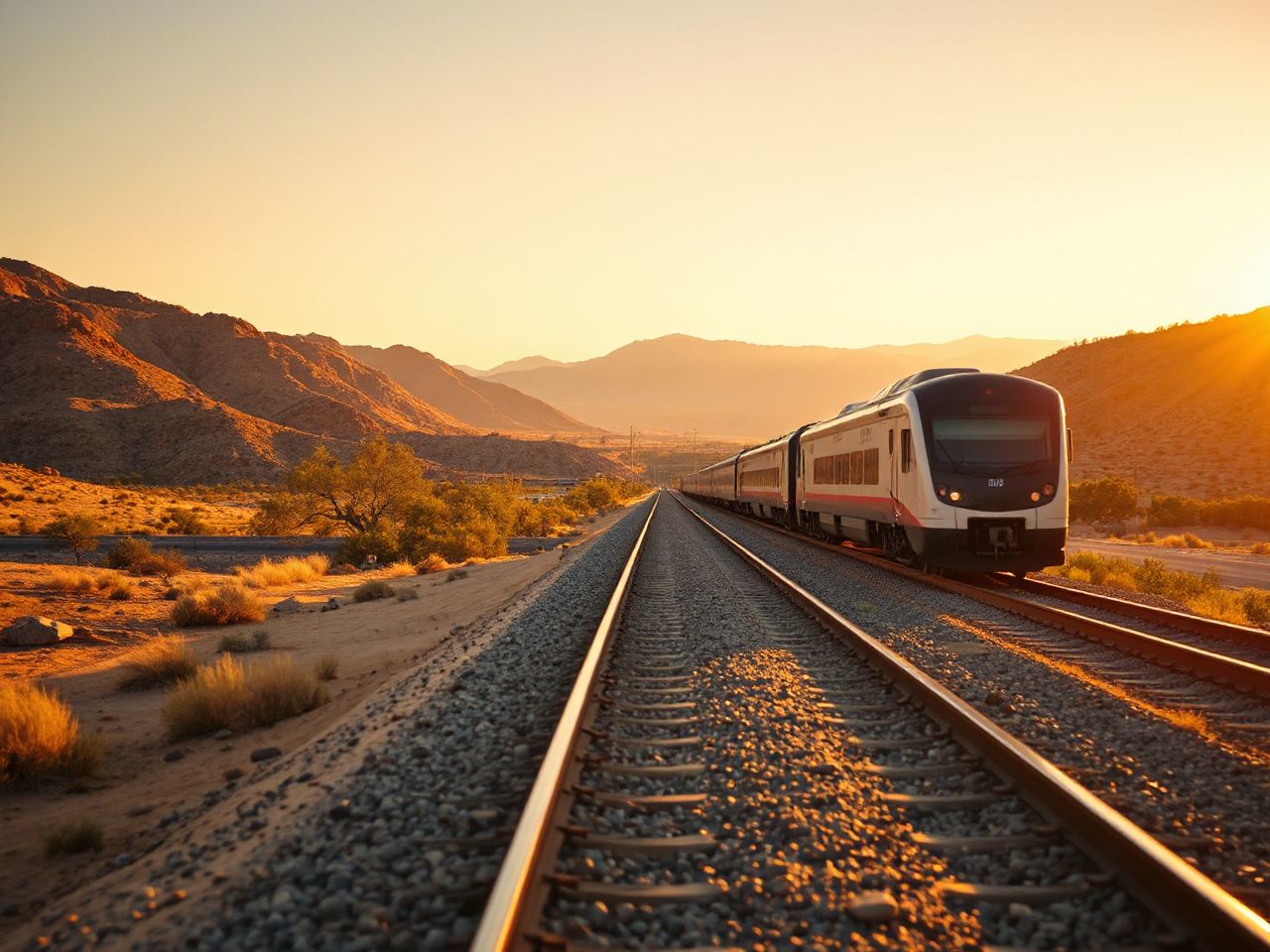
How Long Does It Take to Get to California: Straight Answers
Contents
Why do two people asking how long does it take to get to California get answers that differ by three days? Because California has three separate rail gateways — San Diego, Los Angeles, and the Emeryville/Oakland complex serving San Francisco — and a train from Portland is not the same trip as a train from New York. The realistic range for reaching California by rail spans roughly 2 hours on the Pacific Surfliner from San Diego to Los Angeles, up to 50 hours or more on the California Zephyr from Chicago to Emeryville.
Key Takeaways
- No single answer: San Diego to Los Angeles takes about 2 hours 45 minutes, while New York to Emeryville requires a transfer in Chicago and takes over 3 days total.
- The biggest time factor is your origin: short-haul corridors within California and from nearby states run in hours, while long-distance Amtrak routes from the East Coast and Midwest run one to two nights.
- Always add a delay buffer of at least 2-4 hours for long-distance trains, because freight traffic and weather regularly push Amtrak schedules late.
What “Getting to California by Rail” Actually Means
The first split is between trains that operate entirely within or very near California and those crossing the country. Short-haul corridors like the Pacific Surfliner, Capitol Corridor, and San Joaquin run multiple daily departures and are measured in hours. Long-distance trains like the California Zephyr, Southwest Chief, Sunset Limited, and Coast Starlight run once daily and are measured in days. Also note the destination city matters: Los Angeles Union Station is the terminal for most long-distance western routes, while San Francisco’s rail stop is actually Emeryville, with a connecting bus across the Bay Bridge.
This is why the question cannot be answered with one number. Los Angeles Union Station is the primary rail gateway for three of Amtrak’s long-distance western routes, while Emeryville serves as the Bay Area’s rail terminal across the bay from San Francisco.
Three Rail Gateways, Not One
- San Diego: Served by the Pacific Surfliner direct from Los Angeles, about 2 hours 45 minutes.
- Los Angeles: Union Station hub for the Southwest Chief, Sunset Limited, Coast Starlight, and many Surfliner trains.
- San Francisco Bay Area: Emeryville Station is the Amtrak stop; from there a 20-minute bus or bridge crossing to San Francisco.

Short-Haul Corridors: Hours, Not Days
If you are already in California or a neighboring state, rail travel can be surprisingly fast. The Pacific Surfliner between San Diego and Los Angeles runs up to 10 times per day in each direction, and the trip is comparable to driving without traffic.
San Diego to Los Angeles (Pacific Surfliner)
The Pacific Surfliner covers the 128-mile San Diego to Los Angeles segment in about 2 hours and 45 minutes, making it the fastest rail option for that corridor. Trains run frequently, and no reservation is required for coach seating on this route.
San Francisco Bay Area to Los Angeles
There is no direct train from downtown San Francisco. You must first get to Emeryville, then take either the Coast Starlight southbound, which takes about 12 hours 20 minutes, or the San Joaquin train to Bakersfield plus a connecting Thruway bus to Los Angeles, which totals 8 hours 30 minutes to 9 hours 30 minutes. The San Joaquin plus bus option is usually faster but involves a bus transfer in Bakersfield.
Fastest Routes from Neighboring States
From Nevada, the fastest rail entry into California is the California Zephyr from Reno to Emeryville, scheduled at roughly 6 hours 45 minutes. From Oregon, the Coast Starlight from Portland to Sacramento takes about 16 hours, and Klamath Falls to Sacramento takes about 8 hours. There is no direct Amtrak service to Las Vegas; the closest stations are Kingman, Arizona on the Southwest Chief or Needles, California, both of which require a car or bus transfer from Vegas that adds 2-4 hours.
Long-Distance Trains from the East Coast and Midwest
The biggest single fact about cross-country rail: there is no direct train from New York City to any California station; you must change trains in Chicago or New Orleans, which adds at least six hours of layover time to a trip that already runs more than 50 hours on the rails. This transfer requirement is the hidden time cost most people do not account for.
New York to San Francisco Bay Area (via Chicago, then California Zephyr)
The classic two-train routing works like this:
- Step 1: Lake Shore Limited from New York Penn Station to Chicago Union Station, departing 3:40 p.m. and arriving 9:50 a.m. the next day, about 19 hours.
- Step 2: A long layover in Chicago from morning until the 2:00 p.m. departure of the California Zephyr.
- Step 3: California Zephyr from Chicago to Emeryville, departing 2:00 p.m. and arriving 4:10 p.m. two days later, about 50 hours 10 minutes.
Total from New York to Emeryville is approximately 2 days 20 hours, not counting delays. If you connect from the Crescent via New Orleans, the trip is even longer and the Sunset Limited runs only three times per week.
Chicago to Los Angeles (Southwest Chief)
From Chicago Union Station you can board the Southwest Chief for a direct ride to Los Angeles Union Station. The Southwest Chief’s westbound schedule from Chicago Union Station to Los Angeles Union Station is roughly 43 hours, with the train arriving in Los Angeles in the morning two days after departure. This route also serves Kansas City, Albuquerque, and Flagstaff.
New Orleans to Los Angeles (Sunset Limited)
The Sunset Limited links New Orleans to Los Angeles in about 46 hours, but it runs only three days per week in each direction. Missing this train can mean waiting two days for the next departure, which is a critical scheduling factor for anyone coming from the Southeast.
The West Coast Route: Coast Starlight and Neighboring States
The Coast Starlight runs the length of the West Coast, and it is the only direct train from the Pacific Northwest into California. Amtrak’s Coast Starlight covers the roughly 1,377-mile route from Seattle to Los Angeles in approximately 35 hours, and the train runs once daily in each direction.
Seattle to Los Angeles (Coast Starlight)
The southbound Coast Starlight departs Seattle at 9:45 a.m. and arrives in Los Angeles at 9:00 p.m. the next day, about 35 hours 15 minutes. That makes it longer than driving but far more scenic, and it avoids the need to stop overnight on the road.
Portland to Los Angeles and Sacramento
From Portland, the Coast Starlight takes about 30 hours to Los Angeles and about 16 hours to Sacramento. If your destination is Northern California, you can get off in Sacramento or Emeryville and skip the long coastal stretch south of the Bay Area.
Time Zones and Perceived Duration
When crossing from Mountain or Central Time into Pacific Time, you gain hours on the clock. A train that leaves Chicago at 2:00 p.m. Central and arrives Emeryville at 4:10 p.m. Pacific has an actual elapsed time of about 50 hours, but a traveler subtracting departure and arrival clock times without adjusting for the time zone change may miscalculate by three hours. Always use the actual duration printed on the ticket, not the clock difference.
For another kind of seasonal rail planning, knowing when it starts to snow in Switzerland shapes how travelers time Alpine rail trips, just as California’s summer tourist season fills the Coast Starlight weeks in advance.
Booking Strategy, Delay Buffers, and How It Compares to Driving or Flying
How far ahead you book depends on the route and the season. For short corridors like the Pacific Surfliner, tickets are typically available up to 11 months out, and coach seats rarely sell out more than a day ahead except during major events. For long-distance sleepers on the California Zephyr or Coast Starlight, book 3-6 months ahead for summer, major holidays, or spring break. Roomettes and bedrooms are the first to go, and coach seats on the Zephyr can also sell out on peak dates.
Train vs. Driving vs. Flying
Train is almost always slower than flying for cross-country trips. A flight from New York to San Francisco takes about 6 hours, while the same trip by rail takes 50+ hours plus a multi-hour transfer in Chicago. Driving from New York to San Francisco takes about 42-45 hours of actual driving, spread over four or five days. For within California, rail can be competitive: San Diego to Los Angeles driving takes about 2 hours 15 minutes without traffic, and the Pacific Surfliner takes 2 hours 45 minutes, which is often faster during rush hour.
Long-distance buses like Greyhound and FlixBus operate similar coast-to-coast routes, often taking 5-10 hours longer than Amtrak but sometimes at lower fares. The train’s advantage is space, scenery, and a bed option, not speed.
Once you arrive, planning which parks to visit matters; our guide to The Best National Parks in California for 2026 breaks down where to go after the train pulls in.
Amtrak’s USA Rail Pass and Multi-Stop Trips
If you plan to make several stops inside California or across the West, the Amtrak USA Rail Pass allows a set number of travel segments over a period of time. Using it for multi-stop trips can save money, but each segment still takes the same amount of time, and reservations on long-distance trains may require booking each leg separately. This matters when you are counting days, not hours.
For a different logistics challenge, our breakdown of Skydive Dubai costs shows how trip planning changes when the activity, not the transport, is the hard part.
Frequently Asked Questions
How long does it take to get to California by train from the East Coast?
From New York to Los Angeles using the Lake Shore Limited to Chicago and then the Southwest Chief to Los Angeles totals about 65-70 hours including the Chicago layover. From New York to Emeryville via the California Zephyr is roughly 2 days 20 hours. There is no direct East Coast-to-California train, so you must change in Chicago or New Orleans even on the fastest routing.
Do I have to change trains to get to California from the Midwest?
If you board at Chicago Union Station, you can take the California Zephyr or Southwest Chief directly to California with no change. From most other Midwest cities — Milwaukee, Detroit, St. Louis, Minneapolis — you must first take a short corridor train into Chicago, then transfer to a long-distance train. That transfer typically adds 2-4 hours of layover.
Is taking the train to California slower than flying or driving?
For cross-country trips, yes: flying takes 5-6 hours, driving takes 4-5 days, and Amtrak takes 50-70 hours or more. For trips inside California or from nearby states like Nevada, the train can be nearly as fast as driving and far more relaxing. The Pacific Surfliner from San Diego to Los Angeles is only about 30 minutes slower than a car in good traffic.