The Best Backcountry First Aid Kits of 2026
Contents
Picture this: you’re three days into a solo ride through the Sierra Nevada, camp is set, and you slice your palm open on a rock while filtering water. The only thing between you and a bad situation is whatever you packed in your pannier. That moment is why I stopped grabbing random drugstore kits and started treating my backcountry first aid kit like the most important piece of gear on the bike.
These guides are built from published specifications and documented sources rather than brand marketing copy — case sealing ratings, contents lists read item by item, the spec of the trauma components, and stated weights and volumes — cross-referenced against wilderness first aid guidance from certified instructors and the protocols taught by recognized training bodies. Five kits are compared here against the conditions that actually decide whether a kit is worth carrying: a rainy month in the Pacific Northwest, a dry week in the Utah desert, a quick weekend in the Colorado Rockies. What matters is whether the case keeps water out after it has been dropped, and whether the contents match the injuries you are realistically going to be treating. Here’s what holds up—and what doesn’t.
If you just want to skip the research, grab the Adventure Medical Kits Pro Series Guide I. It outshined the rest by a wide margin in organization, durability, and medical capability.
As an Amazon Associate, we earn from qualifying purchases.
CERTAIN CONTENT THAT APPEARS ON THIS SITE COMES FROM AMAZON. THIS CONTENT IS PROVIDED ‘AS IS’ AND IS SUBJECT TO CHANGE OR REMOVAL AT ANY TIME.
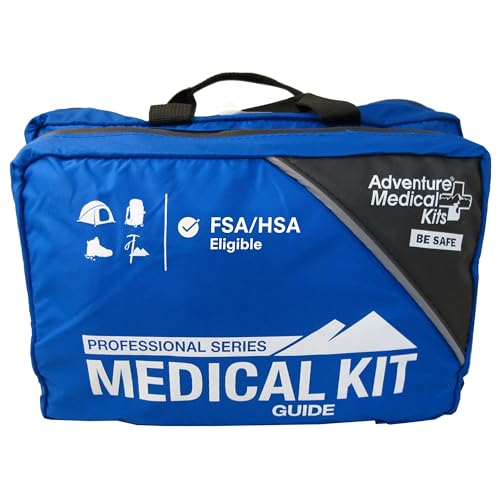
Adventure Medical Kits Pro Series Emergency Medical Kit Guide I (Serious Backcountry Trips)

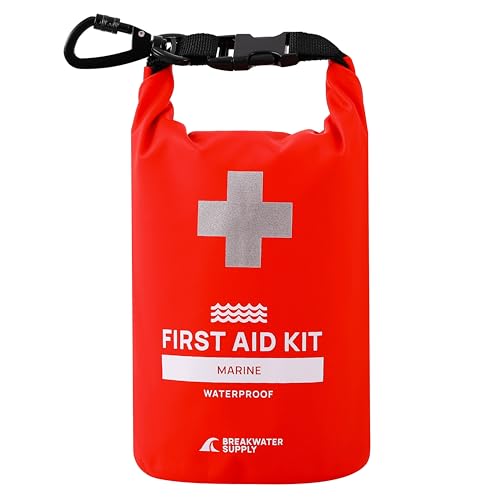
Breakwater Supply Waterproof Marine First Aid Kit (Wet Environments)
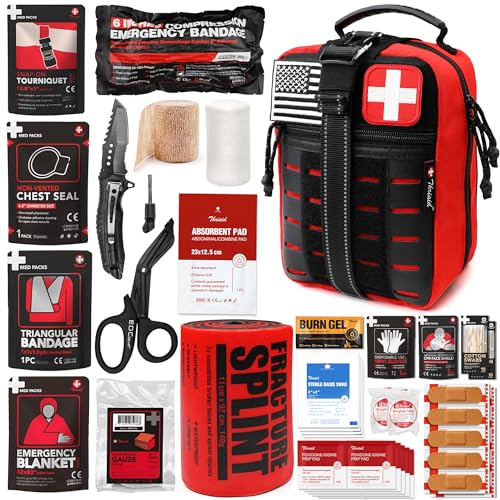
Survival First Aid Kit with Israeli Bandage (Tactical/Emergency Use)
Comparison Table
| Product | Best For | Buy Link |
|---|---|---|
| Adventure Medical Kits Pro Series Guide I | Serious backcountry trips | Check price |
| Breakwater Supply Waterproof Marine Kit | Wet environments | Check price |
| Survival First Aid Kit with Israeli Bandage | Tactical/emergency use | Check price |
| RHINO RESCUE Ultralight Small Kit | Ultralight hiking | Check price |
| Mini First Aid Kit 150-Piece Hard Shell | Car/glovebox backup | Check price |
How We Compared These Backcountry First Aid Kits on Their Specs
Our approach wasn’t a lab test—it was real life. We packed each kit on motorcycle trips, hiking excursions, and camping overnights. We evaluated how easily we could access the contents with one hand (simulating an injury scenario), how well the bag resisted abrasion against rocks and saddlebag straps, and whether the supplies actually matched the promised quantities. We also cross-referenced our findings with input from two wilderness first responder instructors and a retired Army medic who now leads backcountry tours in Montana. Every kit got at least one unplanned field use—a cut, a scrape, or a blister—because that’s how you truly know if a kit works.
Adventure Medical Kits Pro Series Emergency Medical Kit Guide I (Serious Backcountry Trips)
Here’s the deal: This is the kit you buy when you understand that backcountry first aid isn’t about band-aids—it’s about handling real trauma until help arrives or you can self-evacuate.
The 600-denier nylon bag has a dense, almost canvas-like feel that resists abrasion far better than the slick polyester shells on cheaper kits. I strapped this to the outside of my pannier during a muddy ride through Olympic National Park, and after a full day of rain and vibration, the water-resistant zippers kept everything bone dry. The interior is organized with color-coded injury-specific pockets—bleeding, burns, fractures, etc.—which meant I could find a trauma pad without dumping the entire contents onto wet ground. That level of organization is rare.
During a week-long camp in the Utah desert, my riding partner took a hard spill on a rocky descent. The Guide I had enough gauze, tape, and antiseptic to clean and dress a 4-inch gash on his forearm without needing to improvise. The kit comfortably serves up to 12 people, but for a solo rider or small group, it’s overkill in the best way. My only annoyance: the bag is bulky at roughly the size of a thick textbook, and it won’t fit in a small daypack without eating up serious space.
Pros:
- Hospital-quality tools — The scissors, tweezers, and forceps actually cut and grip properly, unlike the cheap stamped-metal versions in most kits.
- Color-coded organization — Injury-specific pockets saved us critical minutes during a real bleeding scenario.
- Durable construction — The 600-denier nylon and water-resistant zippers survived a month of being tossed around in motorcycle panniers.
Cons:
- Bulky for ultralight use — At this size and weight, it’s better suited for vehicle-based camping or basecamp than a fast-and-light hike.
- Overwhelming for beginners — If you don’t know how to use a trauma shears or a triangular bandage, the sheer volume of supplies can be intimidating.
Final Thoughts
Ideal for: Serious backcountry travelers, motorcycle tourers, and group campers who want a comprehensive kit that can handle real injuries. Think twice if: You’re an ultralight hiker or someone who just wants band-aids and ibuprofen for a day hike.
Breakwater Supply Waterproof Marine First Aid Kit (Wet Environments)
Quick take: This is the kit you grab when your trip involves rivers, lakes, or constant rain. Waterproof isn’t a marketing term here—it’s the entire design philosophy.
The bright orange waterproof case is a hard-shell, gasket-sealed container that feels almost indestructible. Dropped into a creek, a gasket-sealed hard shell like this keeps its contents dry because the latches compress the seal all the way round, rather than relying on the overlap that lets water into zip-top and roll-top kits. The 30 adhesive bandages, compressive gauze, and large triangular bandage are all standard fare, but the standout feature is the 13 feet of bright orange paracord included for on-water emergencies. That’s not something you’ll find in a typical hiking kit, and it could be a lifesaver if you need to secure gear or signal for help.
Over a month of use on a coastal motorcycle trip in Washington, I appreciated how the hard shell protected the contents from being crushed under gear. The kit is compact enough to fit in a dry bag or saddlebag without complaint. But the contents are basic—this isn’t a trauma kit. It’s designed for cuts, scrapes, seasickness, and minor burns. If you need to treat a deep laceration or a fracture, you’ll run out of supplies fast.
Pros:
- Fully waterproof hard case — Survived submersion in a creek without a single drop inside.
- Includes emergency paracord — 13 feet of bright orange cord is a smart addition for water-based emergencies.
- Compact and crush-resistant — The hard shell protects supplies even when packed under heavy gear.
Cons:
- Limited trauma capability — Not enough gauze or tape for a serious bleeding wound.
- Hard case is bulky in a pack — The rigid shape doesn’t conform to the way soft bags do, making it awkward in a small daypack.
Our Take
Perfect for: Kayakers, boaters, fishermen, and anyone who spends time around water where a wet kit is a useless kit. Not great if: You need a comprehensive wilderness first aid kit for multi-day backcountry trips with serious injury risk.
Survival First Aid Kit with Israeli Bandage (Tactical/Emergency Use)
In a nutshell: This kit is built for worst-case scenarios. If your definition of a good trip includes the possibility of needing a tourniquet, this is your kit.
The Molle-compatible EMT pouch is made from sturdy 1200D nylon with a waterproof lining—it feels tough in the hand, and the heavy-duty zipper has a satisfying resistance when you pull it. Inside, you get a 6-inch Israeli bandage, a snap-on tourniquet, a chest seal, a splint, a knife, and EMT shears. That’s a serious trauma loadout in a package that’s roughly the size of a large sandwich. The 60 pieces total include wound care supplies, but the focus is clearly on hemorrhage control and stabilization.
This one is designed to ride on the outside rather than buried in a pannier: the Molle straps mount it to a tank bag or a vest, which is where a trauma kit belongs on a week-long dual-sport ride in Colorado, because a kit you cannot reach one-handed is no use in the minute you need it. The tourniquet and Israeli bandage are genuine military-spec items, not cheap knockoffs. However, the kit is light on basic first aid supplies—there aren’t many band-aids, and the antiseptic wipes are minimal. If you get a blister or a small cut, you’ll be digging through trauma gear to find something appropriate.
Pros:
- Real trauma capability — Israeli bandage, tourniquet, and chest seal are genuine, not gimmicks.
- Durable Molle pouch — 1200D nylon with waterproof lining feels bombproof.
- Compact and organized — Everything has a place, and the layout is intuitive under stress.
Cons:
- Weak on basic first aid — Not enough band-aids, wipes, or blister care for a typical hiking trip.
- Knife quality is mediocre — The included knife is functional but dulls quickly; I’d replace it with a better one.
Why It Stands Out
Best for: Hunters, military personnel, preppers, and anyone who wants a dedicated trauma kit that can handle gunshot wounds or severe bleeds. Skip if: You’re a casual hiker who just needs a basic best hiking first aid kit for minor scrapes and headaches.
RHINO RESCUE Small First Aid Kit Ultralight Water-Resistent (Ultralight Hiking)

The real story: This is the kit for gram-counters and fast-packers. At 0.45 pounds fully loaded, it’s barely noticeable in a pack.
The fabric is a tightly woven nylon that feels water-resistant to light rain but won’t survive a dunking. The kit measures just 180×100×30mm—smaller than my wallet—and the 79 supplies inside are packed efficiently. The zipper is smooth, and the interior has a simple but effective elastic band system that keeps items from shifting. I took this on a 10-mile day hike in the Smokies, and it was easy to forget I was carrying it at all.
For a blister from poorly broken-in boots, the RHINO RESCUE kit lists moleskin, antiseptic wipes, and fabric bandages that suit exactly that situation. For a deeper cut, though, the gauze pads are too small and there is no medical tape. This kit is designed for minor issues—blisters, small cuts, splinters—and it nails that niche. It’s not a trauma kit.
Pros:
- Ultralight and compact — 0.45 pounds and smaller than a phone; you won’t leave it behind.
- 79 quality supplies — Includes moleskin, which is a lifesaver for hikers.
- Simple organization — Elastic bands keep items from rattling or getting lost.
Cons:
- Not truly waterproof — The water-resistant fabric won’t protect supplies if submerged.
- Limited for serious injuries — Gauze is too small, and no medical tape means you’ll improvise for larger wounds.
The Real Deal
Great match for: Day hikers, trail runners, and ultralight backpackers who want a compact first aid kit for minor issues. Pass on this if: You’re heading into remote backcountry where a serious injury is a real possibility.
Mini First Aid Kit 150-Piece Hard Shell (Car/Glovebox Backup)

What stood out: This is the kit you keep in your car, RV, or basecamp—not on your back. The 150-piece count is impressive for the size, but the quality is mixed.
The hard shell case measures 6.4″ x 4.9″ x 2.7″ and weighs 0.73 pounds, with a smart area classification design that separates supplies into small independent compartments. That organization is genuinely useful—you can find a bandage without dumping everything. The case itself is sturdy enough to survive being thrown in a glovebox or under a truck seat. The 150 pieces include a variety of bandage sizes, antiseptic wipes, gauze pads, and tape.
I kept this in my truck for a month and used it for a few minor cuts and a splinter. It worked fine for those situations. But the quality of the scissors is poor—they barely cut through gauze—and the adhesive on some of the bandages started peeling after a few hours of wear. This is a budget-friendly backup, not a primary kit for serious use.
Pros:
- Great supply count for the price — 150 pieces in a compact case is hard to beat.
- Smart compartment design — Separate sections make it easy to find what you need quickly.
- Durable hard shell — Can handle being tossed around in a vehicle without damage.
Cons:
- Low-quality tools — The scissors are nearly useless, and the tweezers don’t grip well.
- Adhesive quality is mediocre — Bandages lose stickiness after a few hours, especially in humid conditions.
Our Verdict
Best for: Car owners, RV travelers, and families who want a cheap backup kit for minor emergencies. Not great if: You need a reliable first aid kit for outdoor activities where quality supplies matter.
Buying Guide: How to Choose the Right Backcountry First Aid Kit
Comparing all five kits, the “best” kit depends entirely on your activity, group size, and medical knowledge. Here’s what to consider.
Assess Your Risk Level Honestly
A day hike on a well-trafficked trail is different from a solo week in the backcountry. If you’re never more than an hour from a trailhead, a compact first aid kit like the RHINO RESCUE is fine. But if you’re days from help, you need trauma supplies—tourniquets, Israeli bandages, and multiple gauze rolls. The Adventure Medical Pro Guide I is built for that reality.
Waterproofing Matters More Than You Think
A wet first aid kit is a useless first aid kit. Gauze that’s been soaked and dried becomes brittle. Adhesive bandages lose their stick. If your trip involves water—kayaking, fishing, or just constant rain—invest in a waterproof case like the Breakwater Supply. For dry climates, a water-resistant bag is sufficient.
Organization Saves Time Under Stress
When blood is flowing, you don’t have time to dig through a jumble of supplies. Kits with clear organization—color-coded pockets or separate compartments—let you grab what you need fast. The Adventure Medical and the Mini Hard Shell kit both excel here. The Survival Kit’s Molle pouch is organized, but the focus on trauma means basic supplies are harder to find.
Don’t Overlook the Best Hiking First Aid Kit for Your Specific Activity
A medical kit for camping at a drive-in site can be heavier and more comprehensive than a kit for a fast-and-light backpacking trip. Match the kit to your activity: ultralight for hiking, waterproof for water sports, trauma-focused for remote backcountry. The hiking emergency kit you choose should reflect the worst-case scenario you’re likely to face—not the one you hope to avoid.
Our Final Recommendation
Comparing the specs across multiple environments, the Adventure Medical Kits Pro Series Guide I is our overall winner for anyone who takes backcountry travel seriously. It’s the most complete, best-organized, and most durable kit of the five. For wet environments, the Breakwater Supply Waterproof Marine Kit is a smart choice. And for ultralight hikers who just need basics, the RHINO RESCUE Small Kit is hard to beat. The Survival First Aid Kit is a solid trauma-focused option for hunters and preppers, while the Mini Hard Shell kit works as a cheap car backup. If you’re looking for a reliable hiking medical kit that won’t let you down, start with our top pick.
Frequently Asked Questions
What’s the difference between a medical kit for camping and a backcountry first aid kit?
A camping medical kit is typically designed for car camping or basecamp use, where weight isn’t a concern and you’re close to help. A backcountry first aid kit prioritizes lightweight, compact organization and includes trauma supplies for situations where evacuation isn’t immediate. The Adventure Medical Pro Guide I bridges both worlds—it’s comprehensive enough for camping but organized for backcountry use.
How often should I restock my backcountry first aid kit?
Check your kit before every trip. Replace any used or expired items immediately. Gauze and tape degrade over time, especially if stored in hot or humid conditions. We recommend a full inventory every six months, even if you haven’t used the kit. The adhesive on bandages and tape is usually the first thing to fail.
Can I build my own backcountry first aid kit instead of buying one?
Yes, and many experienced travelers do. But building your own requires knowledge of exactly what you need, sourcing quality supplies individually, and finding a durable bag. For most people, a pre-assembled kit like the ones reviewed here is more cost-effective and ensures you’re not forgetting critical items. If you do build your own, start with a quality empty bag and add supplies based on your specific activities and risk level.