0 Degree Backpacking Sleeping Bag: What the Specs Say
Contents
A good night outdoors should leave you ready for coffee, not bargaining with the sunrise for ten more minutes. The right 0 degree backpacking sleeping bag can make a cold stop feel calm and restorative, but the number on the label is only the beginning.
RedSky Adventures is funded by affiliate commission. Our picks come from comparing published specifications and documented features against what matters in the category — no brand pays for a place on this page. If you buy through a link here we may earn a commission at no extra cost to you, and it pays for the research behind the next guide. Full disclosure.
As an Amazon Associate we earn from qualifying purchases. This does not affect the price you pay.
CERTAIN CONTENT THAT APPEARS ON THIS SITE COMES FROM AMAZON. THIS CONTENT IS PROVIDED ‘AS IS’ AND IS SUBJECT TO CHANGE OR REMOVAL AT ANY TIME.
Kelty Cosmic Synthetic 0F Degree Mummy Sleeping Bag (Cirroloft insulation)

The short answer: 0 degree backpacking sleeping bag picks
- Best overall: Kelty Cosmic Synthetic 0F Degree Mummy — a stated 0°F rating and synthetic insulation that keeps its warmth in damp conditions
- Best value: Teton Altos-S 0 Degree Sleeping Bag — roomy mummy shape and limited lifetime warranty
- Most versatile: BISINNA 0 Degree Winter Sleeping Bag — converts to a blanket or wider double bag
- Best for tall sleepers: RIOYALO 0 Degree Winter Sleeping Bag — large 86.6-inch listed length
How We Chose These 0 Degree Backpacking Sleeping Bags
These picks come from comparing published specifications, materials, and documented features against what matters in a cold-weather backpacking sleep system. The ranking weighted the credibility of each temperature statement first, then insulation type and amount, listed weight, packed dimensions, fit, and draft-control features. Down fill power matters because loft is central to warmth, but the amount of down and the way the bag retains that loft matter just as much. Synthetic insulation earns attention because damp conditions can undermine down loft, even though synthetic bags often carry more bulk. Check the exact size, shoulder room, pad compatibility, storage instructions, and whether a separate storage sack is included before ordering. Our shortlist is specification-led, not a claim of physical testing.
Teton Altos-S 0 Degree Sleeping Bag (roomy mummy fit)
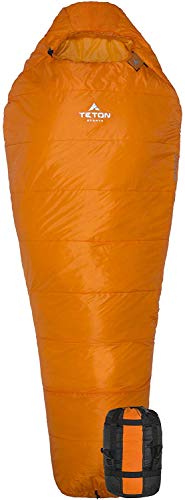
- BrandTETON Sports
- Model1169
- Dimensions84.0 inches x 32.0 inches x 3.0 inches
- Weight3.5 pounds
- Size / capacity84 x 32 x 17
- ColourOrange
- WarrantyLimited Lifetime Warranty
In a nutshell: The Altos-S is the practical value pick for campers who care more about room and warranty support than shaving every ounce.
The Teton measures 84 by 32 by 3 inches and weighs 3.5 pounds. Its listed 84-by-32-by-17 capacity, built-out footbox, and extra shoulder and leg room point toward a less restrictive mummy shape than a close-fitting alpine bag. A compression sack with heavy-duty straps is documented, which is important for anyone packing a motorcycle or backpack where loose bulk steals space.
The listing calls the insulation lightweight, lofty, water-resistant, and highly compressible, but it does not identify the insulation material, fill weight, or an ISO-tested comfort rating. Still, its limited lifetime warranty and roomier proportions make it a credible value choice for riders who spend some nights at established campsites and want easier movement inside the bag.
Pros:
- 3.5-pound listed weight — a reasonable middle ground between down-focused and heavier synthetic options.
- 84-by-32-inch dimensions — more generous shoulder and leg room than a tight mummy design.
Cons:
- Unidentified insulation — the listing does not tell buyers the fill type or amount.
- Unclear temperature basis — “0 degree” is not supported by a stated ISO comfort or limit rating.
Our Take
Great match for: Budget-conscious campers wanting a roomier mummy bag, a footbox, and a compression sack. Think twice if: You need verified fill power, exact insulation weight, or the lowest possible pack weight.
Kelty Cosmic Synthetic 0F Degree Mummy Sleeping Bag (Cirroloft insulation)
- BrandKelty
- Model35428525LR
- Dimensions74.0 inches x 30.0 Inches x 3.0 inches
- Size / capacityLong (2026)
- ColourFired Brick Red
- WarrantyKelty Limited Lifetime Warranty
What sets it apart: Kelty’s Cosmic is the recommendation for buyers who prefer synthetic insulation and a design intended to retain coverage in cold, damp conditions.
The long model measures 74 by 30 by 3 inches, fits sleepers up to 6 feet 6 inches according to the listing, and has a manufacturer-stated total weight of 4 pounds 11 ounces. Its Cirroloft synthetic insulation is described as maintaining loft for even coverage, while the integrated compression stuff sack and exterior stash pocket add useful trail details. Synthetic construction usually trades weight and compressibility for more forgiving moisture management, and this bag clearly makes that trade.
The 60-ounce fill weight is useful context, yet it is not the same thing as a published comfort rating. A 30-inch listed width may suit sleepers who prefer a more contained mummy shape, while the long length is wasted bulk for anyone shorter than the stated fit range.
Pros:
- Cirroloft synthetic insulation — a sensible choice for trips where damp conditions are a concern.
- 60-ounce fill weight — gives a clearer picture of insulation quantity than several competing listings.
- Integrated compression stuff sack — avoids treating a separate compression accessory as an afterthought.
Cons:
- No stated comfort rating — the 0°F title alone cannot tell you how warm the bag will feel.
Who Should Buy This
Perfect for: Backpackers who accept extra weight for synthetic insulation and a long fit up to 6 feet 6 inches. Not great if: You are counting grams, need a smaller packed load, or want a published comfort rating rather than a title temperature.
BISINNA 0 Degree Winter Sleeping Bag (convertible design)
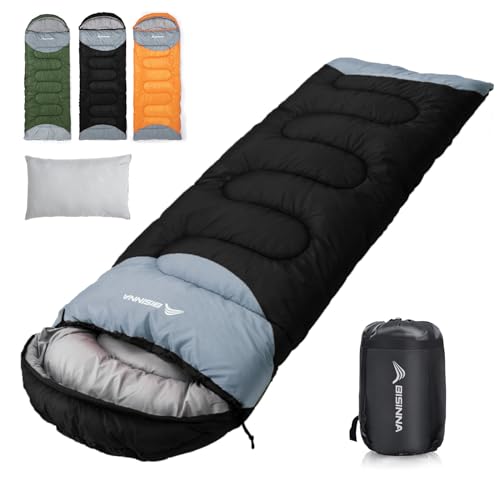
- BrandBISINNA
- Dimensions86.8 Inches x 31.4 Inches x 3.0 inches
- Weight5.07 pounds
- Size / capacity2.3kg Right Zipper
- ColourBlack
Here’s the deal: BISINNA makes the most sense for flexible car camping and shared use, not for a minimalist backpack where every pound earns scrutiny.
The BISINNA weighs 5.07 pounds and measures 86.8 by 31.4 by 3 inches. Its 480 grams per square metre hollow-fiber fill, 210T polyester outer fabric, 210T pongee lining, half-circle hood, and pillow compression sack create a comfort-focused package. The listing also documents an SBS two-way zipper, bottom zipper, and left/right zipper compatibility for combining bags into a wider double sleeping bag.
The listing gives a temperature range of 23° to 5°, but it does not explain whether those figures represent comfort, limit, or extreme performance, and it does not establish ISO testing. Fully unzipping the bag into a blanket is useful around a campsite, yet the added hardware and generous format are poor priorities for a long walking tour.
Pros:
- 480GSM hollow-fiber fill — the listing identifies both insulation type and stated fill density.
- Convertible zipper system — the bag can open as a blanket or combine with a compatible opposite-zip bag.
- Half-circle hood and bottom zipper — documented features support head coverage and ventilation control.
Cons:
- 5.07-pound weight — too substantial for many backpacking loadouts.
- Temperature wording is unclear — the 23° to 5° range does not identify comfort or limit conditions.
- Large packed-bulk concern — the listed 41-by-27 cm packing size is supplied, but the bag still weighs more than every other option here.
Final Thoughts
Ideal for: Car campers, couples, and people who value blanket conversion over low pack weight. Pass on this if: Your trip involves long daily walking, wet-weather weight control, or a need for a clearly comparable 0°F rating.
RIOYALO 0 Degree Winter Sleeping Bag (large synthetic format)

- Brandrioyalo
- ModelRSBA-MLTYGREEN
- Dimensions86.6 inches x 30.7 inches x 3.0 inches
- Weight5.0 Pounds
- Size / capacityLarge
- ColourMilitary Green
- WarrantyLimited Lifetime Warranty
Quick take: RIOYALO is aimed at tall or larger sleepers who want a broad, soft-lined bag and do not mind carrying five pounds.
The RIOYALO has listed dimensions of 86.6 by 30.7 by 3 inches, a large capacity, and a weight of 5.0 pounds. Its marketing copy identifies 450GSM microfiber filling, a 210T ripstop polyester shell, 190T pongee lining, a compression sack, a wind buffer, and an anti-pinch grosgrain ribbon. The listing says the bag suits people up to 6 feet 10 inches, making its long format the clearest fit advantage in the group.
The 15.6-inch-by-7.6-inch packed-size claim comes from manufacturer copy, while the verified weight remains 5.0 pounds; that is manageable for car camping but a serious load for a sustainable motorcycle touring routine where food, tools, and riding layers already compete for room. A limited lifetime warranty is a genuine plus, though it excludes normal wear and misuse.
Pros:
- 86.6-inch listed length — the most suitable option here for taller sleepers.
- 450GSM microfiber fill — gives buyers a documented synthetic insulation figure.
- Limited lifetime warranty — coverage includes defects in materials or workmanship under the stated terms.
Cons:
- 5.0-pound weight — heavy for a backpacking sleeping bag.
- 30.7-inch width — large sleepers should still verify shoulder and hip room rather than relying only on the length.
- Unclear temperature standard — the listing does not separate comfort from limit or extreme ratings.
Who Should Buy This
Best for: Tall campers and motorcycle travelers who value generous length, a soft pongee lining, and synthetic construction. Skip if: You need compact down performance, a light pack, or a documented 0°F comfort rating.
0 Degree Backpacking Sleeping Bag Comparison
| Product | Best for | Listed weight | Insulation detail |
|---|---|---|---|
| Teton Altos-S 0 Degree Sleeping Bag | Roomy value | 3.5 pounds | Not listed |
| Kelty Cosmic Synthetic 0F Degree Mummy | Damp conditions | 4 pounds 11 ounces | Cirroloft synthetic, 60oz fill |
| BISINNA 0 Degree Winter Sleeping Bag | Flexible car camping | 5.07 pounds | 480GSM hollow fiber |
| RIOYALO 0 Degree Winter Sleeping Bag | Tall sleepers | 5.0 pounds | 450GSM microfiber |
How to Choose a 0 Degree Backpacking Sleeping Bag
What makes the best zero degree sleeping bag?
Start with the rating language, not the large number in the product title. Comfort, lower-limit, and extreme ratings describe different use cases, and a listing that only says 0 degree or 0°F does not tell you which one applies.
Down versus synthetic insulation
Down generally offers a better weight-to-packability relationship, but dampness can reduce loft, so a dry shelter, careful clothing management, and a water-resistant packing routine matter. Kelty’s Cirroloft synthetic insulation is the more sensible direction for damp conditions, though its 4-pound-11-ounce stated weight shows the carrying penalty. The BISINNA and RIOYALO also use synthetic fills, at 5.07 and 5.0 pounds respectively.
Fit, loft, and draft control
A bag must have enough shoulder and foot room to avoid compressing insulation, but excess space creates more air to warm. Hoods, draft collars, zipper draft tubes, and footboxes deserve close inspection, yet the listings do not document a draft collar or zipper draft tube for these bags.
Weight, pad insulation, and camp habits
A winter sleeping bag works as part of a system. An inadequately insulated pad can allow substantial heat loss beneath you, so match the bag with a high-R-value winter pad or insulated air mattress rather than expecting insulation above your body to solve everything. Wind protection from a cold-weather tent or bivy, dry sleep layers, and a sheltered campsite all affect perceived warmth. Our guide to clothes for backpacking is useful when deciding what belongs in the sleep system rather than in the bag itself.
Packability also changes the right answer. Before ordering, check whether the stated packed size is compressed or merely the sack’s dimensions, and buy a roomy storage sack if the manufacturer does not document one. Down and synthetic bags should be stored uncompressed and washed according to their care instructions; BISINNA specifically lists hand washing for its bag, while RIOYALO states that its bag is machine washable.
For riders planning longer stops, a sleeping bag is only one part of a sustainable loadout. Packing space saved by a lighter bag can go toward a stove, spare layers, or food; our guide to backpacking stove choices covers the next item that turns a cold morning into a proper breakfast. Broader fit questions belong in our big-and-tall sleeping bag guide, especially if shoulder width matters as much as length.
Our Final Recommendation
Teton Altos-S is the best value for campers who want more room, a footbox, compression sack, and limited lifetime warranty. Kelty Cosmic Synthetic is our overall pick: its listing states a 0°F temperature rating, and its Cirroloft synthetic insulation keeps its warmth in cold, damp conditions, which is worth its 4 lb 11 oz weight on wet winter trips. BISINNA and RIOYALO make more sense for car camping, shared use, or tall sleepers than serious minimalist backpacking. None has a fully documented 0°F comfort rating in the supplied listings, so pair any choice with a suitable pad and realistic expectations.
Frequently Asked Questions
Does a 0°F sleeping bag keep me comfortable at 0°F?
Not necessarily. Comfort, lower-limit, and extreme ratings are different values, and a product title alone does not identify which one applies. Clothing, shelter, wind, metabolism, and sleeping-pad insulation also affect warmth.
Is down or synthetic insulation better for backpacking?
Moisture can reduce down loft, however. Synthetic insulation is generally more forgiving in damp conditions, and Kelty’s Cirroloft design reflects that priority, but its manufacturer-stated 4-pound-11-ounce weight is a clear packability trade-off.
How should I wash and store a 0 degree backpacking sleeping bag?
Follow the product’s care instructions and avoid storing insulation compressed. BISINNA lists hand washing, while RIOYALO states that its bag is machine washable. Dry the insulation fully before storage because retained moisture can affect loft and odor.
Which option suits a tall or larger sleeper?
RIOYALO lists an 86.6-inch length and says it accommodates people up to 6 feet 10 inches. Teton offers 84 by 32 inches with extra shoulder and leg room. Measure your height and compare shoulder width before ordering rather than choosing from length alone.