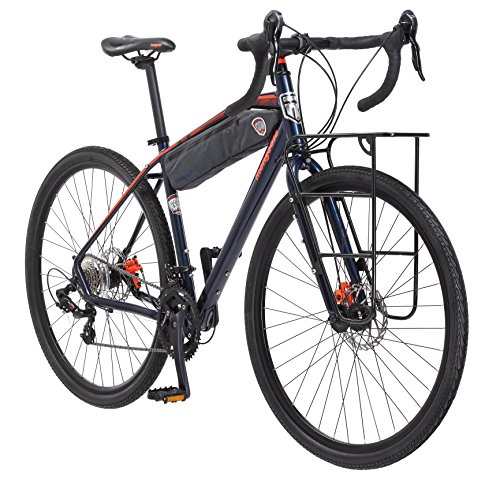
Trek 800 Mountain Bike: What to Check Before Buying a Used One
Contents
The honest answer first: a “top picks for 2026” roundup cannot answer a search for the Trek 800 mountain bike. The keyword names one specific model, not a category, so a shortlist of unrelated budget bikes swaps the question for a different one. Anyone typing that model name is almost certainly weighing up a second-hand machine: a marketplace listing, a garage find, a bike that has leaned against a shed wall for years. That is an inspection problem, not a shopping problem.
There is a durable, checkable spine for that inspection, and it is not a spec sheet. It is the federal bicycle regulation at 16 CFR Part 1512, titled “Requirements for bicycles” in the text reproduced by the Legal Information Institute at Cornell Law School, plus the separate mandatory helmet standard at 16 CFR Part 1203. Those documents set out what a bicycle sold in the United States was legally required to have. A missing item proves nothing alone, but it is something you can see and touch before money changes hands.
Key takeaways
- 16 CFR Part 1512 carries its bicycle requirements in Subpart A, sections 1512.1 through 1512.20, in the text published by the Legal Information Institute at Cornell Law School.
- § 1512.3 ties compliance to the sale: a bicycle must meet the requirements “in the condition to which it is offered for sale to consumers” — an inspection list, never a certificate for a used bike.
- § 1512.5(a) permits only two brake configurations: front- and rear-wheel brakes, or rear-wheel brakes only.
- § 1512.16(a) requires an essentially colorless front reflector, essentially colorless or amber pedal reflectors and a red rear reflector, plus side retroreflection.
- § 1512.19 requires a frame label permitting identification of the manufacturer and the month and year of manufacture — how an unlabelled old frame gets dated.
Why a model name cannot become a roundup
A model name is not a category. Roundups work when a keyword describes a class of product; a single model name narrows the answer to one object. When the bicycle is something you have found rather than something you can order, the questions are what it should have on it, what is missing and what is bent. One caution before the checklist: the regulation describes bicycles as offered for sale, not bicycles as found, and nothing below certifies that a second-hand bike is safe, compliant or fit to ride.
What Part 1512 covers, and what it fixes in time
The regulation is short and specific. Its rules sit in Subpart A at sections 1512.1 through 1512.20. Part 1512 applies to a bicycle as defined in § 1512.2(a), expressly excluding a “track bicycle” and a “one-of-a-kind bicycle”, and excluding a bicycle already banned under § 1500.18(a)(12).
What gives the list teeth is § 1500.18(a)(12): a bicycle introduced into interstate commerce on or after May 11, 1976 that does not comply with Part 1512 is a banned article under the hazardous-substances rules, track and one-of-a-kind bicycles excepted. Compliance was not optional for a bicycle introduced into commerce from that date, with four listed provisions taking effect November 13, 1976 instead, so a feature missing today is worth asking about.
What takes the teeth out again is § 1512.3. A bicycle must meet the requirements “in the condition to which it is offered for sale to consumers”, and one sold disassembled must meet them after assembly according to the manufacturer’s instructions. Compliance attaches to a moment, not to the decades after it.
Brakes and reflectors, the two headline rules
Section 1512.5(a) is blunt. Bicycles “shall be equipped with front- and rear-wheel brakes or rear-wheel brakes only.” Those are the two arrangements the section names, which makes this a quick disqualifying check on a used machine. Handbrake performance is measured as a stopping distance of no greater than 4.57 m (15 ft) from the actual test speed with a rider of at least 68.1 kg (150 lb). Sidewalk bicycles “shall not have handbrakes only”.
Section 1512.16(a) is a colour-and-position rule: “There shall be an essentially colorless front-facing reflector, essentially colorless or amber pedal reflectors, and a red rear-facing reflector.” Side retroreflection can be met three ways, which matters when spoke reflectors vanished years ago: retroreflective tire sidewalls, reflectors mounted on the spokes of each wheel, or, for non-caliper rim brake bicycles, retroreflective wheel rims. On bicycles other than sidewalk bicycles, each pedal shall have reflectors on its front and rear surfaces.
The walk-around, section by section
The table turns the regulation into the order you would inspect a bicycle in, standing next to it.
| Section | What the regulation requires | What to look at |
|---|---|---|
| § 1512.5(a) | Front- and rear-wheel brakes, or rear-wheel brakes only | Which configuration is fitted, and whether each lever engages |
| § 1512.16(a) | Colorless front, colorless or amber pedal, red rear reflectors | Count them; ask where missing ones went |
| § 1512.11 | No missing spokes; at least 1.6 mm (1/16 in.) clearance between tire and fork or frame at any wheel position | Spin each wheel and watch the gap close |
| § 1512.12 | Positive wheel locking devices; quick-release levers showing locked or unlocked | Open and close each lever |
| Part 1512 | Permanent minimum-insertion mark on quill stems; capped handlebar ends | Loosen the stem; check the bar plugs |
| § 1512.15(b) | Permanent seat-post mark showing minimum insertion depth | Drop the post clear of the frame and look |
| § 1512.4(b) | No unfinished sheared metal edges exposed to hands or legs | Brackets, dropouts and mounts, by hand |
| § 1512.19 | A marking or label securely affixed on or to the frame | Find it before you agree a price |
Pro tip
Section 1512.19’s frame label must permit identification of the manufacturer and of the month and year of manufacture. That label, not a seller’s recollection, is how an undated frame gets dated. Look for it on the frame before you agree a price, and photograph what you find.
Edges, cockpit, wheels and clearance
Section 1512.4(b) is checkable by hand: “There shall be no unfinished sheared metal edges or other sharp parts on assembled bicycles that are, or may be, exposed to hands or legs.” The same section bars protrusions in an area bounded by the handlebar stem, the seat front and the top tube. Accessible cable ends “shall be provided with protective caps or otherwise treated to prevent unraveling”.
Two permanent marks are worth hunting for. Quill-type handlebar stems shall contain a permanent ring or mark clearly indicating the minimum insertion depth. Under § 1512.15(b), the seat post carries a permanent mark indicating minimum insertion depth — the maximum seat-height adjustment. On a bike that has passed through several owners, a stem or post pulled up past its mark is worth looking for early.
The drivetrain and geometry rules are equally concrete. Section 1512.10 requires the recommended inflation pressure to be moulded into or onto the tire sidewall in lettering no less than 3.2 mm (1/8 in.) high. Under § 1512.17, with the pedal horizontal, the crank at its lowest position and training wheels removed, it must be possible to tilt the bicycle at least 25 degrees from the vertical without the pedal or any part other than tires touching the ground plane; absent toe clips, at least 89 mm must separate pedal from front tire or fender.
Common mistake
Treating Part 1512 as a roadworthiness certificate. Section 1512.3 fixes the requirements to the condition in which a bicycle is offered for sale, and to disassembled bicycles only after assembly per the manufacturer’s instructions. It says nothing about a machine that left a shop decades ago and has been stored, crashed, modified and rebuilt since.
The helmet is a separate standard entirely
16 CFR Part 1203, “Safety standard for bicycle helmets”, is its own document. Subpart A is the standard at sections 1203.1 through 1203.17; Subpart D covers helmets manufactured from March 17, 1995 through March 10, 1999. Section 1203.2 states the purpose: to reduce the likelihood of serious injury and death to bicyclists resulting from impacts to the head, pursuant to 15 U.S.C. 6001-6006.
Dates carry real weight in the helmet standard. The helmet standard states that it “shall become effective March 10, 1999 and shall apply to all bicycle helmets manufactured after that date”, with helmets made from March 17, 1995 through March 10, 1999 inclusive subject to Subpart D instead. A helmet handed over with an old bicycle can sit outside Subpart A altogether, and the manufacture date, not appearance, is what decides which subpart applies.
The labeling rule is the practical one. Section 1203.6 requires a warning that impact damage “may not be visible to the user”, and that an impacted helmet be “returned to the manufacturer for inspection, or be destroyed and replaced”. It also requires a notice that “no helmet can protect against all possible impacts and that serious injury or death could occur”; the signal word “WARNING” in capitals and bold; and a warning about degradation by common substances, with mild soap and water given as the cleaning method.
Fit, the manual, and what to service first
Section 1512.19 states the sizing criterion as standover: no less than one inch of clearance between (1) the top tube of the bicycle and the ground plane and (2) the crotch measurement of the rider. A used frame is often simply the wrong size, and no amount of seat-post adjustment fixes that. The same section’s owner’s manual maintenance list doubles as a first-service plan: brakes, control cables, bearing adjustments, wheel adjustments, lubrication, reflectors, tires, and handlebar and seat adjustments.
Frequently asked questions
Does federal regulation mean a used Trek 800 mountain bike is safe to ride?
No. Section 1512.3 applies the requirements of Part 1512 to a bicycle in the condition in which it is offered for sale to consumers, and to disassembled bicycles after assembly per the manufacturer’s instructions. It says nothing about the condition of a machine bought second-hand.
What brake arrangement does the regulation require?
Section 1512.5(a) states that bicycles shall be equipped with front- and rear-wheel brakes or rear-wheel brakes only. Handbrake performance is assessed as a stopping distance of no greater than 4.57 m (15 ft) from the actual test speed, with a rider of at least 68.1 kg (150 lb). Sidewalk bicycles shall not have handbrakes only.
Which reflectors should be on the bicycle?
Section 1512.16(a) calls for an essentially colorless front-facing reflector, essentially colorless or amber pedal reflectors and a red rear-facing reflector. Side retroreflection may be met by retroreflective tire sidewalls, spoke-mounted reflectors, or retroreflective rims on non-caliper rim brake bicycles.
How can an undated old frame be dated?
Section 1512.19 requires a marking or label securely affixed on or to the frame, permitting identification of the manufacturer and of the month and year of manufacture. Where paperwork is long gone, that label is the dating evidence the machine itself carries.
Is the helmet that comes with a used bicycle worth keeping?
The helmet standard’s own labeling requirement argues against it. Section 1203.6 requires a warning that impact damage “may not be visible to the user” and that an impacted helmet be “returned to the manufacturer for inspection, or be destroyed and replaced”.
What is a “sidewalk bicycle” and why does the term keep appearing?
It is a size category, not an age category. Section 1512.2 defines it as a bicycle with a seat height of no more than 635 mm (25.0 in), measured with the seat adjusted to its highest position, recumbents excluded. Several requirements in Part 1512 treat sidewalk bicycles differently.