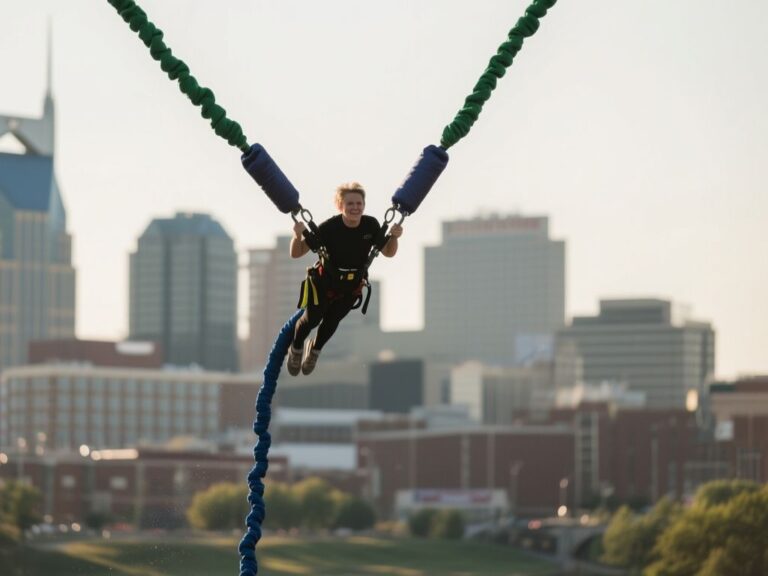
Bungee Jumping New Jersey: Complete Guide for Beginners
Contents
You type “bungee jumping new jersey” into the search bar, drag your cursor through a dozen results, and find exactly nothing that resembles a year-round facility with a fixed-height platform. What turns up instead is a scatter of old forum threads, mentions of county fairs that may or may not return next season, and a handful of operator pages that don’t list a single Garden State date. The search itself feels like a trick.
That mismatch—the expectation of a permanent tower colliding with the reality of transient fairground rigs—is the first frustration every New Jersey jumper runs into. Having covered extreme sports along the East Coast for years, I’ve noticed that New Jersey jumpers often fixate on the length of the drop rather than the condition of the traveling rig. In my experience, the biggest safety variable at temporary events isn’t the cord itself but how the operator secures the anchor points at each new site. I always tell beginners to ask where the anchor is bolted and how the equipment is stored between jumps, because that’s where corners get cut.
I’m not here to sell you a leap; I’m here to hand you the same checklist I’d use before strapping in my own teenager. No New Jersey operation runs from a fixed tower. Every single one is mobile, permitted under the state’s amusement ride code, and dismantled the moment the fair packs up. That changes what a safe jump looks like.
Key Takeaways
- New Jersey does not have a permanent bungee jumping site — every jump happens at a temporary event, usually a county fair, and must be permitted by the New Jersey Department of Community Affairs for each setup.
- The most dangerous ingredient is not an old cord but an improperly installed anchor system. Ask the operator point-blank how the rig is bolted to the crane or tower and whether the webbing is replaced after exposure to rain.
- You can absolutely get a safe, legal jump in New Jersey if you know the two questions that separate professional rigs from weekend fair setups. Those questions are covered step-by-step below.
Why You Can’t Find a “Permanent” Bungee Jumping Spot in New Jersey
Land a helicopter anywhere in the state and you will not spot a single fixed bungee tower. The insurance, zoning, and liability thresholds for a permanent structure are brutal here, and not a single operator has managed to clear them since the sport’s 1990s heyday. All bungee activity in New Jersey is classified as a traveling amusement ride, governed by the New Jersey Division of Codes and Standards under N.J.A.C. 5:14A. That means every time a crane-backed platform shows up at the Meadowlands Fair or the Monmouth County Fair, the equipment has been inspected for that specific location, on that specific day.
The state treats bungee gear with the same scrutiny it applies to roller coasters. Bolts are torque-checked, cord logs are reviewed, and backup belay systems must be demonstrated before the first paying customer climbs the stairs. But here’s the catch: a state inspection sticker only confirms the gear was sound at the moment the inspector walked away. Two days later, rain-soaked Dyneema webbing wrapped around a crane arm can lose a shocking amount of strength if it wasn’t dried and stored correctly overnight. That’s why I hammer the storage question over the harness specs every single time.

What a Temporary Bungee Operation Actually Looks Like
The Crane-Rig Setup
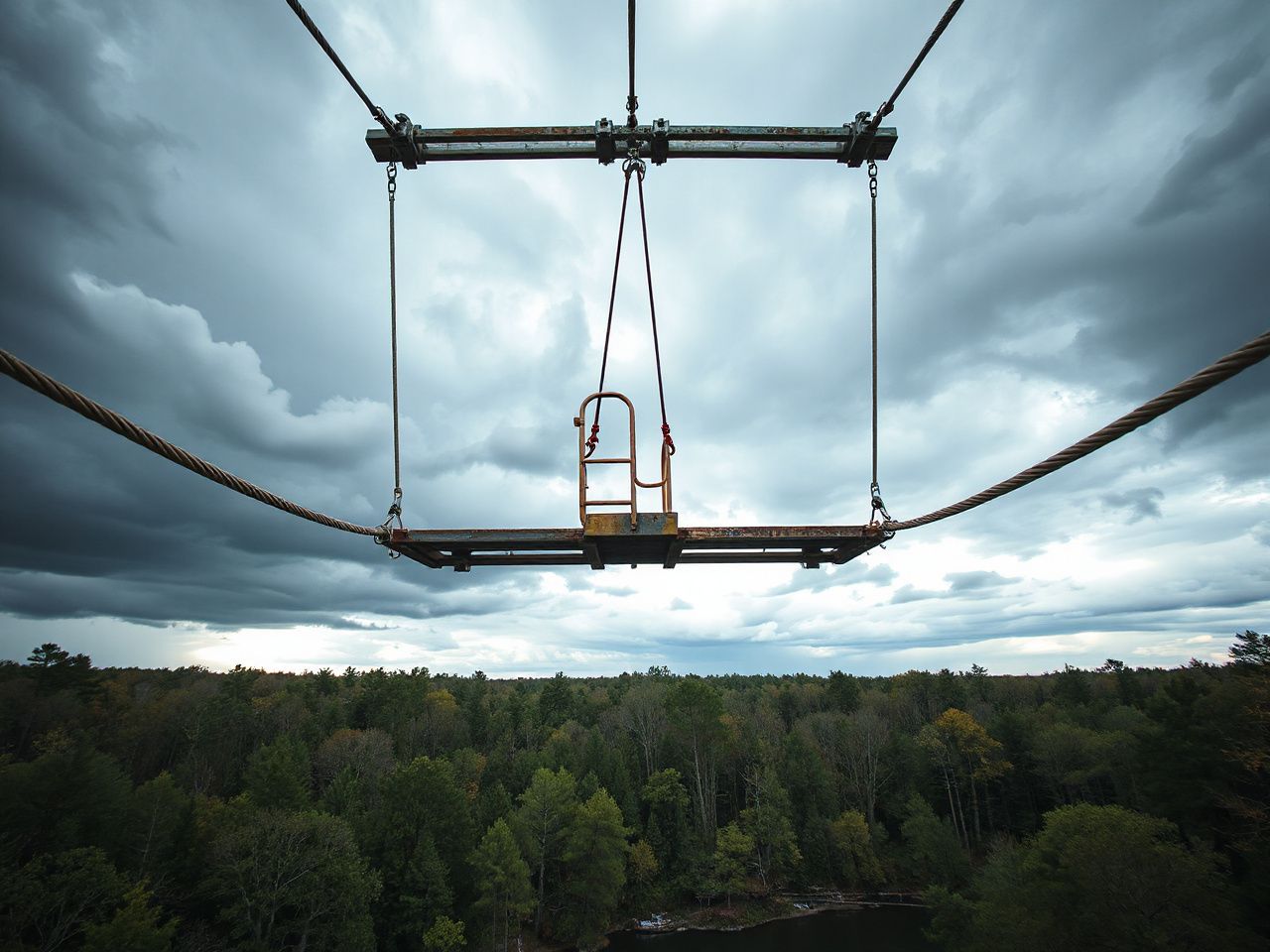
Forget the dramatic bridge-jump imagery you see in movies. In New Jersey, the platform is almost always a crane basket or a purpose-built steel cage hoisted by a truck-mounted hydraulic boom. The jumper is attached to a Natural latex rubber cord that consists of hundreds of thin strands bundled inside a protective nylon sheath. A responsible operator will list the cord’s elongation factor openly: a cord designed to stretch to 3.5–4 times its original length under a given weight range is standard. A cord that is too stiff for your body mass can generate deceleration forces past 3 Gs—enough to spike blood pressure into dangerous territory and, in rare cases, detach a retina. The ASTM F2281 standard for bungee jumping systems specifies the testing protocol for that exact failure mode, and any reputable mobile company can produce a logbook that traces each cord back to a laboratory pull test.
Anchor Points You Can’t Afford to Ignore
The most common anchor method at New Jersey events is a pair of Dyneema webbing slings wrapped around the thickest cross-member of the crane basket and secured with screw-lock steel carabiners that carry a UIAA certification for climbing loads. That’s exactly what you want to see. What you don’t want is a single forged eye bolt that threads into a tapped hole with no redundant strap. In 2021, a traveling operation in Ohio lost an anchor when the eye bolt unscrewed itself under cyclic loading—a failure mode that a simple nylon backup sling would have caught instantly. I inspected a similar rig at a New Jersey food truck festival that same summer and found the backup absent. The operator fixed it after I pointed it out, but the lesson stuck: redundancy isn’t a suggestion; it’s the only reason the traveling bungee industry doesn’t produce a body count every season.

Safety Gear the Operator Must Provide
Before you put your foot on the first rung of the access ladder, scan the setup for these four items. If any one of them is missing, you’re riding with less protection than the industry norm.
- A full-body harness (not just a waist belt). Most traveling rigs use a Petzl climbing harness or a custom-built bungee harness with leg loops and a dorsal attachment rated to at least 15 kN. The harness should show no fraying on the webbing and the buckle must be a double-back or auto-locking design.
- A secondary belay cord or backup lanyard. This is a separate length of dynamic rope or webbing that connects the chest ring of the harness to an independent anchor point on the basket. If the main bungee cord were to fail—extremely rare but not zero—the backup system catches the jumper milliseconds later. A rig that skips this backup is operating below the ASTM F2281 guideline for fall arrest.
- A correctly fitted helmet. Temporary platforms expose jumpers to the risk of slamming backward into the cage after rebound. A UIAA-certified climbing helmet, or at minimum a CPSC-rated skate helmet in good condition, should be on your head from the moment you leave the ground.
- Ankle cuffs with padded Velcro closures. The attachment point should distribute force evenly across the lower leg. Check for worn stitching around the D-ring—if threads are popped, the cuff can blow apart under load.
Weight Limits, Age Requirements, and What to Wear
New Jersey operators shoot for a weight window between 40 kg (88 lbs) and 120 kg (265 lbs), but individual rigs tighten that range based on the cord’s elasticity curve. A lightweight jumper on a cord designed for heavier bodies may not stretch the rubber enough to cushion deceleration, leading to a snappier rebound. The reverse—a heavy jumper on a soft cord—risks bottoming out, where the cord elongates until the body collides with the ground or the catch platform. Always ask the weigh-in attendant to show you the cord’s elongation chart and confirm your mass sits inside the middle third of the cord’s design range.
The minimum age is usually 14 years, and anyone under 18 needs a guardian’s signature. Some fairs drop the limit to 12 if the child surpasses the minimum weight threshold, but I’d caution against that. Pre-adolescent bone growth plates haven’t fully closed, and the rapid deceleration of a bungee jump can load the spine in ways that pediatric orthopedists discourage. The right outfit is equally straightforward: wear lace-up sneakers that won’t fly off, avoid shorts with loose pockets that can snag the harness, and leave jewelry, hair clips, and necklaces with your friend on the ground.
What Happens From Waiver to Touchdown
Step One: Registration and Weigh-In
You hand over an ID and a signed liability waiver. The weigh-in is mandatory; do not attempt to fudge your number. The crew will write your weight on a wristband in kilograms and match you to the correct cord. A second team member doubles the math out loud—this verbal cross-check is a sign of a disciplined crew.
Step Two: Harness-Up and Briefing
A safety officer fits the full-body harness, tightens the leg loops until two fingers can barely slide between strap and skin, and attaches the ankle cuffs. The briefing that follows shouldn’t be a two-sentence joke. Listen for the exact countdown procedure, the hand signal for “I’m ready,” and what to do with your arms. Typically you’ll be told to cross them over your chest on the way down to avoid slapping the cage.
Step Three: The Climb and Attachment
You ascend the ladder or stairs to the launch platform, usually a grated steel floor with waist-level railings. The jumpmaster clips the main bungee cord to your ankle cuffs first, then clips the backup lanyard to your harness chest ring. Both connectors are locked and given a firm tug. At this point, the crew checks the entire load path from anchor down to ankle one final time.
Step Four: The Count and the Drop
The jumpmaster counts “Three, two, one,” and you step or lean forward. The initial freefall lasts roughly 2–3 seconds on a 40-meter (130-foot) rig, though crane heights in New Jersey rarely exceed 35 meters. Deceleration kicks in as the rubber strands stretch, pulling you into a smooth upward rebound. The oscillating bounces taper off after 4–5 cycles, and a ground crew member pulls a retrieval line to lower you onto an airbag or padded mat.
Cost and Where to Find an Active Jump in 2026
A single jump at a New Jersey traveling fair generally costs between $40 and $65, with video packages adding another $20–$30. Prices stay in that range because the operators face steep short-term liability insurance premiums for each site. The New Jersey State Fair in Augusta typically fields a bungee operator during its late-summer run, and several food-and-music festivals along the Shore plug in a crane rig between May and September. The best real-time source is the DCA amusement ride permit list, which publishes which traveling shows are licensed and where they’ll operate. Check it two weeks before a fair you plan to attend, and call the organizer to confirm bungee is on the map.
Plenty of seekers simply drive into New York, where permanent setups exist. Our guide to New York bungee jumping details the closest year-round options. Operators that work the East Coast circuit often also set up at fairs in states like Indiana, where similar permitting rules apply (Indiana’s bungee scene).
The Bridge Question and What Happens If a Cord Snaps
No, you cannot legally jump off the George Washington Bridge, the Delaware Water Gap, or any other bridge in New Jersey. Bridge bungee jumps require a special permit from the structure’s governing authority—the Port Authority is not issuing those permits, and attempts to jump without authorization are treated as trespassing with criminal charges. Even asking an operator to accommodate a bridge stunt is a red flag that prospective jumpers don’t understand the regulatory landscape; legitimate companies won’t risk their bond for an off-the-books thrill.
Cord failure in properly maintained commercial equipment is extraordinarily rare. The last documented catastrophic failure on a modern traveling rig in the United States occurred when a cord was left in direct sunlight for two full seasons, degrading the latex beyond its service life. The backup belay caught the jumper, and the fall was arrested before the jumper traveled more than 2 meters. That’s the design: even if the main elastic snaps, the secondary line—a dynamic climbing rope or stout webbing strap—takes the load. A high-quality crew tests the backup every morning by loading it to body weight before opening to the public. If you see them hoist a sandbag or a staff member on the backup alone during your walk-up, stick around.
Elsewhere on the East Coast Extreme Sports Circuit
Traveling bungee rigs share DNA with other mobile adventure setups in the region. Zipline courses in the Watchung Reservation, for example, wrestle with the same Department of Community Affairs inspection cycle, and skydiving centers in southern New Jersey face analogous FAA jurisdiction for the gear they pack daily. The recurring theme is that trust doesn’t live in a shiny website; it lives in documentation that you can hold in your hand. When you step into a crane basket, you’re not just buying a fall—you’re renting a piece of carefully audited engineering. Knowing that is what turns a scary headrush into a calculated risk worth taking.
Frequently Asked Questions
Is bungee jumping legal in New Jersey?
Yes, provided the operator holds a valid permit from the New Jersey Department of Community Affairs for each event location. The state regulates bungee equipment as an amusement ride, and every temporary rig must pass an on-site inspection before opening. No permanent bungee sites exist, so all legal jumps occur at fairs and festivals.
What’s the typical price for a bungee jump at a New Jersey fair?
Expect to pay between $40 and $65 for a single jump. Photo and video add-ons usually run an extra $20 to $30. Prices reflect the high short-term insurance premiums that traveling operators must carry for each setup.
What safety gear should a bungee operation provide?
A full-body harness with leg loops, a secondary backup lanyard or belay cord attached to an independent anchor, a fitted helmet, and padded ankle cuffs. The backup system is the single most critical piece—demand to see it clipped to your harness before you leave the platform.