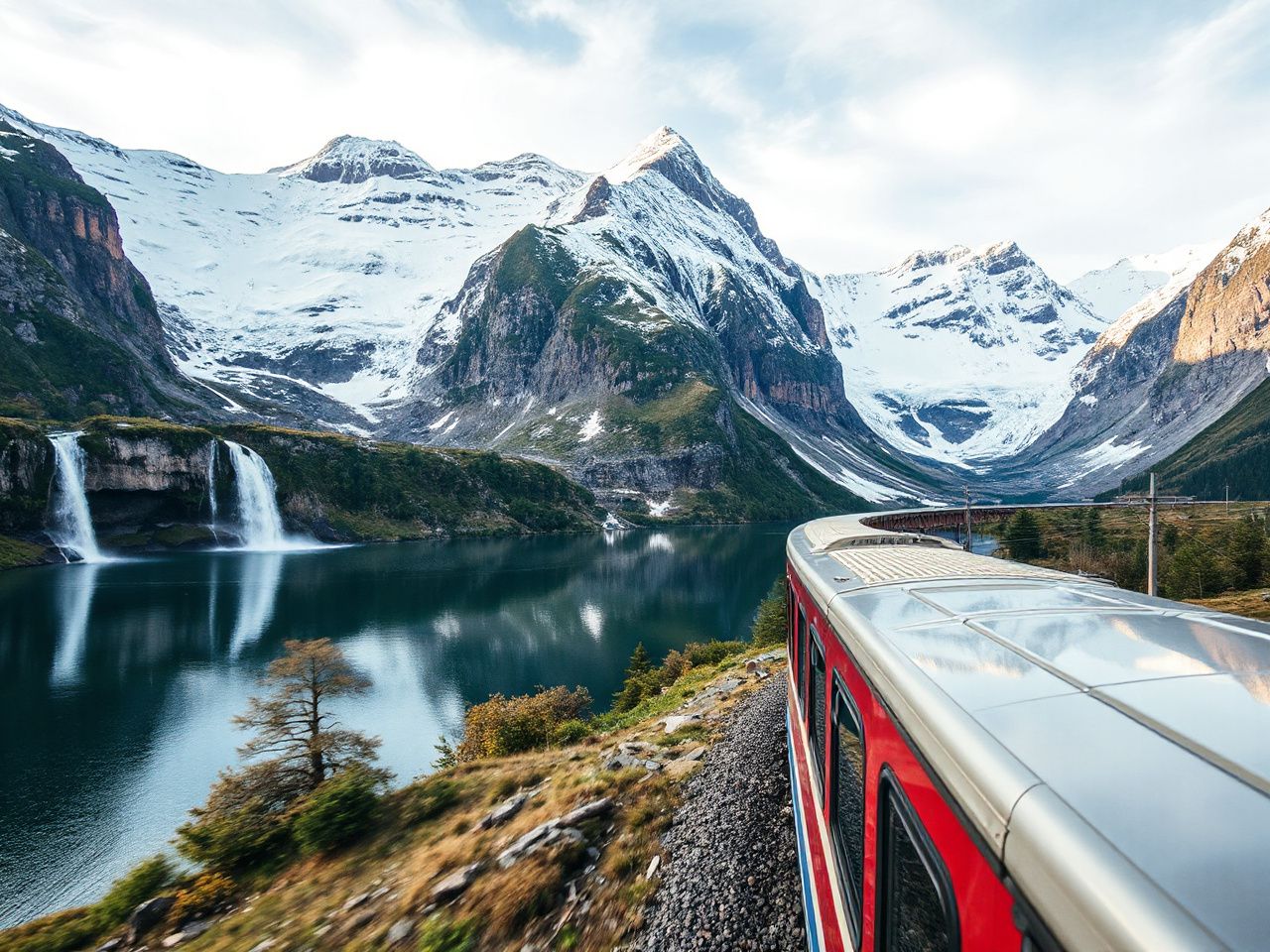
Norway Train Tours: A Practical Look at Scenic Routes
Contents
Most advice about Norway train tours frames them as relaxed sightseeing. That’s dangerously wrong. A missed ferry connection in Flåm can cascade into a missed train, a missed hotel night, and a lost day. Plan these routes like a freight shipment with a fragile deadline, not like a Sunday drive.
When you start planning Norway train tours, the first decision is not which line to ride but whether you can absorb a delay. The rail network is a series of interconnected lines, ferries, and buses, not a closed loop. For a broader look at scenic rail across the continent, our European train tours guide compares similar routes and shows how Norway differs from the rest.
Key Takeaways
- Norway in a Nutshell is not one train; it’s a timed chain of rail, ferry, and bus segments where missing one link means buying new tickets.
- Seat reservations are mandatory on Bergensbanen, Dovrebanen, and Nordlandsbanen, even with a Eurail pass.
- Flåmsbana is a separate spur from Myrdal and requires its own ticket unless bundled into a package.
- The Nordland Line stops at Bodø; reaching Narvik or Tromsø requires a bus or flight, which can add many hours.
The Route Landscape: What You’re Actually Riding On
The Four Backbone Lines
Norwegian long-distance rail rests on four corridors. The Bergen Line (Bergensbanen) runs from Oslo to Bergen in roughly 6.5 to 7 hours, climbing over the Hardangervidda plateau. The Dovre Line (Dovrebanen) connects Oslo and Trondheim in about 7 hours, crossing the Dovrefjell mountains. The Nordland Line (Nordlandsbanen) stretches from Trondheim to Bodø, taking around 10 hours for that segment and up to 18 hours from Oslo. The Raumabanen is a 1.5-hour spur from Dombås down to Åndalsnes, often used as a gateway to the Geirangerfjord area.
The Bergen Line crosses Hardangervidda, a high mountain plateau where Finse station sits at 1,222 meters, the highest point on the Norwegian rail network. That elevation means weather can shut the line down in any season, but more on that later.
For route maps and current conditions, Visit Norway’s official route overviews list the scenic sections and stops, while Bane NOR’s operational updates show real-time track status. Bookmark both before you go.
Flåmsbana: The Spur That Demands Its Own Ticket
The Flåm Railway is the famous branch line from Myrdal station on the Bergen Line down to Flåm at the head of Aurlandsfjord. It descends 863 meters over 20 kilometers, making it one of the steepest standard-gauge adhesion railways in the world. That gradient is why it gets separate billing — and often a separate ticket.
If you ride the Bergen Line from Oslo to Bergen and want to detour to Flåm, you must get off at Myrdal, board Flåmsbana, and then either return to Myrdal or continue by ferry and bus. A Eurail or Interrail pass gives a 30% discount on Flåmsbana, not free travel. The full fare is around 600–700 NOK one-way depending on season, and the ride takes 50–60 minutes.
Norway in a Nutshell: Not a Train Tour, a Transport Chain
The classic packaged itinerary sold under the name “Norway in a Nutshell” is frequently mislabeled as a train tour. It is a coordinated chain of transport modes: typically a train from Bergen to Voss, a bus from Voss to Gudvangen, a fjord cruise on the Nærøyfjord from Gudvangen to Flåm, the Flåmsbana up to Myrdal, and then the Bergen Line onward to Oslo or back to Bergen. You can start from Oslo and reverse the order.
Every segment has a fixed departure time. If the ferry is delayed by 15 minutes, the bus at Gudvangen may have already left. The package often includes rebooking assistance, but only if all segments were bought as one ticket. If you assemble the same route yourself with separate tickets, you bear the full cost of a missed connection.
Unlike fixed multi-day packages elsewhere, such as the ones covered in our luxury train tours in Italy guide, the Nutshell offers less hand-holding and more moving parts. You carry your own bags between modes, and station staff may not be available at every stop.

Booking Basics: Passes, Seat Reservations, and the Fine Print
Eurail and Interrail in Norway: What Works, What Doesn’t
A Eurail or Interrail pass covers most Vy trains in Norway, including the Bergen, Dovre, and Nordland lines. That sounds generous until you hit the reservation requirement. On those long-distance routes, a seat reservation is mandatory even with a pass. The reservation costs around 50–100 NOK per leg depending on route and class, and you must book it in advance through Vy’s official booking portal. Without a reservation, you can board but you will be told to leave or pay a fine if the train is full — and on popular summer departures it will be full.
Flåmsbana is not fully covered by any rail pass. The pass gives a 30% discount, but you still need to buy a separate ticket online or at the station. Raumabanen is fully covered with a reservation. Regional trains around Oslo and Bergen generally require no reservation.
Mandatory Reservations and Stopover Rules
On the Bergen Line, Dovre Line, and Nordland Line, every passenger needs a reserved seat. This is not like German ICE trains where reservations are optional. The system is enforced. If you want to stop along the way — say, get off at Finse for a hike and continue the next day — you must book each leg separately with its own reservation. A single reservation from Oslo to Bergen does not let you hop off and reboard on a later train.
Here is the reality: even if you hold a flexible rail pass, the mandatory reservation system effectively turns Norwegian long-distance trains into fixed-time tickets. You cannot just show up and board the next departure. Plan your exact train numbers before you buy anything.
Night Trains: Oslo to Bergen, Trondheim, Bodø
Night trains operate on three main corridors. The Oslo–Bergen night train leaves around 23:00 and arrives around 06:30. The Oslo–Trondheim night train runs a similar schedule. The Trondheim–Bodø night train is the longest, departing around 23:00 and arriving around 09:00 the next morning. All require seat reservations, and sleeping compartments cost extra — often 500–900 NOK on top of the ticket or pass.
From a worst-case perspective, night trains are not a free hotel. Delays on the Dovre Line are common in winter due to snow clearing. If the train arrives late, you may lose your connecting bus or ferry. The Nordland Line night train sometimes waits for late passengers from connecting services, but do not count on it. Always have a backup plan for the morning after a night train.

Seasonal Survival: When to Go and What to Carry
The High Plateau Problem: Hardangervidda in Any Season
Hardangervidda’s weather can close the Bergen Line in any month, with wind speeds exceeding 30 meters per second not uncommon in autumn. Snow can fall in June, and the line has been shut for days at a time by avalanches or drifting snow. Summer brings thunderstorms and high winds that topple trees onto tracks. Winter is actually the most reliable season because Bane NOR runs dedicated snowplows and the infrastructure is built for it.
If you are planning a trip through Finse, the station itself is a gateway to hiking trails that lead onto the Hardangervidda plateau in summer. But there is no road access. If the train does not run, you are stuck until the next scheduled service — which might be 24 hours later.
Winter Packing for a Train Trip That Goes Sideways
Trains can be delayed for hours in blizzards, and many small stations have no heated waiting room. Pack for a breakdown even on a short trip.
- Thermal base layers and a puffy jacket — train interiors are warm, but platforms and unheated waiting rooms are not.
- Food and water for 12 hours — the onboard café may run out or close during extended halts.
- A power bank rated for at least two full phone charges — outlets on older Vy carriages are unreliable.
- Printed tickets and a printed timetable — phones die, and station Wi-Fi is not guaranteed.
- Cash in small denominations — some vending machines at rural stations only take coins, and card terminals can fail in cold weather.
- A headlamp — winter daylight is a few hours; if you have to wait outside, you need light.
Summer Crowds and the Day-Trip Trap
From mid-June through August, the Norway in a Nutshell route is packed. Ferries on the Nærøyfjord sell out, and the Flåmsbana has standing-room-only departures. The “day trip from Oslo to Flåm and back” is the classic trap: you spend 12 hours in transit for 2 hours in Flåm, and if one segment runs late you miss the return train home.
The best time for a Norwegian train tour is late May to mid-June or September. You get long daylight, fewer crowds, and still-open ferry schedules. October brings autumn color on the Dovre Line but also the first serious storms. Winter is starkly beautiful and reliable if you accept the short days and cold platforms.
Advanced Contingency: The Worst-Case Planner’s Checklist
When a Connection Misses: What Actually Happens
If you booked all segments as one package (like the Nutshell), the operator will usually rebook you on the next available service. If you assembled the trip yourself with separate tickets, you own the loss. You march to the ticket office and buy a new seat on the next train, if one exists. On the Bergen Line, the next departure may be three hours later; on the Nordland Line, it may be tomorrow.
Build buffer into your itinerary. Add an overnight in Flåm or Myrdal instead of trying to do the fjord cruise and Flåmsbana and Bergen Line all in one day. A single missed ferry should not unravel your entire trip. The extra hotel night is cheap insurance.
The Far North Reality: Bodø Is the End of the Line
The Nordland Line terminates at Bodø. There is no direct rail connection from Bodø to Narvik, Tromsø, or anywhere further north. To reach Narvik, you take a bus from Fauske (a station on the Nordland Line) or fly from Bodø. To reach Tromsø, you fly from Bodø or take a long bus from Fauske or Narvik.
If you miss the last bus from Fauske to Narvik, the next one leaves the following morning. There is no night train to rescue you. The Ofotbanen, which runs from Narvik into Sweden toward Kiruna, is not connected to the Norwegian network south of Fauske. Plan the far north as a separate segment with generous layover time.
Self-Planned vs. Nutshell: A Risk Assessment
A self-planned itinerary gives you control over stopovers and you can choose cheaper departure times. A Nutshell package gives you coordinated timing and rebooking help, but you are locked into the operator’s schedule. If you are comfortable navigating separate tickets and want to hike at Finse or explore Åndalsnes, self-plan. If you want someone else to solve problems when a ferry is late, buy the package.
For a contrasting approach to rail travel with more built-in slack, our train to Fresno guide shows how American corridors handle spontaneity — a reminder that Norwegian rigidity is not universal.
Frequently Asked Questions
How does Norway in a Nutshell actually work?
Norway in a Nutshell is a pre-arranged sequence of transport segments sold as one itinerary. You receive tickets for each leg — typically train, bus, fjord ferry, Flåmsbana, and mainline train. You follow the printed schedule yourself. No guide accompanies you. The operator will rebook missed connections only if the entire package was purchased through them, not if you bought legs separately. Allow at least one overnight stop to avoid a same-day cascade.
Is the Flåm Railway worth the extra cost?
For most travelers, yes, if you have not ridden a steep mountain railway before. The 20-kilometer descent from Myrdal to Flåm passes through 20 tunnels and offers views of the valley that are inaccessible by road. The cost is around 600–700 NOK one-way. If you are on a tight budget and have already seen alpine rail elsewhere, you could skip it and still enjoy the Bergen Line’s Hardangervidda crossing, which is arguably more dramatic.
Can I use a Eurail pass on all Norwegian trains?
No. A Eurail or Interrail pass covers most Vy trains, including the Bergen, Dovre, and Nordland lines, but seat reservations are mandatory and cost extra. Flåmsbana gives only a 30% discount, not free travel. Regional and local trains generally need no reservation. Always check the pass rules for each specific route before assuming you can board freely.
Do I need to reserve seats in advance for Norway train tours?
Yes, on all long-distance trains — Bergensbanen, Dovrebanen, Nordlandsbanen, and Sørlandsbanen — seat reservations are mandatory and can sell out days ahead in summer. Book through the Vy app or website as soon as your travel dates are fixed. Even pass holders need a reservation number. Without one, you risk being denied boarding on a full train.
What is the best time of year to take a Norwegian train tour?
Late May to mid-June and September offer the best balance of daylight, operable ferry schedules, and manageable crowds. Winter is reliable for main lines because Bane NOR runs dedicated snow clearing, but daylight is short and some fjord ferries stop running. Summer works if you book every reservation and ferry ticket weeks ahead. Avoid late autumn on the Bergen Line unless you are prepared for multi-hour wind delays.