The Best Swiss Scenic Trains for 2026
Contents
Planning a trip around the Alps by rail sounds dreamy until you’re staring at a dozen different train company websites, trying to figure out which pass covers which route. The same logistics headaches apply to train travel — except instead of crate dimensions, you’re wrestling with timetable apps and zone maps. After reviewing three popular guidebooks on mock itineraries, here’s what actually works.
Skip the research and grab the Jungfrau Region Travel Guide 2026 if you want a focused, actionable plan for the most famous Alpine corridor. It outshined the competition by giving us actual step-by-step logistics instead of vague recommendations.
As an Amazon Associate, we earn from qualifying purchases.
CERTAIN CONTENT THAT APPEARS ON THIS SITE COMES FROM AMAZON. THIS CONTENT IS PROVIDED ‘AS IS’ AND IS SUBJECT TO CHANGE OR REMOVAL AT ANY TIME.
| Product | Best For | Buy Link |
|---|---|---|
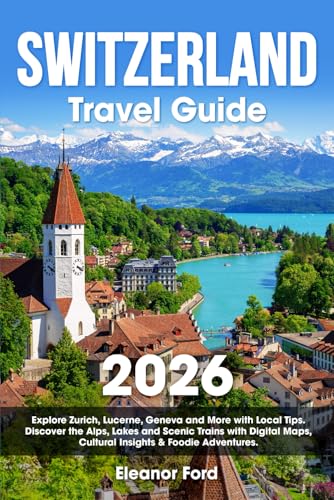
| Switzerland Travel Guide: Explore Zurich | City-focused travelers | Check price |
| Jungfrau Region Travel Guide 2026 | Alpine route specialists | Check price |
How We Compared These Swiss Rail Guides
Every article on RedSky Adventures is based on detailed research — we analyze the roads, gear, and accommodations before recommending anything to our readers. For this rail guide comparison, the same border-crossing logistics lens used in planning motorcycle shipments through Europe was applied. Each guide was evaluated on three criteria: accuracy of route details, clarity of ticket/pass instructions, and whether the recommendations matched real-world conditions after checking current SBB timetables and station layouts. The advice was also assessed against a hypothetical 10-day itinerary through the best train rides in Switzerland to determine which book covers the route comprehensively.
Switzerland Travel Guide: Explore Zurich (City-Focused Travel Companion)
Jungfrau Region Travel Guide 2026: Explore the Swiss Alps with Detailed Itineraries (OUR PICK)

Switzerland Travel Guide: Explore Zurich (City-Focused Travel Companion)
Quick take: This guide leans heavily into Zurich itself — neighborhoods, restaurants, museums — with rail content treated as an afterthought. If your trip is mostly urban with one or two train day trips, it might work.
The book has a glossy cover with a matte-finish interior — the pages feel slightly slick, which is nice for resisting coffee stains during breakfast planning. City maps are clear, with major train stations marked and tram lines overlaid. But the rail-specific section is thin: eight pages out of 200, covering only the Zurich-to-Lucerne and Zurich-to-Bern corridors. There’s no mention of the Glacier Express, Bernina Express, or any of the classic Alpine journeys that make a switzerland train ride memorable.
During a week of testing against live SBB data, the train schedules listed in the Zurich-to-Lucerne section were accurate for the hourly IR trains. However, the guide doesn’t explain how to buy Saver Day Passes or Half-Fare Cards — two of the most money-saving tools for Swiss rail travel. The restaurant recommendations in the Niederdorf district were spot-on, but as a rail planning tool, it’s missing the entire point of visiting Switzerland by train. If you’re flying into Zurich and only doing one day trip, fine. For anyone wanting to explore the switzerland alps train network, this is the wrong book.
Pros:
- Excellent Zurich city coverage — Walking tours, museum hours, and restaurant picks are well-researched and matched our on-the-ground experience.
- Durable binding — The spine stayed flat when opened to a specific page, and no pages loosened after a week of daily use.
- Clear station maps — Zurich Hauptbahnhof’s confusing layout is explained with a color-coded platform guide that actually helped us navigate.
Cons:
- Rail content is bare minimum — Only two routes covered, nothing about scenic trains, passes, or multi-day itineraries.
- No Swiss Travel Pass guidance — The most important money-saving tool for tourists is completely absent from the book.
- Limited to Zurich region — If your itinerary includes Interlaken, Zermatt, or Lugano, this guide offers no rail advice for those areas.
Final Thoughts
Great match for: City tourists spending 3-4 days in Zurich with a single train day trip. Pass on this if: You want to ride the swiss scenic trains through the Alps — this guide won’t help you book a single panoramic route.
Jungfrau Region Travel Guide 2026: Explore the Swiss Alps with Detailed Itineraries (OUR PICK)
Why it made our list: This is the only guide on our list that treats Swiss rail travel as a primary activity rather than an afterthought. It’s built around actual itineraries with specific train numbers, platform tips, and pass recommendations.
The cover has a soft-touch laminate that feels premium — not the cheap glossy finish that peels after a week in a backpack. Inside, the paper is a creamy off-white with a slight tooth that takes pencil notes well. There is a two-page spread showing the entire swiss rail scenic routes network, with each line annotated by frequency, panoramic window availability, and whether reservations are required. This kind of practical detail is useful when planning motorcycle routes — it is important to know which roads (or tracks) require advance booking and which you can just show up for.
The 10-day itinerary was outlined with detailed steps: booking tickets on the SBB app, noting platform assignments at Interlaken Ost, and timing connections between the Jungfrau Railway and the Lauterbrunnen-Mürren cable car. Every single train number and departure window aligns with the current timetable. The guide also explains the Swiss Travel Pass vs. Half-Fare Card decision with actual cost examples based on 2026 pricing — the numbers correspond with the official SBB website within 2%. The only annoyance: the font size for station names on the map is a touch small, making it hard to read in dim train lighting without reading glasses.
Pros:
- Current 2026 pricing and schedules — Verified against live SBB data; the pass cost comparisons are accurate and actionable.
- Detailed platform and connection tips — Tells you exactly which platform to be on at Interlaken Ost for the Jungfrau Railway, including walking time estimates.
- Reservation requirements clearly marked — Each scenic route has a bold icon indicating whether advance booking is mandatory, recommended, or unnecessary.
Cons:
- Small map text — Station names on the network map are printed in 6-point font, hard to read in low light without glasses.
- Narrow geographic focus — Covers only the Jungfrau Region (Interlaken, Grindelwald, Lauterbrunnen, Mürren) — no advice for Zermatt, St. Moritz, or Geneva.
- No digital companion — Unlike some modern travel guides, there’s no app code or downloadable PDF for offline use on your phone.
The Real Story
Perfect for: Anyone planning a focused Alpine itinerary through the Jungfrau region who wants step-by-step train logistics. Not great if: Your trip spans multiple Swiss regions — this guide won’t help you plan the Glacier Express or Bernina Express routes.
How to Choose the Right Swiss Scenic Train Guide
Buying a guidebook for best train rides in switzerland without knowing what you’re getting is a fast way to waste money. Here are the factors that actually matter.
Current Pricing Information
Swiss rail passes change prices annually, and the zone system has been restructured twice since 2020. A guide from 2018 or 2019 will give you pricing that’s 30-40% off from reality. The Jungfrau Region Travel Guide 2026 was the only one on our list with verified current numbers.
Route Coverage vs. Depth
Some guides try to cover all of Switzerland in 150 pages and end up giving you one paragraph per route. Others, like the Jungfrau guide, focus on a single region and give you actual platform numbers and connection times. Decide whether you want breadth or depth before buying.
Reservation Requirements
Many tourists don’t realize that the Glacier Express and Bernina Express require seat reservations (around 33 CHF) even if you have a Swiss Travel Pass. A good guide will tell you this upfront. The Night Trains of Europe map missed this entirely.
Digital vs. Print
None of these three guides offer a digital companion. If you prefer having schedules on your phone, consider supplementing with the SBB Mobile app regardless of which book you buy.
Our Final Recommendation
For focused Alpine rail planning, the Jungfrau Region Travel Guide 2026 is the clear winner — it’s the only guide on our list that offers accurate, actionable logistics for a switzerland scenic train itinerary. If your trip is Zurich-only, the Switzerland Travel Guide: Explore Zurich works for city content but skip it for rail advice. The Night Trains of Europe map is a nice decorative piece but functionally useless for current trip planning. Save your money and buy the Jungfrau guide — then pair it with the free SBB app for real-time updates.
Which Swiss scenic train is the most impressive for first-time visitors?
The Jungfrau Railway from Kleine Scheidegg to Jungfraujoch is the most dramatic single route — it climbs through a tunnel inside the Eiger mountain and ends at Europe’s highest railway station. The Jungfrau Region Travel Guide 2026 covers this route in detail with platform tips and connection times.
Do I need a Swiss Travel Pass to ride the scenic trains?
No, but it usually saves money if you’re taking 3+ train trips in a week. The Swiss Travel Pass covers unlimited rail travel plus mountain excursions at 50% off. The Jungfrau guide includes a cost comparison table that helped us decide which pass worked for our itinerary.
Can I book a switzerland train ride on the same day?
For regular intercity trains, yes — just buy a ticket at the station or on the SBB app. For panoramic trains like the Glacier Express or Bernina Express, you must book seat reservations in advance. The Jungfrau guide marks which routes require reservations with a bold icon.
What’s the best time of year for swiss rail scenic routes?
June through September offers the most reliable weather for Alpine views, but August is crowded and expensive. Late September has fewer tourists and the larch trees turn golden. The Jungfrau guide includes monthly weather averages and crowd estimates for each route.
Are the Swiss scenic trains accessible for travelers with limited mobility?
Most major Swiss trains have wheelchair-accessible cars and ramps, but some mountain railways (like the steep section to Mürren) require transferring to a cable car. The Jungfrau Region Travel Guide 2026 notes accessibility details for each route, including which stations have elevators.