Transcontinental Railroad Today: The Basics Worth Knowing
Contents
You’ve spent weeks building the perfect coast-to-coast motorcycle route. Fuel stops spaced at 180-mile intervals, weather windows calculated by historical pressure patterns, and emergency bail-out points marked every 40 miles. Then, 72 hours before departure, a cold front stalls over the Rockies and your primary line is scrubbed. That’s the moment a lot of riders start searching for what the transcontinental railroad is doing these days. Does it still function as a true continent-crossing lifeline, or is it just a relic that shows up in black-and-white photos?
The gear you skip buying to save money is almost always the gear you regret not having when you need it most. Invest once, invest right. That same principle applies to trip planning: the contingency you neglect is the one that will derail your trip. The railroad isn’t just nostalgia—it’s a logistical corridor useful when pavement plans fail. Understanding the transcontinental railroad today means knowing what it can carry, how fast it moves, and exactly where it can intersect with a motorcycle journey when the weather, a mechanical breakdown, or simple fatigue rewrites your itinerary.
Key Takeaways
- The transcontinental railroad today is a dual-use network: Amtrak passenger trains run on freight-owned tracks, which means understanding freight priorities is critical for schedule realism.
- You can ship a motorcycle via rail—not on the passenger train you ride, but through dedicated vehicle transport services that leverage the same rail corridors.
- Using the train as a bail-out option requires advance research into station locations, motorcycle-friendly loading points, and the specific dimensional limits that vary by route.
The Steel Spine Still Connects Oceans, Just Not How You Think
Ask most people about the transcontinental railroad and they’ll picture the Golden Spike ceremony of 1869. That original alignment from Council Bluffs to Sacramento still exists, but it’s been rebuilt, rerouted, and expanded into a web of main lines that carry roughly 40% of all U.S. long-haul freight ton-miles. Today’s network is dominated by two Class I carriers: Union Pacific, whose Overland Route follows much of the historic alignment across Nebraska, Wyoming, and Utah, and BNSF, whose Northern Transcon runs from the Pacific Northwest through the Northern Plains to Chicago. For a trip planner, those same corridors often parallel interstate highways, which means your motorcycle bail-out points can be synchronized with railroad division points.
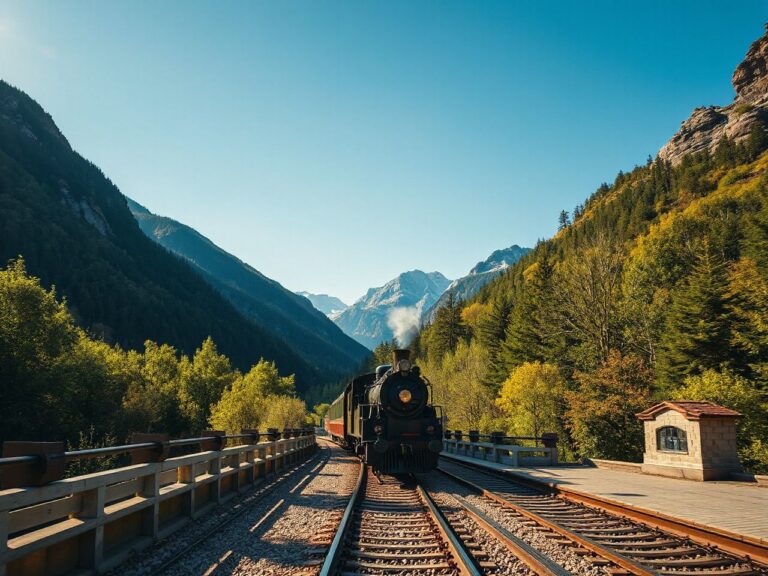
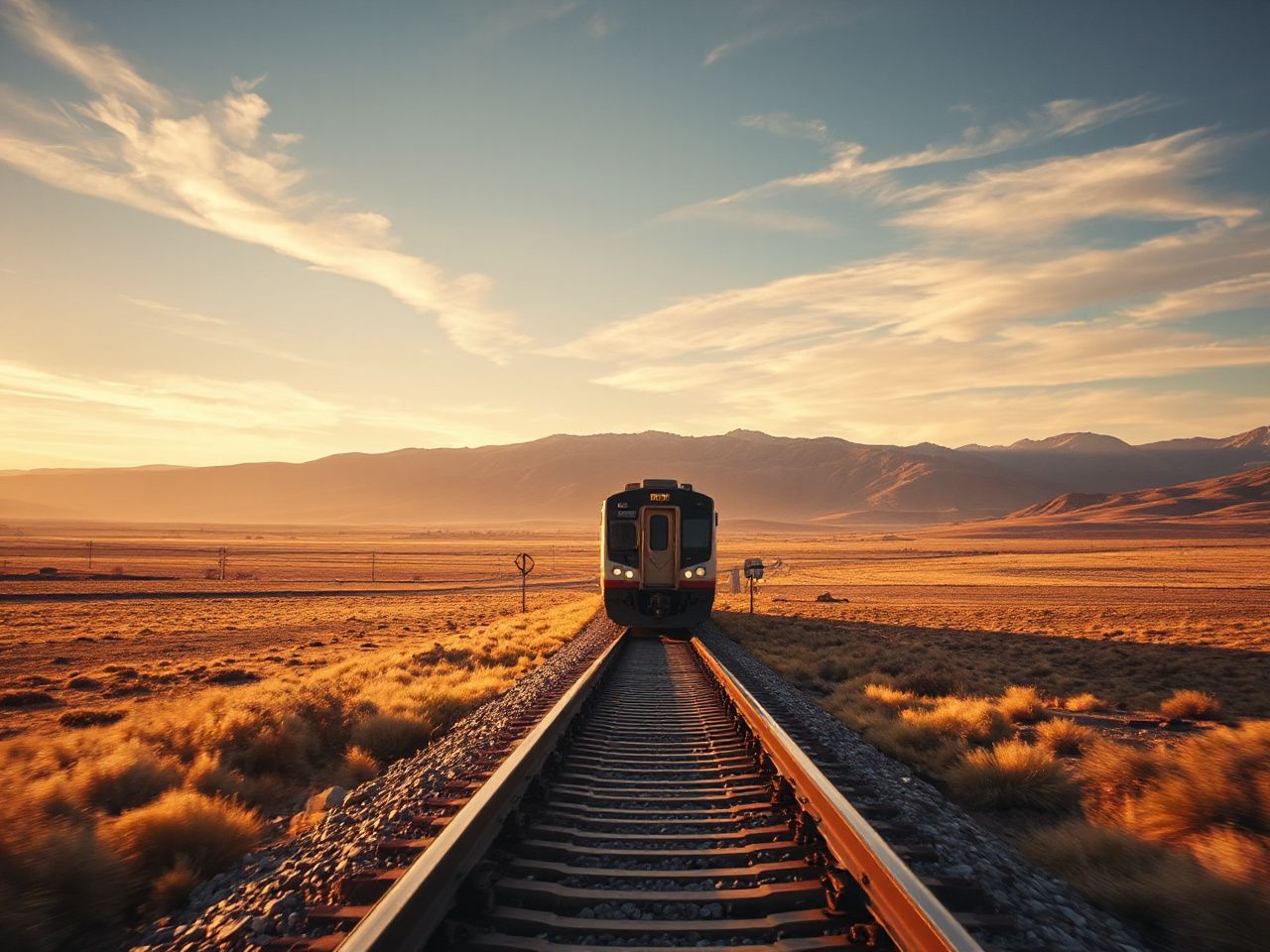
In 2026, you’re not boarding a single “Transcontinental Express.” Instead, you’re looking at a patchwork of long-distance Amtrak routes that stitch together the continent. The California Zephyr (Chicago to Emeryville) is the closest direct descendant of the Overland Route, running on UP’s former Western Pacific and Rio Grande trackage through the Rockies and Sierra Nevada. The Southwest Chief (Chicago to Los Angeles) follows the old Santa Fe Trail, crossing Raton Pass at 7,588 feet. The Empire Builder (Chicago to Seattle/Portland) uses BNSF’s Northern Transcon through Glacier National Park. These aren’t high-speed bullet trains—average speeds hover between 45 and 55 mph—but they run daily and can move you 2,400 miles in roughly 52 hours if on-time performance cooperates.
Passenger Reality Check: What an Amtrak Crossing Actually Demands
Riding the rails across the country today is not a luxury experience out of a vintage poster, but it is an intensely functional one if you plan it carefully. Coach seats recline with 39 inches of legroom—more than any economy airline seat—and observation cars offer panoramic windows that let you scout terrain you might later ride. Sleeping compartments (roomettes and bedrooms) are available, and they include meals in the dining car, which simplifies on-board logistics considerably. The critical limitation for a rider: there is no carry-on motorcycle service. You can’t roll your bike onto a baggage car. But you can stow up to 150 pounds of gear per passenger across carry-on and checked bags, which means helmets, riding suits, and tool rolls can travel with you while the motorcycle moves separately.
On-time performance is a frequent pain point. In fiscal 2025, long-distance Amtrak routes posted a systemwide endpoint on-time rate hovering near 54%. The host freight railroads control dispatching, and when a hot intermodal train needs to pass, your passenger run gets stuck in a siding. For a trip planner, that means never expecting to arrive exactly on the advertised schedule. Build in a full 12-hour recovery day between the train’s scheduled arrival and the moment you need to be straddling a motorcycle at the destination station. This absorbs cascading delays and lets you do a thorough pre-ride inspection on the bike you’ve had shipped or parked at the end point.
Freight: The Real Transcontinental Railroad That Never Sleeps
When people search for “transcontinental railroad today,” they’re often surprised to learn that the freight network is vastly more robust than the passenger one. Over 140,000 route-miles of track move an average of 5.5 million carloads per week across North America. The major transcontinental freight corridors include the Central Corridor (Union Pacific’s Overland Route and BNSF’s Southern Transcon), the Northern Corridor (BNSF via Spokane and Minot), and the Sunset Route (UP from LA to El Paso and east). A single double-stack intermodal train can haul the equivalent of 280 trucks off the highway, and these trains run at maximum authorized track speeds of 70 mph on welded rail segments. For a trip planner, understanding freight fluidity is a predictive tool: when you see intermodal volumes spiking on the AAR’s weekly traffic report, you can anticipate passenger train congestion and plan your bail-out accordingly.
From a motorcycle transport perspective, the freight network is what makes shipping a bike across the continent feasible without you riding every mile. Services like Amtrak Express Shipping don’t formally exist as of 2026, but several third-party transporters use unused capacity on intermodal railcars—essentially, your bike gets palletized and loaded into a container that rides the same rails you might ride as a passenger. Transit times mirror long-distance train schedules: Chicago to Los Angeles runs 5-7 days door-to-terminal, depending on consolidation. If you’re planning a trip that combines riding and rail, you can fly or ride the train out, have the bike already delivered to a warehouse near the station, and begin your ride after a 24-hour mechanical inspection period.
Mapping Rail Corridors Into Your Motorcycle Trip
The real tactical value of the transcontinental railroad today isn’t as a replacement for a motorcycle trip, but as a strategic buffer you can activate under specific triggers. Map every cross-country route with three parallel lines: the pavement line (actual riding route), the bail-out rail line (nearest passenger rail station with motorcycle-friendly access), and the emergency extraction line (a freight depot or team track where a bike could be loaded onto a transport service). The rail line isn’t static—it depends on which Amtrak route serves your region and whether its stations have high-level platforms (easier to roll a bike on/off via wagon) or low-level ground-level boardings (you’ll need a loading ramp).
Here’s a concrete example. If you’re running the Trans-America Trail from Tennessee to Oregon, your pavement line might suffer a washout in the Ozarks. The nearest viable bail-out station could be Kansas City Union Station, served by the Southwest Chief. You’d ride or trailer the bike to KC, board the Chief, and ride to Flagstaff, AZ where you could pick up a pre-positioned bike or have your own shipped. The Chief crosses the Continental Divide at Raton Pass and runs across northern Arizona at an elevation that stays above 5,000 feet, so weather contingencies still apply. Keep notes on each rail segment, including: station coordinates, freight train density for that subdivision, historical delay data from the last 90 days (available on Amtrak’s website), and local motorcycle towing services within a 50-mile radius of each station.
Motorcycle Transport by Rail: The Specs You Need
If you decide to ship your motorcycle instead of riding it across the country, the rail option—through intermodal container services—demands precise measurements. Most standard 20-foot containers have interior dimensions of roughly 19’4″ L x 7’8″ W x 7’10” H. A full-dress touring bike like a Harley-Davidson Road Glide measures about 8.5 feet long and 4 feet wide, so it fits easily with wheel chocks secured to the container floor. The critical spec is door height: some containers have a door opening of only 7’6″, which means you can’t roll in a tall adventure bike with a raised windscreen without unbolting it first. Ship bikes with the screen removed and mirrors folded, and check tire pressures before the multi-day transit. The container will likely ride a transcontinental intermodal train that covers 500-600 miles per day on BNSF’s Southern Transcon, subject to hump yard sorting delays in major terminals like Barstow, CA or Fort Madison, IA.
Cost varies by distance and fuel surcharge, but a coast-to-coast motorcycle shipment via consolidated intermodal rail typically runs between $500 and $900 in 2026 dollars, depending on whether you palletize the bike yourself or use a full-service transporter. When coordinating with a passenger rail bail-out, allow for 3-4 days of lag between the bike’s departure and its availability at the destination transload facility. It is advisable to schedule the rail shipment to land 48 hours early and have a local shop do a quick once-over before putting the bike back on the road.
Station Intel: What to Expect When You Arrive
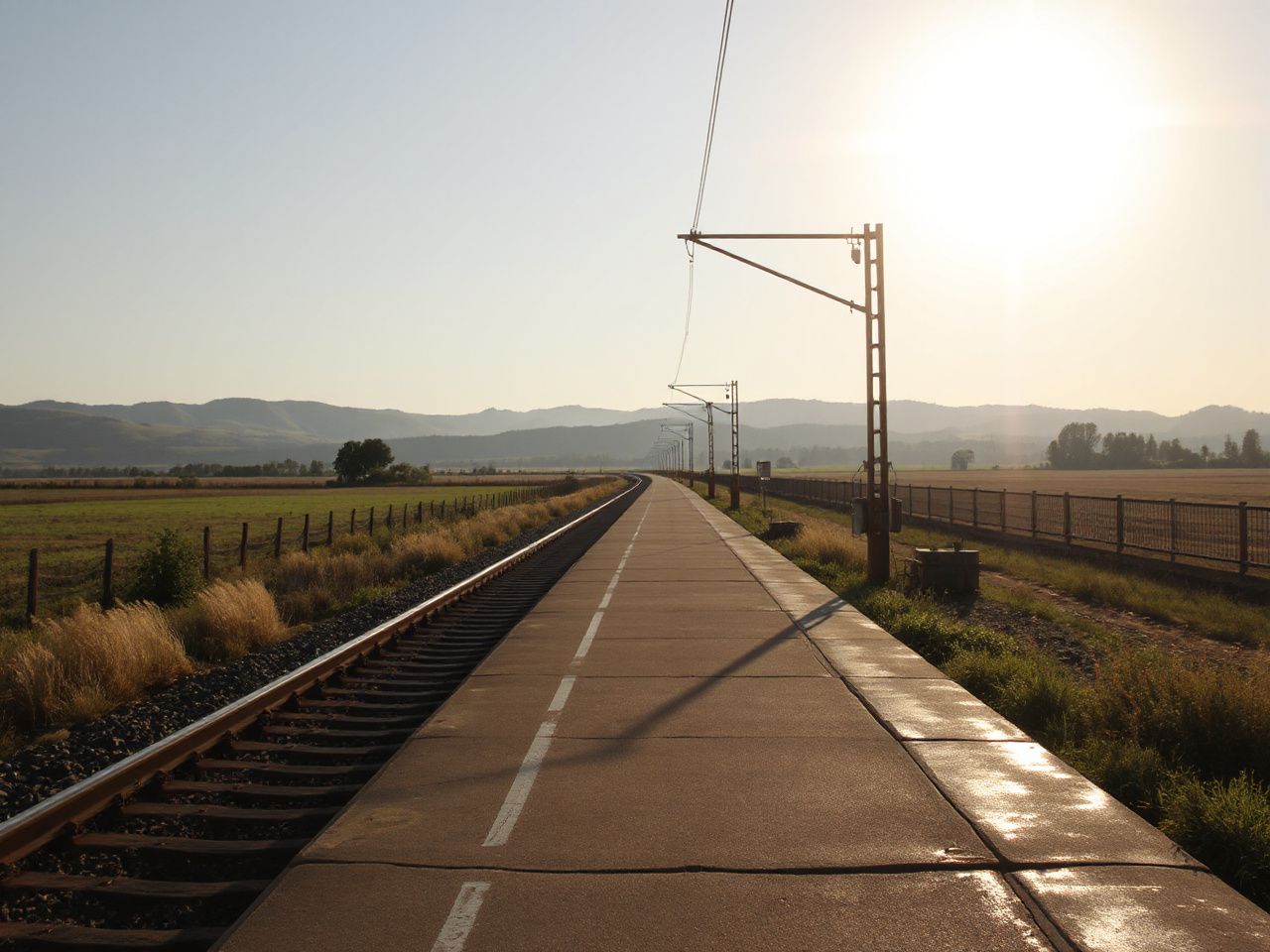
Not all train stations are created equal for a motorcyclist trying to reunite with a bike or launch a new leg. Major terminals like Chicago Union Station have freight elevators and ramps that a motorcycle can navigate, but smaller stops along the transcontinental routes often consist of a concrete pad and a bus shelter. Denver Union Station, a major California Zephyr stop, is a bustling transit hub with ground-level boarding and nearby motorcycle rental outfits, making it an excellent place to regroup. Salt Lake City, in contrast, uses a newer intermodal terminal that’s less bike-friendly—you’ll need to ride or shuttle to a local dealership if your bike shipped to a warehouse across town.
Keep a station evaluation matrix that includes: platform type (high-level vs. low-level), presence of a checked baggage counter (essential for gear), proximity to motorcycle shipping receiving warehouses, and availability of U-Haul or Penske rental within a 5-mile radius in case you need to haul a bike out on a trailer. For the transcontinental railroad today, the most versatile stations for motorcycle operations are Chicago, Kansas City, Denver, Salt Lake City, Sacramento, Portland, and Seattle. Each of these has at least two ways to get a bike onto the road within three hours of arrival, which makes them reliable choices.
Weather and Seasonal Considerations for Rail-Motorcycle Hybrids
Rail lines are not immune to weather. The Donner Pass segment of the California Zephyr can see snowfall from October through May, and track-side snow sheds keep the line open but don’t guarantee on-time passage. For a rider planning a trip that uses the Zephyr in winter, the bail-out window shrinks considerably because the mountains east of Sacramento can close riding season. Treat rail segments crossing major mountain passes the same way as pavement passes: never schedule a rail-dependent motorcycle handoff on the lee side of a pass during its “snow probability window,” meaning the period when historical snow depth at the pass summit exceeds 6 inches in at least 30% of years. For Donner, that window runs from November 15 through April 1. Instead, route through the Southwest Chief to Los Angeles, where the only pass of concern is Raton, which sees far less severe weather.
Summer heat presents its own set of problems. The Southwest Chief’s route across the Mojave Desert can push ambient temperatures above 110°F. Amtrak equipment can handle that heat, but if a motorcycle is sitting in an intermodal container that gets stuck on a siding for 12 hours, internal temperatures can exceed 140°F. Fuel vapor expansion can cause leaks, and plastics soften. It is recommended to ship with fuel tanks no more than one-third full and place a folded microfiber towel over the tank cap to catch any seepage. All electronic devices (phone, GPS, bike ECU dongles) should be removed from the bike and carried in carry-on luggage, protected from the extreme thermal swings of a steel container.
Your Transcontinental Railroad Planning Kit
To use the modern transcontinental railroad as a serious trip-planning tool, you need a dedicated information package. Build a physical folder for each route you might bail out onto. Inside goes a printed timetable (the PDF on your phone will fail when you have no signal in the mountains), a 25,000:1 scale state railroad map showing every siding and yard, a list of all stations with the phone numbers for the station agent or Amtrak’s 800 number, and an annotated list of motorcycle-friendly resources at each stop. Also include weather contingency cards for the major passes: the card for the Moffat Tunnel route (California Zephyr) lists the tunnel’s elevation (9,239 feet), average winter closure risk, and the nearest bail-out station (Granby, CO) with its motorcycle towing contact.
On the digital side, a mobile hotspot can be dedicated to rail tracking. Amtrak’s app provides ETAs, but the granular data comes from ASM (Advanced System Monitor) displays that some enthusiasts share online. Setting up push alerts for UP or BNSF track failure notices on the subdivisions to be traversed helps anticipate delays. When a washout or derailment occurs, the host railroad often halts all traffic for 6-12 hours. Knowing that before Amtrak announces a service disruption allows arranging an alternative bike extraction—perhaps renting a truck in the next town—before the rest of the passengers even know there’s a problem.
When Rail Becomes the Primary Plan, Not the Contingency
There are scenarios where a trip is built around the railroad intentionally. Maybe the goal is to experience the high Sierras from a dome car instead of a motorcycle seat on a day when the pavement is treacherous, or to move a vintage bike across the country without putting unnecessary miles on the odometer. In 2026, the transcontinental railroad can be a deliberate travel choice that still connects to a riding adventure. For example, riding the Empire Builder from Chicago to Whitefish, Montana, with a motorcycle already shipped to a local shop is an option. The train arrives at 7:41 AM (scheduled), the shop is a short walk away for inspection, and by 9 AM it is possible to head into Glacier National Park. The train segment can save two days of interstate travel and help conserve energy for the twisty roads.
This approach works because the stations near major riding destinations—Whitefish, Grand Junction (CO), Truckee (CA), Albuquerque (NM)—all have established motorcycle rental or shipping infrastructure within a short distance. But it only works if you’ve done the legwork: confirming that the station parking lot is safe for overnight bike storage, that the local repair shop has availability on your arrival date, and that you have a written contingency if the train is delayed beyond a 6-hour window (which happens roughly one out of every five trips on western long-distance routes). That’s where careful planning comes in: no single point of failure, no assumptions without verification.
Frequently Asked Questions
Can I bring a motorcycle on an Amtrak transcontinental train?
No, Amtrak does not offer roll-on motorcycle or automobile service on its long-distance routes. Trains carry only passengers and standard checked baggage. To move a motorcycle by rail, you must use a third-party vehicle transport service that palletizes the bike and places it in an intermodal container riding on a separate freight train. Coordination times run 5-7 days coast-to-coast, and you’ll meet the bike at a warehouse near your destination station.
Which modern Amtrak route follows the original transcontinental railroad most closely?
The California Zephyr between Chicago and Emeryville (San Francisco) traces the historic Overland Route across much of Nevada and the Sierra Nevada, descending into California via Donner Pass—the same pass the Central Pacific built in the 1860s. East of Salt Lake City, the route diverges from the original alignment through the Moffat Tunnel and across the Colorado Rockies, but the western half is steeped in transcontinental railroad history.
How reliable are transcontinental passenger trains in 2026 for time-sensitive connections?
On-time rates hover near 54% for western long-distance routes, making them unsuitable for tight connections without a buffer. A planned arrival at 3 PM could realistically happen anytime between 1 PM and 11 PM. For motorcycle hand-offs, allow a 12-hour window and have a backup plan if the train is more than 6 hours late—usually a rental car to cover the last leg while the bike reships to a new rendezvous point.