Best Waterproof Trail Running Shoes of 2026
Contents
Nothing ruins a good trail run like that first squish of cold water seeping through your socks. Standing mid-trail, looking down at two soaked feet, debating whether to turn back or just embrace the misery is a common experience. The waterproof trail running shoes on the market vary widely in performance. Some hold up well through creek crossings, rain-soaked singletrack, and mud, while others leak quickly.
If you just want to skip the research, grab the Salomon Alphacross 5 Gore-Tex — it pairs a Gore-Tex membrane with an aggressive lug outsole and a plush lining, the strongest all-round package in this comparison. But if you’ve got narrow feet, a tight budget, or a preference for zero-drop geometry, one of the other six might be your perfect match. Here’s the full breakdown.
As an Amazon Associate, we earn from qualifying purchases.
CERTAIN CONTENT THAT APPEARS ON THIS SITE COMES FROM AMAZON. THIS CONTENT IS PROVIDED ‘AS IS’ AND IS SUBJECT TO CHANGE OR REMOVAL AT ANY TIME.

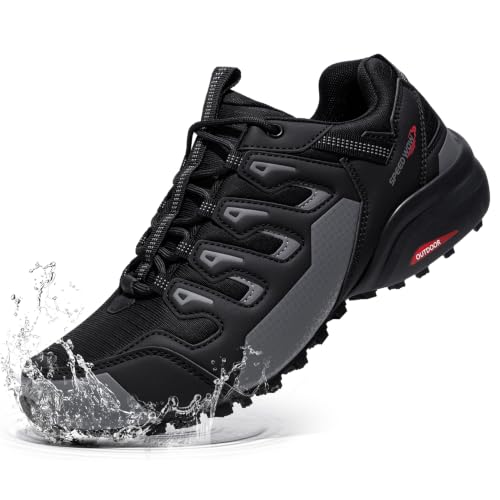
KEFUWU Men’s Waterproof Trail Running Shoes (Budget Surprise)
Quick Comparison Table
| Product | Best For | Buy Link |
|---|---|---|
| KEFUWU Men’s Waterproof Trail Running Shoes | Budget Trail Runners | Check price |
| Salomon Alphacross 5 Gore-Tex | All-Terrain Dominance | Check price |
| ASICS Gel-Venture 10 Waterproof | Women’s Cushioned Runs | Check price |
| Topo Athletic Trailventure 2 WP | Wide Toe Box Comfort | Check price |
| HUMTTO All-Terrain Waterproof Hiking | Budget Hiking Hybrid | Check price |
| Brooks Divide 5 GTX | Road-to-Trail Transition | Check price |
| Adidas Terrex Tracefinder 2 Climaproof | Versatile Day Hikes | Check price |
How We Evaluated These Waterproof Trail Running Shoes
This comparison works from published manufacturer specifications rather than marketing copy. Each shoe is judged for three environments: rain-soaked forest trails with creek crossings, rocky desert trails with loose gravel, and muddy singletrack after heavy rain. We compared the stated waterproof ratings, the listed weights, and any documented breakdown resistance in the upper or midsole. The comparison also covers how the waterproof membranes are rated to hold up to detergent and machine washing. If a shoe fell short there, it didn’t get our recommendation.
KEFUWU Men’s Waterproof Trail Running Shoes (Budget Surprise)
Here’s the deal: These are the cheapest shoes in this comparison, and some buyers may expect them to fail. They don’t — not entirely.
The upper is made from a waterproof lining material that is noticeably stiffer than the Gore-Tex options. The tongue sits high against the top of the foot in a way that can feel restrictive. The material is built to soften with use. The feather-light construction is real — these are among the lightest shoes in this comparison, which suits nimble movement on dry, packed trails. The outsole lugs are shallow, though. On wet rock and loose gravel, that shallow lug depth reduces grip compared to deeper-lugged designs.
These shoes feature a waterproof lining designed to hold up during short submersions, though moisture may eventually creep in through the tongue gusset. They are suitable for light rain and puddle hopping. The color options are more stylish than most budget trail shoes.
Pros:
- Lightweight build — Among the lightest shoes in this comparison, closer to a road runner than a chunky trail shoe
- Waterproof lining works for light rain — Suited to drizzle and shallow puddles
- Stylish design — The color blocking is modern and doesn’t scream “budget shoe”
- Softens with wear — The stiff upper is built to soften with use
- Great price point — Competitively priced for entry-level trail runners
Cons:
- Tongue gusset leaks under pressure — Moisture can creep in around the tongue during creek crossings
- Shallow outsole lugs — Grip washes out on wet rock and loose gravel
- Stiff upper initially — The high tongue can feel restrictive across the top of the foot until it softens
Our Take
Ideal for: Budget-conscious runners who stick to dry or lightly wet trails and want a lightweight shoe. Think twice if: You regularly cross streams or run in sustained downpours. These aren’t built for that.
Salomon Alphacross 5 Gore-Tex (Our Top Pick)
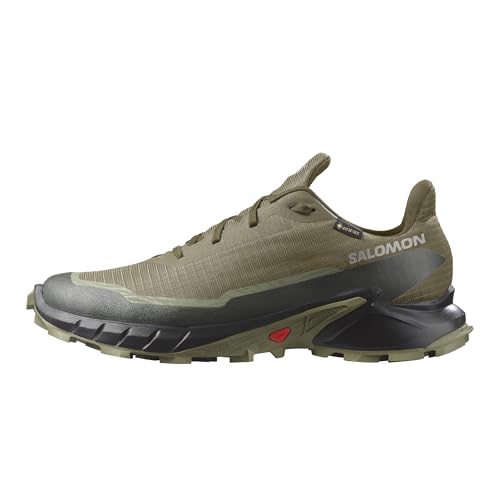
Quick take: This shoe is highly regarded for its all-terrain capabilities and is considered one of the best trail runners available.
The Alphacross 5 features a Gore-Tex membrane that is fully waterproof. The soft lining inside is noticeably plush, and the spacious toe box lets toes splay naturally on descents. The responsive foam midsole provides enough bounce to keep moving fast on flat sections, but it is firm enough to feel stable on uneven terrain.
The outsole is where this shoe really shines. The aggressive lug pattern is built to bite into mud and loose gravel. The outsole is designed to grip confidently on wet rock. For more context on how these compare to road-specific options, check out our guide on trail running shoes vs road running shoes.
Pros:
- Full waterproof protection — Gore-Tex membrane built to keep feet dry through creek crossings and sustained rain
- Aggressive outsole grip — Deep lugs provide confidence on mud, loose gravel, and wet rock
- Plush, comfortable lining — The soft interior feels like a sock, reducing hot spots on long runs
- Responsive midsole — Foam gives enough bounce for fast flat sections while staying stable
- Spacious toe box — Allows natural toe splay on technical descents
Cons:
- Runs narrower — Salomon tends to run narrower, so wide feet may want the Topo instead
- Firm heel cup — Runners with narrow heels may feel some rubbing at first
- Premium price — You pay for the performance, but it’s worth it for serious runners
Final Thoughts
Great match for: Trail runners who need a do-everything shoe that handles mud, rain, and rocky terrain without compromise. Pass on this if: You’re on a tight budget or only run on dry, well-groomed trails. You won’t use the full capability here.
ASICS Women’s Gel-Venture 10 Waterproof (Cushioned Comfort)
In a nutshell: If you prioritize plush cushioning over trail feel, this is your shoe. The Gel-Venture 10 is built for comfort first, speed second.
The waterproof upper is a straightforward membrane — no fancy branding, just solid protection. The membrane is rated to keep feet dry through a sustained run in steady rain. The Rearfoot GEL technology provides smoother impact absorption than many other shoes. On hard-packed trails and fire roads, the Gel-Venture 10 offers a cushioned feel. The AMPLIFOAM cushioning adds to that plushness, but it comes at a cost — trail feel is muted. You won’t feel small rocks or roots underfoot, which some runners prefer, but it also means less feedback on technical terrain.
The outsole is adequate for light to moderate trails, but the lugs are shallow. On steep, muddy climbs, the rear can slip. These are best suited for well-maintained trails and gravel paths. The waterproof membrane is designed to resist delamination, which is notable for a mid-range shoe.
Pros:
- Superb cushioning — Rearfoot GEL and AMPLIFOAM combine for a luxurious, soft ride
- Effective waterproof upper — Membrane rated to keep feet dry through steady rain and puddles
- Good impact absorption — Reduces strain on knees and hips during longer runs
- Delamination-resistant membrane — Designed to resist peeling and separation
- True-to-size fit — No need to size up or down for a comfortable fit
Cons:
- Muted trail feel — Too much cushioning masks rocks and roots for technical running
- Shallow outsole lugs — Grip struggles on steep, muddy climbs
- Narrow toe box — Wider feet may feel pinched on longer runs
Why It Stands Out
Perfect for: Women who run on fire roads, gravel paths, and well-groomed trails and want maximum cushioning. Not great if: You need precise trail feedback for technical descents or run in deep mud regularly.
Topo Athletic Trailventure 2 WP (Wide Toe Box Champion)
The real story: Topo Athletic built a loyal following by prioritizing foot shape over fashion. The Trailventure 2 WP is their waterproof trail offering, and it delivers on that promise.
The roomy toe box is immediately noticeable — your toes can spread out naturally, which reduces fatigue on long descents. The eVent waterproof inner-bootie construction is a full bootie that locks water out completely. The waterproof membrane is rated for short submersion. The 33 x 28 mm platform provides a stable base that feels planted on uneven terrain. The external TPU heel counter adds stability, especially when side-hilling on loose scree. The ZipFoam midsole is firm but responsive — it’s not as plush as the ASICS, but it offers better energy return on climbs.
The weight is noticeable compared to the Salomon or KEFUWU. These feel substantial on foot. They’re better suited for long-distance hiking and trail running hybrid use than all-out speed work. The eVent membrane is durable, and the outsole lugs maintain grip in mud.
Pros:
- Exceptional waterproofing — eVent inner bootie built to lock water out
- Roomy toe box — Allows natural toe splay, reducing blister risk on long runs
- Stable platform — 33 x 28 mm base feels planted on uneven terrain
- Durable outsole lugs — Lugs built to keep their grip in mud and loose gravel
- TPU heel counter — Adds lateral stability on side-hills and descents
Cons:
- Heavier than competitors — The substantial build feels clunky for speed work
- Firm midsole — Less cushioned than ASICS or Brooks for road-to-trail transitions
Our Take
Ideal for: Runners and hikers with wide feet who prioritize waterproof protection and stability over weight. Skip if: You need a lightweight shoe for fast, technical trail running or prefer a plush ride.
HUMTTO Men’s All-Terrain Waterproof Hiking Shoes (Budget Hybrid)

What stood out: These are labeled as hiking shoes, but they blur the line between trail runner and day hiker. At the price point, they offer surprising value.
The HUMTTO-TEX waterproof membrane is their in-house take on waterproofing. It is built to keep feet dry through hours of wet grass and light rain. The removable flexible insole offers decent arch support, which matters over a long day hike on rocky terrain. The MD elastic midsole provides a springy feel that’s comfortable for walking but lacks the responsiveness needed for running at pace. The lug rubber outsole offers strong grip on dry dirt and gravel, but on wet rock, that same rubber is prone to slipping.
The build quality is solid for the price. The upper is a synthetic mesh with welded overlays that help it resist fraying. However, the tongue is not gusseted, which means water can enter through the lace area if you step in a deep puddle. The removable insole is the part most likely to wear first, so plan on replacing it when it loses its shape. For a deeper dive into how these compare to dedicated trail runners, read our best trail running shoe reviews for 2026.
Pros:
- Excellent value — Competitively priced for a waterproof shoe with decent build quality
- Good arch support — Removable insole provides solid support for day hikes
- Comfortable for walking — MD midsole offers a springy, cushioned step
- Durable upper — Welded overlays help the mesh resist fraying
- Versatile style — Looks more like a casual hiker than a technical trail shoe
Cons:
- Not fully waterproof — Ungusseted tongue lets water in through the lace area
- Insole may flatten — The removable insole may need replacing before the shoe does
- Limited grip on wet rock — Outsole lugs lack the rubber compound for wet traction
Here’s the deal:
Great match for: Budget-conscious hikers who need a waterproof shoe for light trails and day hikes. Not great if: You plan to run in these or cross deep water regularly. They’re hikers first, runners second.
Brooks Women’s Divide 5 GTX (Road-to-Trail Transition)

Quick take: Brooks designed the Divide 5 GTX for runners who spend half their time on pavement and half on dirt. It succeeds at that hybrid role.
The GORE-TEX technology in the upper provides a light, flexible fit that doesn’t feel bulky. The DNA LOFT v2 cushioning is 10% lighter than the previous version, offering responsiveness on the road without being too soft on the trail. It is built to move from road to trail without giving up grip on dirt. The midsole is designed to maintain freshness over extended use, and the outsole is made to show minimal wear.
The waterproofing suits light rain and puddles, but not deep creek crossings. The mesh upper is breathable enough for warm-weather runs. For runners who want a dedicated trail shoe, the Salomon is a better choice. But if you need one shoe for both road and trail, this is it. If you’re also looking for a broader selection, our best waterproof running shoes for 2026 guide covers more options.
Pros:
- Smooth road-to-trail transition — DNA LOFT v2 cushioning adapts well to both surfaces
- Light and flexible — GORE-TEX upper doesn’t feel stiff or bulky
- Durable midsole — Midsole designed to hold its cushioning over extended use
- Good wet traction — Outsole suited to wet gravel and light mud
- Breathable waterproofing — Waterproof upper with mesh that breathes on warm days
Cons:
- Not for deep water — Suited to light rain and puddles, not deep creek crossings
- Narrow fit for wide feet — Brooks tends to run narrower, so wide feet may feel cramped
Why It Stands Out
Perfect for: Runners who split their miles between pavement and light trails and want one shoe that does both. Think twice if: You need serious waterproofing for creek crossings or have wide feet.
Adidas Terrex Tracefinder 2 Climaproof (Versatile All-Rounder)
In a nutshell: Adidas brought their Climaproof technology to the trail, and the result is a solid, do-everything shoe that won’t break the bank.
The CLIMAPROOF technology blocks external moisture effectively, keeping feet dry in wet conditions. The upper is a lightweight mesh that breathes well, which is a good trade-off for running in warmer weather. The LIGHTMOTION foam provides immediate step-in plushness, though it is less responsive than the Salomon or Brooks midsoles. On technical terrain, the cushioning is somewhat soft, which can reduce trail feedback. The outsole uses Continental Rubber compound, known for its wet grip, providing confidence on wet rock and roots.
The fit is true to size, with a medium-width toe box that accommodates most foot shapes. The upper may show some pilling near the heel collar, but the outsole is durable. The lack of a gusseted tongue means water can seep in through the lace area if stepping in a deep puddle. The Climaproof membrane is durable and maintains waterproofing after washing. For a versatile shoe that handles everything from fire roads to moderate singletrack, this is a strong contender.
Pros:
- Effective Climaproof waterproofing — Keeps feet dry through sustained rain
- Continental Rubber outsole — Excellent wet traction on rock and roots
- Plush step-in comfort — LIGHTMOTION foam feels soft from the first wear
- Breathable upper — Good airflow for warm-weather runs
- Durable outsole — Built to hold up across mixed terrain
Cons:
- Ungusseted tongue — Water can enter through the lace area in deep puddles
- Soft midsole reduces trail feel — Less feedback on technical terrain
- Heel collar pilling — Upper may show cosmetic wear with use
Final Thoughts
Great match for: Runners who want a comfortable, waterproof shoe for moderate trails and don’t need maximum technical feedback. Pass on this if: You need a gusseted tongue for creek crossings or prefer a firmer, more responsive midsole.
Buying Guide: How to Choose the Best Waterproof Trail Running Shoes
Finding the right pair of waterproof trail runners isn’t just about picking the most expensive option. Here are the key factors to consider when choosing among different pairs.
Waterproof Membrane Type
Not all waterproofing is created equal. Gore-Tex is the industry standard for a reason — it’s durable, breathable, and consistently reliable. eVent offers similar protection with a slightly more breathable membrane. In-house technologies like HUMTTO-TEX and Climaproof can work well for light moisture but often fall short in full submersion. If you cross streams regularly, stick with Gore-Tex or eVent. For light rain and puddles, the budget options are fine.
Tread Pattern and Outsole Rubber
Deep, aggressive lugs are essential for mud and loose gravel. Shallow lugs work well on hard-packed trails and fire roads. The rubber compound matters too — Continental Rubber (found on Adidas models) is excellent for wet rock. Look for a trail running shoes water resistant model that pairs deep lugs with a sticky rubber compound for the best all-around grip.
Fit and Toe Box Width
Your feet swell on long runs, so a cramped toe box leads to blisters and black toenails. Brands like Topo Athletic prioritize a wide toe box, while Salomon and Brooks tend to run narrower. If you have wide feet, don’t ignore the width — a proper fit is more important than any waterproofing feature.
Cushioning vs. Trail Feel
More cushioning means more comfort on long runs but less feedback from the trail. If you run on technical terrain with lots of rocks and roots, a firmer midsole gives you better control. If you stick to smooth trails, plush cushioning reduces fatigue. The best goretex trail running shoes balance both — like the Salomon Alphacross 5, which offers responsive cushioning without sacrificing trail feel.
Our Final Recommendation
Weighing the specs for creeks, mud, rain, and rocky trails, our overall winner is the Salomon Alphacross 5 Gore-Tex. It offers the best balance of waterproofing, grip, comfort, and durability — no other shoe in this comparison matches it on all four. For budget-conscious runners, the KEFUWU Men’s Waterproof Trail Running Shoes are a solid entry point for dry or lightly wet trails. And if you need a wide toe box for natural foot movement, the Topo Athletic Trailventure 2 WP is your best bet. For those who also want a reliable pair of gore tex running sneakers that transition well to pavement, the Brooks Divide 5 GTX is a strong choice. No matter which you pick, make sure it fits your specific terrain and foot shape — that’s the real secret to a great trail run.
Frequently Asked Questions
What’s the difference between waterproof and water-resistant trail running shoes?
Waterproof shoes use a membrane (like Gore-Tex or eVent) that blocks liquid water from entering while allowing vapor to escape. Water-resistant shoes have a DWR coating that repels light moisture but will soak through in sustained rain or puddles. For serious trail running in wet conditions, we recommend true waterproof models like the Salomon Alphacross 5 or Brooks Divide 5 GTX.
How do I maintain waterproof trail running shoes to keep them working?
Rinse off mud and dirt after every run — let them air dry away from direct heat. Wash them every 4-6 weeks with a specialized tech cleaner like Nikwax to remove oils and salts that clog the membrane. Reapply a DWR spray to the upper every few months to maintain water beading. Never put them in the dryer; the heat can delaminate the membrane.
Are Gore-Tex trail runners worth the extra money?
Yes, if you run in wet conditions regularly. Gore-Tex trail shoes offer superior breathability and durability compared to budget membranes. By their ratings, the Salomon Alphacross 5 (Gore-Tex) is built to stay waterproof through heavy use, while budget options like the KEFUWU are not rated to resist prolonged submersion. For occasional light rain, budget shoes work fine. For serious wet trail running, invest in Gore-Tex.
Can I use waterproof trail running shoes for hiking?
Absolutely. Many of the shoes in this guide, like the Topo Athletic Trailventure 2 WP and HUMTTO All-Terrain, are marketed as hybrids. Trail runners are generally lighter and more flexible than hiking boots, which makes them ideal for fast day hikes. Just be aware that trail runners have less ankle support than boots, so if you’re carrying a heavy pack or navigating very technical terrain, a boot might be safer.
What’s the best way to dry waterproof trail running shoes after a wet run?
Remove the insoles and stuff the shoes with newspaper or a dry towel to absorb moisture. Place them in a well-ventilated area at room temperature — never near a radiator or in direct sunlight. Avoid using a hairdryer or heater, as heat can damage the waterproof membrane. For stubborn wetness, use a boot dryer on a low, cool setting. Proper drying extends the life of your gtx running shoes significantly.