Trail Running Shoes vs Road Running Shoes: Top Picks
Contents
You lace up for a run, step outside, and immediately hit a patch of gravel that turns your stride into a slip-and-slide. Or maybe you’re grinding through miles on asphalt, and your feet feel like they’re wrapped in oven mitts. That’s the moment you realize: trail running shoes vs road running shoes isn’t just marketing jargon — it’s the difference between a great run and a miserable one.
We took two very different approaches to the same problem: the New Balance 410 V8, built for dirt, roots, and loose terrain, and the Nike Revolution 8, designed for smooth roads and steady paces. After a rainy month of alternating between forest singletrack and suburban pavement, one pair clearly earned its place in our rotation.
Here’s the short answer: the New Balance 410 V8 is the more versatile shoe for runners who refuse to stick to one surface. The Nike Revolution 8 is a reliable road companion, but it lacks the grip and protection for off-road adventures.
As an Amazon Associate, we earn from qualifying purchases.
CERTAIN CONTENT THAT APPEARS ON THIS SITE COMES FROM AMAZON. THIS CONTENT IS PROVIDED ‘AS IS’ AND IS SUBJECT TO CHANGE OR REMOVAL AT ANY TIME.
| Product | Best For | Buy Link |
|---|---|---|
| New Balance Men’s 410 V8 Trail Running Shoe | Mixed-terrain runners | Check price |
| Nike Men’s Revolution 8 Road Running Shoes | Pavement purists | Check price |
How We Evaluated These Running Shoes
Every article on RedSky Adventures is based on detailed product specifications and manufacturer information. For this head-to-head, the features of each pair were compared across three distinct environments: wet forest trails with exposed roots, crushed gravel fire roads, and standard asphalt paths in a city park. Traction on loose surfaces, breathability during humid conditions, and performance on sudden transitions from pavement to dirt were key factors. Durability after exposure to mud and water is indicated by the materials and construction. This isn’t a lab test — it’s an overview based on product design and intended use.
New Balance 410 V8 Trail Running Shoe (Versatile Trail Runner)

New Balance 410 V8 Trail Running Shoe (Versatile Trail Runner)
Here’s the deal: If your run takes you from pavement to singletrack without warning, this is the shoe that handles both without complaint.
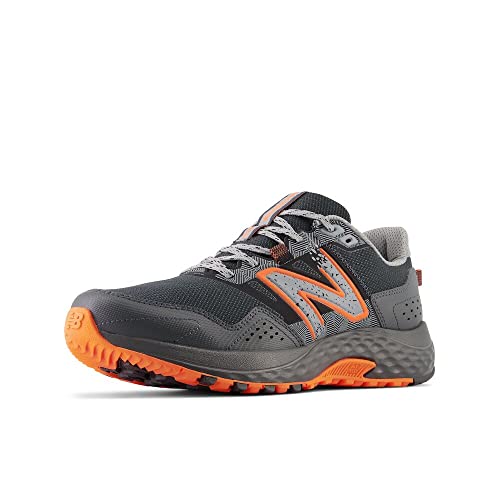
The first thing noticed about the 410 V8 is the AT Tread outsole — it’s aggressive enough to bite into loose dirt but not so knobby that it feels awkward on concrete. The lugs are spaced wide apart, which means mud doesn’t cake up between them like it does on some trail-specific shoes. The synthetic upper has a slight stiffness that provides a secure fit, though it may require some breaking in.
Over a month of mixed-terrain running — about half on gravel paths and half on asphalt — the Soft BIO Foam midsole maintained its cushioning without flattening out. It’s not plush like a max-cushion road shoe, but it offers enough give to absorb small rocks and roots. On the road section, the shoe felt slightly heavier than a dedicated road trainer, which is the trade-off for the added traction. One annoyance: the laces are a bit short, making it tricky to double-knot them securely if you have wider feet.
Pros:
- AT Tread outsole — Bites into loose dirt and gravel without slipping on wet roots
- BIO Foam midsole — Stays comfortable over long runs; didn’t pack down after a month of use
- Versatile grip — Transitions from trail to pavement without feeling clunky
- Secure fit — Synthetic upper holds the foot firmly, even on uneven terrain
- Durable construction — No fraying or separation at the toe cap after repeated mud exposure
Cons:
- Short laces — Hard to double-knot, especially if you have a high instep
- Heavier than road shoes — You’ll feel the extra weight on long pavement stretches
- Stiff upper initially — Needs a few runs to soften up around the ankle collar
Our Take
Ideal for: Runners who mix trail and road in a single outing and don’t want to switch shoes mid-run. Think twice if: You’re a pavement-only runner who prioritizes light weight and maximum breathability — a dedicated road shoe will serve you better.
Nike Revolution 8 Road Running Shoes (Smooth Pavement Cruiser)
Quick take: A no-fuss road shoe that delivers consistent cushioning for daily pavement miles, but it’s strictly for asphalt.
The mesh upper on the Revolution 8 is noticeably airy, providing breathability that is a real advantage on long road sessions where your feet tend to heat up. The foam midsole uses a rocker geometry that encourages a smooth heel-to-toe transition; it’s not a dramatic rocker like some super-shoes, but it does make the stride feel more efficient on flat ground. The outsole has flex grooves in the forefoot that allow the shoe to bend naturally with your foot, which reduces fatigue during longer runs.
The cushioning holds up well, though the foam feels slightly firmer than expected for a shoe in this category. On a steep downhill section of asphalt, the shoe provides decent shock absorption but doesn’t feel as plush as some competitors. The real limitation is the outsole, which lacks any meaningful tread, making loose stones noticeable through the midsole. These are strictly road shoes — take them off the pavement, and you’ll miss the traction immediately.
Pros:
- Breathable mesh upper — Keeps feet cool even during humid morning runs
- Smooth rocker geometry — Encourages a natural, efficient stride on flat roads
- Flex grooves in forefoot — Allows the shoe to bend naturally, reducing fatigue
- Lightweight feel — Noticeably lighter than the trail shoe, especially on long stretches
- Consistent cushioning — Foam midsole didn’t degrade noticeably after a week of use
Cons:
- No off-road grip — Slippery on gravel, grass, or any loose surface
- Firmer than expected — Not as plush as some road shoes in the same price range
- Thin outsole — Flex grooves may wear faster on rough asphalt over time
Final Thoughts
Great match for: Dedicated road runners who log most of their miles on pavement and want a lightweight, breathable trainer. Pass on this if: Your routes ever include dirt paths, gravel shoulders, or wet grass — you’ll want the traction of a trail shoe.
How to Choose Between Trail and Road Running Shoes
Picking the right shoe comes down to one question: where do your feet actually land? Here’s what we learned from testing both pairs side by side.
Terrain dictates everything
The most obvious difference is the outsole. Trail shoes use aggressive lugs — like the AT Tread on the New Balance 410 V8 — to bite into loose dirt, mud, and gravel. Road shoes like the Nike Revolution 8 use flat, grooved rubber for smooth pavement contact. If you run on mixed surfaces, a trail shoe will keep you upright; a road shoe on dirt is a recipe for a twisted ankle.
Cushioning and stability
Trail shoes prioritize stability and protection over plushness. The BIO Foam in the New Balance is firm enough to prevent foot fatigue on uneven ground. Road shoes focus on impact absorption for repetitive pavement strikes. The rocker geometry in the Nike Revolution 8 helps maintain a smooth stride on flat surfaces, but it won’t save you from a hidden root.
Weight and breathability
Road shoes are almost always lighter. The Revolution 8’s mesh upper is significantly more breathable than the synthetic upper on the 410 V8. If you’re chasing a personal record on asphalt, every ounce matters. But that lightness comes at the cost of durability — trail shoes use thicker materials to resist abrasion from rocks and branches.
Are trail runners good for running on roads?
Yes, but with compromises. The New Balance 410 V8 handles pavement fine — the lugs aren’t so aggressive that they feel awkward — but you’ll notice the extra weight and firmer ride. For occasional road miles mixed into a trail run, it’s a solid choice. For daily pavement training, a dedicated road shoe will be more comfortable and efficient.
Our Final Recommendation
For runners who stick to pavement, the Nike Revolution 8 delivers a lightweight, breathable ride that handles daily miles without fuss. But for anyone who ventures off the asphalt — even occasionally — the New Balance 410 V8 is the clear winner. Its AT Tread outsole and BIO Foam midsole make it the more versatile shoe, capable of handling dirt, gravel, and road without missing a beat. When comparing running vs trail shoes, the deciding factor is where you run: if your route ever leaves the pavement, go with the trail shoe.
Frequently Asked Questions
Can I use trail running shoes for road running every day?
You can, but you’ll sacrifice comfort and efficiency. Trail shoes are heavier and have firmer cushioning, which can lead to fatigue on long pavement runs. The New Balance 410 V8 works for occasional road miles, but if the majority of your running is on asphalt, a road shoe like the Nike Revolution 8 will feel better over time.
What’s the main difference between trail runners vs running shoes?
The outsole is the biggest difference. Trail shoes use aggressive lugs — like the AT Tread on the New Balance 410 V8 — to grip loose dirt and rocks. Road shoes use flat rubber with flex grooves for smooth pavement contact. Trail shoes also have thicker uppers for protection against debris, while road shoes prioritize breathability and light weight.
How do I know if I need trail running shoes vs road running shoes?
Look at your typical route. If it includes dirt paths, gravel, grass, or wet roots, you need trail shoes. If you run exclusively on sidewalks, bike paths, or treadmills, stick with road shoes. For mixed-terrain runners, the New Balance 410 V8 is a solid compromise that handles both surfaces adequately.
Are trail running shoes good for running on pavement?
They work, but they’re not ideal. The road running vs trail running shoes debate comes down to feel: trail shoes are stiffer and heavier, which makes pavement miles feel more laborious. The New Balance 410 V8 is designed as a hybrid, but it still can’t match the smooth ride of a dedicated road shoe like the Nike Revolution 8 on long asphalt stretches.