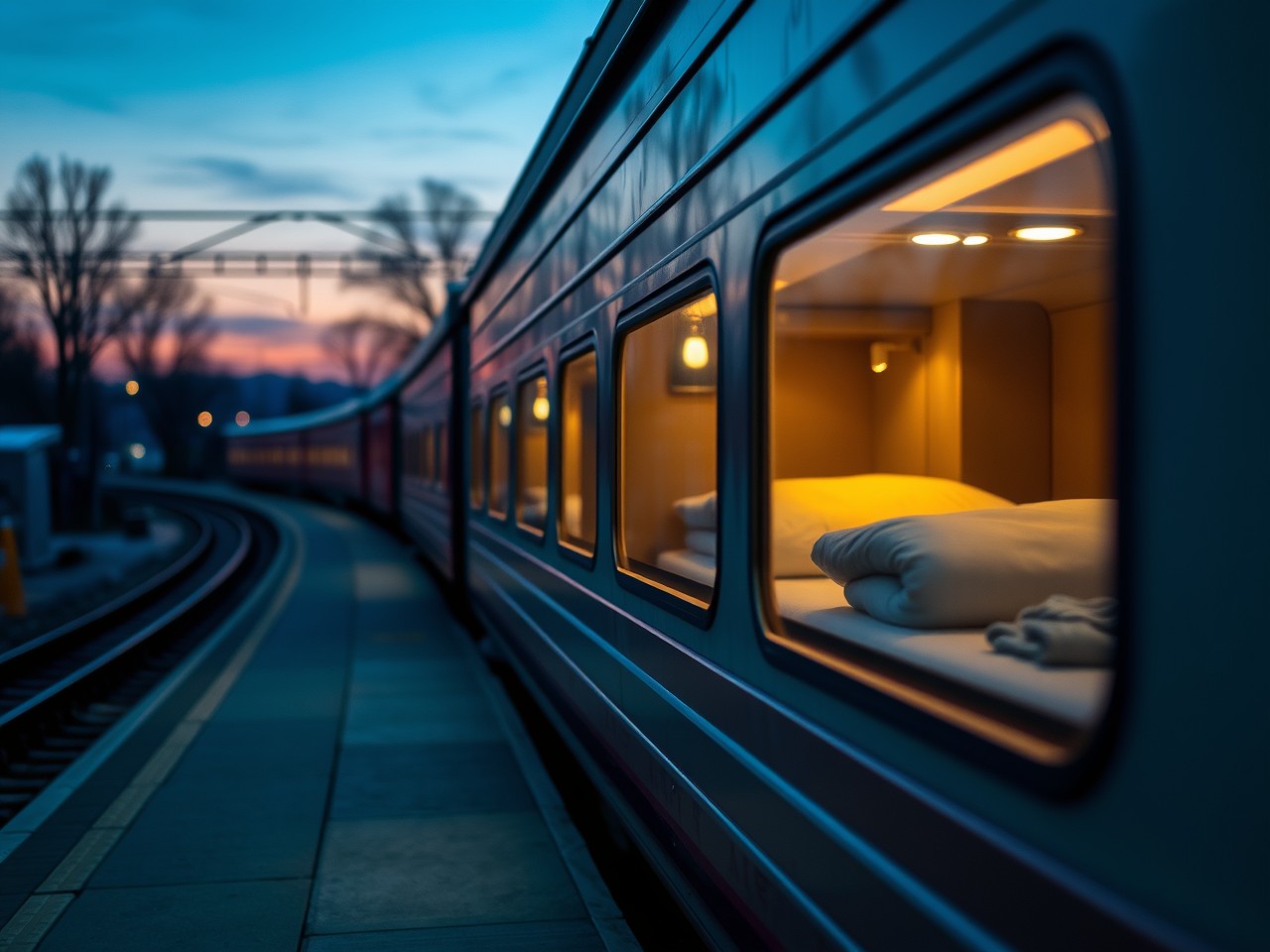
Sleeping Place on a Train: Where to Sleep and Why It Matters
Contents
A sleeping place on a train is any space set aside for lying down overnight. The useful question is whether it’s a seat you can doze in or a bed you can actually sleep on. Privacy, a lockable door, bedding and a flat surface decide how much rest you get. That’s far more than the name printed on the ticket. Pick the class by how much control you need over the space, then check what that specific operator means by each term.
Key Takeaways
- A reclining seat, a couchette, and a sleeper compartment are three different levels of control over your space, and the terms change meaning between countries and operators.
- Rail passes usually do not cover the reservation or sleeper supplement, so that cost is bought separately and early.
- Judge any plan by how it holds up when things go wrong: a late arrival, a locked-out toilet, a missed stop, or a dead phone with no outlet.
What Counts as a Sleeping Place on a Train?
A sleeping place on a train falls into three broad groups. There’s an upright or reclining seat, a shared bunk in a multi-berth compartment, and a private compartment with its own door. Each step up adds flatness, privacy and security. It also costs more.
Operators across Europe, North America and the UK all sell these, but the labels differ. Amtrak, the Caledonian Sleeper and the ÖBB Nightjet each describe their own products in their own terms. So a word like “couchette” or “roomette” should be read on the operator’s own page, not assumed.
Reclining Seat (Overnight Seat Coach)
A reclining seat is the cheapest overnight option, and it never becomes a flat surface. The seat tilts back, sometimes with a leg rest. But the body stays at an angle. Cabin lights, aisle traffic and neighbours stay part of the night.
The seat suits short overnight hops or travelers who sleep easily upright. It’s the weakest choice for a long journey, because broken sleep piles up into a rough next day.
Couchette
A couchette is a shared compartment with fold-down bunks, and the key word is shared. Several travelers sleep in the same closed room, usually on stacked berths. They get simple bedding in place of a made-up bed.
Because the compartment’s shared, the occupants may be strangers. Lower-class compartments are often mixed-gender, though some operators offer women-only ones. So ask for that when booking, and don’t assume it’s the default.
Sleeper Compartment and Roomette
A sleeper compartment is a private room with a door, a flat bed and usually bedding. The room itself is what you’re paying for. A roomette is a smaller version of the same idea, often with a seat that converts to a bed.
Some sleeper compartments include an en-suite toilet and washing facility. Others rely on shared facilities down the corridor. A single-occupancy booking removes the question of strangers entirely.
How Do You Decide Which Sleeping Option Is Worth It?
The right sleeping option depends on how many hours you need to rest. It also depends on how much a bad night would cost you the next day. Short overnight legs tolerate a seat; a long one repays a private door.
Plan the decision around failure, not the best case. If the train runs late, the night stretches. The cheapest option then becomes the most tiring one.
Match the Class to the Stakes
- Arriving to a meeting, a connection or a long hike: a flat bed and a lockable door protect the next day.
- Flexible schedule and a tight budget: a couchette or reclining seat is workable if a rough night costs nothing.
- Solo traveler concerned about shared space: a single-occupancy compartment or a women-only berth gives the most control.
- Two or more traveling together: booking out a whole compartment turns a shared space into a private one.
Compare the Night Train With the Alternatives
A night train replaces a hotel night and a daytime journey in one booking. That’s its main appeal against a budget flight plus a room. The trade is that sleep quality is variable, so the comparison only works if the sleeping place is decent.
Is It Safe to Sleep on a Train, and What Happens to Luggage?
Sleeping on a train is generally manageable when the door locks and valuables stay on your person. Security differs sharply by class and operator. A private compartment with an interior lock offers the most control, while an open seat coach offers the least.
Locks, Doors and Attendants
Whether you can lock the door from the inside depends on the compartment type and operator. Confirm it before booking instead of assuming. And if there’s a lock, use it for the whole night.
Many sleeper services have an attendant. They check tickets, hold the compartment key or wake passengers at a set time. That human presence is part of what the supplement pays for.
Luggage and Valuables
Luggage storage varies by class. Private compartments tend to have room within the space. Shared and seat coaches use racks or end-of-car areas. Keep passports, phones, cards and medication on your body or under the pillow, and leave only replaceable items in the rack.
- Take a small bag with documents, money and medication into the bunk.
- Lock or latch the compartment door once settled.
- Loop the main bag’s strap around a fixed point if no lockable storage exists.
- Note the attendant’s location before the lights go down.
Will You Share With Strangers?
Shared compartments are common in lower classes. Your sleeping arrangement may put you with people you don’t know. Mixed-gender compartments are standard on some services, while others offer women-only or single-occupancy options.
For solo travelers and women traveling alone, the safest approach is a women-only or single-occupancy booking, when the operator offers one. If it doesn’t, a private compartment is the next level up. That extra cost buys you control over who shares the door.
Bedding, Washing and Toilets
Bedding is supplied on many sleeper services, but what’s included varies. So confirm whether pillows, sheets and blankets come with the ticket. Where nothing is provided, bring a light layer, since cabin temperatures can swing in either direction.
For travelers who run cold or sleep on a camping-style schedule, the guidance in sleeping bags for cold weather offers a useful way to think about insulation. A full bag is rarely needed on a heated train.
Toilets and Washing
Passenger cars put restroom and toilet facilities at the ends of the car. A trip to the toilet often means walking down the corridor in the dark. Know the direction before lights go out, and keep shoes within reach.
Some private compartments include an en-suite toilet and wash basin. Whether showers exist depends entirely on the operator and class. Check the specific service instead of assuming.
Top Bunk or Bottom Bunk?
The bottom bunk is easier to reach and keeps luggage close. The top bunk offers more privacy and less foot traffic at the door. Neither is universally better, and the choice depends on mobility and how you sleep.
- Lower berth: easier access at night, better for anyone with limited mobility, but more exposed to people moving through.
- Upper berth: quieter and more private, though the climb and the closer ceiling bother some sleepers.
Requests for a particular berth are usually made at booking, and are not always guaranteed. Book early if the position matters.
Swaying, Noise and Getting Real Sleep
Motion and noise are part of any train. How much they interfere depends on the bed position, the type of car and your own tolerance. Earplugs, an eye mask and a layer that handles both warm and cool air cover most of the problem.
Sleeping well in a noisy place also draws on the same habits that help with jet lag: a steady wind-down, dim light and a fixed alarm. Attendants may wake you at a set time. So build a margin before arrival instead of cutting it close.
Booking, Rail Passes and Cost
Rail passes usually don’t cover the reservation or sleeper supplement. So you buy those separately, even if the base fare is covered. Treat the supplement as its own line item when budgeting.
Sleeper tickets are released in advance through each operator’s booking system, and popular routes sell out. Book as early as the release allows. Then compare the price spread between seat, couchette and private room, since the gap differs by route and operator. No fixed cost applies across services. So check the live price on the operator’s own site.
Meals and Breakfast
Whether a meal or breakfast comes with the sleeping place depends on the operator and class. Some include it in the ticket. Others rely on a dining car or onboard trolley, so confirm before you board. Carry a snack as a fallback.
Common First-Timer Mistakes
Most first-time failures come from assumptions about the service, not the train itself. A short checklist prevents the usual ones.
- Assuming terms mean the same everywhere. Couchette, sleeper and berth shift in meaning by country and operator, so read the operator’s own description.
- Missing the stop. Check the arrival time and the station stops in advance, set an alarm, and ask the attendant about wake-up service.
- Forgetting the pass supplement. A rail pass seldom covers the sleeper charge, so add it to the booking.
- Relying on outlets. Not every bunk has a socket, so charge devices fully before boarding.
- Trusting the schedule. An overnight train may arrive early or late, so keep the next leg flexible.
Travelers who treat the night train as one link in a chain, with a spare connection and a backup plan, handle delays calmly. Those who book a tight onward leg after an overnight run are the ones who get caught.
For travelers who pack for outdoor trips, the thinking in expert picks for trekking sleeping bags shows how sleep gear is weighed against space. Still, a train bunk rarely demands that level of kit.
The Bottom Line
The best place to sleep on a train is the one that gives enough privacy, flatness and security for the length of the trip. Have a plan ready if the schedule slips. Confirm what each operator means by its class names. Buy the supplement a rail pass leaves out. Keep valuables close.
Frequently Asked Questions
What is the difference between a couchette and a sleeper compartment?
A couchette is a shared room with fold-down bunks. It usually comes with basic bedding, and strangers may sleep together. A sleeper compartment is a private room with a door and a flat bed, often with more bedding and sometimes an en-suite. Names vary by operator. So read each service’s own description before booking.
Can I lock the door of my sleeping place on a train?
It depends on the compartment type and operator. Private sleeper compartments commonly have an interior lock, while shared couchettes and open seat coaches may not. Confirm this before booking. If there’s a lock, use it overnight and keep documents and phone on your person.
Do rail passes cover a sleeping place on a train?
Rail passes usually don’t include the reservation or sleeper supplement, so that charge is bought separately even when the base travel is covered. Check the pass terms and the operator’s booking page. Add the supplement to your budget early, since sleeper space on popular routes can sell out.
Is it safe for a woman traveling alone to sleep on a train?
Safety depends on the class and operator. Some services offer women-only compartments or single-occupancy rooms. These give you the most control over who shares the space. Where neither exists, a private lockable compartment is the next step up. Keep valuables on your body. Note where the attendant’s stationed.