Free Camping: Where to Sleep Without Paying for It
Contents
Most riders think the best free camping is found at the end of a long, rutted dirt road, far from civilization. That’s half the truth—and it’s the half that gets your bike stolen or your gear rifled through while you sleep. The free campsites that turn out to be safest are rarely the ones marked on a glossy overland map. They are the spots where the parking is naturally surveilled, the ground accepts a tent stake like a handshake, and the local drunks have no reason to stumble past at 2 a.m. The trips that make the best stories are almost always the ones where something went wrong. Preparation doesn’t prevent adventure—it just gives you better options when it shows up. And nothing sharpens your appreciation for a secure parking spot like waking up to find your chain has been nibbled by bolt cutters. This guide is about finding those free places to go—and keeping your motorcycle safe while you enjoy them.
Key Takeaways
- Free camping is legal on most public lands, but rules vary by agency—know the difference between BLM, USFS, and state trust land to avoid fines and unsafe parking.
- Motorcycle security starts before you park: scout the substrate for anchor options, look for natural barriers, and never rely on a single lock.
- Free doesn’t mean unprotected: the best free sites offer visual cover from the road, firm ground for a disc lock alarm, and cell reception for emergencies.
Beginner: Essential Foundations for Free Camping on a Motorcycle
Tip 1: Understanding Public Lands and Dispersed Camping Rules
Before you even twist the throttle toward a free campsite, you need to know whose dirt you’re sleeping on. Bureau of Land Management (BLM) land and USDA Forest Service (USFS) parcels allow dispersed camping for up to 14 days within a 28-day period, generally at no cost. State trust lands often require a $15–$20 annual permit—a small price for legal overnight stays. The key is pulling the right map overlay. Apps like Gaia GPS or onX Offroad show land ownership boundaries, and a dedicated GPS unit that doesn’t need cell service can be useful. Vehicle access is another layer: many free places to go require navigating washboard gravel or soft sand, and a fully loaded adventure bike handles differently. Check road conditions via the local ranger district website; a single call can save you a 40-mile backtrack. And always, always look at the parking surface from a security standpoint. Loose gravel makes it harder for a thief to silently roll your bike, but deep sand will swallow a kickstand and leave you heaving 500 pounds upright in the dark.
Tip 2: Packing Light but Smart: Minimal Gear for Maximum Security
Motorcycle camping demands ultralight philosophy, but security gear isn’t the place to shave ounces. The core kit includes a 16mm hardened steel chain (at least 5 feet to loop around a tree or bollard), a disc lock with a 120dB alarm, and a lightweight motion-sensing cable lock for panniers. Combined weight: about 9 pounds. That’s less than a full water bladder and does more for your peace of mind than any gadget. For soft ground, carry a screw-in ground anchor—basically a massive corkscrew with a hardened eyelet. It bites into soil, grass, or even compacted gravel, creating an immovable point to which you can chain the frame. When touring through the Southwest, consider the caliche: it looks like concrete but crumbles under torque. A better bet is to use the bike itself as part of the anchor system: run the chain through both wheels and the frame, then lock to a fixed object, or if none exists, use the chain to lock the wheels together so the bike can’t roll. Gear selection also matters for environmental security. Those wrinkle free travel clothes made from technical fabrics compress down to nothing, resist mildew, and don’t advertise that a rider with expensive gear is sleeping nearby—unlike a neon rain suit draped over the saddle.
Tip 3: Basic Motorcycle Security Measures for Remote Camps
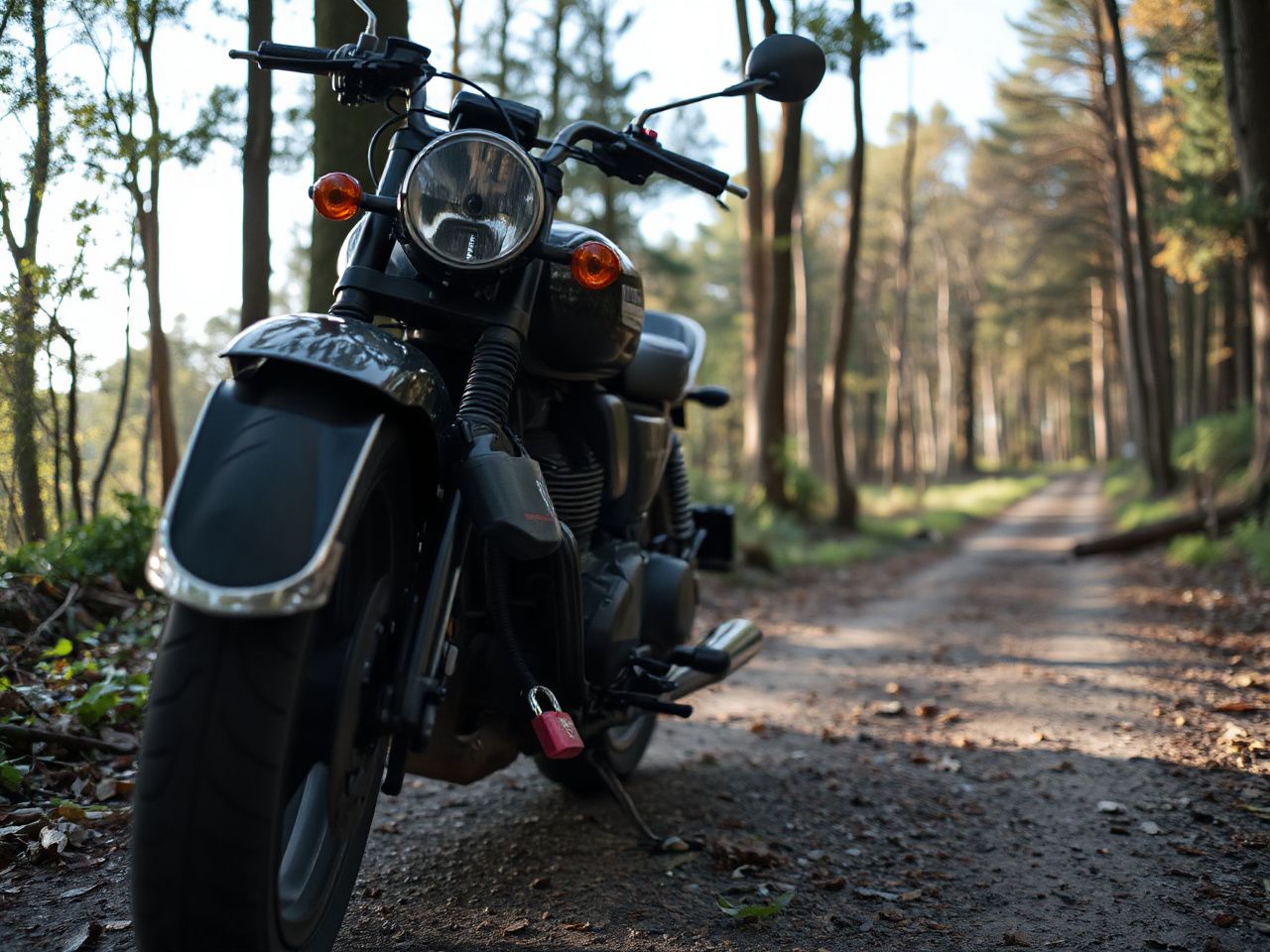
A thief with an angle grinder will get through almost anything given enough time, so the goal is to increase the time required and the noise generated. An alarmed disc lock does both: 120 decibels at the first hint of movement. Position it on the rear disc because a would-be thief has to kick the bike off the stand first, triggering the alarm before they can even touch the front wheel. When camping near trailheads or popular dispersed areas, add a bright motion-activated LED light zip-tied to the handlebar. A low-draw light won’t run down the battery quickly, and it creates a “someone’s watching” effect. The number one free security measure? Park out of sight from the main road. If a dispersed site is visible from a Forest Service Road, hump your gear an extra 200 yards to a spot behind a berm or cluster of junipers. The inconvenience deters casual halfwit thieves. And always, before you turn in, do a 30-second walk-around: remove the GPS, lock the panniers, slip the tank bag inside the tent, and zip-tie the helmet to the handlebar through the visor opening. These small habits make your camp a harder target, and hard targets get passed over for the next guy’s shiny ADV bike with a disc lock still in the saddlebag.
Intermediate: Leveling Up Your Site Selection and Security
Tip 4: Using Satellite Maps and Local Intel to Scout Secure Sites
Satellite view is your best friend when hunting for free places to go with motorcycle security in mind. Open Google Earth on a tablet and look for three things: shade lines that suggest a berm or rock outcropping, proximity to a secondary access road (not the main highway), and absence of fire rings visible from the air—too many rings means heavy use and likely periodic enforcement sweeps. Next, check the slope angle: anything over 5 degrees and your bike’s sidestand will leave you with a slow-motion topple, which is reason enough to keep a clinometer app on the phone and rule out otherwise perfect spots with it. Then comes the human factor. Calling a local Forest Service office isn’t just about road conditions; the question worth putting to a ranger is, “Is there a site off [Forest Road 123] where I won’t hear generators and I can keep an eye on my motorcycle?” Asked that way, rangers will often hand over coordinates to dispersed sites that aren’t on any public map. For popular areas like the Grand Canyon region, some of the best places to camp in Grand Canyon are the free dispersed sites in the Kaibab National Forest, but they fill fast. Sites with a hard-packed limestone base sink tent stakes poorly but provide excellent anchor points for a chain lock around a sturdy juniper root. If you’re heading somewhere like that, also check recent trip reports on ADVrider forums—search for the road number and the word “security” to get real, dated intel.
Tip 5: Advanced Locking Strategies and Ground Anchors for Soft Ground
Soft soil—sand, loam, pine duff—defeats traditional ground anchors. The answer is a duckbill anchor system: a small, kite-shaped steel plate you drive into the ground with a pin, then rotate horizontal so it resists pullout. It needs a 3-pound sledgehammer (a compact Eastwing is plenty) and a solid steel pin. The anchor holds up to 800 pounds of lateral force in compacted soil. For sand, use a screw-in pet anchor meant for large dogs—the helix design bites where straight stakes fail. It weighs only 1.2 pounds and serves double duty as a pannier hook. Once the anchor is set, run a 14mm chain from the bike’s frame, through the anchor eye, and back to the rear sprocket. That creates a security triangle: ground, frame, wheel. Where no anchor will hold, lock the bike to itself and to the tent, then run a shock-sensitive cable alarm from a tent pole to the handlebar. Any tug on the bike yanks the tent, and the 130dB siren wakes the camp and every living creature within a quarter mile. It is not pretty, but it works on Baja beaches and grassy alpine meadows alike, precisely because it stops depending on the ground to hold anything. Don’t forget the cover. A nondescript, gray motorcycle cover that fits over loaded panniers does more than protect against rain; it obscures the brand, model, and value of the bike, turning a KTM 1290 into a formless lump. Cut a small slit for a battery tender lead and the bike can trickle-charge without being uncovered.
Tip 6: Weather Awareness and Environmental Security
Wind, water, and sun can undo your security efforts as fast as a thief. Parking perpendicular to the prevailing wind, with the kickstand on the downwind side, and using two webbing straps staked to 12-inch aluminum pegs on the upwind side helps stabilize the machine. The straps attach to the engine guards or frame, not the handlebar, to avoid steering head stress. Flooding is another risk. Avoid camping in a wash or dry creek bed, no matter how inviting the sand looks. A thunderstorm miles away can send a wall of water through your camp in minutes. Look for a site elevated by at least 18 inches above the surrounding lowest point and check for debris lines of previous floods. In high-sun environments, the heat can soften asphalt and sink a kickstand. Carry a 4-inch square of 3mm aluminum plate as a stand pad; it distributes the load on hot tarmac and prevents a tip-over. These weather-specific measures become automatic when framed as part of the bike’s security posture—a tipped bike is an unlocked bike, and a flooded engine is a multi-day repair waiting to happen.
Advanced: Mastering the Art of Stealth Camping and Long-Term Trip Planning
Tip 7: Stealth Camping Techniques and Urban Overnight Security
Sometimes the only free place to go is a strip of gravel behind a closed gas station or a patch of woods near a truck stop. These urban-edge sites demand reverse psychology. Skip the tent if you can sleep on the bike. A half-inflated sleeping pad across the seat and tank, with the bike on the center stand, keeps you off the ground and ready to ride in seconds. The key is positioning: park parallel to a wall or fence, leaving the bike’s right side exposed so you can bail out the left. Run a chain through both wheels and around a fixed object if possible—otherwise, lock the rear sprocket and loop a steel cable through the helmet and jacket. The cover goes on, and a small, battery-powered motion sensor with a 12-second delay (to avoid false alarms from cats) sits under the engine. At truck stops, ask permission to park in the lot’s camera-covered zone, often near the fuel pumps, and ask the night clerk to keep an eye out. This often makes for more secure sleep than any remote campsite. For the stealth camper, the best skill is site arrival timing: arrive at dusk, leave at dawn, and never light a fire. Use a red headlamp to preserve night vision and avoid advertising your position. These habits, combined with a pre-planned exit route where you can ride out without starting the engine (if the terrain allows), turn a questionable spot into a secure bivouac.
Tip 8: Building a Network of Trusted Camp Hosts and Fellow Riders
The best free security is a human who gives a damn. Contacts include camp hosts at state parks, ranch owners who let riders camp by the stock pond, and ADV rider groups on Telegram with real-time site reports. When scouting a new region, message the local Backcountry Discovery Route (BDR) ambassador or a member of the Motorcycle Camping Association. These riders know which dispersed sites are currently squatted by tweakers and which farm stand owners will let you park behind the greenhouse for the price of a conversation. Carry pre-printed thank-you cards with contact info to hand to anyone who lets you camp on private land, which often leads to a standing invitation. In some areas, like central Montana, it is possible to rent a secure parking space for a few days from a member of the Airbnb Experiences community who hosts motorcyclists—not free, but $10 a night for a locked garage while backpacking into the wilderness is a steal. For longer trips, join organized rides that negotiate group camping at secured fairgrounds. When really remote, use a Garmin inReach to text a trusted contact exact coordinates and expected check-in time. If two check-ins are missed, they alert the local sheriff. This social safety net complements physical security and often opens doors to free places to go that no app lists.
Tip 9: Customizing Your Bike’s Security System for Multi-Day Stops
For trips where the bike will sit unattended while hiking for several days, add layered, autonomous defenses. A handlebar-mounted vibration alarm with a pager remote can notify if someone is messing with the bike from up to 1,500 feet away. Pair it with a GPS tracker wired into the bike’s battery with a backup battery and a motion-triggered alert to a phone. The tracker sits inside the airbox, hidden behind the filter. Use a digital padlock on the chain instead of a keyed lock; it has no cylinder to pick, and the code can be shared via text with a recovery driver if needed. For ground anchoring during multi-day stops, bring two duckbill anchors and a 1-meter section of galvanized chain rated for 5,000 pounds. Drive both anchors 4 feet apart, run the chain between them, and lock the bike to that bridge. This is overkill for a single night but necessary when the bike sleeps alone for 48 hours. Before leaving the bike, complete a security check: remove all luggage and pannier liners, drain the fuel line from the petcock to prevent siphoning, take a photo of the bike in situ, and note the GPS coordinates. Leave a note in a waterproof bag taped to the seat that says “Owner returning [date]. GPS tracked. Motion alarms active.” It’s a bluff that works. The biggest risk is leaving an unattended machine that looks easy to steal. This layered approach—physical locks, alarms, tracking, and social backup—helps keep the bike where it was left, even in places where the nearest sheriff is an hour away.
Frequently Asked Questions
What are the best free camping apps for finding secure motorcycle parking spots?
Apps like iOverlander and FreeCampsites.net let users filter for “motorcycle friendly” and often include notes on surface type and theft risk. They can be paired with Gaia GPS to confirm land ownership. For security-specific intel, ADVrider forums provide detailed information—search the route number plus “theft” or “tweekers.” Always cross-reference with recent satellite imagery to check for new gates or changes.
How do I secure my motorcycle in a free campsite with no trees or boulders?
Use a screw-in ground anchor designed for dogs or a duckbill anchor that buries into soil. Drive it 18–24 inches deep, then lock a 16mm chain through the frame to the anchor. If the ground is too hard, lock the wheels and sprocket together with a disc lock and chain, and tether a motion alarm from the bike to your tent. The goal is to make rolling or lifting the bike impossible without loud, sustained noise.
Is free camping on public lands really safe for a solo motorcyclist?
Statistically, remote dispersed camping sees fewer thefts than urban hotel parking lots. Most threats are environmental—wind, flash floods, animal damage. That said, solo riders should prioritize sites with cell reception, carry a satellite messenger, and inform a contact of their exact coordinates.
Can I find free places to go camping near popular national parks like the Grand Canyon?
Absolutely. The Kaibab National Forest offers free dispersed camping right at the edge of the park boundary. For more remote options, good places to go backpacking often have adjacent forest service roads with unofficial sites. Arriving by 2 p.m. on weekdays helps to secure a spot with natural security features—a rock wall behind the bike, for instance.