Best Base Layer Bottoms: The Honest Picks for 2026
Contents
Standing at a trailhead before dawn, or sitting motionless in a hunting blind, the wrong legwear makes the day miserable. Static cold wants brushed fleece. Hard exertion wants thin, breathable stretch. This guide sorts best base layer bottoms by that split, using published specs rather than guesswork.
As an Amazon Associate we earn from qualifying purchases. This does not affect the price you pay.
CERTAIN CONTENT THAT APPEARS ON THIS SITE COMES FROM AMAZON. THIS CONTENT IS PROVIDED ‘AS IS’ AND IS SUBJECT TO CHANGE OR REMOVAL AT ANY TIME.
Short answer: the BAMBOO COOL Fleece Lined Pants 2 Pack wins on a bamboo-viscose, acrylic and spandex blend with 4-way stretch, plus two pairs in the box.
| Product | Best for | Fabric | Pack / Lining |
|---|---|---|---|
| BAMBOO COOL Fleece Lined Pants | Best overall | 55% bamboo viscose, 37% acrylic, 8% spandex | 2 pairs, lightly brushed |
| Poriff Fleece Lined Long Johns | Best value | 88% polyester, 12% spandex | 1 pair, brushed fleece |
| Roadbox Compression Pants | Hard-training tights | Not listed on the listing | 1 pack, no fleece |
| HYCOPROT Compression Pants | Gym and court use | Not listed on the listing | 2 pairs, no fleece |
| RIKUAOU Thermal Compression Pants | Cold-weather running | Not listed on the listing | 1 pair, fleece-lined |
| Smartwool Kids’ Classic Thermal Merino | Kids on cold days | 100% merino wool | 1 pair, midweight interlock |
RedSky Adventures is funded by affiliate commission. Our picks come from comparing published specifications and documented features against what matters in the category — no brand pays for a place on this page. If you buy through a link here we may earn a commission at no extra cost to you, and it pays for the research behind the next guide. Full disclosure.
BAMBOO COOL Fleece Lined Pants 2 Pack (Bamboo-Viscose Blend)

- BrandBAMBOO COOL
- Weight1.19 pounds
- Size / capacityX-Large
- ColourD-black*2
Quick take: A two-pair set for cold, mostly stationary days like hunting, camping and winter commutes.
The fabric is 55% viscose from bamboo, 37% acrylic and 8% spandex, lightly brushed on the inside. That mix leans toward soft, static warmth instead of the sweat-shedding speed of a pure synthetic. The listing also gives a resilient elastic waistband, tagless construction, an open fly and close-fitting ankle cuffs. Those features keep the hems from riding up under boots.
Two pairs weigh 1.19 pounds together, so each pair is light enough to pack. The manufacturer claims moisture-wicking, but a brushed viscose-acrylic blend will hold more dampness than a polyester tight. That makes it a better fit for sitting in cold air than for a hard climb. Fabric content is the only spec given, and no thickness or temperature rating is listed. The 4-way stretch and close cut suit layering under hunting pants or ski shells.
Pros:
- Two pairs included — daily rotation without buying twice.
- Bamboo viscose blend — soft against skin for long wear indoors and out.
- 4-way stretch with 8% spandex — squatting and reaching won’t fight the fabric.
- Elastic waistband and tagless design — fewer pressure points under a pack belt.
Cons:
- Acrylic and viscose hold moisture — a sweaty ski-touring day can leave the lining damp and cooler.
- No size or warmth chart in the data — fit is claimed as close, but buyers should check the seller’s size table.
Who Should Buy This
Best for: Hunters, campers and commuters who spend long stretches in the cold. Skip if: Hard aerobic output is the plan; a thinner synthetic tight suits that better.
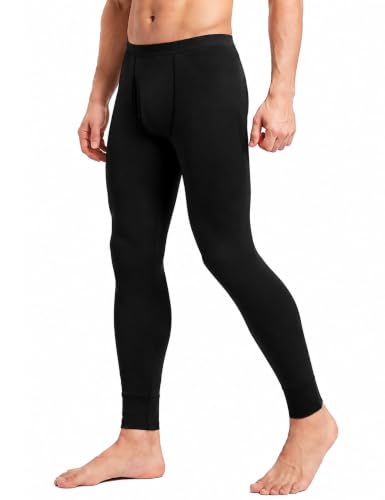
Poriff Fleece Lined Long Johns (Polyester-Spandex Stretch)
- BrandPoriff
- Size / capacityMedium
- ColourBlack-1 Item
Here’s the deal: A single-pair fleece-lined option that works as an entry-level trial before a multi-pack.
The listing states an 88% polyester, 12% spandex blend with a brushed fleece interior. Polyester dries faster than viscose or acrylic, and 12% spandex is a generous dose for shape retention at the knees. Flatlock seams and a stay-put elastic waistband are listed to reduce chafing.
Against the BAMBOO COOL set, the Poriff trades a softer natural-feeling hand for quicker drying. It’s sold as one item, so per-pair math depends on whether the seller’s multi-packs are offered. The seller markets it as low-profile under jeans. Weight and dimensions aren’t listed, so there’s no way to judge bulk from the sheet. Polyester fleece generally runs warmer for its weight than bamboo blends.
Pros:
- 88/12 polyester-spandex — dries faster and holds shape better than viscose blends.
- Flatlock seams — less rubbing under a pack or saddle.
- Brushed fleece interior — traps heat for cold, low-output days.
- Single-pair option — a low-commitment way to check fit.
Cons:
- One pair per purchase — rotation costs more than the two-pack.
- Weight and thickness not listed — hard to gauge whether it overheats while skiing.
Our Take
Ideal for: Buyers who want a polyester fleece tight at a budget-friendly level. Pass on this if: You need two pairs on a trip without reordering.
Roadbox Compression Pants (Cooling Base Layer Tights)

- BrandRoadbox
- Model4US152176_2
- Size / capacitySmall
- Colour1 Pack-black
The short version: A thin compression tight built for movement, not for deep cold.
Roadbox markets muscle support for hips, quadriceps, hamstrings and calves, with an ergonomic seam design and a quick-dry system. It comes in six sizes, S to 3X. The title says cooling, which is a red flag for winter. A tight designed to shed heat will do little against wind or snow.
The seller does claim it holds heat in winter, but there’s no fleece and no fabric blend given. That means the claim can’t be checked. As a next-to-skin layer under insulated pants, it can work, since a snug fit is what moves sweat. Running, cycling and gym are the intended uses. For static cold, the fleece-lined options above are the safer call.
Pros:
- Six sizes, S to 3X — wider fit range than most tights.
- Ergonomic seams — meant to cut rubbing on long efforts.
- Quick-dry fabric claim — suited to high sweat output.
- Multi-sport cut — works for cycling, running and court sports.
Cons:
- No insulation listed — thin cooling tights give little warmth in deep cold.
- Fabric blend not stated — spandex content and stretch recovery are unknown.
Final Thoughts
Perfect for: Hard training in mild to cool weather. Not great if: You’re sitting still in freezing air.
HYCOPROT 2 Pack Compression Pants (Black and White Set)

- BrandHYCOPROT
- Size / capacityLarge
- Colour1black+1white
In a nutshell: A two-pair athletic compression set aimed at gyms and field sports.
The pack includes one black and one white pair. Seams are described as smooth and friction-reducing. An elastic bottom hem grips the leg. The listing says quick-dry and light weight. No fabric percentages, weight or dimensions are given.
The white pair is a practical oddity. It suits light-colored shorts layering, but it shows dirt quickly outdoors. Like the Roadbox, there’s no lining. Warmth only comes from being snug. Two pairs is a plus for rotation. For skiing, hunting or cold commutes, a fleece-lined option is the better match.
Pros:
- Two-pair pack — spare pair for laundry days.
- Elastic bottom hem — stays put during running and court sports.
- Smooth seam design — aimed at reducing friction.
- Lightweight claim — fits warm-weather or mild-day training.
Cons:
- No fleece or insulating layer — poor for static cold.
- Material composition not given — durability and pilling resistance can’t be judged.
Who Should Buy This
Great match for: Gym and sports use. Think twice if: You need warmth below freezing.
RIKUAOU Thermal Compression Pants (Fleece-Lined Athletic Tights)

- BrandRIKUAOU
- ModelWillgoen-1720-Black-L
- Size / capacityLarge
- ColourBlack
Why it earns a spot: The in-between choice, with compression-style tights plus a fleece lining.
RIKUAOU combines four-way stretch, flatlock seams and a fleece-lined interior with a contoured crotch and reinforced curved back waist. That shaping is useful for bending and lifting a leg over a saddle or into a ski binding. Quick-dry and breathable claims sit alongside the fleece, which can pull in opposite directions.
It should run warmer than the Roadbox or HYCOPROT. It should feel slimmer than a traditional long john. Fabric percentages are not listed, so spandex content is unknown. Fleece plus an athletic cut fits cold-weather running or a brisk winter walk better than a hard summit push, where it may overheat.
Pros:
- Fleece-lined athletic cut — warmth with a close fit.
- Contoured crotch — more room for stepping and bending.
- Curved back waist — meant to reduce slipping when bending.
- Flatlock seams — less chafing on long efforts.
Cons:
- Fleece in a compression tight — can run hot at high exertion.
- Weight and fabric blend not listed — bulk and stretch recovery stay unknown.
The Real Deal
Ideal for: Cold-weather runners and walkers. Pass on this if: You want a lighter, cooler tight for hard intervals.
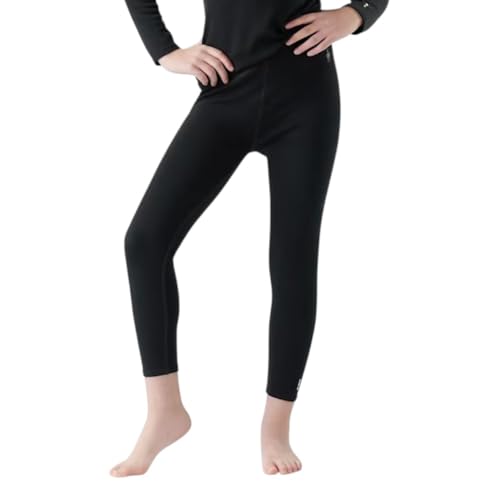
Smartwool Kids’ Classic Thermal Merino Bottoms (100% Merino)
- BrandSmartwool
- ModelSW0SN112
- Dimensions8.5 inches x 5.5 inches x 1.0 inches
- Weight0.2 pounds
- Size / capacityXX-Small
- ColourBlack
The short version: A kids-only merino bottom, and the only wool on this list.
This is a 100% merino, midweight interlock knit. It has flatlock seams. The listed size, XX-Small, has a 20-inch inseam. It’s a slim fit meant to sit under other layers. The model SW0SN112 weighs 0.2 pounds. It’s light enough to disappear in a kid’s pack.
Wool wicks and resists odor. It keeps insulating when damp, which matters for kids who sweat then stand still on a ski hill. The tradeoffs are care and sizing. Merino wants cool washing and low heat. This is a children’s cut, so adults can’t wear it. Kids outgrow gear, and that makes the investment a harder sell.
Pros:
- 100% merino — regulates temperature and resists odor.
- Midweight interlock knit — breathable for active kids.
- Flatlock seams — fewer rubbing points on small legs.
- 0.2 pounds — packs small for ski days.
Cons:
- Kids-only sizing — not a pick for adult readers.
- Merino care needs — hot washes and dryers risk shrinkage.
Who Should Buy This
Perfect for: Parents layering kids for ski days. Not great if: You’re shopping for adult bottoms or want a cheap, outgrown-in-a-year layer.
How We Chose These Base Layer Bottoms
These picks come from published specifications, materials, care instructions and documented features. They also reflect patterns buyers often mention in verified reviews. None were tested hands-on. Fabric-to-activity match carried the most weight. Fleece-lined polyester or bamboo blends for static warmth is one part. Merino supports odor resistance and temperature regulation. Thin compression synthetics help breathability. Fit, stretch recovery, waistband and seam comfort also counted. Check the seller’s size chart before ordering. Fit varies between brands and cuts. Several listings here omit fabric percentages.
How to Choose the Best Base Layer Bottoms
A base layer’s job is to move sweat away from the skin toward the outer layers, which makes them feel warmer. A garment that doesn’t move moisture well is closer to a mid-layer than a true base layer. Those two facts decide most purchases.
Match the Fabric to the Activity
Heavy fleece suits sitting in a blind. Hard climbing in the same fleece gets sweaty. Damp insulation chills fast. Thin cooling tights, like the Roadbox and HYCOPROT, offer little insulation in deep cold. For more on thermal options, see our base layer vs thermal comparison.
Skip Cotton in the Cold
Traditional U.S. long underwear is often cotton or a cotton-polyester waffle weave. Cotton holds sweat and loses insulation when wet. Wool keeps insulating when wet, wicks moisture, repels water, and resists odor. Many modern options are polyester, as with the Capilene line.
Best Ski Base Layer Bottoms: What to Look For
Skiing mixes exertion on descents with standing still on lifts. The best ski base layer bottoms are usually mid-weight and stretchy with flat seams under boots and shells. The Poriff and RIKUAOU target this use. Anyone wanting more warmth can read our cold weather base layer guide.
Fit and Care
Base layers should sit snug against the skin to wick. Wash merino cool and skip high heat. Fleece-lined synthetics tolerate more, but still avoid hot dryers to preserve stretch. Fire hazards matter near campfires: synthetics can melt, while wool resists flame. Check labeling under the U.S. Consumer Product Safety Commission flammability rules if buying for children’s sleepwear-style use.
Riders and hikers who care about the places they travel should favor garments that last. A pair worn for several seasons beats a pile of cheap replacements. For lighter-weight picks, our midweight base layer guide covers the in-between.
Our Final Recommendation
The BAMBOO COOL Fleece Lined Pants 2 Pack is the overall winner: two pairs, soft brushed bamboo-viscose blend, 4-way stretch. The Poriff Fleece Lined Long Johns are the best value for a polyester fleece option that dries faster. The Roadbox suits hard training. Smartwool merino fits parents of ski kids. The right tight depends on how hard the day will be.
Frequently Asked Questions
Should I buy fleece-lined thermal bottoms or thin compression tights?
Fleece-lined bottoms suit cold, mostly still days like hunting or commuting. Thin compression tights suit hard exertion and breathe better. A cooling tight gives little insulation in deep cold. Pair it with an insulated outer pant if used in winter.
Will fleece-lined bottoms be too hot for skiing or hiking?
Heavy fleece can trap sweat during hard exertion, and damp insulation can chill when you stop. For steady climbing, a lighter synthetic tight is often safer. Lift-heavy ski days mean lots of standing, so fleece-lined options like the Poriff or RIKUAOU are reasonable.
How tight should base layer bottoms fit?
Snug against the skin, without pinching at the waist or knees. Gaps stop the fabric from wicking moisture. Sizing differs between brands, and between men’s, kids’ and compression cuts. Check the seller’s size table before ordering.
How should merino base layers be washed?
Merino prefers a cool wash and no high heat. High heat can shrink it and reduce stretch. Synthetic fleece-lined options tolerate more, but hot dryers still wear out spandex. Follow the garment’s care label first.
Is merino worth the extra cost over polyester or bamboo blends?
Merino wicks moisture, resists odor, and keeps insulating when damp. Polyester dries faster and costs less. For multi-day trips, washing is rare, so wool earns its price. For single-day use, a polyester blend is usually enough.