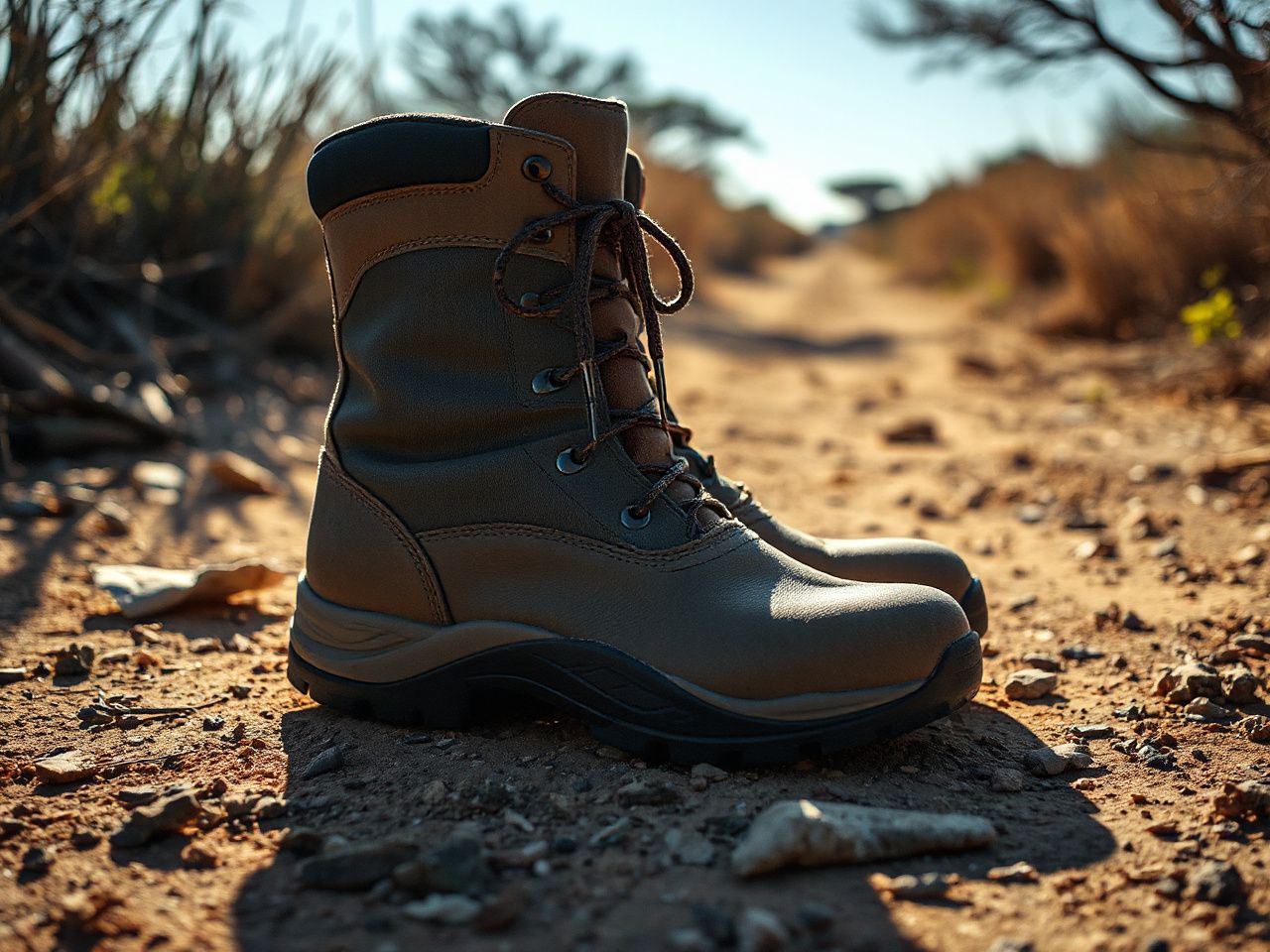
The Complete Guide to Choosing Safari Boots
Contents
There has been a shift in how riders approach footwear. The old mindset was all about pure function — grab the stiffest, most armored boot and call it done. Now, more riders look for boots that work both on the bike and off it. They want to step into a village market, walk through a dusty trail to a waterfall, and still feel solid when they throw a leg over the saddle. That is where a good pair of safari boots comes into focus.
Heavy adventure boots can be great for standing on the pegs but may be uncomfortable for walking. Choosing the right boot is not just about protection — it is about respecting the journey. You slow down, you meet people, and your gear has to let you do that without pain.
Key Takeaways
- Safari boots are designed for mixed use — riding and walking — so look for a balance of ankle support and sole flexibility.
- Leather construction remains the gold standard for durability and abrasion resistance in dusty, rocky terrain.
- A proper fit is non-negotiable; even the best boot will fail you if it pinches or slips at the wrong moment.
What Makes a Safari Boot Different from Other Riding Boots
The term safari boots has roots in African overland expeditions, where riders and drivers needed footwear that could handle long days in the saddle and foot patrols through bush country. Unlike track boots, which prioritize maximum rigidity for sport riding, or touring boots, which lean toward waterproof membranes and insulation, safari boots emphasize versatility. They typically feature a lower cut — around mid-calf — and a sole that provides both grip on pegs and traction on loose ground.
Boots have to perform in conditions ranging from humid lowlands to high-altitude passes, and the one component that matters most across all of them is the sole. A stiff sole is great for shifting but terrible for hiking. A soft sole gives you feel for the ground but can fold under hard braking. The best safari boots use a medium-density rubber compound with a shallow lug pattern. That gives you enough bite on gravel without catching on the footpeg when you move your foot.
Another key difference is the closure system. Many safari boots use a combination of zippers and buckles or laces. The zipper makes getting in and out quick — a huge advantage when you are setting up camp in fading light. But the laces or buckles let you fine-tune the fit around your shin. A system that allows adjustment of tension without having to re-lace the whole boot is recommended.
Terrain and Climate Considerations for Safari Boots
Dust and Sand Environments
Riding through dry, dusty regions puts unique stress on your boots. Fine dust works its way into zippers and eyelets, causing them to bind over time. Stuck zippers are a common frustration for riders in the middle of nowhere. The fix is simple: choose boots with a gusseted tongue or a dust skirt behind the zipper. Some manufacturers use a rubberized gasket around the zipper base, which helps keep grit out.
Leather also handles dust better than synthetic materials. Full-grain leather can be brushed clean and conditioned to keep it supple. Synthetics, especially mesh panels, trap dust and become abrasive against your skin. If you ride in arid climates, look for boots with minimal stitching on the lower quarter — fewer seams mean fewer places for dust to infiltrate.
Wet and Humid Conditions
Wet conditions are a different challenge. The difference between water-resistant and genuinely waterproof membranes is important, especially in prolonged exposure to rain. The same principle applies to boots. A Gore-Tex liner is the most reliable option for wet riding, but it does come with a trade-off: reduced breathability.
If you ride in a climate that swings between dry heat and monsoon rains, consider a boot with a removable liner. That way, you can dry the liner overnight while the leather shell airs out. Avoid boots that claim waterproofing from heavy wax or oil treatments alone — they will fail under sustained rain.
Treating the leather with a beeswax-based conditioner before a wet trip adds a layer of water repellency and prevents the leather from cracking as it dries. Do this a week before you leave, not the night before, so the wax has time to absorb.
Fit and Sizing: The Foundation of Comfort
A boot that fits poorly will ruin any ride. Trying to muscle through with boots that are a half-size too small, in the hope that they will stretch, is generally ineffective. They do not. Leather will conform to your foot over time, but it will not magically create room where there is none. Start with a boot that fits snugly in the heel and has a thumb’s width of space between your longest toe and the toe cap.
Width is just as important as length. Many safari boots come in a standard D width, but if you have wide feet, look for brands that offer EE sizing. A cramped toe box will cause numbness and fatigue, especially on long days. Boots with a wider last can noticeably improve foot circulation over long hours in the saddle.
If you are between sizes, go up. You can always add a thicker insole or wear heavier socks. You cannot fix a boot that is too small. And do not forget about the ankle — the cuff should wrap around your lower leg without being so tight that it restricts circulation. A good test is to try to slide a finger between your calf and the boot top. If you cannot, the boot is too tight.
For more detailed guidance on measurement and sizing, check out our guide on boots fit — it covers everything from arch support to instep height.
Durability and Maintenance for Long-Term Use
A good pair of safari boots should last several seasons if you take care of them. The most vulnerable part is the sole. Look for a sole that is stitched and cemented, not just glued. Stitching through the welt provides a mechanical bond that will not fail when the glue degrades from heat and moisture. A sole that separates after a single summer of hard riding is frustrating and dangerous.
Leather care is straightforward but requires consistency. After every trip, brush off dirt and dust with a soft brush. If the boots got wet, stuff them with newspaper and let them dry at room temperature. Never put them near a heater or in direct sunlight — that will dry out the leather and cause cracking. Once a month, apply a thin layer of leather conditioner. Focus on the flex points around the ankle and the toe area.
Zippers need love too. A dry zipper will catch and eventually break. Use a silicone-based lubricant on the zipper teeth every few rides. Wipe off any excess so it does not attract dirt. If your boots have laces, replace them at the first sign of fraying. A broken lace on the trail is a nuisance that is easy to prevent.
If you ride in extreme cold, the insulation and sole construction need more attention. Our roundup of the best extreme cold weather boots of 2026 goes into specific models and insulation ratings for sub-zero riding.
Environmental Considerations for the Conscious Rider
Riders who care about the places they travel through should think about the environmental footprint of their gear. Leather is a natural material, but its production has a significant impact. Look for boots made with leather from tanneries that use vegetable tanning processes — these avoid heavy metals like chromium. Some brands also use recycled rubber in their soles, which reduces waste.
Another consideration is repairability. A boot that can be resoled will last years longer than one that is thrown away when the tread wears out. European brands often have resoling programs, but even if yours does not, a local cobbler can replace a welted sole. That is a small act that keeps gear out of landfills and supports local craftspeople.
When you are on the road, be mindful of where you walk. In fragile environments like desert crust or alpine meadows, heavy boots can damage the soil and plant life. Stick to established trails and avoid cutting switchbacks. It is a simple way to leave a place better than you found it.
Frequently Asked Questions
Can I use hiking boots for motorcycle safari riding?
Hiking boots lack the ankle support and abrasion resistance needed for motorcycle use. They are designed for walking, not for holding your foot on a peg at highway speeds. If you take a spill, a hiking boot will not protect your ankle from twisting or your foot from crushing. Stick to boots specifically built for riding. For a deeper comparison, see our article on whether hiking boots are good in water.
How do I break in a new pair of safari boots?
Wear them around the house for a few hours each day for a week. Then take them on short rides — no more than an hour. Focus on flexing your ankle and shifting gears. If you feel pressure points, use a boot stretcher or apply heat with a hair dryer while wearing thick socks. Never force the break-in by soaking the boots in water; that damages the leather.
What is the best way to clean safari boots after a muddy ride?
Let the mud dry completely, then brush it off with a stiff brush. Do not scrub wet mud into the leather — that grinds grit into the pores. Once the mud is removed, wipe the boots with a damp cloth and apply conditioner. If the boots got soaked, remove the insoles and dry them separately. Never machine wash or dry your boots.