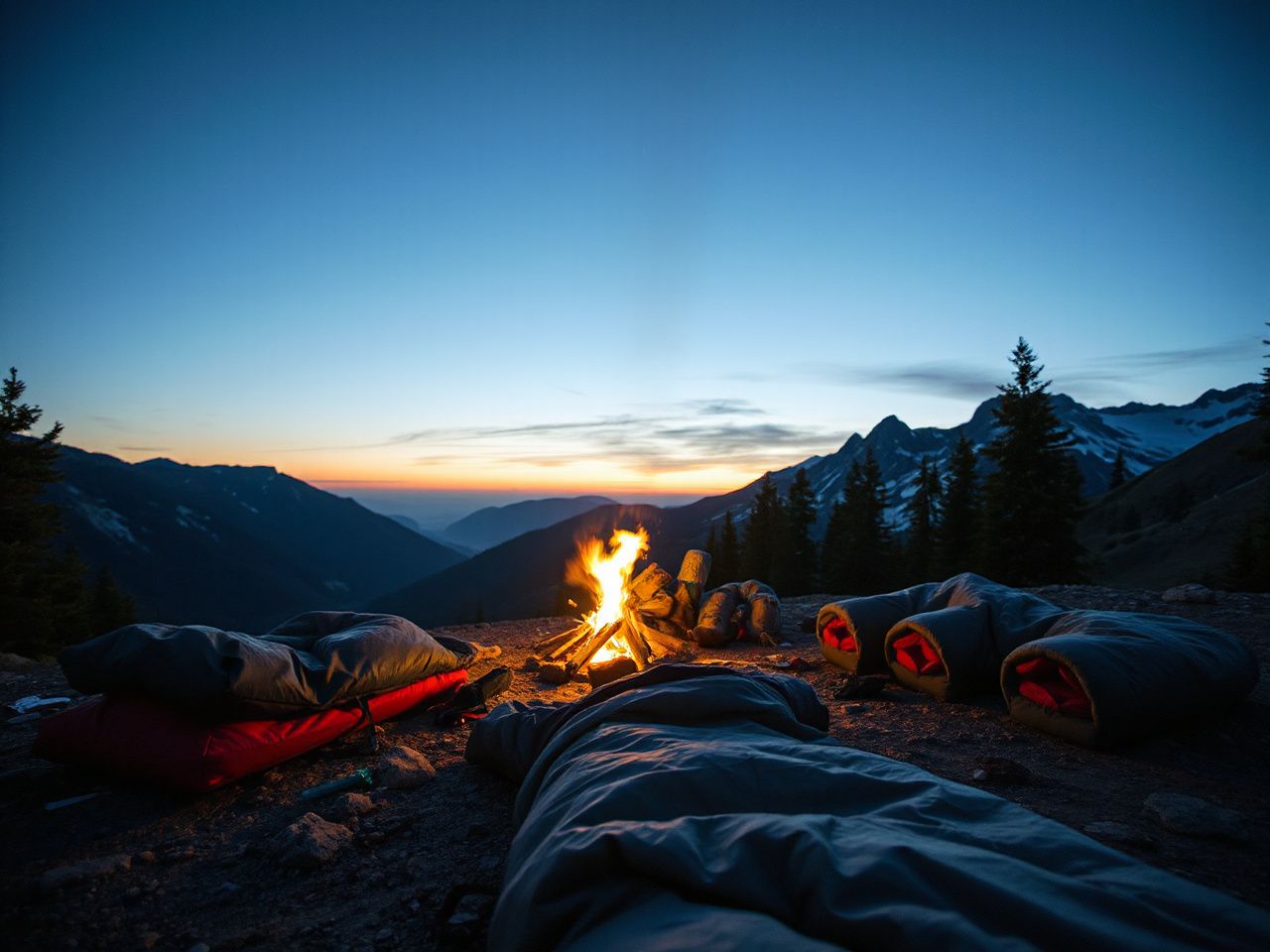
The Complete Guide to Sleeping Bag Material
Contents
Every motorcyclist who camps has had that one night. The one where the temperature drops further than you expected, and you lie there, shivering, wondering why your bag feels like a thin sheet. The trips that make the best stories are almost always the ones where something went wrong, and that is an argument for preparation rather than against it. Preparation doesn’t prevent adventure — it just gives you better options when it shows up. Understanding sleeping bag material is one of those preparations that separates a good night’s rest from a miserable one.
When you’re on a motorcycle, every ounce matters. The fabric and fill of your sleeping bag determine not just warmth, but how much space it takes in your panniers, how it handles damp conditions, and how long it lasts on the road. Let’s break down what you actually need to know about sleeping bag material — without the marketing fluff.
Key Takeaways
- Insulation type (down vs. synthetic) is the most important decision for warmth-to-weight ratio and moisture performance.
- Shell fabric durability and water resistance matter for long-term use, especially when packing tight on a bike.
- Lining material affects comfort, breathability, and how well the bag regulates temperature.
- Fill power and denier are the key numbers to understand for comparing sleeping bag material quality.
Understanding the Core of Sleeping Bag Material
The sleeping bag material that touches your skin and the material that keeps you warm are two different systems working together. The shell is the outer fabric that protects you from wind and abrasion. The lining is the inner fabric that sits against your skin or base layer. The insulation — either down or synthetic — is the middle layer that traps your body heat.
On a motorcycle trip, you’re dealing with constant compression from packing, exposure to road grime and moisture, and temperature swings from sea level to mountain passes. The right combination of these materials makes your sleep system reliable for years.
Shell Fabrics: What Protects You
The outer shell of a sleeping bag takes the most abuse. On a bike, it gets stuffed into a dry bag, strapped to the rear seat, and sometimes dragged across gravel when you set up camp in the dark. Common shell fabrics include nylon and polyester, each with different strengths.
Nylon is lighter and more tear-resistant than polyester. High-denier nylon (like 40D or 50D) is tougher and better for motorcycle use, while lower denier (10D to 20D) saves weight but can puncture easier. Polyester holds up better to UV exposure and doesn’t absorb as much water, which matters if you’re camping in humid climates or coastal areas.
Many bags use a ripstop weave, where thicker threads are woven at intervals to stop small tears from spreading. This is a smart feature for anyone who packs their bag tightly against sharp objects like tent poles or tools.
Lining Materials: What You Sleep Against
The lining of your bag affects how it feels against your skin and how well it wicks moisture. Polyester is the most common lining material because it’s soft, dries fast, and doesn’t absorb much sweat. Nylon linings are smoother and can feel cooler, which is nice in warmer weather.
Some premium bags use cotton-blend linings for a softer feel, but cotton absorbs moisture and takes forever to dry. For motorcycle travel, where you might need to pack a damp bag in the morning, polyester or nylon linings are more practical. A brushed polyester lining adds a bit of warmth and feels less slick against your skin.
Pertex and other proprietary fabrics are often just high-quality nylon or polyester with special coatings. Don’t get distracted by brand names — focus on the base material and its properties.

Insulation: The Heart of Sleeping Bag Material
Insulation is where the biggest differences in sleeping bag material show up. The two main categories are down and synthetic, and each has a clear place in motorcycle travel.
Down Insulation
Down is the soft undercoating from ducks or geese. It has the highest warmth-to-weight ratio of any insulation material. A good down bag can compress smaller than a synthetic bag with the same warmth, which is a huge advantage when you’re trying to fit everything into panniers.
The key metric for down is fill power, measured in cubic inches per ounce. A fill power of 600 to 700 is standard for budget bags. 800 to 900 fill power is premium — it traps more air per ounce, meaning you get more warmth for less weight. For motorcycle travel, look for at least 700 fill power to balance cost and packability.
The biggest downside of down is that it loses almost all insulating ability when wet. A wet down bag is a cold, heavy mess. Down also takes longer to dry than synthetic insulation. If you ride in rainy climates or cross rivers frequently, down can be a liability.
Many modern down bags use a hydrophobic treatment that repels water and helps the down dry faster. This treatment helps, but it doesn’t make down waterproof. In sustained rain, you still need a dry bag.
Synthetic Insulation
Synthetic insulation is made from polyester fibers designed to trap air. Brands like Primaloft, Thermolite, and Climashield are common. Synthetic materials perform better than down when wet — they retain some warmth even when soaked, and they dry much faster.
Synthetic bags are also cheaper than equivalent down bags. For a beginner or someone on a tight budget, a quality synthetic bag is a solid choice. The trade-off is weight and pack size. A synthetic bag with the same temperature rating as a down bag will be heavier and take up more space.
Synthetic insulation also wears out faster than down. After a few years of regular use, the fibers break down and lose their loft, reducing warmth. Down, with proper care, can last decades.
How Sleeping Bag Material Affects Temperature Ratings
Temperature ratings are not standardized across brands. A bag rated to 20°F (-6°C) by one company might feel different from another company’s 20°F bag. The materials play a big role in how warm a bag actually feels.
EN 13537 and ISO 23537 are European standards that test bags with a thermal mannequin. These ratings give you a comfort rating (what a cold sleeper needs) and a lower limit rating (what a warm sleeper can survive). Look for bags tested to these standards for reliable comparisons.
The type of insulation, the loft (thickness) of the bag, and the shell fabric all contribute to warmth. A bag with a draft collar and draft tube behind the zipper will keep heat in better, regardless of the insulation material.
Weight and Packability Considerations
For motorcycle travel, weight and packed size are critical. Down bags typically compress to about half the volume of a synthetic bag with the same warmth. A 20°F down bag with 800 fill power can compress to the size of a small loaf of bread. A synthetic bag for the same temperature might be the size of a large cantaloupe.
Shell fabric weight also matters. A bag with a 10D nylon shell is ultralight but fragile. A 30D or 40D shell is heavier but more durable. For motorcycle use, at least 30D on the bottom and 20D on the top saves weight where abrasion is less likely.
Don’t forget the stuff sack. A good compression sack can reduce your bag’s packed size by another 20-30%. Look for one with straps that let you tighten it evenly.
Durability and Care for Sleeping Bag Materials
How you treat your sleeping bag material determines how long it lasts. Motorcycle travel is hard on gear. Dust, road salt, and moisture all accelerate wear.
Down bags need careful washing with a specialized down cleaner to remove oils and dirt that clump the feathers. You can dry them on low heat with tennis balls to restore loft. Synthetic bags can be washed with gentle detergent and dried on low heat. Never use fabric softener — it coats the fibers and reduces insulation performance.
Storage is just as important. Never store a sleeping bag compressed in its stuff sack. Hang it in a large cotton storage sack or lay it flat. Compression breaks down both down and synthetic insulation over time.
For shell fabrics, you can apply a DWR (durable water repellent) spray to maintain water resistance. This is worth doing once a year if you camp in wet conditions.
Specialty Materials and Features
Some sleeping bag materials are designed for specific conditions. Waterproof-breathable shells like Gore-Tex or proprietary fabrics keep rain out while letting moisture escape. These add weight and cost but are worth it for wet climates.
Reflective linings use metallic particles to reflect body heat back to you. They work, but they add weight and can make the bag feel less breathable. They are useful in extreme cold, but unnecessary for most three-season camping.
Some bags use recycled materials for both shell and insulation. These perform similarly to virgin materials and are a good choice if sustainability matters to you. The trade-off is often slightly higher cost and sometimes lower durability.
For motorcycle travel, avoid bags with cotton shells or cotton linings. They absorb moisture, take forever to dry, and add unnecessary weight. Stick with nylon or polyester for both shell and lining.
Frequently Asked Questions
What is the best sleeping bag material for motorcycle travel?
For most motorcycle travelers, a down bag with 700-800 fill power, a 30D nylon shell, and a polyester lining offers the best balance of warmth, packability, and durability. If you ride in wet climates frequently, a high-quality synthetic bag from Primaloft or Climashield is a better choice because it retains warmth when damp and dries faster.
How does sleeping bag material affect weight?
Down insulation is significantly lighter than synthetic for the same warmth level. Shell fabric weight also matters — a 10D nylon shell is ultralight but fragile, while a 40D shell is heavier but more durable. For motorcycle travel, aim for a shell around 30D to balance weight and protection. The lining material adds minimal weight but affects comfort.
Can I use a synthetic sleeping bag in cold weather?
Yes, synthetic sleeping bags can be rated to very low temperatures, but they will be heavier and bulkier than a down bag with the same rating. For temperatures below 20°F (-6°C), synthetic bags need more insulation, which increases packed size. Down is generally more efficient for extreme cold if you can keep it dry.
How do I clean and maintain different sleeping bag materials?
Down bags require specialized down wash and low-heat drying with tennis balls to restore loft. Synthetic bags can be washed with gentle detergent on a delicate cycle. Never use fabric softener on any sleeping bag material. Store all bags loose in a large breathable sack, never compressed. Reapply DWR spray to the shell annually if you camp in wet conditions.
What does fill power mean for sleeping bag material?
Fill power measures how many cubic inches one ounce of down occupies. Higher fill power (800-900) means the down traps more air per ounce, giving you more warmth for less weight. Lower fill power (600-700) is heavier and less compressible. Fill power only applies to down insulation — synthetic insulation uses different metrics like grams per square meter.