What Changes the Result for Mens Brown Casual Shoes
Contents
A traveler buys a pair of men’s brown casual shoes two days before a two-week Europe trip. By day four, the sole has separated from the upper near the toe, and the leather has creased so deeply it looks like a folded map. The shoes are now unwearable, and the nearest replacement costs double at a tourist shop. This failure is not bad luck; it is a specification problem. Most travelers overlook that brown casual shoes fall into two distinct construction quality tiers: welted (Goodyear or Blake) versus cemented, and the leather grade (full-grain versus corrected) matters far more than brand. A welted, full-grain shoe can be resoled and will conform to the foot, making it a better travel investment, whereas cemented shoes lose their shape and cannot be repaired when the sole wears. Suede, though stylish, needs a protective treatment and is not ideal for rainy destinations.
Key Takeaways
- Full-grain leather outlasts corrected leather because the top grain remains intact, allowing it to absorb conditioner and conform without cracking.
- A Goodyear welt or Blake stitch lets a cobbler replace the sole, while cemented construction makes the shoe disposable once the outsole wears through.
- Suede needs a dedicated protector spray (not leather conditioner) and fails quickly in rain without that treatment.
- Wooden shoe trees, not newspaper, are the only reliable way to pull moisture from the lining and prevent deep toe creases after long travel days.
Construction Quality Tiers: Why One Pair Lasts 500 Miles and Another Dies at 50
The first thing to check before buying any men’s brown casual shoes for travel is how the sole attaches to the upper. This single detail separates shoes that survive repeated packing, walking on wet cobblestones, and the occasional downpour from shoes that fall apart after a few hard days.
Full-Grain vs. Corrected Leather: The Material That Decides Everything
Leather grade is not marketing language; it describes how much of the original hide remains on the surface. Full-grain leather keeps the outermost layer, including the natural grain pattern and tight fiber structure. Corrected leather has been sanded to remove blemishes, then embossed with an artificial grain and coated with a plastic finish. That coating prevents conditioner from penetrating, which means corrected leather cannot be nourished once it dries out. Over time, corrected leather cracks along flex points because the surface film has no give. Full-grain leather, by contrast, develops a patina and softens without losing structural integrity.
A self-contained fact worth remembering: Full-grain leather can absorb conditioner and recover from scuffs, while corrected leather has a sealed surface that rejects conditioner and shows every scratch as a permanent white line.
Tanning plays a role here too. The proteins in raw hide undergo a process known as tanning to enhance microbiological, chemical, and thermal stability. Vegetable-tanned and chrome-tanned leathers behave differently, but both allow conditioning if the grain is intact. Suede is split leather with the grain removed, leaving a fuzzy nap that absorbs water and stains quickly unless treated.
Welted vs. Cemented: The Difference Between Repairable and Disposable
Welted construction means a strip of leather or rubber is stitched to both the upper and the sole, creating a mechanical bond that can be undone and redone. Goodyear welt and Blake stitch are the two most common welted methods. A Goodyear welt stitches the upper, insole, and welt together, then stitches the welt to the outsole. A Blake stitch goes directly through the insole, upper, and outsole. Both allow a cobbler to remove the worn outsole and stitch on a new one. Cemented construction, by contrast, glues the outsole directly to the upper with no stitching. When that glue fails or the sole wears through, the shoe cannot be repaired.
For travel, this matters because a welted shoe can be resoled multiple times over a decade, while a cemented shoe becomes trash after one heavy season. Vibram rubber outsoles are often used on welted shoes because the brand produces replacement soles in standard patterns, but any cobbler-supplied outsole works if the construction allows it. The shoe does not need to be expensive; a basic chukka with a Blake stitch will outperform a designer cemented sneaker in terms of repairability.
If you are also evaluating other footwear for durability, our complete guide to black comfortable shoes covers the same construction principles applied to dark leather, which is useful for business travel where brown is too casual.
Matching the Shoe to the Trip: How Travel Destinations Dictate What You Need
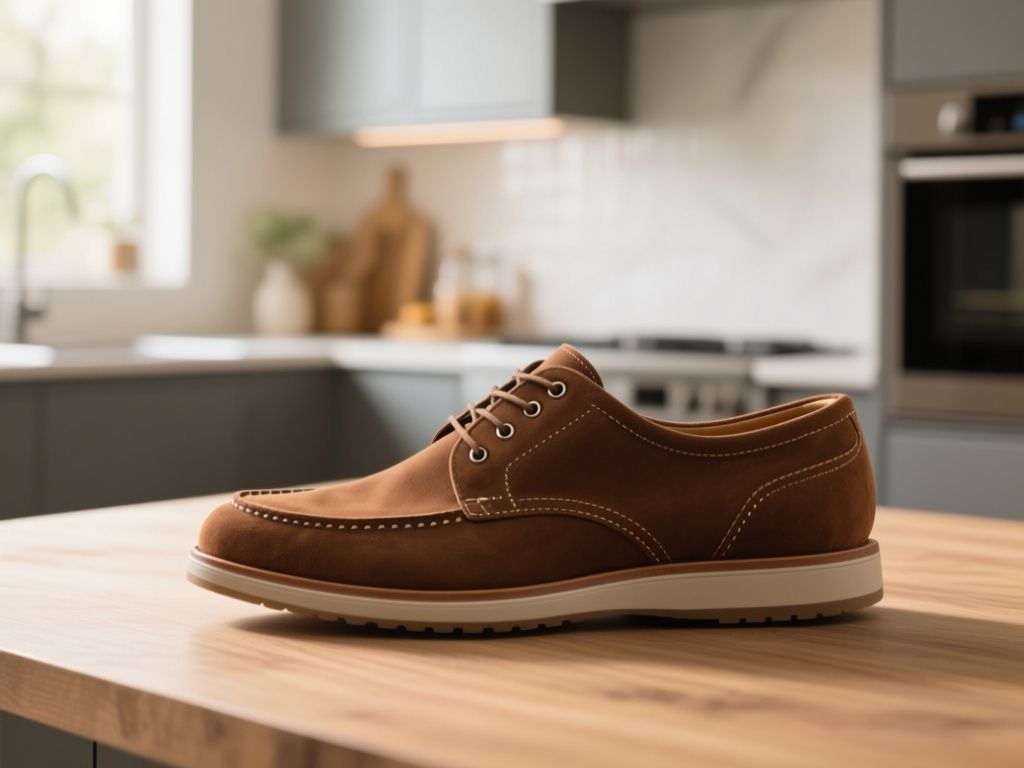
Men’s brown casual shoes are not a single category. A chukka boot, a penny loafer, and a boat shoe all fall under that label but perform completely differently on different terrain. The destination decides the outsole pattern, the upper material, and the lining comfort level.
City Walking and Cobblestones
European city streets and cobblestones are hard on shoes for two reasons. First, the uneven surface forces the sole to flex in directions it was not designed for, which accelerates sole separation on cemented shoes. Second, the stone abrades the outsole faster than smooth pavement. A rubber outsole with a lugged or ridged pattern provides better grip and sheds water better than a flat leather sole. Leather soles are elegant but dangerously slippery on wet stone. For city travel, choose a rubber outsole with at least minimal tread.
Footbed support matters just as much as the outsole. If you have flat feet, look for a removable insole that lets you swap in an orthotic insert. A removable footbed also dries faster after a sweaty day, which reduces odor and lining wear. The shoe’s lining material—leather, textile, or mesh—determines how quickly it breathes. Leather linings hold shape but take longer to dry. Mesh linings dry fastest but wear out sooner.
Beach and Warm Destinations
Boat shoes and suede chukkas are common choices for warm-weather travel, but suede is a poor material for any destination with rain, sand, or saltwater. Suede absorbs liquids instantly and stains permanently if not protected. A boat shoe with a non-marking rubber outsole performs well on boat decks and dry sand, but the leather upper of even a good boat shoe will crack if exposed to saltwater without rinsing and conditioning. For beach destinations, consider a brown casual shoe made from smooth full-grain leather or a waxed leather that resists water. Suede can work only if you carry a travel-sized Nikwax Suede Protector spray and reapply it after every exposure to water.
Brown comes in many shades, and each pairs differently with clothing. Tan browns work better with lighter summer outfits and beaches. Chestnut and chocolate browns pair better with darker jeans and cooler evening temperatures. The color also affects how visible scuffs are. Light tan shows scuffs as dark marks; dark chocolate hides them but shows dust and salt residue as whitish streaks.
Rainy or Cold Destinations
Rain is the enemy of leather and suede alike. Full-grain leather can be conditioned with neatsfoot oil or mink oil to heighten its ability to resist water, but that treatment darkens the leather and changes its appearance. A dedicated waterproofing spray designed for smooth leather is less invasive and maintains the original color better. Suede needs a spray that creates a hydrophobic barrier without flattening the nap. For cold destinations, insulated linings add bulk and make shoes harder to pack, so a better approach is a roomier shoe that accommodates thick wool socks—which also wick moisture away from the foot and prevent blisters better than cotton.
Breaking In Without Blisters: A Methodical Approach for New Brown Casual Shoes
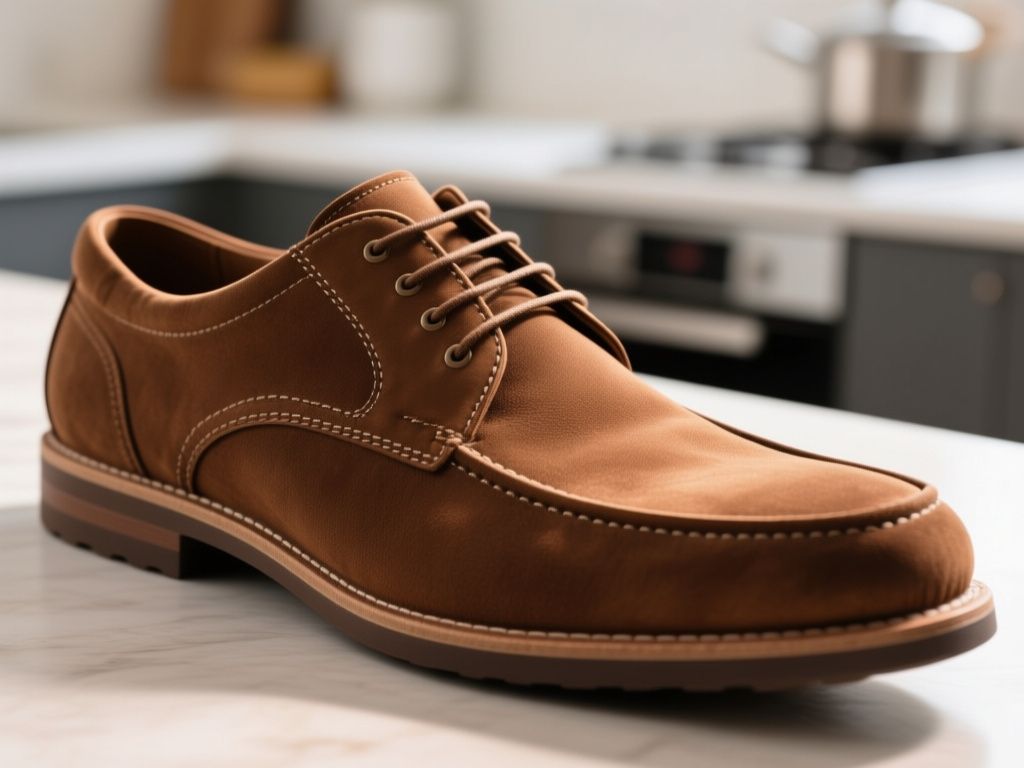
New leather shoes cause blisters because the stiff upper rubs against the heel and the top of the toes before it softens. Breaking in properly is not about suffering through pain; it is about stretching the leather gradually so it conforms to your foot without tearing the fibers.
The First 20 Hours
Leather needs moisture and heat to become pliable, but too much of either damages the material. Apply a thin layer of leather conditioner to the inside of the heel counter and the toe box, then wear the shoes around the house with thick socks for 30-minute sessions over three days. The conditioner softens the leather, and the socks create gentle pressure that stretches the tight areas. After each session, insert a shoe tree to hold the stretched shape while the leather dries.
Do not use a hair dryer or oven to speed up the process. Rapid drying cracks the leather and weakens the adhesive in cemented shoes. If you have no shoe tree, crumpled newspaper works as a temporary moisture absorber, but it does not maintain the toe shape as firmly as a wooden or plastic shoe tree. The shoe tree also pulls moisture from the lining after wearing, which prevents odor and bacterial growth.
Sock Strategy and Moisture
Blisters form when wet skin rubs against a sock or shoe. Cotton socks hold moisture against the foot and increase friction. Wool or wool-blend socks wick moisture away and dry quickly, which is why they are the standard for travel and hiking. For breaking in, wear the thickest wool socks you own to stretch the shoe more aggressively. Once the shoe fits comfortably with thick socks, it will also fit with thin dress socks. If you are breaking in a brown casual shoe that you plan to wear without socks in summer, apply an anti-chafe balm to your heels for the first few wears until the leather softens.
This same break-in logic applies to any stiff leather shoe. If you are considering athletic travel shoes instead, our guide to Nike workout shoes explains how synthetic uppers break in differently from leather.
Cleaning, Waterproofing, and Resoling: Keeping Brown Casual Shoes Alive
Most travelers clean their shoes once after a trip and then forget them until the next one. A monthly care routine—even when the shoes are in rotation—dramatically extends their lifespan and keeps the leather from drying out and cracking.
Leather Care: Conditioning and Scuff Repair
For smooth full-grain leather, wipe off dirt with a damp cloth, let the shoes dry at room temperature, then apply a small amount of Saphir Renovateur or a neutral leather conditioner. Work it in with a soft cloth and buff after 15 minutes. This replenishes the oils lost to heat and flexing. Scuffs on smooth leather can often be removed by rubbing the area with a clean finger—the natural oil in skin helps blend the scratch—or by using a matching brown shoe cream. Deep scratches that break the surface need a colored cream or wax to fill the gap, followed by polishing.
Waterproofing for smooth leather is separate from conditioning. Neatsfoot oil and mink oil increase water resistance but significantly darken the leather. A spray-on waterproofing treatment designed for smooth leather adds a hydrophobic layer without altering color as much. Whatever you use, test it on the heel area first to see how much darkening occurs.
Suede Care: The Separate Protocol
Suede cannot be conditioned, polished, or wiped with a wet cloth. The correct tools are a suede brush and a suede eraser. The brush lifts the nap and removes dried dirt; the eraser rubs out scuffs and light stains. For deeper stains, a suede-specific cleaner used sparingly. After cleaning, apply a suede protector spray such as Nikwax Suede Protector to restore water repellency. Never apply leather conditioner to suede—it mats the nap and leaves oily spots that cannot be fixed.
If suede gets soaked, stuff the shoes with paper towels immediately to absorb moisture and let them dry at room temperature. Do not apply heat. Once dry, brush the nap back up. Suede that has been through a downpour without protection often loses its softness permanently, which is why it is a poor choice for rainy destinations unless you are disciplined about spraying before every trip.
When to Resole and When to Retire
A welted shoe can be resoled when the outsole wears down to the point where the tread is smooth in the forefoot or heel. Vibram rubber outsoles are replaceable, but any cobbler can fit a generic rubber outsole if the construction allows stitching. The outsole pattern and material determine grip and water-shedding, which is crucial for travel. A smooth leather sole should be resoled before it develops a hole, because water entering through the sole rots the insole board and ruins the shoe. A cemented shoe cannot be resoled; when the sole wears through, the shoe is garbage.
The American Society for Testing and Materials maintains test methods for sole abrasion resistance that manufacturers use to predict outsole life, but real-world wear varies with walking surface and gait. ASTM International publishes these standards, which is why a quality rubber outsole will list an abrasion rating measured under those test conditions. A full-grain leather upper that has been conditioned regularly can last a decade or more with resoling; a corrected leather upper typically cracks within two to three years of regular use, even if the sole is replaced.
Shoe sizing for travel matters because international sizing varies. The Mondopoint system, defined by ISO 2816:1973 and ISO 3355:1975, measures foot length in millimeters, eliminating the confusion of UK and US barleycorn increments. ISO publishes these standards, which is why many outdoor and travel shoe brands list Mondopoint sizing on the box.
Packing Brown Casual Shoes So They Arrive Uncreased
The way you pack shoes determines whether they emerge from a suitcase looking presentable or like a folded map. Deep creases in the toe box are not just cosmetic; they weaken the leather and create a flex point where cracking starts.
Stuff each shoe with a pair of rolled socks or a lightweight shoe tree. The fill material holds the toe shape and prevents the upper from collapsing under the weight of other items. Place each shoe inside a separate shoe bag—cotton or nylon—to keep dirt from transferring to clothing. Do not wrap shoes in plastic, because trapped moisture encourages mold and odor. Pack the shoes at the bottom of the suitcase near the wheels, where they act as a stable base and absorb shock. If you only bring one pair, wear them on the travel day and pack the lighter pair in the suitcase. This saves suitcase space and reduces the risk of crushing.
For women’s slip-on styles that pack flat, our guide to slip-on walking shoes for women shows how a collapsible heel counter changes packing strategy. The same principle applies to men’s loafers: avoid crushing the heel counter, because once it creases, the shoe loses rear-foot stability.
Frequently Asked Questions
What is the lifespan of a good pair of men’s brown casual shoes, and when should I replace them?
A welted full-grain leather shoe can last a decade or more with resoling every two to three years under heavy travel use. A cemented shoe typically fails within one to two years of weekly wear. Replace shoes when the outsole is worn through, the upper has cracked through the grain, or the midsole has compressed so much that the shoe no longer provides support. A compressed midsole causes foot fatigue and back pain even if the shoe looks fine on the outside.
How do I waterproof men’s brown casual shoes without changing the color?
For smooth leather, use a spray-on waterproofer designed for leather that does not contain neatsfoot oil or mink oil. Those oils increase water resistance but darken the leather significantly. A spray forms a clear hydrophobic layer that wears off after a few uses and needs reapplication. For suede, a dedicated suede protector spray is the only waterproofing option; it coats the nap without flattening it. Test any product on the heel area first to see the color change.
Can I remove deep wrinkles from leather shoes after they have creased from packing?
Deep creases from packing can often be reduced but not eliminated completely. Stuff the shoes with a shoe tree or rolled socks and apply a leather conditioner to the creased area. Let it sit overnight so the conditioner relaxes the fibers. Then insert the shoe tree and buff. The crease will soften and become less noticeable, but it will not vanish. Prevent future creases by always packing shoes stuffed with fill material and never placing heavy objects on top of them.