What Is a Paraglider? Before You Start Your First Flight
Contents
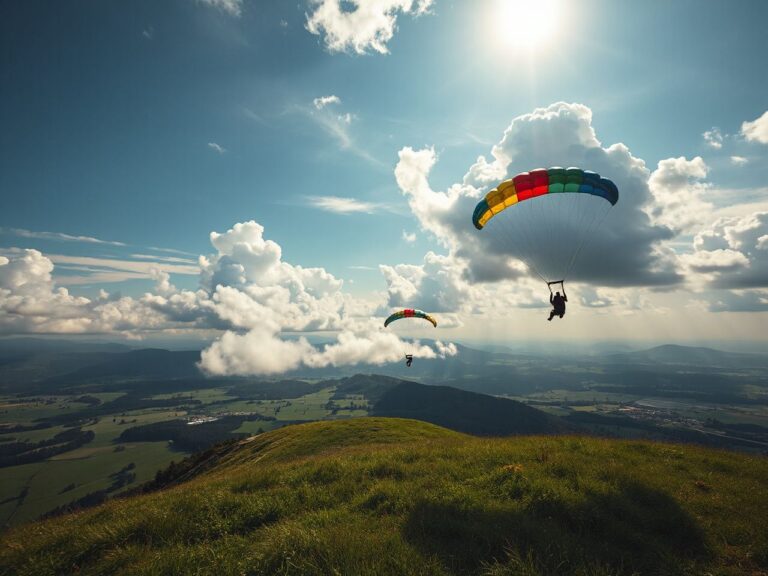
A pilot stands at a launch site in Bir Billing, a Himalayan ridge known for reliable thermals. The wind meter reads 28 kilometers per hour, gusting higher as a rotor curls over the edge. He pulls the wing up, it surges overhead, and the left side collapses without warning. The glider dives hard toward the slope, and only a last-second reserve parachute throw keeps the situation from becoming a fatality. This is the reality behind the question of what a paraglider is: a foot-launched aircraft that demands respect for aerodynamics, weather, and the limits of human reaction.
A paraglider is fundamentally a pressurized airfoil that uses forward speed to generate lift, distinguishing it from a parachute that merely slows descent. Understanding what a paraglider is means recognizing that the canopy’s internal cell pressure gives the wing its shape and ability to glide, and that control comes from managing airspeed and weight shift, not from applying constant brake pressure. For anyone assessing the risk of starting this sport, that distinction is the difference between a manageable learning curve and a dangerous misunderstanding.
Key Takeaways
- A paraglider is a soft, ram-air wing that relies on internal air pressure to maintain shape, making it capable of gliding for hours and covering tens of kilometers.
- Control comes from weight shift and brake toggles that change the wing’s angle of attack, not from pulling strings like a parachute.
- Risk is manageable but real: collapses, strong wind, and equipment fatigue cause most accidents, and these require training, judgment, and a reserve parachute to mitigate.
What a Paraglider Is (and What It Is Not)
The wing itself is a canopy made of ripstop nylon, with suspension lines often made from high-strength materials like Dyneema. A standard sporting paraglider has a span of roughly 30 feet and a wing area of about 280 square feet, divided into between 35 and 60 air cells. These cells are open at the front and sealed at the back, connected by cross-ports that allow air to move between them. When the wing inflates, air pressure inside the cells holds the canopy in its aerodynamic shape. The complete system—wing, harness, reserve parachute, altimeter, and variometer—typically weighs between 12 and 13 kilograms.
Paraglider vs. Parachute
A parachute is designed to slow a fall. It deploys overhead and creates drag, but it does not glide forward significantly. A paraglider generates lift because it has a true airfoil shape and forward speed. Once inflated, a paraglider can soar upward in rising air, travel over 280 kilometers in a single flight, and stay airborne for more than 12 hours. The world altitude record for a paraglider stands at approximately 18,000 feet. Those numbers are impossible for a parachute.
Paraglider vs. Hang Glider
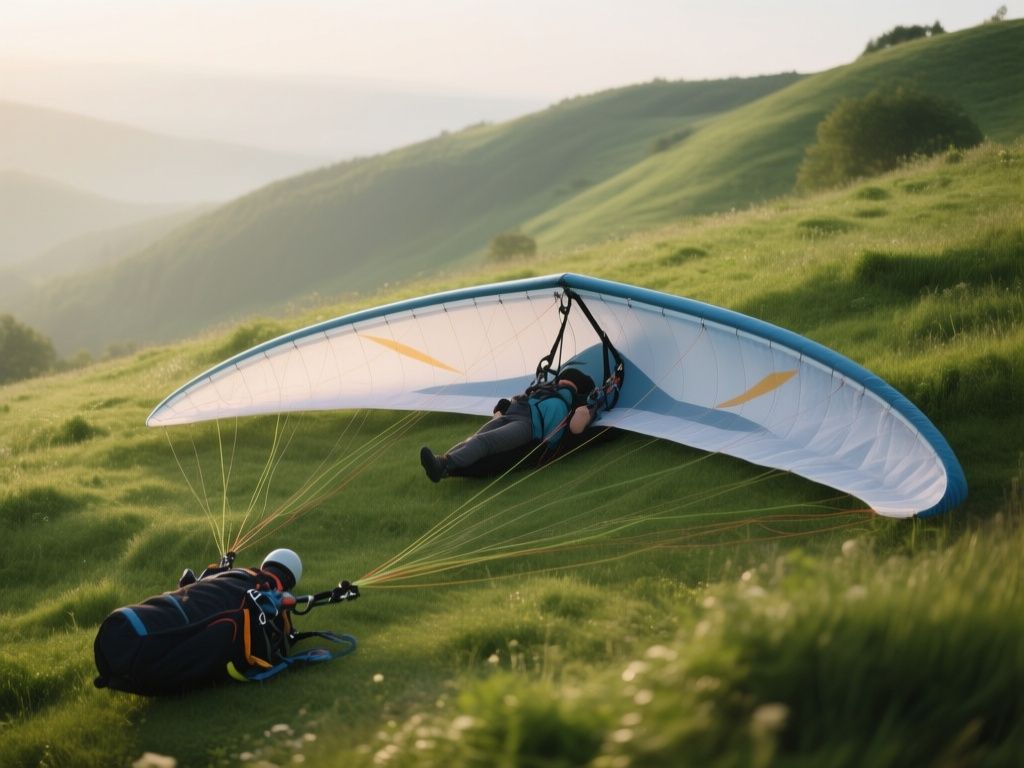
A hang glider has a rigid aluminum frame that holds the wing in a fixed shape. A paraglider has no rigid structure—it depends entirely on air pressure. That makes a paraglider packable into a backpack and easy to transport, but it also makes it more susceptible to turbulence. A hang glider is faster and more stable in strong air, but it requires a larger launch and landing area. For beginner risk assessment, a paraglider is more portable but less forgiving in rough conditions.
Paraglider with a Motor
A paraglider with a motor is called a paramotor or powered paraglider. The wing is identical; the pilot wears a frame with a small two-stroke or electric engine and a propeller on their back. Paramotoring allows takeoff from flat ground without wind or a hill, but it adds the risk of spinning propeller blades and fuel management. Parasailing, by contrast, is not a free-flying sport—the canopy is towed behind a boat, and the rider has no control over the wing’s direction or speed.
How the Wing Generates Lift and How You Control It
A paraglider is a pressurized airfoil. Forward speed creates lower pressure above the wing and higher pressure below, producing lift. The internal air pressure inside the cells maintains the wing’s curved shape. If that pressure is lost—called a collapse—the wing stops flying and begins to fall. Modern paraglider designs are tested to recover from collapses automatically when the pilot releases the brakes and lets the wing fly, but that recovery depends on proper pilot input.
Steering and Speed Control
Steering a paraglider is done through two primary controls: weight shift and brake toggles. Leaning left or right in the harness shifts your weight and slightly deforms the wing, causing a gentle turn. Pulling down on the left brake toggle pulls down the trailing edge of the left side of the wing, increasing drag and reducing lift on that side, which turns the glider left. The key rule for beginners is that you do not hold constant brake pressure. Hands-up is the neutral position. Holding brakes creates drag, slows the wing, and increases the risk of stall.
To fly faster, pilots use a speed bar or accelerator, a foot-operated bar that changes the angle of attack by pulling on the front risers. This reduces lift slightly and increases speed, but it also makes the wing more prone to collapse in turbulence. Speed bar is an advanced tool, not something a beginner should use.
Turbulence and Collapse
Turbulence disrupts the smooth airflow over the wing. When a thermal or rotor hits the canopy, the internal pressure can drop suddenly, causing part of the wing to deflate. An asymmetric collapse—where one side folds—causes an immediate turn toward the collapsed side. A symmetric or frontal collapse causes the wing to pitch forward and dive. Both are recoverable if the pilot responds correctly: release the brakes, keep your weight centered, and allow the wing to regain airspeed. Panic and over-braking turn a recoverable event into a spiral dive or stall.
The Risk Factors Most Travel Writers Downplay
From a risk assessment standpoint, paragliding is not bungee jumping. The danger is not a single fall; it is the accumulation of small errors in weather judgment, equipment maintenance, and pilot technique. Most accidents involve one of three factors: strong wind, a poorly timed collapse, or flying a wing that has exceeded its safe life.
Weather Hazards
Can you fly a paraglider in strong wind? Yes, but only if you are highly experienced and the site is appropriate. For a beginner, wind above 25 kilometers per hour is a hard no. Gusty conditions are worse than steady wind because they cause sudden pressure changes. Rain is another hidden danger: a wet wing becomes heavier and its shape deforms, which can lead to a deep stall or spin. Thermals—rising columns of warm air—are what allow cross-country flights, but strong thermals can also be violent. Sites like Annecy, France, are famous for smooth evening air that suits beginners, while midday thermal conditions are for advanced pilots only.
Equipment Fatigue and Inspection
A paraglider has a finite fatigue life. Nylon degrades under ultraviolet light, lines stretch unevenly, and the fabric becomes porous. Most manufacturers recommend retiring a wing after several hundred flight hours or 5 to 7 years, whichever comes first. Even if the wing looks fine, internal damage from hard landings or line wear can compromise safety. Every paraglider must undergo a professional inspection every 12 to 24 months, depending on usage. The reserve parachute also requires periodic repacking by a certified rigger.
Reserve Parachute and SIV Training
A reserve parachute is essential equipment, but it is only a last-resort safety device. It will not save you if you throw it too late, too low, or after a cascade of events that leaves you disoriented. SIV training—Simulation d’Incident en Vol—is a course where pilots deliberately induce collapses and stalls over water, under instructor supervision, to practice recovery. It is the single most effective way to reduce panic and build muscle memory. A pilot who has done SIV training is far more likely to recover a collapse than one who has only read about it.
Training, Certification, and Equipment Essentials
Learning to paraglide takes longer than most people expect. A typical beginner course runs 7 to 14 days of full-time instruction, ending with a novice rating (such as USHPA P2 or IPPI level 3). You will spend the first several days doing ground handling—inflating the wing and controlling it while standing on a flat field—before your first solo flights from a small training hill. Landing approaches, wind assessment, and emergency procedures are all covered before you are signed off to fly unsupervised.
Do You Need a License?
In the United States, foot-launched ultralight vehicles like paragliders fall under Federal Aviation Administration Part 103, which does not require a pilot certificate. However, nearly every flying site, instructor, and insurance provider requires a recognized rating from USHPA or an equivalent national organization. In many countries, paragliding is regulated by a national aviation authority and requires a formal license. The practical answer is yes—you need training and a rating, even if the law does not demand it.
Essential Gear
Beyond the wing and harness, you need a certified helmet (EN 966 standard), a reserve parachute, a variometer to indicate climb and sink rate, a radio for site communication, and sturdy boots with ankle support. Layered clothing is important because you lose about 2°C for every 300 meters of altitude gain. The airworthiness standard for paraglider canopies is EN 926-1, established by the European Committee for Standardization, which certifies that a wing passes structural load tests and has predictable inflation behavior. Always fly a wing that carries this certification for your skill level.
Preflight and Ongoing Checks
Before every flight, run through a checklist: lines untangled and free of knots, risers connected correctly, carabiners locked, reserve pin in place, and weather briefed. After flying, dry the wing completely before packing to prevent mildew, and store it out of direct sunlight. A paraglider that is cared for will last longer and perform more predictably. A wing that is abused—dragged across rocks, left in a hot car, or packed wet—will fail sooner and more dangerously.
Frequently Asked Questions
What exactly is a paraglider?
A paraglider is a foot-launched, ram-air inflated wing that generates lift through forward speed. It is not a parachute; it can soar, climb in thermals, and cover long distances. The canopy is made of ripstop nylon, and the pilot steers by weight shift and brake toggles. A complete system weighs 12-13 kilograms.
How long does it take to learn to paraglide?
A beginner course typically takes 7 to 14 days of full-time instruction. You will spend several days on ground handling before your first solo flights. After the course, ongoing practice and additional training (like SIV) are necessary to build proficiency. Most pilots need 50-100 flights before they feel comfortable in active air.
Is paragliding safe?
Paragliding carries real risk, but it is manageable with proper training, conservative weather choices, and well-maintained equipment. The most common causes of accidents are strong wind, mid-air collapses, and flying a fatigued wing. A reserve parachute is essential, but it is not a substitute for good judgment. The honest answer: it is as safe as the pilot makes it.
What is a paraglider with a motor called?
A paraglider with a motor is called a paramotor or powered paraglider. The wing is the same, but the pilot wears a frame with an engine and propeller. Paramotoring allows takeoff from flat ground, but it adds new risks like propeller strikes, fuel management, and extra weight. Parasailing is different—it is towed behind a boat and offers no free-flight control.
How much does paragliding equipment cost?
Equipment costs vary widely by certification level, age, and condition. A complete new setup—wing, harness, reserve, and instruments—typically costs several thousand dollars. Buying used can lower the price, but any used wing must be professionally inspected before flight. The real cost is not the gear; it is the time and effort to learn to fly safely.