Bloukrans Bungy Jump: Worth Knowing First
Contents
The silence on the walkway is the first sign something is wrong. A jumper reaches the edge of the platform under Bloukrans Bridge, looks down at the Bloukrans River over 200 meters below, and freezes solid. This is the failure nobody writes about—not equipment, not cord, but the thirty seconds where the brain refuses to let go of the railing. If you’re reading this before booking a Bloukrans bungy jump, know that the psychological barrier is the real opponent, and it’s built into the very design of the platform.
Key Takeaways
- The jump platform hangs below the road deck, so the initial drop starts with no visible ground beneath you—depth perception fails immediately.
- A full body harness (not ankle-only) spreads the force across your chest and legs, making the rebound softer but still disorienting when the cord snaps back laterally.
- Weight limits and medical screening are strictly enforced, and you are retrieved by a hoist, not by climbing back up—so plan for a few minutes dangling in the harness afterward.
What the Bloukrans Bungy Jump Actually Is (and What Most Guides Get Wrong)
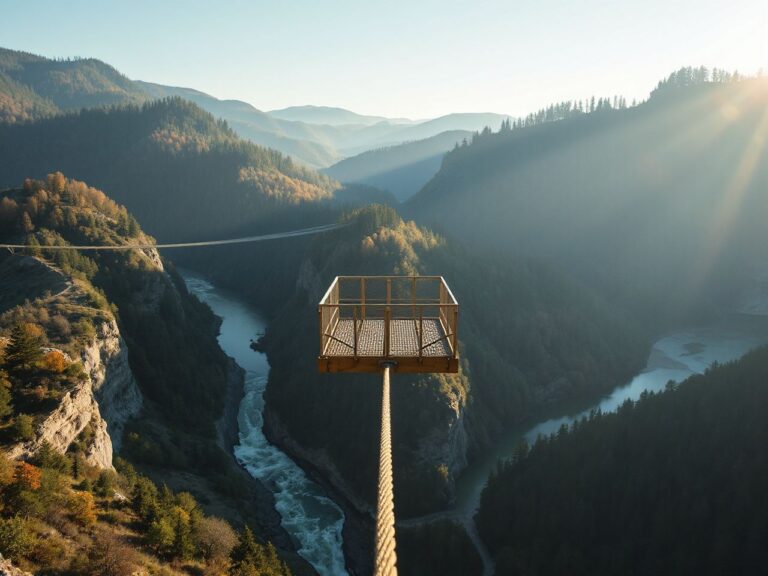
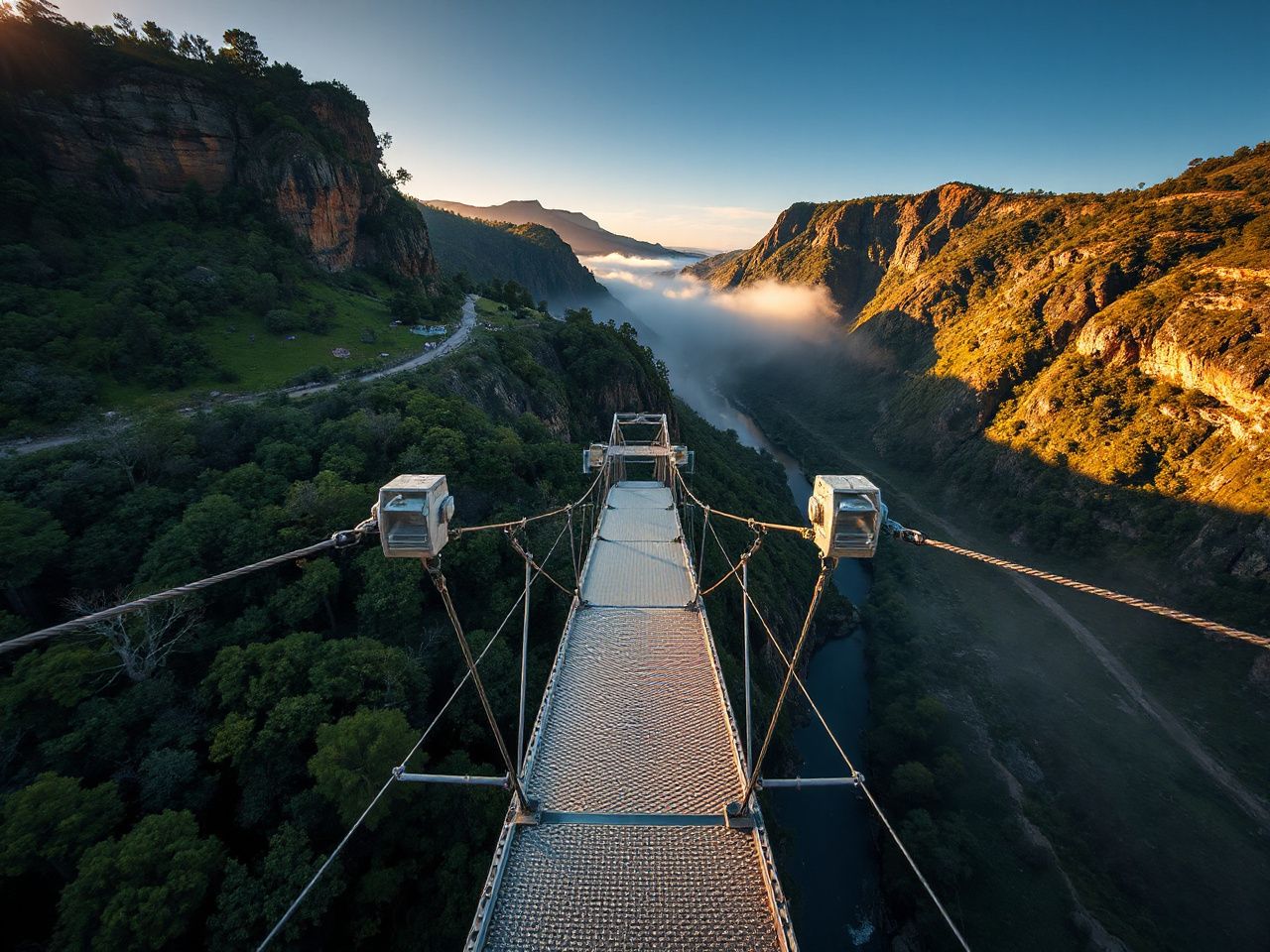
Bloukrans Bridge carries the N2 highway across the Bloukrans River gorge on South Africa’s Garden Route, roughly 40 kilometers east of Plettenberg Bay. The bridge deck sits 216 meters above the river. The bungee jump operated by Face Adrenalin uses a platform suspended below the road deck, which means you are not jumping from the bridge itself—you walk down a steel walkway to a cage-like platform that hangs in open air. This detail changes everything about how the jump feels, and most marketing copy glosses over it.
The platform sits roughly 200 meters above the water, but because it is tucked under the bridge structure, your peripheral vision is blocked by steel girders above and nothing but vertical rock and river below. Your brain cannot anchor on the ground because the ground is not in your field of view. That loss of depth perception is the single biggest reason people freeze at the edge. It is not the height itself; it is the absence of any visual reference point until the river comes rushing up.
The attachment for the Bloukrans bungy jump is a full body harness, not an ankle harness. The harness has multiple attachment points at the chest and legs, and the bungee cord connects to a central point at the front of the harness. This distributes the force across your torso and thighs, which reduces the whiplash effect compared to ankle-only jumps. The first rebound is softer than a tower jump because the cord stretches laterally away from the bridge before snapping back, but the lateral swing is what disorients you—you are not just going up and down; you are swinging in an arc under the bridge. At the bottom of the rebound, you will be pulled partially sideways, and the visual field spins.
Recovery is by hoist, not climbing. After the cord settles, a crew member lowers a retrieval line, clips it to your harness, and winches you back up to the platform. The hoist is slow, and you will hang in the harness for several minutes while the river spins below you. If you have ever been winched out of a climbing route, you know the feeling; if not, picture being suspended in a construction lift with no floor under your feet. That part is rarely mentioned, and it is the second most common point of panic.
By the numbers, the Bloukrans bungy jump holds the record as the world’s highest commercial bridge bungee, as verified by Guinness World Records. That is a bridge-specific record. The world’s highest commercial bungee overall is the Macau Tower jump at 233 meters, which is a tower jump, not a bridge jump. If you see an article claiming Bloukrans is the highest bungee in the world without the word “bridge,” that writer has not done the homework.
The Jump Experience, Step by Step
Arrive at the Bloukrans Bridge operations center, which is directly off the N2. Check-in takes about 15 minutes: you sign a consent form, show a valid ID, and get weighed. The weight limit is minimum 35 kg (77 lbs) and maximum 150 kg (330 lbs), and the scale is calibrated daily. If you are outside that range, you do not jump, no exceptions. The operator enforces this so strictly that they will not even let you onto the walkway.
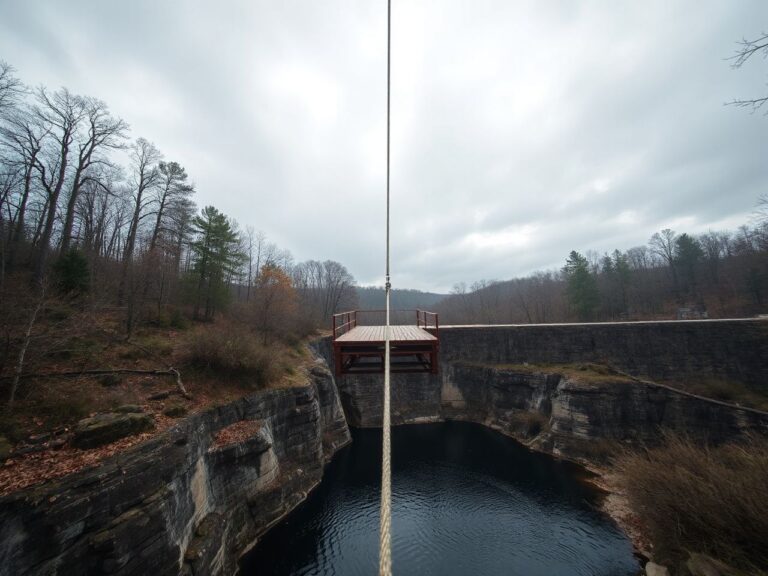
After check-in, you watch a short safety briefing, then walk down a steel catwalk that runs under the bridge deck. The catwalk takes about five minutes and is fully enclosed with railings, but the wind can be intense. At the end, you step onto the jump platform, which is a grated steel cage roughly the size of a small elevator. This is where the freeze happens. The crew will call you forward one at a time.
The harness fitting is done by trained staff, and they double-check every buckle in front of you. The bungee cord is attached to a backup line, and the crew clips both to your harness. You are not clipped to the bridge itself; you are clipped to the cord, which is anchored to the bridge structure via a series of redundant points. The jump master will talk you through the countdown, but you are in control of when you step off. They will not push you.
Once you jump, the freefall lasts about 3.5 to 4 seconds before the cord begins to stretch. At terminal velocity you are falling at roughly 190 kilometers per hour, but because you start from a static position, most jumpers never actually reach terminal velocity; you hit around 150 to 170 km/h before the cord bites. The initial stretch is smooth, not jerky, because the harness spreads the load. Then comes the rebound: the cord snaps back and you shoot upward, but not straight up—you swing sideways under the bridge, and that lateral motion is what makes your stomach drop for the second time.
After several smaller rebounds, you will settle into a gentle spin while hanging in the harness. The hoist line comes down, the crew clips it to a ring on your harness, and you get winched up. The entire jump, from edge to platform, takes about 10 minutes, but the freefall and rebounds account for less than one minute of that. The rest is hanging and hoisting.
Photos and videos are taken by the operator’s camera crew, positioned on the bridge deck and on the platform. You can purchase a package after the jump, and most people do. You cannot bring your own camera or phone onto the platform—the risk of dropping an object onto the highway below or into the gorge is too high. If you want a first-person view, you can rent a wrist-mounted GoPro from the operator, but that also gets checked for security.
Booking, Cost, and Practical Details
You need to book in advance, especially during South African school holidays from December to mid-January and over Easter. The operator runs jumps every 20 to 30 minutes from around 9:00 AM to 5:00 PM, but slots fill up fast. Walk-ins are sometimes possible in the low season, but do not count on it. Online booking through Face Adrenalin’s official site is straightforward.
The cost for the Bloukrans bungy jump as of my last check was around R1,600 for the jump package, which includes the jump, a certificate, and a basic photo or two. The full video package adds another few hundred rand. Prices fluctuate with exchange rates and seasonal demand, so check the operator’s current rates before you commit. This is not a cheap activity, but compared to similar jumps in New Zealand or North America, it is in line with the market.
What to wear: closed shoes that will stay on your feet. Sandals, flip-flops, and high heels are not allowed—you will be asked to remove them, and jumping barefoot is permitted but not recommended because the landing rebound can be rough on bare feet. Wear comfortable clothing that does not ride up, and avoid anything with loose straps or buckles that could catch on the harness. Leave jewelry, watches, and sunglasses in the locker provided. The operator supplies lockers, but they are small, so pack light.
Medical conditions that will stop you from jumping include heart problems, uncontrolled high blood pressure, epilepsy, recent surgery, back or neck injuries, and pregnancy. The consent form asks about these, and the crew reserves the right to refuse anyone they deem unfit. If you have a condition that is well managed and your doctor clears you, the operator may still refuse—safety is their call, not your doctor’s. Do not lie on the form; the consequences of a medical event mid-jump are not worth the risk.
If you pull out at the last second, the crew will not force you. They will give you time, talk you down, and offer to walk you back. There is no refund if you decide not to jump after signing the form, but you can rebook for another day at a reduced rate. Most people who freeze at the edge do eventually jump, often after a few minutes of deep breathing and some encouragement from the crew and the people waiting behind them. The worst thing you can do is let the pressure of the queue rush you—tell the jump master you need a minute, and they will respect that.
Safety Audit: Separating Fact from Marketing
Bungee jumping has no international regulatory body with the force of law, but reputable operators follow standards set by organizations like the International Organization for Standardization for equipment testing and the South African National Standards for workplace safety. Face Adrenalin publishes its safety record and procedures on its website, and the company has been operating the Bloukrans bungy jump since 1997 without a fatal accident. That is a strong track record, but it does not mean the activity is risk-free; it means the operator controls the variables well.
The equipment is inspected daily, and the bungee cords are retired after a set number of jumps or a set period, whichever comes first. The cords are not just elastic ropes; they are specially engineered braided cords with multiple internal strands, and each cord is rated for far more than the maximum jumper weight. The harness is a full body harness with redundant attachment points, and the backup line is a separate webbing strap that would catch you if the main cord failed. The jump platform itself is a steel structure bolted to the bridge, inspected annually by structural engineers.
One thing most articles fail to mention: the bridge was engineered to handle highway traffic, not bungee jumping. The original bridge design did not include a jump platform, so the platform and anchoring system are retrofitted. That is not inherently unsafe—the bridge was built with generous safety margins—but it means the platform is subject to different vibration and wind loads than the bridge deck. The operator has managed this for decades, but it is a detail worth knowing for anyone who thinks the bridge was built for this purpose.
Compared to other bungee jumps in South Africa, such as the 70-meter jump at Graskop Gorge in Mpumalanga or the indoor jumps at Orlando Towers in Soweto, the Bloukrans bungy jump is in a different category of height and exposure. If you are nervous about the height, try Graskop first—it is a quarter of the height and gives you a taste of the harness and rebound without the full psychological load. For a truly first-person account of how bridge jumps feel, check out our guide to the highest bungee jump in North America, which breaks down the same physics from a tower perspective.
The Bungee vs. the Swing, and What Else Is Nearby
The Bloukrans Bridge also offers a swing, and the two activities are often confused. The bungee is a vertical drop with a rebound; you fall until the cord stretches, then bounce back up. The swing is a pendulum: you step off the platform attached to a rope, fall for a couple of seconds, then arc out in a huge sweeping motion under the bridge, like a giant playground swing. The swing has a higher initial acceleration because the rope does not stretch, but the bungee has the rebound disorientation. If you are afraid of the freefall, the swing is actually worse in the first second because there is no stretch to soften the jerk. If you are afraid of the rebound, the bungee is the one to avoid.
After your jump, the Tsitsikamma National Park is directly below the bridge, and the Storms River Mouth is a 30-minute drive east. The Otter Trail, one of South Africa’s most famous multi-day hikes, starts in the park, and day visitors can walk the first few kilometers along the coast. The Garden Route as a whole is packed with adventure sports—shark cage diving in Gansbaai is a few hours west, zip-lining through the Tsitsikamma forest canopy is right at the bridge turnoff, and the Bloukrans River itself offers white-water kayaking in the wet season. If you are building a full adrenaline trip, this is one stop among many.
For a broader look at bungee jumping as an industry, including how operators choose cord designs and what separates a safe jump from a dangerous one, our complete bungy bungy guide for 2026 covers the technical side in detail. It is not specific to Bloukrans, but the principles apply, and it will help you ask the right questions at any jump site.
Frequently Asked Questions
How high is the Bloukrans Bungy Jump, and is it the highest bungee in the world?
The bridge deck is 216 meters above the Bloukrans River, and the jump platform hangs below the deck, placing the actual drop at around 200 meters. It holds the record as the highest commercial bridge bungee, but the Macau Tower in China is higher overall at 233 meters. So if you want the tallest bungee anywhere, Macau wins; if you want the tallest from a bridge, Bloukrans is the one.
What if I panic at the edge and change my mind?
The crew will not push you. They will give you time, talk through your fear, and offer you the option to walk back. There is no refund after you have signed the consent form, but you can rebook for another day at a discounted rate. Many people freeze for several minutes before jumping, so do not feel rushed by the queue behind you.
Can I bring my own camera or phone for the jump?
No. Loose objects are banned on the platform because of the risk of dropping them onto the N2 highway or into the gorge. The operator provides professional photos and video packages that you can purchase after the jump, and you can rent a wrist-mounted action camera if you want first-person footage. Leave your phone in the locker.