Sweden Family Vacation: What to Know Before You Go
Contents
Most families plan a Sweden trip the same way: they book a hotel in Stockholm, buy a city pass, and then drag kids through three museums a day until everyone melts down. That approach breaks a family vacation in Sweden faster than anything else. The country runs on a different rhythm — one that rewards slow travel, outdoor time, and eating cinnamon buns at a café without checking the clock. A Sweden family vacation built around packed itineraries will cost more, feel rushed, and miss the whole point. The real trip is about leaving room for everyday moments, and the best plans are built around trains, ferries, and forest walks, not bucket-list checkmarks.
Key Takeaways
- Travel in May or September for fewer crowds and lower prices; summer brings peak costs and northern mosquitoes, while winter offers northern lights but deep cold.
- Skip the rental car — Swedish trains, buses, and ferries handle families well, and you avoid parking hassles in cities.
- Embrace allemansrätten (right of public access) for free nature time, but follow the rules: no camping near homes, no motor vehicles off-road, and pack out all trash.
Beginner: Nail the Basics Before You Book Anything
The biggest mistake first-time visitors make is assuming Sweden works like a compact Central European country. Distances are long, especially to the north, and the best experiences often require a deliberate slowdown. Before booking flights, decide what kind of trip your family actually wants: city culture, island hopping, forest camping, or winter aurora chasing. Trying to combine all four in one week will exhaust everyone.
Best Time to Visit — and What That Means for Your Daily Plan
Swedish school summer holidays run roughly from mid-June to mid-August. During those weeks, domestic families travel heavily, so popular spots like Gotland and the Stockholm archipelago fill up, and prices for accommodation spike. If your children are not tied to a school calendar, aim for late May to early June or late August to September. You get long daylight hours in early summer, fewer crowds at museums, and hotels often drop rates by 20–30%. Autumn brings crisp air and berry-picking opportunities, though some outdoor attractions begin to close by late September.
Winter travel means short days and real cold, but it also means the northern lights season, Christmas markets, and ski resorts. For a family not used to sub-zero temperatures, February and March are better than December or January because daylight returns and temperatures moderate slightly. The Swedish Meteorological and Hydrological Institute (SMHI) publishes reliable seasonal forecasts and daylight tables to help you plan realistic daily schedules.
Getting Around Without a Rental Car
You do not need a car for most of southern and central Sweden. The train network operated by SJ Swedish Railways runs frequent services between Stockholm, Gothenburg, Malmö, and Uppsala, with family-friendly carriages that include play areas on some routes. Children under 7 often travel free with an adult, and older kids get discounts. Onboard toilets have changing tables on newer X2000 trains. Book tickets in advance for the best prices; last-minute fares can be triple the early-bird rate.
Within Stockholm, the SL public transport system (buses, metro, trams, and ferries) uses a single integrated ticket. A 72-hour travel card is far cheaper than buying single rides, and kids under 12 travel free with a paying adult on weekends. The metro itself is a free art gallery — every station has a different theme, which keeps young kids entertained while you commute. Gothenburg has a similar tram network, and its archipelago ferries are part of the public transport ticket, so you can island-hop for the price of a bus fare.
If you do rent a car, never assume the rental company provides car seats. Swedish law requires appropriate child restraints, but rental agencies often run out or charge steep daily fees. Bring your own booster seat or book a seat explicitly in writing. Taxis are a different problem: many Stockholm taxi companies do not carry child seats at all, and drivers are not obligated to provide them. For airport transfers with young children, pre-book a private transfer that includes seats, or use the Arlanda Express train, which has no seat requirement issue.
Stockholm for Kids: The Museums That Actually Work
Stockholm has dozens of museums, but only a handful are genuinely engaging for children under 12. The Vasa Museum is the single best choice: a 17th-century warship raised from the harbour floor, displayed in a dim, dramatic hall. Kids can walk around the ship at multiple levels, and the free audio guide has a child-friendly version. Allow 90 minutes, not the three hours some guides suggest — small legs get tired.
Skansen, the world’s oldest open-air museum, is essentially a giant park with historic houses, native animals (moose, bears, wolves), and a small amusement area. On a sunny day, your family could spend five hours here without noticing. The Junibacken storybook museum, dedicated to Astrid Lindgren and other Nordic children’s authors, includes a story train ride that even toddlers enjoy. Note: Astrid Lindgren’s World is a separate theme park in Vimmerby, about three hours south of Stockholm by car — do not confuse the two. If you have a Pippi Longstocking fan, that park is worth a dedicated day, but it is not a Stockholm day trip.
The Tekniska Museet (National Museum of Science and Technology) has a huge hands-on area called MegaMind where kids build, experiment, and climb. It works well on rainy days. Skip the Royal Palace and the Nobel Museum unless your children are genuinely interested in formal history; the queues and formality drain energy fast.
Food That Picky Eaters Will Actually Eat
Swedish cuisine is far more kid-friendly than many visitors expect. Meatballs with lingonberry jam and mashed potatoes is a safe default — every restaurant has a version, and the jam adds sweetness without spice. Pannkakor (thin pancakes) with jam and whipped cream appear on most lunch menus. Korv (hot dogs) are sold everywhere, often wrapped in tunnbröd (soft flatbread) with mashed potatoes — a classic Swedish street food. Cinnamon buns (kanelbullar) are ubiquitous and cheap at bakeries.
Kids often eat free at hotel breakfast buffets, but this is not universal — always confirm at booking. Many lunch restaurants offer a “barnportion” (child portion) at half price. Tap water is safe and free; ask for “kranvatten” to avoid paying for bottled water. Grocery stores like ICA, Coop, and Hemköp have excellent ready-made sandwiches, fruit packs, and yogurt tubes, which beats restaurant dining for every meal of the day.

Intermediate: Beyond Stockholm — Gothenburg, Gotland, and Nature Access
Once you have the capital handled, consider a second base. Gothenburg on the west coast is more relaxed than Stockholm and has a compact centre that is easy to walk with a stroller. Liseberg, Scandinavia’s largest amusement park, opens in late April and offers gentle rides for toddlers alongside thrill rides for teens. Entry is free if you just walk around; you pay per ride or buy a wristband. The Universeum science centre next door has a rainforest zone with free-flying birds and a huge aquarium tunnel, which can occupy kids for a full rainy afternoon.
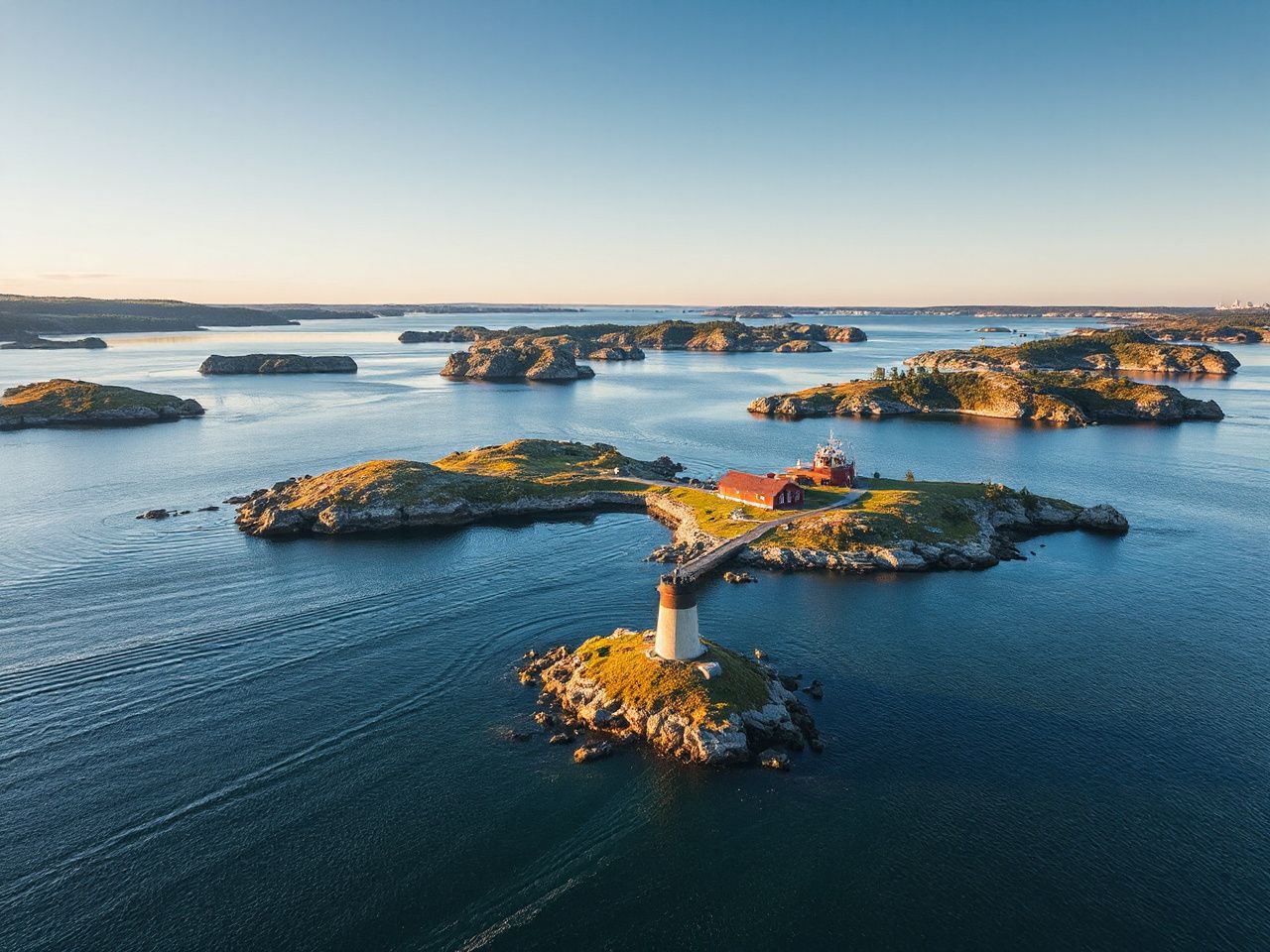
The Gothenburg archipelago is reachable by public tram and ferry, and the southern islands (Brännö, Styrsö) have car-free villages with sandy beaches and ice cream kiosks. A day trip here costs less than a museum entry in Stockholm and feels like a real Swedish summer.
Gotland by Ferry: Plan Ahead
Gotland, a large island in the Baltic, is a favourite Swedish summer destination, especially the medieval town of Visby. The ferry runs from Nynäshamn (south of Stockholm) or Oskarshamn, and crossings take 3–4 hours. Book ferry tickets at least two months ahead for summer weekends — cars and cabins sell out. The ferry itself is part of the fun: kids can run around the open decks, play in the small indoor playroom, and eat overpriced but decent cafeteria food. On Gotland, rent bikes in Visby and ride the flat coastal roads, or take the local bus to sandy beaches like Tofta. Visby’s medieval city wall and ruined churches are more interesting to older kids who can climb and explore than to toddlers in strollers.
Hiking Safety and the Right of Public Access
Sweden’s famous allemansrätten (right of public access) allows anyone to walk, cycle, ride, ski, and camp on private land as long as they do not disturb residents or damage nature. The Swedish Environmental Protection Agency spells out the rules clearly: you may camp one or two nights in the same spot, you must stay at least 70 meters from any dwelling, you cannot drive a motor vehicle off-road, and you must pack out all trash. For families, this means free wild camping in forests and along lakes, but it does not mean building fires anywhere — fire bans are common in dry summers, and you should always check local restrictions.
Mosquitoes in northern Sweden during June and July are a genuine issue, not a minor nuisance. Bring repellent with DEET or icaridin, and consider a mosquito head net for kids if you plan to camp in Lapland. In the south, ticks carrying Lyme disease and TBE are present in grassy and wooded areas from spring to autumn. The Public Health Agency of Sweden recommends checking kids’ skin after every nature walk and considering TBE vaccination if you will spend a lot of time outdoors.
Advanced: Northern Sweden, Northern Lights, and Winter Trips
Northern Sweden — Swedish Lapland — is a different world, and it rewards families who plan carefully. The two main hubs are Kiruna and Abisko, both reachable by overnight train from Stockholm. Abisko National Park is widely considered one of the best places on Earth to see the northern lights because of its “blue hole” — a microclimate that often keeps the sky clear when surrounding areas are cloudy. The Abisko Scientific Research Station publishes aurora forecasts and sky condition updates, which helps you decide whether to stay up late with the kids.
Northern lights with children require a different approach than an adult photo trip. Kids under 8 often fall asleep before the aurora peaks around 10 p.m. to midnight. Instead of dragging them out in -15°C, book accommodation with a glass roof or a large window facing north, such as the Aurora Sky Station’s warm lounge or a cabin in Abisko. If you do go outside, dress in layers: wool base layer, fleece mid-layer, insulated snowsuit, and proper mittens — not gloves. Hand and foot warmers are essential, and so is a thermos of hot chocolate. Temperatures below -20°C are simply not safe for young children for more than 20–30 minutes, regardless of clothing.
The Icehotel in Jukkasjärvi, near Kiruna, is a spectacular art installation, but it is not a comfortable place for young kids to sleep. Guest rooms are kept at -5°C, and you sleep on a block of ice covered with reindeer skins. The hotel offers warm “cold rooms” (heated cabins) on the same property, and many families choose to stay warm and visit the ice rooms during the day. Day visits include a tour, and kids can slide down ice sculptures in the main hall. If you do book an overnight ice room, the minimum recommended age is usually 8–10, and even then one night is enough.
Sweden has excellent family ski resorts, far less glitzy and more affordable than the Alps. Åre in Jämtland is the largest, with slopes for all levels and a dedicated children’s area with magic carpets and gentle runs. Sälen and Idre Fjäll further south are even more family-oriented, with ski schools that accept kids from age 3. Lift tickets cost about half what you would pay in Switzerland or Austria, and many resorts offer package deals that include accommodation, lift passes, and ski rental for a fixed weekly price. Cross-country skiing is also a family activity in Sweden — trails are free to use if you have your own skis, and rental shops are abundant.
Frequently Asked Questions About a Sweden Family Vacation
Is Sweden expensive for a family trip? How can we budget?
Yes, Sweden is more expensive than most of Europe, but you can manage with three strategies. Stay in apartments or cabins with kitchen access instead of hotels; cooking half your meals saves 50–70% on food costs. Use public transport instead of taxis and rental cars. Choose free activities — nature, playgrounds, city walks, and the right of public access camping — over paid attractions. A realistic budget for a family of four in summer, staying in mid-range accommodation and eating out once a day, is around 2,500–3,500 SEK (roughly $250–$350) per day excluding flights.
Which Swedish cities are most kid-friendly besides Stockholm?
Gothenburg tops the list thanks to Liseberg amusement park, Universeum science centre, and a compact, walkable centre with excellent trams. Malmö, across the bridge from Copenhagen, has a relaxed coastal vibe, huge parks, and the Turning Torso tower that kids enjoy spotting. Uppsala, just 40 minutes by train from Stockholm, has a beautiful cathedral, a fun hands-on biology museum (Biotopia), and plenty of green space. Visby on Gotland works well for older kids who like medieval history and beach days.
How can we experience the Northern Lights with children?
Go to Abisko in February or March. Daylight returns enough for daytime activities like dog sledding or a short hike, and aurora displays often start by 8 p.m., before young kids get too tired. Book a warm viewing spot with windows — the Aurora Sky Station has a cosy lounge, and several cabins in Abisko have glass roofs. Dress kids in full-body snowsuits with mittens, not gloves, and bring multiple hand warmers. If the aurora forecast is weak, do not force a late night; one good display makes the trip, and pushing exhausted children ruins the next day.
What are some traditional Swedish foods that picky eaters will like?
Meatballs with lingonberry jam and mashed potatoes is the obvious choice, but also try pannkakor (thin pancakes) with jam, räksmörgås (shrimp sandwich) if your kids eat seafood, and kanelbulle (cinnamon bun) for a sweet treat. Hot dogs (korv med bröd) are everywhere and cheap. Picky eaters often enjoy filmjölk, a yogurt-like fermented milk that tastes mild and comes in fruit flavours. Avoid surströmming (fermented herring) — it is an acquired taste that few adults, let alone children, enjoy.
Is it worth going to the Icehotel with young kids?
As a day visit, yes. The ice sculptures and rooms are magical, and children love sliding on the ice floor and touching the cold walls. As an overnight stay for kids under 8, no. The -5°C sleeping temperature is genuinely uncomfortable regardless of the thermal sleeping bags provided, and the combination of cold and excitement usually means no one sleeps. Stay in a warm cabin nearby and do the daytime tour instead. If your child is over 10 and adventurous, one night can be a memorable experience, but book a warm room for the second night.
If you are still weighing options beyond Sweden, our European vacation packages for 2026 roundup compares multi-country itineraries, and our best family tour packages guide breaks down structured trips that handle logistics for you. For families who prefer cruising, the family friendly cruises list includes Baltic routes that stop in Stockholm and Helsinki.