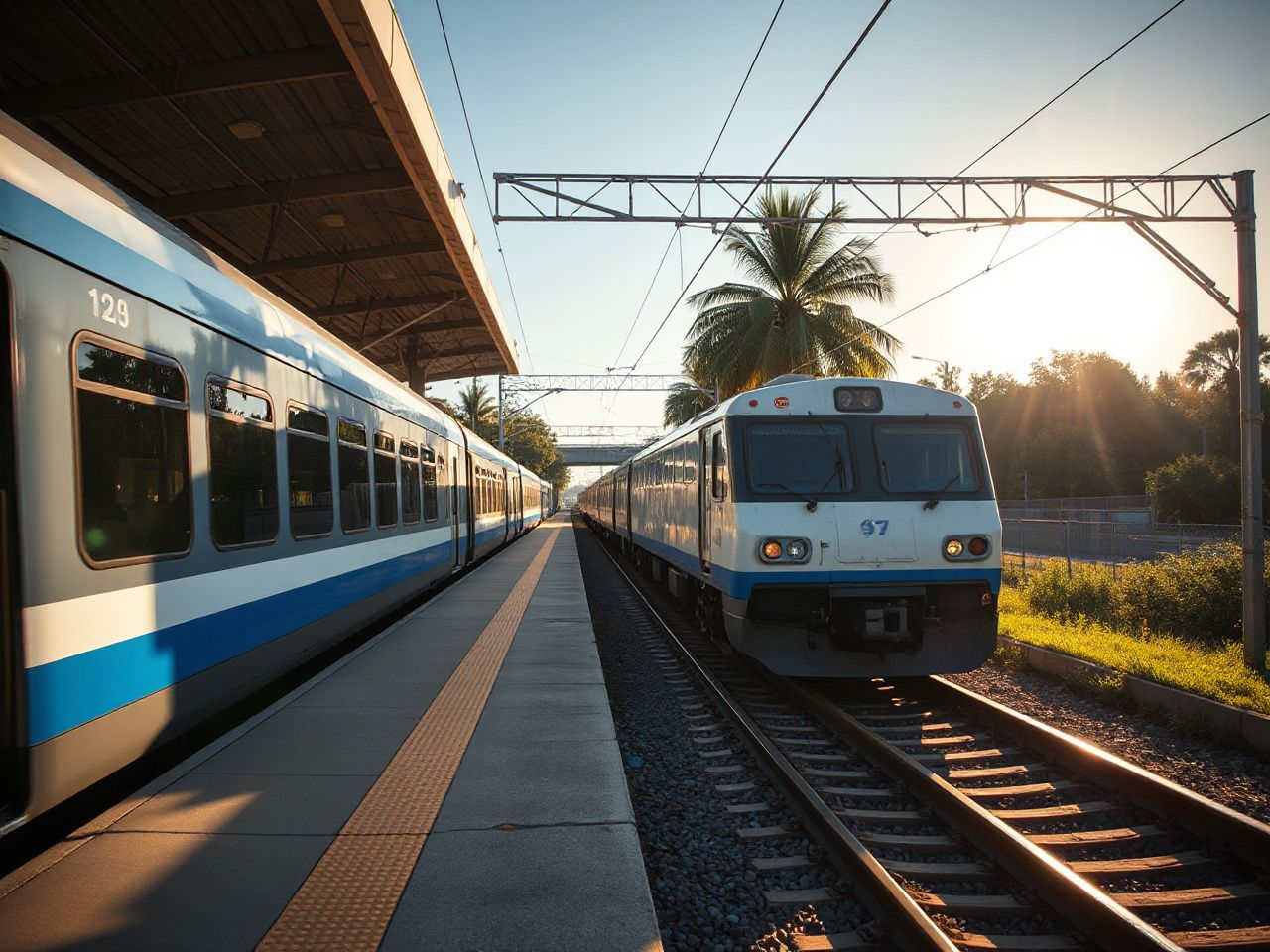
Train from Tampa to Orlando FL: Step-by-Step Guide
Contents
Most travel guides bury the lead: there’s no direct train from Tampa to Orlando. None. Not a single-seat ride on Amtrak’s Silver Star, not a sleek Brightline high-speed jaunt—at least not yet. I’ve ridden every rail option between these cities, and the first thing I tell people is to abandon the idea of a single-seat train ride unless you’re willing to wait for Brightline’s Tampa link to open. Right now, the practical choice is comparing a Milwaukee Road–style bus-bridge Amtrak connection or just driving, because the train isn’t a time-saver. When I map out the logistics, I focus on the actual station locations and transfer times—something a new rider inevitably underestimates when they see ‘Tampa to Orlando’ on a timetable.
Key Takeaways
- No direct train exists between Tampa and Orlando; Amtrak requires a Thruway bus transfer from Tampa Union Station to an Orlando stop, and Brightline’s Tampa extension remains under construction with no firm opening date in 2026.
- The total trip time often exceeds 4.5 hours—slower than driving—due to bus segments, freight-induced delays, and limited departure windows.
- Orlando’s Amtrak station sits miles from the tourist district; you’ll need a separate ride to Disney World or Universal, adding another 25–40 minutes to your timeline.
The Uncomfortable Truth: No Direct Train (Yet)
Walk into Tampa Union Station and ask for a train ticket to Orlando. The agent will hand you a bus voucher. Not a boarding pass for the Silver Star. That train, despite running through Florida, completely bypasses Orlando—it angles northeast from Tampa via Lakeland to Jacksonville. This isn’t a seasonal hiccup; it’s the permanent routing of the Amtrak Silver Star along CSX freight tracks. The Florida Department of Transportation’s 2025 rail study confirmed that no dedicated passenger corridor links the two cities, leaving the I-4 corridor as the sole overland connection.
Brightline’s planned extension from Orlando International Airport (MCO) to Tampa does promise direct diesel-electric service eventually, but as of early 2026, the Brightline Tampa project is still securing right-of-way agreements along the Florida East Coast Railway corridor. Construction hasn’t begun. Realistically, don’t build a trip around it until at least 2028. For now, the “train” trip is a hybrid bus-train mission.
I’ve mapped out dozens of multi-leg routes, and this one triggers more confusion than a freight derailment on a single-track mainline. The core problem: Amtrak’s website and third-party aggregators list a train from Tampa to Orlando as an option, but you’re booking an Amtrak Thruway Bus Connection with a possible rail segment elsewhere. That nuance trips up even experienced travelers who skim the timetable without checking the mode of transport.

The Amtrak Thruway Bus: Your Hybrid Mission
The current answer to the question “train from Tampa to Orlando FL” is a motorcoach operated by Amtrak as a connecting service. You board at Tampa Union Station (601 N Nebraska Ave), not at some outlying depot. The bus typically departs in the early morning—often around 5:20 a.m.—bound for Amtrak’s Orlando station near downtown, officially called Orlando Health/Amtrak Station (1400 Sligh Blvd). That facility is a small, functional stop, not a grand terminal, and it’s about 7 miles from Walt Disney World’s main gate.
A single round-trip bus ride without a connecting train can cost as little as $14 one-way if booked weeks ahead, though last-minute fares spike to $30–$40. However, many itineraries bundle the bus with a train segment—say, Tampa bus to Orlando, then Orlando train to Miami—which changes the pricing logic. When I plan a point-to-point mission, I always break out the cost per mile: roughly 12 cents per mile on a $14 ticket versus 58 cents per mile if I drive solo, factoring I-4 tolls and gas. The bus looks competitive in dollars alone, until you factor in the clock.
Where to Catch the Train (or Bus)
- Tampa Union Station: Address 601 N Nebraska Ave, Tampa, FL 33602. Parking is available but unattended overnight; I don’t leave a bike there long-term. The station building is historic and modest, with an indoor waiting area that opens before the first departure.
- Orlando Health/Amtrak Station: 1400 Sligh Blvd, Orlando, FL 32806. No rental car desks inside; rideshare pickup is out front near the crosswalk. SunRail’s commuter platform is adjacent, but trains don’t run to tourist zones directly.
Timeline & Cost Comparison: Rail vs. Asphalt
The bus-only trip takes about 2 hours and 15 minutes in ideal I-4 traffic. Add 45 minutes early arrival for check-in (Amtrak asks for 30 minutes before departure), and your gate-to-gate time is roughly 3 hours. Driving the 85 miles from downtown Tampa to downtown Orlando via I-4 takes 1 hour 20 minutes to 1 hour 45 minutes outside peak hours. The bus loses on speed.
If you tie the bus to a train segment, like Tampa bus to Orlando then rail to Miami, the one-way price can drop to $10–$12 as part of the longer trip, but you’ll sit on a bus for the Tampa-Orlando leg regardless. Schedules are sparse: typically only one or two early morning departures and a late-evening return around 9 p.m.—hardly ideal for a day trip. The last bus back from Orlando leaves around 6:00 p.m. on most days, killing any chance of evening park fireworks.
Can You Make a Day Trip Work?
Theoretically, yes—board the 5:20 a.m. bus, arrive by 8 a.m., and you could reach a park by 9:30 a.m. after a rideshare or SunRail connector. But the return bus before 6 p.m. means you’re leaving the park by 4:30 p.m., netting about 7 hours on-site. For comparison, driving gives you a full 10 a.m.–9 p.m. park day and costs about $18 in gas and tolls round-trip versus $28 for two bus tickets. The train-bus combo doesn’t save money or time; it’s strictly a convenience for those who don’t want to drive.
The Orlando Arrival Problem: Getting to Disney & Universal
This is where most trip plans crumble. The Amtrak station off Sligh Boulevard sits in a residential area with no direct shuttle to the theme parks. Disney World’s Magic Kingdom is 11 miles away; Universal Orlando is 8 miles. SunRail, the commuter rail, stops at the same platform, but its lines head north-south, not to the attractions. You’ll need one of three options:
- Rideshare (Uber/Lyft): $15–$25 each way, 20–30 minutes. Factor surge pricing near park close.
- Lynx bus Route 42: $2 per trip, but expect 50–70 minutes and a transfer near Florida Mall. Not a serious option with luggage.
- One-way rental car: Budget and Avis have pickup counters a short taxi ride from the station. A day rental can be $35–$50.
Brightline’s future station at Orlando International Airport (MCO) will ease this—once the Tampa link opens, you’ll step off the train into a hub with rental cars and shuttle buses to Disney’s Transportation and Ticket Center. But for now, tourists who ride Amtrak into Orlando often stare at their phones in disbelief when they realize they’re not in the resort bubble. I recommend pre-arranging a private transfer if carrying bulky luggage; SunRail doesn’t go to Disney.
One oddity: some travelers route through Lakeland or Kissimmee to avoid the bus entirely. You can take the Silver Star from Tampa to Lakeland (a 45-minute ride) and then catch a separate Amtrak train from Lakeland to Orlando, but that adds a multi-hour layover and costs more. I’ve charted that detour precisely once—it took 6 hours total. The direct bus, flawed as it is, remains the fastest rail-connected option.
Onboard Experience: What to Expect En Route
Amtrak’s Thruway buses are typically modern coaches with reclining seats, air conditioning, and a restroom. WiFi depends on the contractor; some buses offer it, but I never rely on connectivity. The trip from Tampa to Orlando follows I-4, so you’ll pass by heavy freight depots and the occasional lake vista—nothing scenic, just functional transit. Seating is unreserved, so boarding early gets you a window spot.
Food service does not exist. Vending machines at Tampa Union Station may be your last chance. For a morning departure, I pack a thermos of coffee and a protein bar, no different than a long motorcycle haul. Luggage policies are surprisingly liberal: you can typically bring two checked bags (up to 50 lbs each) and two carry-ons, same as Amtrak’s train baggage rules. Bicycles? Not on the bus itself, but you can box a bike and check it if your ticket includes a train segment that offers checked baggage. I’ve transported a disassembled dual-sport using Amtrak’s checked service on trains, but never the bus part—they won’t gate-check a bicycle. If you’re traveling the whole trip by bus only, call ahead to confirm, as policies shift by route.
Delays: Freight Trains, Not Passenger Trains
What’s rarely stated is that Amtrak buses can get snarled not by bus traffic but by the train they’re meeting. The bus often connects to a long-distance train at Orlando, and if that train is late—common thanks to CSX freight priority—the bus holds until it arrives. I’ve waited 90 minutes at Orlando station for a Silver Meteor, watching a bus driver chain-smoke outside. The Amtrak performance metrics show that Florida trains average a 25–35% delay rate on this segment. Always pad your schedule, and never book a tight connection to a flight or dinner reservation.
For riders comparing the train-bus combo to Greyhound or Megabus, the difference is reliability. Megabus runs point-to-point from Tampa to Orlando without train coordination, often for less than $10, but cancellations are more frequent. Amtrak’s Thruway enjoys the railroad’s service guarantee, meaning a canceled bus triggers a rebooking or refund, not a shrug. Set the two side by side and, for an arrival you cannot afford to miss, the Amtrak ticket is worth the extra fare every time.
Long-Distance Rail Perspective: Where This Fits
In the grand scheme of my route planning, the Tampa–Orlando gap represents one of those odd rail discontinuities that forces creative logistics. I’ve tracked similar dead zones—like routes from Utica to NYC where bus-bridges fill missing rail segments, or the transcontinental trek from Denver to New York that requires aligning multiple carriers. The same principles apply: always verify the exact departure point, never assume a station is downtown, and map weather contingencies for the road leg if you’re driving part of the route.
For 2026, Tampa’s rail landscape is shifting too. As Brightline and Amtrak both eye expansions, the bus bridge may shrink, but that’s a timeline measured in years. The best defense is knowing that today’s “train” ticket is a bus ride with a railroad logo.
Frequently Asked Questions
Is there a direct train from Tampa to Orlando in 2026?
No. Amtrak does not run a direct passenger train between Tampa Union Station and Orlando Health/Amtrak Station. The available route requires an Amtrak Thruway bus for the entire distance or, in some itineraries, a bus connection to a train that only technically passes through Orlando. Brightline’s future direct train is still under planning.
Can I take a train for a day trip from Tampa to Orlando’s theme parks?
It’s possible but impractical. The earliest bus departs around 5:20 a.m., arriving Orlando before 8 a.m., but the last return leaves by roughly 6 p.m., forcing you to exit the parks by late afternoon. Add a rideshare transfer of 25–30 minutes each way, and you net about seven hours on-site—less than a driving day trip.
What is the cheapest way to get between Tampa and Orlando using Amtrak?
A standalone Amtrak Thruway bus ticket can start at $14 one-way if booked weeks in advance. Bundling the bus with a longer train itinerary—like Tampa to Miami via Orlando—may lower the per-segment cost to around $10, but that obligates you to a bus ride for the Tampa-Orlando portion regardless. The Megabus often undercuts Amtrak’s bus on price but offers no railroad service guarantee.
Your Mission Checklist: Tampa to Orlando Rail Log
- Verify mode: On Amtrak.com, filter by “Train” carefully; if “Bus” appears, you’re boarding a motorcoach.
- Book early: Buy 2+ weeks out to lock bottom-tier fares and secure a seat during sparse schedules.
- Map the Orlando arrival gap: Pre-book rideshare or a one-way rental to the parks—don’t rely on walk-up availability near the station.
- Buffer 60 minutes: Assume a freight delay or a held bus.
- Pack food: No dining car here.
- Luggage check: Bicycles must be boxed for train segments, not accepted on the bus alone.
- Check for Brightline updates: By late 2026, construction progress may shift the equation; monitor Brightline’s Tampa page.