Shoes To Walk On Water: How It Works, Explained Clearly
Contents
What happens when you’re halfway across a slick, fast-moving stream and your supposedly “water-ready” shoes lose every ounce of grip? This lesson applies directly to any piece of equipment you’d stake your safety on—including the footwear built for walking on water. Cheap crash bars for a GS can bend on the first tip-over in a parking lot, costing more to fix than quality bars. Budget gear on a loaded adventure bike is a false economy every time, and the exact same logic holds when you’re eyeing a pair of flimsy water shoes on a discount rack. The manufacturers rarely publish real test data, and you’re left crossing your fingers while you cross the creek.
Gear that can’t back up its claims with independent safety ratings should be avoided. When evaluating a new helmet against ECE 22.06 or a pair of water shoes against ASTM F2913 slip-resistance standards, the principle is identical: if the paperwork doesn’t exist, the product is a gamble. This guide explains what to look for in shoes that can handle walking on water—not just keep your feet damp, but actually protect you from the kinds of injuries that end trips. No fluff, no affiliate-driven top ten lists. The focus is on helmets with the best rotational-energy management data.
Key Takeaways
- Legitimate safety certifications—like ASTM F2913 for dynamic slip resistance and ASTM F2412/2413 for toe protection—separate tested water shoes from fashion accessories.
- Drainage and quick-dry materials matter as much as tread pattern; a shoe that pools water increases slip risk and invites trench foot on multi-day trips.
- Fit retention systems (heel lock, lace bungees, Velcro straps) prevent the most common failure mode: a shoe pulling off in sticky mud or strong current.
What “Shoes to Walk on Water” Really Demand: A Safety-First Framework
Most travelers think of water shoes as a single category—something you wear on a beach or while snorkeling. The moment you plan to actually cross moving water or navigate submerged terrain, the requirements shift dramatically. Those aqua socks you packed for the hotel pool become a liability. So let’s define the real-world scenario that separates a toy from a tool: you’re on a multi-day hike or an overland motorcycle trip, you come to a knee-deep river crossing with a rocky bottom, and you need to get across without a rolled ankle, a cut foot, or a slip that sends your entire pack into the drink. That is the benchmark. And it demands the same kind of objective scrutiny you would give a helmet before wearing it at 70 miles per hour.
In the motorcycle world, riders live and die by the sticker on the back of the shell. DOT, ECE, SNELL, FIM—each tells you a specific story about what the helmet was tested for and, more importantly, what it wasn’t. For footwear intended for walking on water, the sticker equivalent is often hidden because the industry knows most buyers won’t ask. Anyone who has pulled the Federal Motor Vehicle Safety Standard 218 test reports before buying a helmet knows that demanding documentation is an important step.
Safety Certifications That Actually Mean Something
You can’t rely on gut feel or the little gripping-sole icon on the box. Here are the hard-number standards to look for when evaluating any shoe that walks on water and might see real current, slick algae, or submerged debris.
ASTM F2913: The Slip-Resistance Benchmark
This standard tests footwear under dynamic conditions—think foot approaching a wet surface at a certain angle and speed—using a whole-shoe tribometer rather than just a material coupon. It evaluates both forward heel slip and flat-slip modes on quarry tile coated with a calibrated soap solution. A shoe that passes this test with a COF above 0.50 gives you a fighting chance on slimy rocks. Don’t consider a pair of water-crossing shoes that can’t cite this standard by name. It’s the ECE 22.05 of the footwear world: if it’s missing, you’re buying style, not substance.
ASTM F2412/F2413: Toe Protection for Submerged Hazards
Full-size protective toe caps aren’t typical in a travel water shoe, but many trail-running style water shoes now offer compression-resistant toe bumpers tested to these standards. The test drops a 50-pound weight from a specific height onto the toe area and measures internal clearance. In a river crossing, you can’t see what’s under the surface. A missed step onto a sharp submerged branch or a jagged piece of metal can end a trip with a deep puncture wound. A water shoe that claims ASTM F2413 compliance for a protective toe has been engineered for real impact, not just knit-to-fit marketing.
ISO 20347:2012 for Water Penetration and Absorption
Not all water shoes are meant to keep your feet dry—most are designed to let water in and out fast. But if you’re looking for a shoe that resists water ingress during brief submersion, this occupational footwear standard gives you a quantifiable test. The upper is subjected to a water bath for a fixed time, and the internal moisture uptake is measured. A shoe that passes at a low absorption rate (less than 30% by mass) won’t bog you down the instant you step in. For those longer crossings where you want to explore water-resistant women’s options, this standard separates the genuinely protective from the spray-painted hydrophobic claim.
Material Science That Keeps You Upright
Standards are the gatekeepers, but materials determine how those certifications translate to real-wearing performance. Tread compound, channel depth, and drainage port placement matter as much as the sticker on the box.
Outsole Compounds: Sticky Rubber vs. Budget PU
A water shoe that uses a genuine blown rubber or high-rebound EVA compound infused with siping (those razor-thin cuts in the tread) will conform to uneven surfaces far better than a hard, injection-molded polyurethane sole that feels like plastic. The compound’s Shore A durometer should fall between 55 and 70 for optimal grip on wet stone. Softer than that and the lugs will shred on gravel; harder and the sole will be as stiff as ski boots. The fingernail test can indicate softness: if a thumbnail makes a slight indentation in the rubber, the compound is likely suitable. Companies may provide durometer test data upon request, though it is not always available.
Drainage Architecture: How Fast Does Water Exit?
A shoe that walks on water will inevitably fill with water unless it’s a drysuit bootie. The question is how quickly that water leaves when you step onto a dry rock. Effective drainage ports are located at the midfoot and heel, angled so that water exits with each step rather than sloshing around. Pseudo-drainage holes placed purely for aesthetics on the lateral side do nothing when you’re standing. Tilting the shoe from toe to heel under a faucet is the standard way to determine how many seconds it takes to empty. Under 3 seconds is excellent. Over 8 seconds, and you’re carrying unnecessary weight that contributes to fatigue. For travel when you might encounter wet cobblestones in Old Towns, our guide to the best shoes for traveling Europe touches on drainage in multi-environment footwear you might also walk city streets in.
Midsole Support vs. Ground Feel
Thick, cushioned midsoles feel great in the store but act like a disconnected platform on submerged, irregular terrain. You lose proprioception—the sense of where your foot is relative to the surface—and that’s exactly how ankles get rolled. A good water-crossing shoe balances 8–12mm of stack height with a rock plate or aramid weave in the forefoot to protect against puncture. The plate doesn’t need to be full-length; a segmented design lets the toes feel while shielding the arch. That’s the equivalent of a well-designed CE level 2 motorcycle armor: it absorbs impact without isolating you from the feedback you need to ride—or walk—safely.
Fit and Retention: Why Your Shoe Must Stay On
The most dangerous failure mode is not a weak toe cap or a slick sole—it’s a shoe that comes off in deep mud or current. This happens more than expected, and the consequences range from a lost shoe to a foot trapped under a log. Retention systems are the ECE chin strap of water footwear. Without them, nothing else matters.
Heel Lock Lacing and Anchored Straps
Look for a lacing system that includes a heel lock eyelet—that extra set of holes at the very top that lets you cinch the collar around your ankle. Combined with a heel counter that’s rigid enough to resist lateral deformation under force, this prevents the shoe from sliding off even if the forefoot is loose. In motorcycles, this is called a positive retention doffing load; some helmet standards require at least 50 Newtons of pull force before a strap disengages. While no standard applies to water shoes, you can test this yourself. Lace them up, stand in a bucket of water, and pull upward with your hand. If you can slip a finger easily under the heel, the shoe is a no-go for moving water.
Bungee Cords vs. Traditional Laces
Elastic bungee closures with barrel-togggles are convenient but tricky. They often provide no micro-adjustability—once they stretch out, your foot starts to shift inside. Fine for calm tide pools, dangerous when you’re pushing against current. A thin round lace paired with a lace garage on the tongue is preferable. The round profile sheds water faster and resists loosening when wet better than flat laces. And if the shoe has a Velcro instep strap that anchors to the midsole chassis, even better. That’s a redundant backup that mirrors the double-D ring system on a quality motorcycle boot.
Environmental and Ethical Considerations for the Adventure Rider & Hiker
Water shoes are notoriously short-lived, and millions end up in landfills or, worse, in waterways. The microplastic shedding from deteriorating synthetic uppers directly impacts the ecosystems we’re trying to enjoy. When you’re selecting shoes for walking on water, the material lifecycle deserves as much scrutiny as the safety rating.
Recycled Content and Certification Labels
Check for Global Recycled Standard (GRS) or OEKO-TEX Standard 100 certification on the upper and lining. Some companies now use recycled polyester from ocean-bound plastics for the mesh, which reduces the demand for virgin petroleum. The midsole foam can also be made from algae-blended EVA—a brilliant innovation that actually removes harmful algal biomass from freshwater lakes and turns it into a material that performs identically to standard foam. It’s the gear-head equivalent of running a catalytic converter on a motorcycle: you’re mitigating the ride’s footprint at the source.
Sole Adhesive Solvents and Glue Toxicity
Most water shoes are constructed with volatile organic compound (VOC) solvent-based adhesives. During manufacturing, these release benzene and toluene into the atmosphere. A few responsible brands have shifted to water-based adhesives or heat-fused construction that eliminates glue entirely. There’s no easy certification to look for here, but you can research the brand’s sustainability report. I ask the same question I ask helmet manufacturers about their EPS liner molding process: “What’s your bonding method, and have you published any environmental impact data?” The silence you often get is telling.
If you’re someone who also values comfort and style for casual stops along the way, shoes like Toms that now incorporate recycled materials can bridge the gap between town and trail without the guilt. But remember, the style must still meet the baseline safety criteria for any water contact—recycled content doesn’t excuse a missing ASTM slip-resistance rating.
Real-World Testing You Can Do Before You Travel
Simple checks at home are worthwhile where possible. Before you stake your trip on a pair of shoes that walk on water, run these practical assessments. None of them are certifiable, but they reveal design flaws that glossy product photography hides.
The Bathtub Slip Test
Fill your bathtub with a couple inches of water and add a small amount of mild dish soap to mimic the biofilm on river rocks. Step in with the shoes fully laced and gently shift your weight from heel to toe. If you feel even a micro-slip on the porcelain surface, the outsole compound likely lacks the necessary hysteresis on wet surfaces. Then try standing on one foot and rotating your ankle slightly. Any roll-over sensation indicates a weak midfoot chassis or poor heel counter stiffness.
Flow-Through Drainage Test
Place the shoe under a running faucet so that water enters the toe box. Time how long it takes for the water to exit through the intended drainage holes. 3 seconds or less is ideal. Then, while the shoe is still wet, weigh it on a kitchen scale. Compare that to the dry weight. A well-designed shoe should gain no more than 25% of its dry weight when saturated. Any more and you’re hauling around dead pounds that accelerate fatigue and increase the chance of a stumble.
The Creek Bed Simulation
Find a sloped, wet, mossy surface—a garden paver that’s been in the shade for a while often works. Walk perpendicularly across it in the shoes. Pay attention to whether you instinctively tense your foot or shorten your stride. Your subconscious is picking up on micro-slips your conscious mind hasn’t processed yet. If you feel that tension, the shoe is failing the most important test: your own nervous system.
Maintenance and Care to Extend Safety Performance
A safety-rated shoe that isn’t maintained degrades just as fast as a budget alternative. The most overlooked aspect of water shoes is how to store and clean them after exposure to saltwater, sand, or organic matter.
Rinse Immediately, Dry Thoroughly
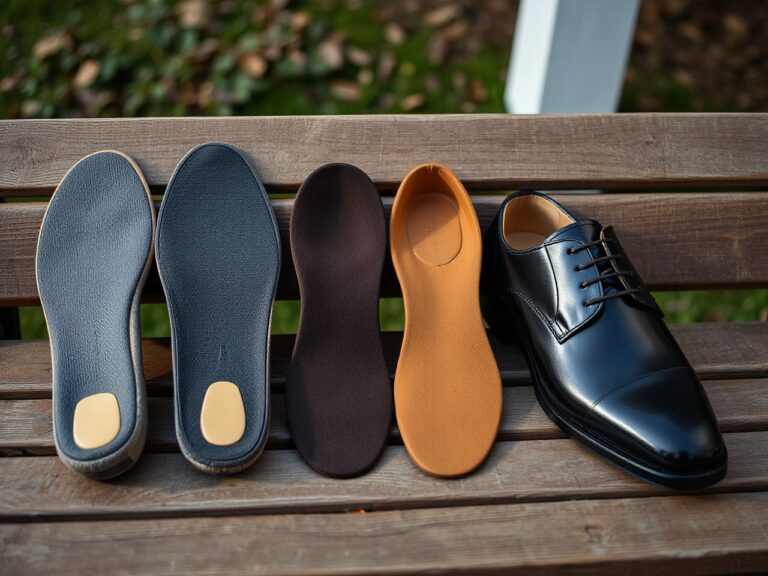
Salt crystals act as microscopic wedges inside the rubber’s polymer network, accelerating crack propagation. After any saltwater use, soak the shoes in fresh water for 20 minutes, agitating them to dissolve hidden salt. Then remove the insoles—they’re often the first part to harbor bacteria and delaminate—and let the entire shoe dry away from direct sunlight. UV degrades most synthetic rubbers within 200–400 hours of cumulative exposure, so never leave them on a dashboard or in a rear window.
Inspect the Drainage Ports and Siping
Mud and fine grit will pack into the small cuts of the siping, hardening over time and turning those grip features into smooth patches. Use a stiff-bristled brush and lukewarm water after each outing to clear the channels. The same brush used for motorcycle chains works well and takes about 90 seconds. While you’re at it, check the glue lines between the upper and the midsole. Any delamination here is a trip-ending failure waiting to happen. A tiny tube of flexible water-proof adhesive (like a contact cement rated for polyurethane) can buy you another few weeks, but if the delamination exceeds 5mm in length, retire the shoe.
Frequently Asked Questions
What safety certifications should I look for in shoes built for walking on water?
The absolute minimum is ASTM F2913 for dynamic slip resistance on wet surfaces. For added puncture and impact protection, seek ASTM F2412/F2413 testing on the toe bumper or cap. If the shoe claims water resistance rather than drainage, ISO 20347 quantifies water absorption rates. Ask the manufacturer for the specific coefficient of friction (COF) value—if they can’t produce a number above 0.50, the slip-resistance marketing is likely just that.
Can I use regular trail running shoes for crossing rivers and walking on wet rocks?
Regular trail runners aren’t optimized for fully submerged conditions. The uppers tend to retain water, adding weight, and the lugs often lack the micro-siping needed to grip algae-covered stones. Moreover, most trail shoes don’t carry any ASTM slip-resistance certification for continuously wet conditions. If you’re only splashing through a shallow stream, they may work, but for true water walking, purpose-built shoes with drainage and certified slip ratings significantly reduce injury risk.
How often should I replace my water shoes if I use them frequently?
Treat them like a helmet: replace after any significant impact that visibly compresses the toe bumper or midsole, or after roughly 400–500 miles of cumulative hard use. The rubber compound hardens with age and UV exposure, losing its grip. If the sole feels smooth to the touch in previously textured areas or the drainage ports are cracked, it’s time to retire them. Waiting until a sole splits mid-crossing is the equivalent of riding on dry-rotted tires.
Do water shoes keep your feet dry, or are they designed to let water in?
Most lightweight water shoes are drainable, meaning they intentionally allow water to enter and exit quickly. This prevents the “bucket effect” where shoes fill up and become heavy. If you need actual dryness, look for shoes with integrated hydrophobic membranes and sealed tongues, similar to drysuit booties. However, those may not breathe well and can still leak under full submersion. Clarify your objective: are you crossing water or walking in it?
What’s the difference between aqua socks and true water-crossing shoes from a safety standpoint?
Aqua socks typically lack any structured sole, toe protection, or slip-resistance certification. They’re essentially a neoprene sock with a thin rubber print on the bottom. True shoes designed for walking on water feature a layered midsole, a protective toe cap, and outsole compounds tested against wet-surface slip standards. Relying on aqua socks in a river crossing puts you at high risk for puncture wounds, stubbed toes, and complete loss of traction the moment you encounter algae.