Couples Cruise Guide: The Ultimate Romantic Escape
Contents
Most couples pick the wrong ship. Choosing the right European cruise is often difficult because travelers approach it as a single type of adventure. The real fork is pace: river cruises move you through a new city every day with guided morning tours and calm sailing, while ocean cruises offer long sea days and a resort-like atmosphere with ports scattered across a region. Determining whether you’d rather wake up to a postcard view of a city skyline or a lazy day at sea helps define that rhythm. Once that is established, cabin type and price comparisons become easy—because the decision isn’t about luxury vs. budget, it’s about matching the journey to your relationship’s travel style.
In my day job, I scout unmarked dirt trails in the backcountry. The same rule applies to a couples cruise: know your terrain before you commit. This couples cruise guide applies that scouting logic to Europe’s waterways and coastlines, so you can stop guessing and start planning. If you’re in your 40s and want a curated list, our best cruise for couples in their 40s roundup has tested picks that account for pace and budget.
Key Takeaways
- River and ocean cruises are fundamentally different paces; choose based on whether you want a new city daily or lazy sea days.
- Shoulder season (May, September) cuts crowds and heat, making European ports far more romantic.
- Always verify gratuity policies and passport validity before booking; hidden fees and expired documents are the trip killers.
Scouting the Terrain: River vs. Ocean for Your Couples Cruise
A cruise is not a single product. It is two completely different terrain types: the calm, town-centered river trail and the open, resort-heavy ocean route. Your relationship’s daily rhythm determines which one you should ride.
River Cruises: The Town-Center Trail
River cruise ships are small, usually under 200 passengers, and they slide through the heart of Europe’s historic waterways. The Rhine, the Danube, the Seine, the Douro—each one ties together a string of old-world cities. River cruise ships dock directly in town centers, while ocean ships often tie up at industrial ports that require a 30-minute shuttle ride into the city. That single fact changes everything about your mornings.
On a Viking, AmaWaterways, CroisiEurope, or Scenic river ship, you step off the gangway and you are already on a cobblestone lane. No shuttle bus. No taxi queue. For a couple, that means you can linger over breakfast, walk off whenever you want, and return to the ship for lunch without losing half the day in transit. The sailing is smooth, the scenery is close, and the pace feels like a well-graded gravel road: predictable, intimate, and easy to navigate.
River ships mostly move at night, so you wake up in a new town nearly every day. That suits couples who like constant discovery. If your idea of romance is a fresh city skyline each morning with a guided walking tour before noon, a river cruise is your trail.
Ocean Cruises: The Open Sea Route
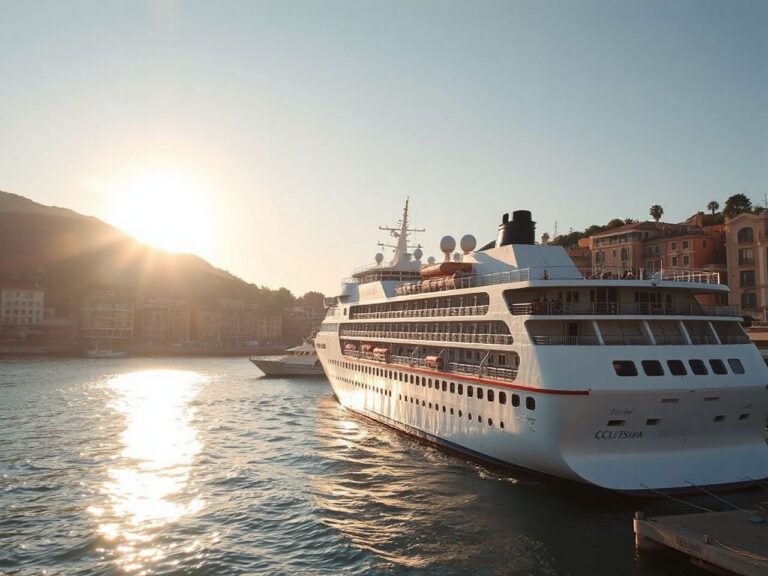
Ocean ships are floating resorts. Celebrity Cruises, Azamara, Windstar, and Ponant all run European itineraries that bounce between islands and coastal cities. Large ocean ships typically spend 50-60% of an itinerary at sea, which means your port time is compressed into short, intense bursts. That is not a bad thing. It just requires a different mindset.
On a Mediterranean loop out of Barcelona or Rome, you might have one sea day followed by a frantic eight hours in Santorini, then another sea day before docking in Athens. The sea days give you time to sleep in, hit the pool, eat lunch on deck, and ignore the outside world. For couples who want a lazy, resort-style vacation with a few intense sightseeing days sprinkled in, this is the better route.
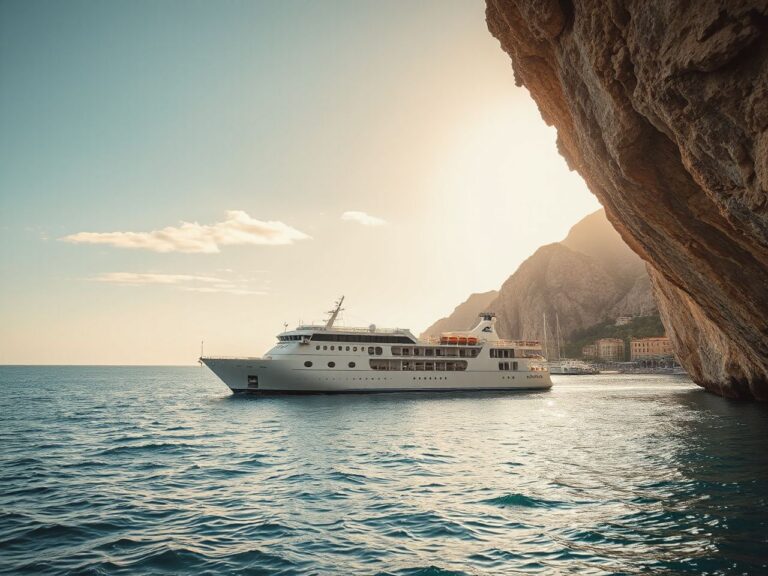
Smaller ocean ships like Windstar and Ponant can thread into smaller harbors that big ships skip. That is the equivalent of a technical singletrack trail: fewer crowds, more surprising landings, but a bit more motion and a higher price tag. Think of it as the advanced route if you have the budget and the sea legs.
The Pace Question
You have to answer one question before you look at a single cabin or deck plan. Do you want to wake up to a city skyline and walk off the ship into a quiet square, or do you want to wake up to open water and spend the morning doing absolutely nothing? That answer determines everything else.
Once you know the pace, cabin comparisons get simple because the ship type narrows the field. You are not comparing luxury to budget anymore. You are comparing two different journeys and asking which one your relationship actually wants.

Picking Your Route: Mediterranean Heat or Northern Cool
Europe gives you two main cruise arenas. The Mediterranean offers sun, ruins, and whitewashed villages. Northern Europe offers fjords, castles, and a quieter, cooler landscape. Both have merit. The right choice depends on what kind of off-road energy you want.
Mediterranean Itineraries: Sun, Ruins, Crowds
The Mediterranean is the default choice for most first-time European cruisers. Barcelona, Marseille, Livorno, Civitavecchia, Naples, Athens, Santorini, Dubrovnik. These ports deliver the postcard images: ancient amphitheaters, cliffside towns, turquoise water. The French Riviera’s port towns feel packed from June through August, and dock space becomes scarce. If you are sailing the French Riviera, check our complete French Riviera cruise guide for route-specific tips on avoiding the worst logjams.
Mediterranean cruises also include the Greek Islands, the Adriatic coast, and the occasional stop in Turkey or Montenegro. Those non-Schengen stops add paperwork, which we cover later. For couples who want heat, swimming, and archaeological sites, this is the obvious route. Just know that in July and August, the main attractions are packed shoulder-to-shoulder.
Northern Europe: Fjords and Fewer Tour Buses
Norway’s fjords, the Baltic capitals, Iceland and the British Isles—Northern Europe is a completely different surface. The scenery is dramatic, the air is cool, and the tourist density is lower in most ports. You trade beach weather for silent fjord sailing. That trade appeals to couples who want dramatic landscapes over suntans.
Cruise lines like Viking and Ponant run excellent northern routes. A Norwegian fjord cruise is less about guided city tours and more about standing on deck while the ship glides past thousand-foot cliffs. If you like that raw, remote feel, it is the closest thing to backcountry cruising you will find on a ship. Some Rhine river itineraries also hook into Switzerland, so if you are considering that option, our Switzerland cruise guide breaks down the best routes.
Timing Your Run: Best Months for a Couples Cruise
May and September are the sweet spot for almost every European couples cruise. May and September offer water temperatures warm enough for swimming in the Mediterranean but air temperatures that rarely climb above 27°C, making shore excursions genuinely pleasant. June and early July work, but you lose the empty-cobblestone feel. August is the worst month: extreme heat, peak crowds, and tender delays. November through March is dead season for Mediterranean and northern cruises except for winter market river cruises on the Rhine and Danube, which can be magical with the right layers.
Cabins and Comfort: What You Actually Need
Cabin selection trips up more couples than any other decision. You do not need the biggest suite. You need the right window configuration and the right location for your motion sensitivity.
French Balcony vs. True Veranda: The Fresh Air Test
On river ships, the word “veranda” is often used loosely. On most European river ships, a French balcony gives you a wide-open window but no place to sit outside, while a true veranda adds roughly 50 square feet of private deck space. A French balcony is a floor-to-ceiling sliding glass door with a railing. You can lean on the railing and watch the river, but you cannot put a chair out there. A true balcony has a small external area with two chairs and a table. For a couple who wants morning coffee outside in their pajamas, a true balcony or a suite is the only option. If fresh air and a view are enough, a French balcony saves you a significant amount of money.
On ocean ships, most standard balcony cabins have a real outdoor space. Inside cabins are cheaper but have no natural light. For a couples cruise, skip the inside cabin unless you plan to spend every waking hour on deck. The private balcony is where you will sit together and watch a sunset. That is worth the extra per-person cost.
Adults-Only Ships and Quiet Corners
Some cruise lines are effectively adults-only. Viking River Cruises has an 18-and-over minimum age policy, which means every sailing is effectively an adults-only couples cruise. That removes the kid factor entirely. On ocean ships, Azamara and Windstar cater to adults with smaller ships and quiet, sophisticated atmospheres. Celebrity’s Solstice-class ships have an adults-only solarium with a covered pool and calm music. If you want kid-free pool time without paying for an ultra-luxury line, those solariums are the best-kept secret on big ships.
Look for ships under 1,000 passengers if you dislike crowds. Ponant, Windstar, and Azamara all fall in that range. The trade-off is fewer dining venues and less nightlife. For many couples, that trade is a feature, not a bug.
Logistics That Break or Make a Couples Cruise
You have picked the terrain, the route, the timing, and the cabin. Now you deal with the unglamorous stuff that ruins trips when ignored.
Gratuities and Hidden Costs: Know Your Tab
Gratuity policies vary wildly. Some European river lines include tips in the fare. CroisiEurope, for example, includes gratuities in the cruise price on most sailings—no extra envelope, no daily charge. CroisiEurope states this directly in their booking terms. Most large ocean lines do not include gratuities. Most large ocean cruise lines add a daily service charge of $14 to $18 per person to your onboard account, which works out to roughly $200 per couple on a seven-night sailing. That is not a hidden fee; it is printed in the fare breakdown. But many couples miss it until the final bill arrives.
Other extras: shore excursions ($40-150 per person per port), specialty dining ($30-60 per person), alcoholic drinks if not in a package, spa services, and Wi-Fi. Budget an additional $400-800 per couple for a seven-night ocean cruise if you want a few excursions and drinks. River cruises often include one shore excursion per port and wine with dinner, which makes their all-in feel much closer to true all-in.
Port Time and Independent Exploration
River ships dock in town centers, so independent exploration is effortless. Walk off, wander, come back for lunch, head out again. You are never more than a ten-minute walk from the ship. On ocean ships, the story changes. Ocean cruise itineraries typically give you 8 to 10 hours in a port, but that clock starts when the gangway opens, not when you reach the city center. If the ship docks at an industrial port 30 minutes outside town, you lose an hour round-trip just in transfers. Tender ports are worse: you wait for a small boat to shuttle you ashore, and that process can eat 45 minutes each way.
You can explore on your own in almost every European port. English is widely spoken, and public transit is reliable. But check the all-aboard time and pad it by 45 minutes. A missed ship in Rome is a very expensive taxi to the next port.
Seasickness on the Mediterranean: Myth vs. Reality
Many couples worry about getting seasick on a European cruise. The Mediterranean is generally calm in summer, but not always. The Aegean Sea’s summer Meltemi winds can produce short, steep swells that make even large cruise ships roll noticeably, while river ships in central Europe experience almost no motion at all. The Meltemi is a northerly wind that blows through the Greek islands from June through September. It is rarely dangerous but can make tender ports bumpy and cause mild nausea on open stretches.
What helps: book a midship cabin on a lower deck, take meclizine or dimenhydrinate before sailing into open water, and use acupressure wristbands if you prefer non-drug options. River cruises rarely need any of this because you are on a calm river the whole time. If motion sickness is a real concern for either partner, a river cruise is the safer bet.
Paperwork for Multi-Country Stops
European itineraries often cross multiple borders. The Schengen Area covers most Western and Central European countries, so you only pass through immigration once when entering the zone. Most Schengen countries require your passport to be valid for at least three months beyond your planned departure date, but several cruise lines recommend six months to avoid any port-side surprises. The European Union’s official travel entry rules outline the exact validity requirements for non-EU citizens.
If your itinerary includes non-Schengen stops like Turkey or Montenegro, you may need an additional visa or an e-visa depending on your nationality. Croatia joined Schengen in 2023, so most Adriatic cruises no longer require a separate visa. Check every port against your passport’s nationality before booking. A surprising number of couples get turned away at embarkation because their passport has five months left and the cruise line requires six. Renew early.
Frequently Asked Questions
What’s the real difference between a river cruise and an ocean cruise for a couple in Europe?
The core difference is pace and docking location. River cruises dock in town centers and move at night, so you wake up in a new city every day with easy walk-off access. Ocean cruises spend half the trip at sea and dock at industrial ports that require shuttles. River ships are intimate (under 200 guests), ocean ships are resorts (2,000+ guests). Pick river if you want constant city discovery; pick ocean if you want lazy sea days between intense port visits.
Do we need a balcony cabin on a European couples cruise, or is an interior okay?
For a couples cruise, skip the interior cabin. A private balcony is where you will share coffee at sunrise and wine at sunset. On river ships, a French balcony gives you a wide window but no sitting space. If you want to sit outside, book a true veranda or suite. The extra cost is worth it for the private outdoor time. Inside cabins work only if you plan to be on deck constantly and never want quiet alone time.
How far in advance should we book a couples cruise to get a good cabin for two?
Book 9 to 12 months ahead for the best cabin selection on popular European routes, especially for summer sailings and small ships. River cruises and premium ocean lines like Windstar and Ponant sell out early because they have fewer cabins. Last-minute deals exist, but you will get leftover locations near elevators or on high decks with more motion. If you have a specific itinerary or anniversary date in mind, lock it in early and then watch for price drops or upgrade offers.