Luxury Bike Tours Italy: The Complete Travel Guide
Contents
The first time a client calls me after a ‘luxury’ tour in Italy, the words are always the same. They expected rolling vineyards and gentle espresso stops. Instead, they got a 2,000‑meter climb by 10 a.m. and a white‑knuckle descent that left their hands cramped around the brakes. The glossy brochure sold the dream; the road delivered a reality check. I’m Dakota Reyes, and as an adventure activity risk assessor, that mismatch is exactly what I fix. The real divide is between the hill‑town Tuscany experience — gravel and rolling vineyard roads with a lunch stop at a winery every 20 km — and the high‑alpine Dolomite epics where the climbing is ferocious and the support van becomes a lifeline. Beginners assume ‘luxury’ means flat and easy, but the best tours push you hard; they just comfort you with a massage table and a sommelier at the finish. I focus on matching the terrain to the rider’s actual desire, not just the price tag. This guide strips away the marketing veneer and maps out what luxury bike tours in Italy genuinely demand, so you can book a trip that fits your legs, not just your wallet.
Key Takeaways
- Luxury Italian bike tours are not flat‑rate easy tours; the Dolomites regularly serve 2,500–4,000 meters of climbing per day, while Tuscany’s rolling profile still racks up 1,500+ meters.
- High‑end rentals from Colnago, Pinarello, or Campagnolo‑equipped steeds are standard, but e‑bikes are widely available and fundamentally alter the risk‑to‑reward ratio.
- Book at least 6–9 months ahead for May‑to‑September departures; the best operators fill their flagship routes by February.
- Support vehicles, chef‑prepared meals, and luxury lodging are table stakes — the true differentiator is pace‑group granularity and the medical‑grade backup if something goes wrong on a remote pass.
The Hidden Physical Demands of Luxury Bike Tours in Italy
Here’s a number most booking pages won’t put up front: on a standard seven‑day Dolomites itinerary, you’ll crest more than 13,000 meters of total elevation gain, often with consecutive days that each exceed 3,000 meters. Compare that to the famed Haute Route Alps, and you’re looking at a similar weekly volume. Tuscany clocks in lower, around 8,000–10,000 meters over the same span, but the unrelenting short‑sharp ramps — 14% grade out of a village, then back down to 2%, then another wall — wear out riders who trained only on long steady climbs. The Amalfi Coast adds its own punishment: endless hairpins, narrow roads, and occasional Vespa traffic that demands constant vigilance. Fit cyclists often crack on day three, not because they lack power, but because the combination of fatigue and the need to scan for scooters makes descending difficult.
The Italian Cycling Federation publishes guidelines for riding on public roads, and the Automobile Club d’Italia (www.aci.it) confirms that cyclists must stay as far right as practical on touring routes. That sounds easy until you’re on the Stelvio Pass with 48 hairpin switchbacks and a coach bus squeezing past. Luxury operators mitigate this by choosing secondary roads and timing departures to avoid tourist traffic, but the rider still carries ultimate responsibility. A premium price tag buys you a support van with a satellite phone, not a force field.
A top‑tier tour will offer at least three distinct pace groups: a brisk 28–32 km/h road crew, a moderate 24–27 km/h group that still covers 100 km, and a relaxed social group hovering around 20 km/h with longer café stops. Don’t let the word ‘social’ fool you — 20 km/h in the Dolomites with elevation still means a five‑hour ride day. If that sends a shiver through your quads, beeline for the e‑bike option.
Terrain Decoder: Tuscany vs. Dolomites vs. Amalfi Coast
The region you pick single‑handedly determines your risk profile. I break it down the same way I assess an off‑road expedition: gradient severity, road surface, traffic density, and bail‑out options. Here’s how the three icon categories stack up.
Tuscany (Chianti Region)
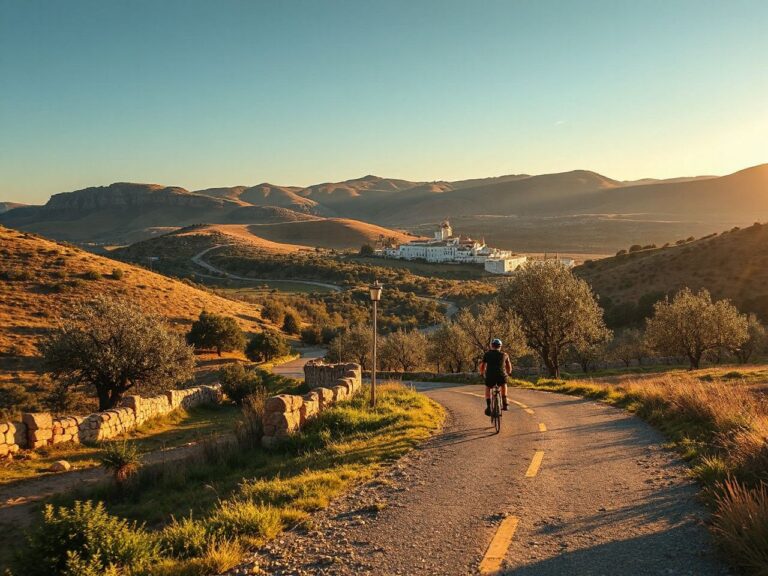
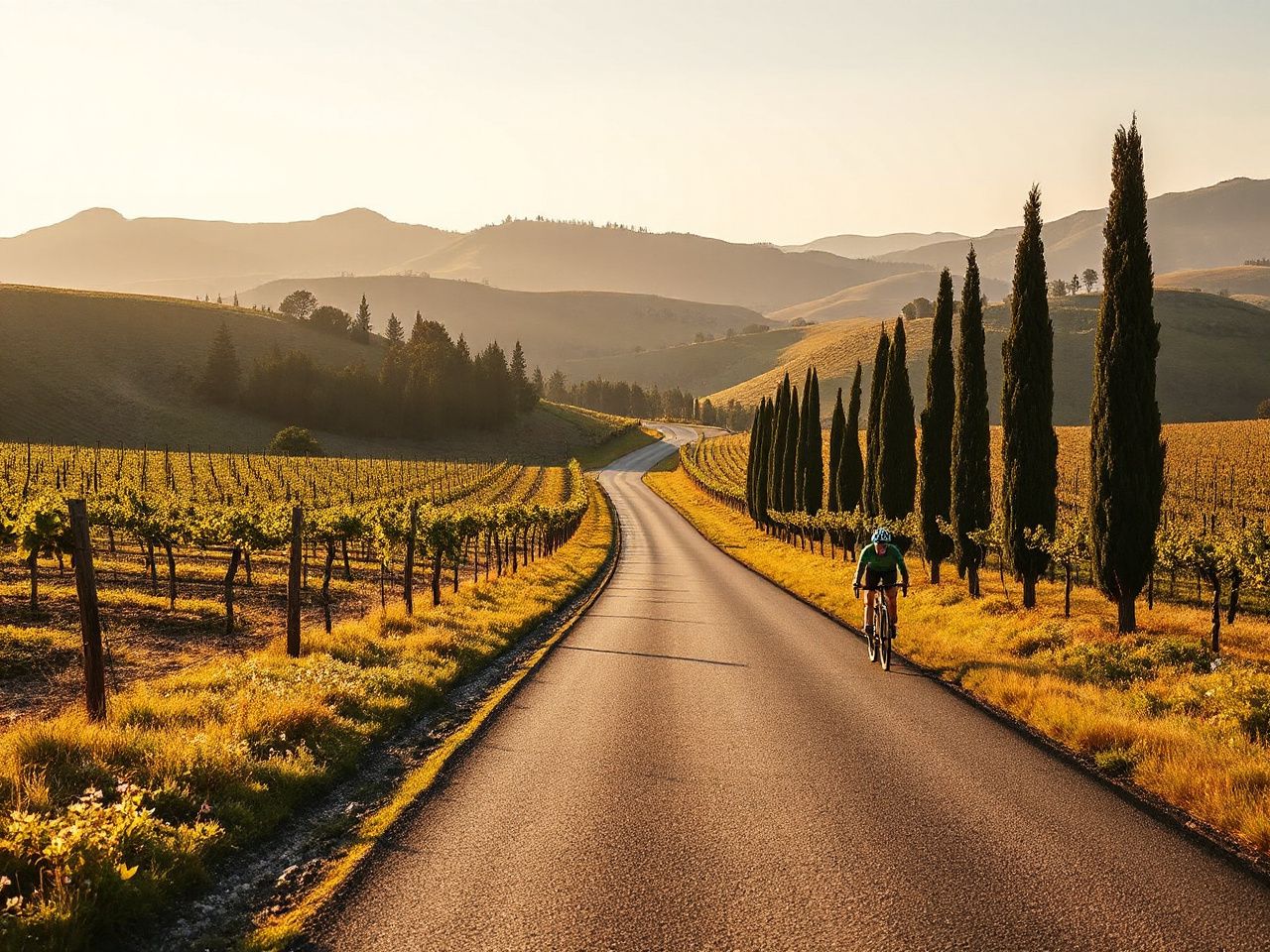
Postcard vineyards, white gravel strade bianche, and enough wine stops to make you forget you’re exercising. The terrain plays out as a sequence of rolling 3–6% climbs, rarely topping 10% for more than a few hundred meters. Road surfaces mix smooth asphalt with packed gravel that’s fine on 28 mm tires but punishing if you’re on racing slicks. Risk is low to moderate: the biggest hazard is dehydration on a July afternoon and the occasional farm tractor. Towns like Greve, Radda, and Castellina offer easy refuge. A luxury tour here typically loads a Pinarello Grevil or Colnago G3‑X — gravel‑ready rigs that soak up the chatter. A day might cover 80 km with 1,200 meters of gain, and you’ll stop at two wineries and a trattoria before the van whisks you to a restored borgo.
Dolomites (Alta Badia, Sella Ronda, Stelvio)
This is the crucible. The Sella Ronda circuit strings together four passes — Gardena, Sella, Pordoi, Campolongo — in a single loop that can tally 4,000 meters of climbing over 90 km. The Alta Badia region serves daily menus of marmot‑like switchbacks where the gradient holds a steady 8–10% for 10 km. Lake Como’s iconic Ghisallo climb is a sideshow by comparison. Here, the luxury element crystallizes: a follow van carrying spare wheels, cold electrolytes, and a mechanic who swaps a chain in four minutes. The Campagnolo Super Record groupset on your rental won’t save you from a bonk at 2,400 meters, but the hot espresso and almond tart at a rifugio halfway up will. Operators like those based in Corvara provide detailed pre‑ride briefings on weather, as afternoon thunderstorms can turn descents treacherous. This is where I strongly recommend the e‑bike option for anyone whose FTP hums below 3.5 watts per kilo.
Amalfi Coast (Costiera Amalfitana)
The climbing load is actually lighter — rarely more than 1,500 meters per day — but it comes in sharp, leg‑snapping punches. You’ll leave Positano and face a wall of 12% within a kilometer. The coast road, the SS163, offers cinematic views and almost zero shoulder. July and August bring a ribbon of tourist traffic; luxury tours counter this by starting rides at 7 a.m. and finishing by midday. The descents are technical: blind corners, hairpins that tighten, and scooters that appear from side alleys. Basic descending confidence is non‑negotiable. Still, the payoff is a seafood lunch perched above the Tyrrhenian Sea and a night at a cliffside hotel. Many tours pair the riding with a train transfer to Sorrento or Naples, making the logistics cleaner. The Amalfi is best for riders who want a sensory overload more than a training camp, but who still respect the consequences of a misjudged turn.
For a different kind of premium experience, a bike trip in Spain shifts the landscape to sun‑baked sierras and arid plains, where the heat management becomes the primary risk factor. The support infrastructure is comparable, but the geography asks a slightly different question of the rider.
What a Luxury Tour Actually Puts On the Table
The word ‘luxury’ gets slapped on any tour with a wine bottle at the finish. I break down what the real premium price tag buys, line by line, so you can audit a brochure quickly.
- Bike fleet: Almost every high‑end operator now equips their fleet with Colnago V3Rs, Pinarello Dogma F, or custom titanium frames, built with electronic shifting and carbon wheels. Rentals are included in the base price, and e‑bike upgrades cost an extra €200–€400 for the week. The bikes are re‑torqued overnight by a professional mechanic.
- Lodging: Four‑ and five‑star properties, often converted monasteries or spa resorts, with on‑site pools, saunas, and laundry service for your kit. Daily room turnover means you never open a suitcase with damp chamois.
- Meals & hydration: Chef‑prepared breakfasts with a buffet that rivals a hotel brunch, en‑route picnic setups with table linens, and multi‑course dinners paired with regional wines. Hydration is managed with team cars distributing chilled bottles every 20 km.
- Support vehicles: A follow van shadows every pace group, carrying tools, spare tubes, energy bars, and a basic medical kit. The driver is often a qualified bike mechanic and a trained first responder.
- Extras: A masseur working on your calves post‑ride, a sommelier at dinner, and a digital photo pack of your ascent up the Stelvio. These are not frills — they’re the cushion that lets you push harder.
Guided vs. self‑guided is a false binary in the luxury tier. True self‑guided luxury still includes a support van that leapfrogs ahead with your luggage and a mechanic on call, but you navigate with a GPS unit and choose your pace without a group. Guided tours add cultural depth — a local expert who can explain why that particular vineyard faces south‑west — and group camaraderie, but they force the rhythm of the slowest rider. I lean toward guided for first‑timers in the Dolomites; the route‑finding alone through the Sella massif can sap mental bandwidth you need for the next climb.
Fitness Checkpoints and the E‑Bike Factor
Italian luxury cycling is not a place to discover your legs. Most operators publish a minimum requirement: ability to ride consecutively for 4–5 hours and comfort climbing 1,000+ meters in a day before you arrive. I’ll be blunter: if you can’t hold a conversation at tempo pace for two hours on rolling terrain, you’re not ready for the Dolomites. That doesn’t mean you can’t go; it means you should grab an e‑bike. Modern e‑road bikes from Pinarello’s Nytro series or the Colnago E64 deliver up to 250 watts of assist and level the field. They don’t sanitize the experience — you still work hard, but the steep bits no longer bully you.
A 2023 survey by the Italian trade association ANCMA (www.ancma.it) indicates that e‑bike sales have overtaken traditional road bikes in the tourism sector, partly because they allow mixed‑ability couples to ride together. A partner who normally dreads biking often becomes the one asking to add an extra loop. The battery range on a standard 500 Wh unit easily covers a 100‑km day with 2,000 meters of climb, assuming you don’t leave it in turbo mode. Charging is done overnight at the hotel; range anxiety is avoided if the operator checks batteries during the evening mechanical service.
Bring Your Own vs. Rental: A Risk‑Based Decision
Shipping a bike from North America involves a $200 flight case, potential airline damage, and a full rebuild at the hotel. Carrying your own machine only makes sense if your fit is dialed to the millimeter and you’re racing a Gran Fondo like L’Eroica or the Nove Colli as an extension of the tour. For everyone else, the rental fleet is a revelation. Campagnolo’s electronic EPS groupset on a borrowed Colnago shifts with a crispness that older mechanical setups can’t match, and the mechanic has already tweaked the seatpost to your measurements after a 10‑minute fit session on day one. The downside? Brake‑lever ergonomics may differ from your home bike, and a week is barely enough to adapt. I tell clients to rent, but to pack their own saddle and pedals — the two contact points that prevent numbness and knee strain. That small box in the luggage goes a long way.
If you decide to bring your own, Italy’s train network can get you to the starting point comfortably, provided you reserve a bike space on high‑speed trains. Our European train tours overview details the logistics, but for cycling, the regional treni regionali are more forgiving than the Frecce services, which require a dismantled bike in a bag.
Booking Timelines and the Questions That Uncover a Good Operator
The May–September window heats up fast. Book by November for the following summer if you want a specific date or a private group tour. The best Tuscan wine‑focused trips fill by Christmas. For Dolomites passes that open in late June, operators finalize their logistics by March, but the guest list often has names on it by February. A short‑notice opening in September is possible if you’re flexible, but the weather window narrows.
When vetting an operator, skip the video montage and ask these three questions:
- “What is the staff‑to‑guest ratio on a sold‑out departure?” — Anything lower than 1:6 means you’ll wait for mechanical help on a climb.
- “Can you show me the emergency extraction protocol for a rider with a broken collarbone on the Passo dello Stelvio?” — If they can’t answer without pauses, they’re not ready.
- “Which pace group finished last on your most recent tour, and what was their average speed?” — This reveals whether the ‘moderate’ group truly is moderate.
Italian traffic regulations also matter. Urban areas like Florence or Milan have aggressive drivers, but luxury routes bypass them entirely; you’ll hardly pedal through a stoplight. Still, the Stelvio, Gavia, and Mortirolo passes are open to public vehicles, and weekend motorcycle traffic can be loud and abundant. A responsible tour provider briefs you on descending protocol: single‑file through the apex, no sudden braking, and always an eye in the mirror for a Ferrari that thinks it’s on a track.
Frequently Asked Questions
How many miles and feet of climbing should I expect per day on a luxury bike tour in Italy?
A typical day in Tuscany covers 50–65 miles with 3,500–5,000 feet of climbing. In the Dolomites, that jumps to 55–75 miles and 8,000–13,000 feet. Amalfi tours are shorter, around 40–55 miles, but pack repeated double‑digit ramps.
Are e‑bikes available on luxury tours, and does that change the experience?
Yes, nearly all operators now provide high‑end e‑road models from Pinarello, Colnago, or Specialized. The ride remains demanding — you still need to pedal hard — but climbs become manageable for riders who lack elite fitness. The assistance tops out at 25 km/h under EU law, so fast flats and descents feel exactly like a regular bike.
What exactly is included in the price of a luxury bike tour in Italy?
You’re paying for accommodation in four‑ and five‑star properties, all meals with paired wines, a premium rental bike, daily mechanical support, a follow van, laundry service, and a post‑ride massage. Flights, personal travel insurance, and alcoholic drinks beyond dinner are typically excluded. A week in the Dolomites runs €7,000–€12,000 per person, while Tuscany and Amalfi tours start around €5,500.
What happens if my bike breaks down or I crash during the tour?
The follow van carries spare wheels, tubes, chains, and a full tool kit. A mechanic can fix most issues roadside in under 10 minutes. If a crash results in injury, the support crew is trained in first aid and will coordinate ambulance extraction through the European 112 emergency system. You’ll be transported to a nearby hospital while the operator handles your bike and luggage.