Train Carriage Types Explained: A Smart Traveler’s Guide
Contents
Last spring, while routing a motorcycle transport across Europe from Munich to Barcelona, a station display listed five different train types, each with a distinct carriage design that would affect bike securement and passenger comfort. Understanding both legacy and modern carriages reveals that the biggest misconception is that all double-deckers are for commuter lines — in fact, high-speed double-deckers like the TGV Duplex are engineering feats that require precise weight and height budgets. The key to evaluating a carriage type isn’t just the seating layout, but the underlying systems: bogie rating, coupling compatibility, and crash standards.
Key Takeaways
- Locomotive-hauled vs. multiple unit: The fundamental split determines how much noise you hear, how you board, and whether the train can split en route.
- Double-deckers need a different loading gauge; a carriage built for mainland Europe’s larger clearance simply won’t fit under British platforms and bridges without redesign.
- Crash energy management zones, not raw strength, allow modern carriages to protect passengers at speeds over 300 km/h.
- Door count and placement directly control station dwell time, which is why some regional trains have wide sliding doors near every seat row while long-haul stock uses two narrow end doors per side.
The Two Basic Families of Passenger Rolling Stock
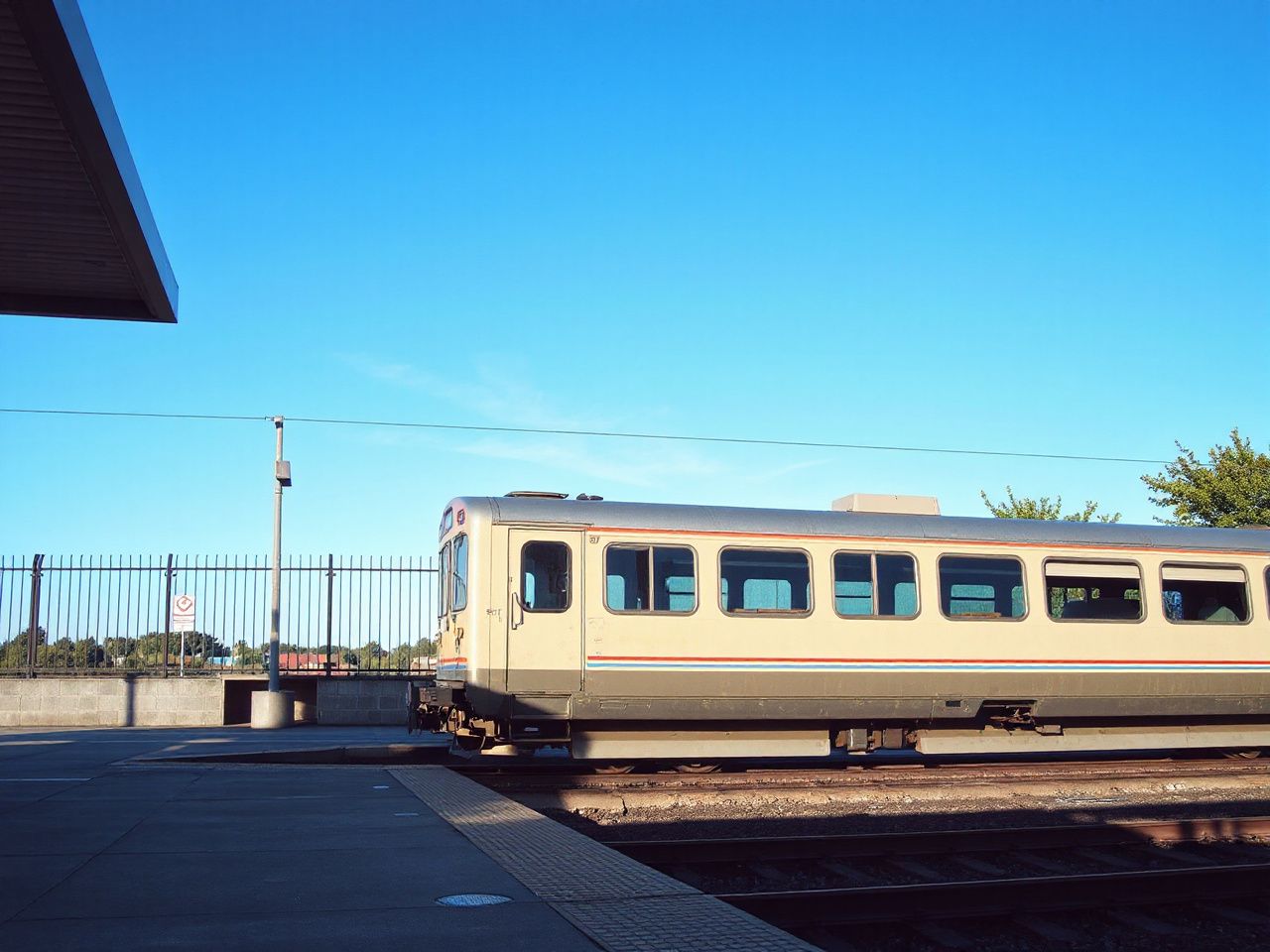
Every passenger carriage you step onto falls into one of two camps: it’s either pulled by a separate locomotive, or it carries its own traction motors as part of a multiple unit. That choice dictates nearly everything else — acceleration, interior noise, how often the air conditioning cycles, and whether you’re staring at a wall of train at a terminus.
Locomotive-hauled carriages, like the classic British Rail Mark 3 or the SNCF Corail, have no motors. A dedicated locomotive does the pulling, and you’ll notice the difference: the ride feels genuinely silent under power because the heavy electrical gear sits far up front. These carriages can also be shuffled between trains, swapped out when a hotbox detector flags a failing bearing, or stored in yards without worrying about traction electronics. However, they require run-round maneuvers at stub-end terminals, which eats platform capacity.
Multiple unit carriages — think Alstom’s regional Coradia trains or Siemens-built ICE 3 high-speed sets — pack motors and transformers under the floor or across several cars. Acceleration feels snappier because the power is distributed, and the train can reverse direction seamlessly without a locomotive swap. But that underfloor equipment vibrates up through the seat mounts and generates a low-frequency hum that’s absent on locomotive-hauled sleepers. On routes where you need to keep noise below 65 decibels for overnight rest, that hum often influences seat selection toward first-class end cars where the motor bogies are farther away.
Carriage Layouts That Shape Your Journey
The Compartment Coach vs. Open-Plan Divide
A compartment coach splits the interior into small rooms of six or eight seats, each with its own door off a side corridor. That design dominated European railways for decades — the SNCF Corail and equivalent German stock still run on secondary night routes. The advantage is privacy and, crucially, a predictable geometry for securing odd-shaped cargo like dismantled motorcycle wheels in luggage racks. An open-plan coach, by contrast, runs an uninterrupted central aisle with rows of airline-style seats or face-to-face bays. Boarding and ticket checks move through much faster, and staff can monitor the whole passenger load from one end. But wind noise from frequent vestibule door cycling climbs noticeably in winter.
A self-contained fact worth remembering: Open-plan carriages consistently reduce dwell time at stations by 20 to 30 seconds relative to compartment stock, which is why high-frequency regional networks ditched compartments long before long-haul night trains did.
Sleeper Cars and Why You Don’t Always See Them
Sleeper carriages pack berths, wash basins, and sometimes en‑suite showers into a heavy vehicle that must ride smoothly enough to let passengers actually sleep. The bogie design determines whether that happens or not. Modern sleeping cars like those from Siemens (used by ÖBB Nightjet) use air-spring bolsters and yaw dampers tuned for low-frequency roll. The older Corail sleepers that SNCF ran until recently rode on Y32 bogies that bounced noticeably over jointed rail, enough to wake passengers on the Paris–Nice train when a rough stretch hit at 3 a.m.
The reason some long-haul trains lack dining cars and proper sleepers comes down to weight and revenue. A full sleeper coach weighs roughly 55 tonnes and generates little seat turnover, while the same axle loads could carry 70 paying seats in a 26-metre open coach. Route planners cut them when overnight demand falls below about 60% occupancy for two consecutive seasons. On the other hand, luxury train car experiences work because they trade volume for premium pricing — each compartment earns three times the revenue per square metre, offsetting the lower capacity.
Double-Decker Carriages Under the Loading Gauge
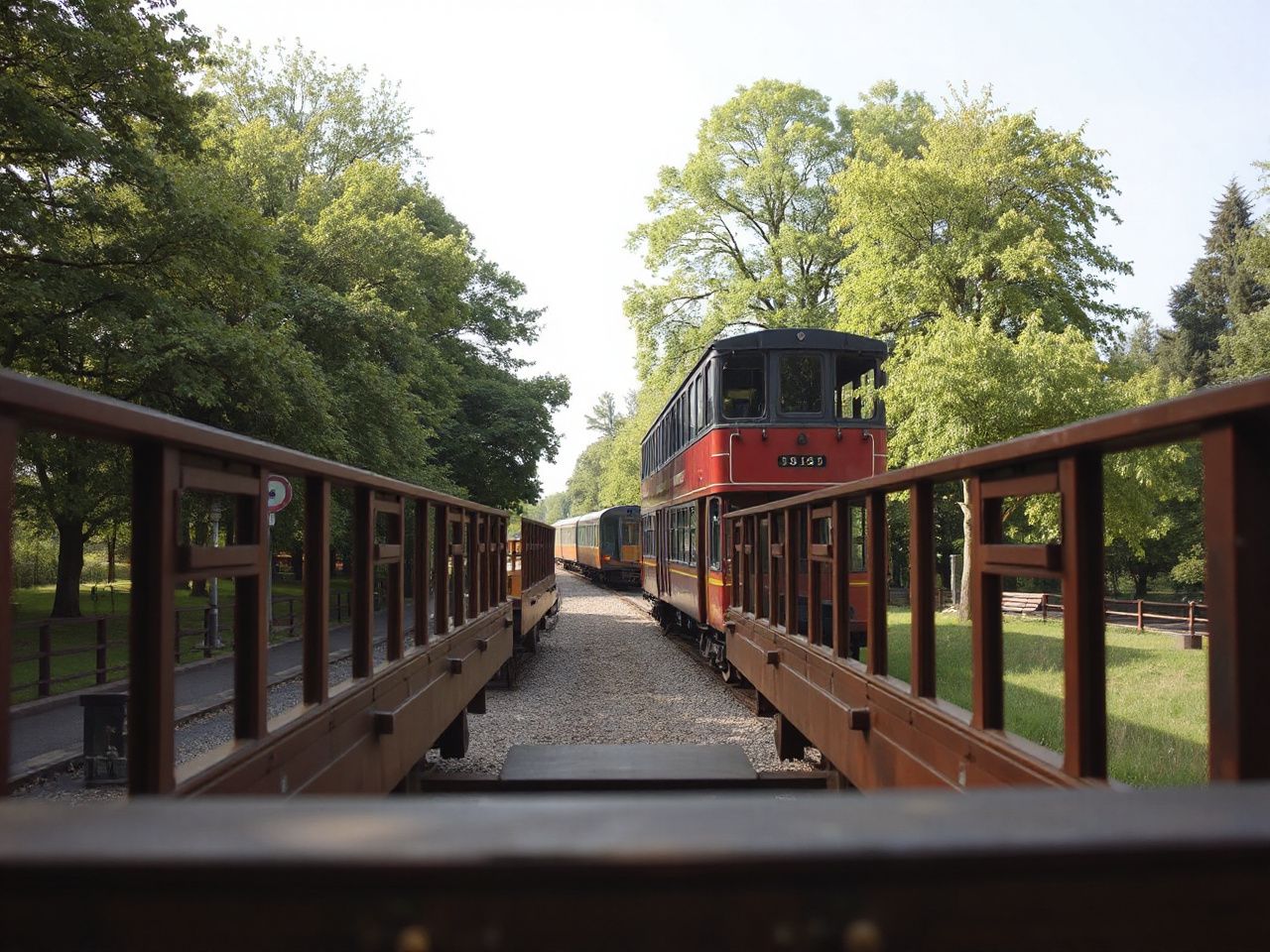
Double-decker carriages fit passengers onto two levels within a height limit dictated by bridges, tunnels, and platform canopies. The critical number is the UIC 566 loading gauge profile, which defines the maximum cross‑section a vehicle may occupy. Mainland Europe typically works with a taller and wider gauge than the UK, so a French TGV Duplex at 4.32 metres roof height would strike overhead structures if ever towed through the British network. That incompatibility forces operators to design region‑specific stock — like the class 700 Thameslink trains that squeeze 8 feet 10 inches of headroom into a low‑profile body shell.
High‑speed double‑deckers like Alstom’s TGV Duplex and the Japanese Shinkansen E4 series don’t just stack seats. Engineers work to a rigid centre of gravity budget: all heavy equipment stays below the lower‑deck floor, and the bodyshell uses ribbed aluminum alloy extrusions to keep the sprung mass under 17 tonnes per axle at full crush load. When checking a carriage spec for a long‑distance motorcycle transfer, look at the bogie pitch damping coefficient — on a double‑decker, a poorly damped bogie amplifies lateral sway enough to shift an unstrapped bike several inches across a loading surface during curve transitions.
What Makes a Carriage Safe and Comfortable at Speed
Crash Standards and Energy Management
Modern passenger carriages are not simply built to be rigid. The European standard EN 15227 requires crash energy management zones that collapse in a controlled sequence, absorbing kinetic energy before it reaches the survival cell. At 300 km/h, a 16‑car ICE 3 formation carries roughly 1.2 gigajoules of kinetic energy; without deformable crumple ends and anti‑climb coupler shields, a collision would transmit twice the deceleration that human organs can tolerate.
Fire safety follows a parallel logic. All passenger areas must use flame‑retardant seat foams and floor coverings tested to the EN 45545‑2 standard, and smoke detectors route signals to a central train management computer. Halon‑free suppression on a modern carriage such as a Bombardier build is designed around a clock rather than a judgement call: full agent discharge follows within 8 seconds of an under‑frame detection, a threshold chosen to sit well inside the time it takes flame to break through into the passenger saloon.
Doors, Dwell Time, and Accessibility
Door arrangement is not an aesthetic choice. A regional EMU with double‑leaf sliding doors every 3 metres unloads a standing load in 45 seconds, keeping headway tight on routes like the Thameslink core. Long‑haul carriages often provide only two narrow end doors per side because every extra opening increases thermal leakage by roughly 2 kW in winter. That trade‑off also limits wheelchair access: older compartment stock with 600‑mm‑wide vestibule doors cannot accept a standard 700‑mm wheelchair turning circle, whereas newer barrier‑free designs like the Alstom Coradia Stream include level‑boarding ramps and dedicated wheelchair areas with intercom call buttons.
For anyone planning a multistop itinerary where platform‑level boarding isn’t guaranteed — think rural stations on the train to Omaha — door sill height becomes a deciding factor. A carriage with a 1,150‑mm floor height and a folding step requires two attendants to board a heavy mobility scooter, while a 760‑mm floor with a bridging plate needs none.
Tilting Technology’s Real Impact
Tilting carriages like the Italian Pendolino or the Swiss ICN lean into curves to maintain passenger comfort without slowing down. The tilt mechanism uses electromechanical actuators bolted to the bogie bolster, rotating the body up to 8 degrees. That extra motion adds 600–800 kilograms per carriage and increases track forces, which is why tilting stock runs on dedicated paths. When I’m rating a carriage for passenger workload during a 10‑hour transfer, I note that tilting reduces lateral force on the seated passenger by 0.02–0.04 g, enough to prevent nausea in those sensitive to sustained roll, but it cannot fully cancel transient jerks unless the signalling system gives advance curve data for feed‑forward control.
What Maintenance and Cost Figures Actually Reveal
The conversation around carriage maintenance costs seldom reaches travellers, yet those numbers explain why certain carriage types vanish from timetables. A single‑level open coach built to the British Rail Mark 3 standard costs roughly €0.35 per axle‑kilometre in scheduled maintenance when operated on welded rail at 160 km/h. A newer aluminium‑bodied EMU carriage reduces that figure to €0.22 per axle‑kilometre because it sheds 4 tonnes of tare weight and uses sealed double‑glazed units that cut corrosion around window frames. Weight matters: every 10% reduction in unloaded mass trims brake pad wear by 6% and energy consumption by 4% on a start‑stop regional diagram.
The most frequent maintenance headaches with modern carriage bodies involve vibro‑acoustic fatigue around door pockets and coupler housings. When a train accumulates 800,000 kilometres, hairline cracks often appear in the aluminium skin where the bodyshell meets the door‑opening frame. Siemens addressed this on the later ICE 4 trailers with 5‑mm‑thick doubler plates that spread stress across 18 rivets per side. Those fixes add weight, but they keep the carriage in service for 30 years instead of 25.
Famous Designs — and the Ones That Didn’t Work
Not every bold carriage concept survives contact with operational reality. The British Rail Advanced Passenger Train (APT) of the 1980s packed a tilting mechanism and hydro‑kinetic brakes into a futuristic aluminium shell, aiming to cut London–Glasgow times by over an hour. It failed in service because the tilt system over‑rotated during curve transitions below 80 km/h, triggering acute motion sickness in journalists and paying passengers alike. The teething troubles killed the programme, though the tilt‑control logic was later licensed to Fiat for what became the successful Pendolino family.
Talgo’s pendulum‑tilting design took a different path entirely — single‑axle steering bogies instead of heavy‑frame trucks, with the body riding on independent wheelsets linked by a stiff guiding beam. That passive tilt proved reliable enough that Renfe still runs Talgo formations on the Madrid–Barcelona corridor today, twenty‑four years after their introduction. The carriage’s low‑floor profile and light steel‑alloy body allow boarding at older platforms that haven’t been raised for step‑free access.
On the success side, the British Rail Mark 3 coach, introduced in 1975, demonstrated that full‑length stainless steel underframes and integrated bogie yaw dampers could deliver a stable ride at 200 km/h for over 40 years. Many of these carriages still operate on charter duty, having outlasted two generations of traction units. The key was the BT10 bogie’s damper‑to‑axle linkage, which eliminated hunting oscillation across a wide speed band without needing expensive active suspension.
Frequently Asked Questions
What’s the difference between a locomotive‑hauled carriage and a multiple unit carriage?
A locomotive‑hauled carriage relies on a separate traction unit, so it remains quiet under power and can be added or removed from trains easily. A multiple unit carriage carries traction equipment within the vehicle itself, enabling faster acceleration and bidirectional operation without locomotive swap moves, though underfloor motors create a constant low‑frequency hum that can disturb light sleepers on overnight runs.
How do you choose between a sleeper car and a regular seat for an overnight journey?
Look at the bogie specification and the route’s track quality. A sleeper car with air‑spring secondary suspension filters rail irregularities below 4 Hz well enough for restful sleep, while a reclining seat in an older coach with steel‑coil suspension can leave you waking hourly. Also check the overnight schedule — if the run is shorter than seven hours, a seat in an open‑plan carriage with a headrest wing often lets you sleep as deeply as a berth, saving both fare and time.
Why do some carriages have many doors while others have only a few?
Door count controls dwell time. High‑frequency commuter routes need wide double‑leaf sliding doors every few metres to unload a standing crowd in 45 seconds and maintain tight headways. Long‑haul carriages restrict doors to two narrow end openings per side, limiting winter heat loss and air‑conditioning load; every extra opening bleeds about 2 kW of thermal energy, which directly affects fuel consumption on a 1,200‑kilometre trip like the train from Utica to NYC where temperature swings can be extreme.
Are there carriage types that simply never worked?
Yes, and the best‑known example is British Rail’s Advanced Passenger Train. Its active‑tilt system over‑rotated during low‑speed curve transitions, inducing motion sickness that ended the programme prematurely — but the tilt‑control logic was later sold to Fiat and evolved into the reliable Pendolino tilting trains running across Europe today. The lesson is that a single flawed sensor calibration can torpedo a carriage design, while the mechanical concept underneath might be sound enough to outlive its original platform.