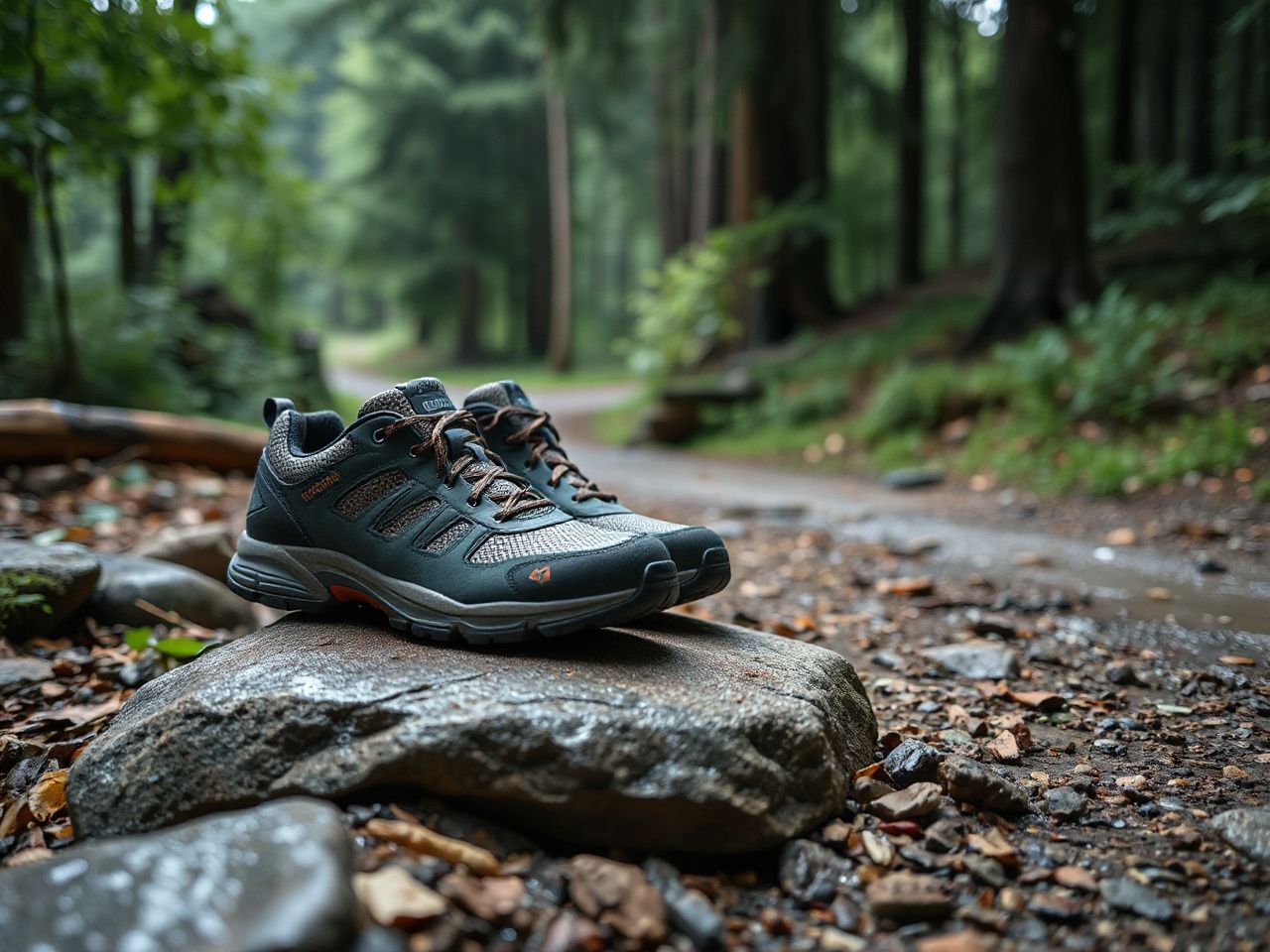
Waterproof Sneakers Men: What To Know Before You Buy
Contents
The American Podiatric Medical Association reports that 8 in 10 travelers experience foot problems during extended trips, with trapped moisture as the leading cause of blisters, maceration, and fungal infections. Those numbers spike even higher in humid or rainy climates. The gap between looking waterproof and actually being waterproof is the same gap that catches riders out with helmets. A non-certified helmet can look excellent and fit beautifully while the EPS foam inside it quietly degrades under UV exposure, and nothing about how it looks or how it sits on the head will tell you that has happened — only an impact test against a published standard will. Footwear has to be read the same way, men’s waterproof sneakers included. Without independent testing and real standards, you’re just hoping for the best.
Key Takeaways
- True waterproof sneakers rely on membrane technology and seam sealing, not just a surface coating, to keep water out during active use.
- Look for independent test data (ISO, ASTM, or equivalent) that proves dynamic waterproofing and breathability claims.
- Proper cleaning, drying, and DWR reproofing can quadruple the lifespan of your waterproof footwear.
The Beginner’s Foundation: Understanding Waterproofness Ratings
Water-Resistant vs. Waterproof: It’s a Hard Line
Walk into any shoe store, and you’ll see the terms splashed across hang tags, often with no clear definition. “Water-resistant” means the outer material has been treated with a spray-on durable water repellent (DWR) that causes water to bead up and roll off for a short period. Under sustained pressure, rain, or puddle submersion, water pushes right through. Waterproof running shoes and travel sneakers, on the other hand, must possess a physical barrier—a membrane—that blocks liquid water while still allowing water vapor (sweat) to escape. The difference is night and day, and marketing fluff is not proof.
Dig into the actual laboratory test protocols. A shoe touting a waterproof membrane should be tested under conditions that simulate walking through wet terrain. The ISO 20871:2018 standard, for example, subjects footwear to thousands of flex cycles while partially submerged in water. To pass, the shoe must show zero water ingress after 30,000 flexes or more. If a brand won’t share that spec, move on.
Why Certifications Matter More Than Buzzwords
Without a third-party stamp, product claims are advertising, not engineering. For waterproof sneakers, look for shoes built and tested to ASTM F1671 or similar standards that measure resistance of materials to liquid penetration under pressure. Even better, the whole shoe should be certified, not just the fabric swatch. Some brands boast about a “waterproof bootie” tested in isolation, but the seams, collar, and tongue junction can leak like a sieve under real-world stress.
The same logic applies to protective riding gear. ECE 22.06 certification for a helmet is non-negotiable. For sneakers, look for whole-shoe dynamic waterproofing tests. One reliable indicator is a shoe that earns the Gore-Tex “Guaranteed to Keep You Dry” promise because Gore requires manufacturers to submit entire finished shoes for rigorous evaluation. Other membrane brands like eVent and Sympatex also enforce strict quality control, but ask questions. If the customer service rep can’t produce a test report, assume the shoe will wet out.
Intermediate: Construction That Actually Stops Water
The Membrane Sandwich That Works
Waterproof sneakers aren’t magic; they’re a carefully layered sandwich. From the outside moving inward, you have a face fabric, a waterproof-breathable membrane, and then a soft inner lining. The membrane is typically a thin film of expanded polytetrafluoroethylene (ePTFE) with pores 20,000 times smaller than a water droplet but 700 times larger than a water vapor molecule. That’s the physics behind Gore-Tex. Others use a polyester or polyurethane film without pores (hydrophilic) that moves moisture through molecular diffusion. Both work, but ePTFE tends to breathe better in warmer conditions.
When evaluating men’s waterproof sneakers, tug on the inner liner. Does it move independently from the outer shell? That separation can cause friction that wears down the membrane from the inside. The best designs bond the membrane directly to the face fabric, reducing weight and preventing delamination. For travel, a bonded 2-layer or 2.5-layer construction cuts down on bulk without sacrificing performance. If you plan to pair these with waterproof joggers, a slimmer sneaker avoids bunching at the ankle.
Seam Sealing and Gusseted Tongues: The Devil’s in the Details
Water finds the path of least resistance. Every needle hole creates a leak point. This is why fully waterproof sneakers for men demand welded or sealed seams. Hot-air seam sealing machines apply a liquid urethane or tape that fuses with the fabric, permanently closing those microscopic holes. Look for shoes that specify “100% sealed seams,” not just “critical seams sealed.” A “waterproof” sneaker with a raw tongue seam turns into a water scoop.
Gusseted tongues are equally critical. The gusset—a flap of material connecting the tongue to the upper—blocks splashes from entering through the lace area. A full bellows tongue keeps water out even when the laces loosen. Pair this with a padded collar that seals around the ankle, and you’ve built a fortress. No DWR coating alone can replicate that structural defense.
The DWR Coating’s Real Job
DWR is not waterproofing. Its sole purpose is to prevent the face fabric from absorbing water, which would block breathability and make the shoe feel clammy. When water beads up and rolls away, the membrane can keep doing its job. Once the DWR wears off—and it will, often within weeks of heavy use—the outer fabric wets out, sweat vapor can’t escape, and your feet feel damp even though no liquid water has entered. Restore DWR regularly with PFAS-free spray-on treatments, which avoid adding long-chain fluorocarbons to the groundwater. Waterproof leather boots face a similar DWR breakdown cycle, but leather retains some natural hydrophobicity—synthetics do not.
Advanced: Extending Lifespan and Avoiding Catastrophic Failure
The Clean, Dry, Reproof Cycle
Neglect kills more waterproof sneakers than pavement. Dirt and body oils abrade the membrane, and trapped moisture fosters mold and seam tape separation. Treat travel sneakers like critical gear: after a wet trip, remove the insoles, loosen the laces, and air-dry them at room temperature for 24 hours. Never place them near a heat source—radiators and campfires can melt the membrane or warp the sole. To clean, use a microfiber cloth with warm water and a tiny drop of pH-neutral soap, then rinse thoroughly. Excess detergent residue attracts water and stains.
Every few months, the DWR can be reactivated with heat. After spraying the clean, damp shoe with a DWR treatment, gently warming the surface with a hairdryer on low helps bond the repellent to the fibers. This step adds 30% more water repellency compared to air-drying alone.
When Waterproofing Dies
All membranes have a finite flex life. Failure is imminent when delamination bubbles appear inside the shoe or when water seeps in along flex creases. Once the seam tape lifts, even a spray-on fix won’t save it. After about 500 miles of travel walking, stress-testing with a shallow bucket submersion can determine if water enters quickly. If water enters within two minutes of simulated stepping, the shoe becomes a dry-weather-only option. It is better relegated to casual use than risking trench foot on a five-mile hike.
One advanced technique for bonded membrane shoes: coat the most flexed areas (forefoot, heel counter) with a tiny smear of seam-grip adhesive to reinforce micro-cracks. It’s a delicate process, but it can squeeze an extra season out of high-mileage travel sneakers. This is not manufacturer endorsed, but neither is ruining your trip because your shoes leaked three days in.
Environmental Responsibility and Footwear Longevity
The ecological footprint of waterproof footwear matters too. Discarded sneakers that rely on per- and polyfluoroalkyl substances (PFAS) leach forever chemicals into soil and water. Look for PFC-free DWR and bluesign®-approved membranes. Brands using Sympatex or recycled polyester face fabrics are the better choice for a lower environmental impact. Keeping a pair in service for an extra year cuts its yearly waste impact, so repair and care matter as much as the initial purchase.
Also, consider the microplastic shedding from synthetic uppers. Washing machine lint filters capture only a fraction. Hand-wiping and spot-cleaning your waterproof sneakers for men instead of machine washing dramatically reduces microfiber pollution. It’s a small act that scales when millions of travelers adopt it.
Frequently Asked Questions
How can I tell if my men’s waterproof sneakers are truly waterproof, not just water-resistant?
Look for explicit language like “waterproof membrane” and whole-shoe test data, such as an ISO 20871 rating. Do a simple sink test: stuff the shoe with paper towel, submerge just the toe in water for five minutes while flexing. If the paper stays dry, the construction holds. If it wicks moisture at the seams, the shoe is at best water-resistant.
Do waterproof sneakers for men breathe well enough for summer travel?
Breathability depends on the membrane type. ePTFE membranes with a high moisture vapor transfer rate (MVTR) above 15,000 g/m²/24hr work well in moderate heat. In temperatures above 85°F, even the best membrane will struggle, and feet may feel damp from sweat. For hot, rainy climates, pairing with a thin merino wool sock aids evaporative cooling.
Can I restore the waterproofing once shoes start leaking?
If the membrane is intact and only the face fabric wets out, reapplying a DWR spray and heat-setting can fully restore performance. However, if water penetrates through the membrane or seam tape, repairs are rarely successful. Small seam leaks can sometimes be patched from the inside with specialized seam-grip tape, but overall structural failures mean the shoe is past its waterproof life.
What’s the difference between everyday waterproof sneakers and those built for hiking?
Travel-oriented waterproof sneakers prioritize packability, style, and moderate comfort on pavement. Hiking models often add a protective toe rand, stiffer midsole, and deeper lugs, but they can feel clunky on cobblestones. The waterproofing mechanism is the same, so choose based on the miles you’ll cover. For mixed-use city and light trail days, a sneaker with an ASTM-tested membrane and a gusseted tongue covers both bases.