Mens Holiday Sweater Explained: Fit, Fabric, and Style
Contents
Over the last couple of seasons, something has shifted in the way riders and outdoorsmen approach holiday gatherings. The old rule was simple: pack a cheap, disposable ugly sweater, wear it once, and stuff it back into the bottom of a saddlebag. But lately, more people are investing in a men’s holiday sweater that they actually want to keep — something that can handle a 500-mile gravel run to a family reunion and still look sharp enough for a candlelit dinner. This isn’t about fashion for a photo op. It’s about a garment earning its keep through cold mornings, campfire sparks, and the brutal honesty of a laundromat after a muddy ride.
The stories worth telling about gear are almost always the ones where something went wrong. Preparation doesn’t prevent adventure — it just gives you better options when it shows up. Snag a sweater on a bungee cord 300 miles from nowhere and it unravels at the cuff, because a knit is one continuous loop of yarn and a break anywhere lets the whole course run. Wash another once in a roadside motel machine and it loses its shape, because hot water and mechanical agitation are precisely what make wool felt and cheap acrylic blends go slack. Those two failure modes say more about what makes a durable holiday sweater than any store tag ever could. This article is the result of all those lessons, broken down into what actually matters: materials, construction, care, and how it holds up when you push it past the point where most clothing gets thrown away.
Key Takeaways
- Not all festive sweaters are made equal — natural fibers like merino wool and cotton blends tend to outlast pure synthetics in real riding scenarios, but each has distinct trade-offs.
- Seam construction and ribbing are the first places a sweater fails after repeated packing and washing; knowing what to look for saves you money over time.
- Washing and drying choices make or break longevity — the treatment you’d use for a technical base layer applies just as much to your holiday knit.
- Layering a holiday sweater under a riding jacket or over a wicking shirt extends its usable season, but the wrong fit will bind, pill, and chafe after a few hours.
What Actually Qualifies as a Men’s Holiday Sweater on the Road
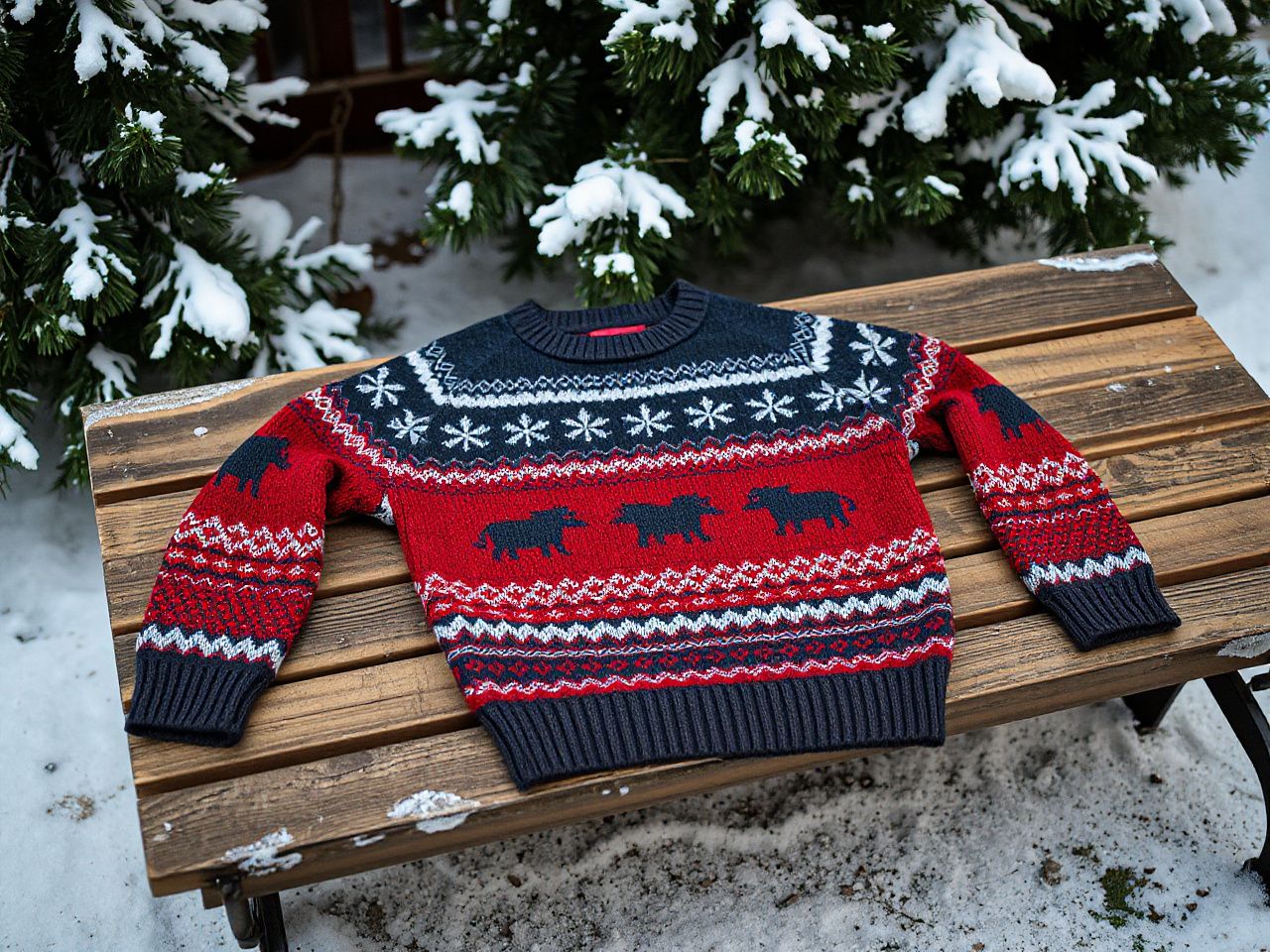
A lot of marketing noise exists around holiday sweaters. From the perspective of someone who lives out of saddlebags, the thing that separates a genuine men’s holiday sweater from an ordinary knit comes down to three factors: visual character, insulation without bulk, and durability under repeated compression. You aren’t just looking for a pattern with reindeer or snowflakes. You need a sweater that can be stuffed into a compression sack, pulled out 8 hours later, and still look presentable. If it can’t survive that, it’s a costume piece, not clothing.
Holiday sweaters for travel typically have a medium-gauge knit — not so loose that it snags on every zipper and not so tight that it feels restrictive. They use set-in sleeves rather than drop shoulders, because the seam sits naturally under a riding jacket without bunching. And they’re almost always made from fibers that can handle sudden temperature changes. You might start a December morning at 28°F and finish at 55°F by noon. Synthetic fibers can’t always manage that without turning into a sweatbox; wool and high-quality cotton blends can.
Why Ugly Sweaters Are Finally Being Built to Last
Ten years ago, a holiday sweater was designed to be a joke — wear it once, toss it. That changed as event rides and destination rallies began incorporating themed dinners. Suddenly, riders needed a sweater that could survive the trip there. Manufacturers noticed and started applying the same durability thinking found in men’s polyester pants to knitwear. You now see reinforced elbows, hidden pocket linings, and yarns blended specifically to resist pilling after abrasive contact with jacket liners. This shift means you don’t have to choose between looking festive and wearing something that won’t fall apart by New Year’s.

Material Choices That Determine How Long a Holiday Sweater Lasts
Every fiber behaves differently when you ask it to handle days of friction, sweat, and repeated drying. The men’s holiday sweater you buy is only as good as the yarn it’s made from. The common blends each hold up and each let go in predictable ways, and here’s what separates them.
Merino Wool: The Long-Range Champion
Merino wool is the standard every other sweater gets measured against. On a 600-mile run from Boise to the Oregon coast, a merino holiday knit will go three days straight without becoming unpleasant. The fiber locks moisture into its core rather than leaving it on the surface, so the bacteria that produce odor have far less to feed on, and that same core takes up the sweat from a hard effort — wrestling a bike onto its center stand, say — instead of holding it against the skin. Merino also — crucially — does not pill readily under the constant rubbing of backpack straps, because its long, fine staple keeps loose fiber ends from working their way to the surface. Real merino (not a 10% blend labeled as wool) can handle machine washing if you use a cold, gentle cycle and flat-dry it. The one catch is that merino can develop small holes if moths find it during off-season storage, so storage discipline matters.
Cotton and Cotton Blends: Comfort with Caveats
Cotton holiday sweaters are everywhere. They’re soft, often cheaper, and they take dye patterns well. But pure cotton absorbs and holds water. Caught in an unexpected rainstorm, a 100% cotton knit turns heavy, cold, and chafing. Look for cotton blends with at least 20% synthetic reinforcement, like nylon or polyester. Those blends retain the look of cotton but gain some quick-dry properties. If you’re pairing a cotton sweater with relaxed fit pants for off-bike comfort, you’ll want that extra resilience so the fabric doesn’t bag out at the elbows after a few hours leaning on a bar counter.
Synthetic Knits: When They Work and When They Melt
Acrylic sweaters dominate the budget holiday market. They’re lightweight, colorfast, and often mimic wool visually. But synthetics have a dark side. They melt near open flames — a real concern if you’re sitting around a fire pit. More importantly for riders, acrylic fibers pill aggressively under friction. After one long weekend in a tank bag, an acrylic sweater can look like it’s been dragged behind the bike. The exception is high-grade acrylic blends that use a long-staple fiber, which reduces pilling. But even then, they suit only short, low-abrasion trips.
Construction Cues That Separate a Keepsake from a One-Season Throwaway
Even the best yarn fails if the sweater isn’t built with movement in mind. The way a men’s holiday sweater is assembled determines how it responds to reaching forward to grip handlebars, twisting to check blind spots, and being yanked off over a helmet.
Seams and Stress Points
Look for flatlock seams along the sides and underarms. A traditional overlock seam creates a ridge that can irritate skin and wear down faster. On a 400-mile ride with a heavy pack, that ridge becomes a raw spot. The shoulder seams should sit exactly at the edge of your shoulder bone, not droop down onto your bicep — drop shoulders create excess fabric that bunches under a jacket and restricts arm movement. The cuffs and hem are the first places a sweater frays. Ribbed knit cuffs with a bit of spandex or elastic will bounce back after repeated stretching, but cheap ribbing will stay stretched out, leaving you with floppy sleeves.
Pattern Integrity After Washing
Those Nordic or Fair Isle patterns aren’t just decoration. In low-quality sweaters, the contrasting yarns are often carried loosely behind the fabric, creating long floats that snag on rings, zippers, or even the hook-and-loop closures on riding gear. A loose interior thread caught on a glove closure can ruin a holiday pattern. A well-constructed sweater uses woven-in floats of less than 1 inch or fully jacquard-knit patterns where the back is as tidy as the front. Turn the sweater inside out: if you see long spiderweb threads, expect those to break within months.
Washing and Care: The Real 500-Mile Test
A men’s holiday sweater that’s been worn through dust, campfire smoke, and maybe a little spilled eggnog needs cleaning that doesn’t destroy it. This is where the most hard-won advice is collected.
Machine Washing Without the Heartbreak
If the care label says “dry clean only,” you can often wash it anyway — but with caution. Most wool and cotton blends can handle a cold water delicate cycle (68°F / 20°C or less) if you follow a ritual. First, zip up any zippers on your thin men’s cargo pants that might be in the same load to prevent them from catching the knit. Turn the sweater inside out. Place it in a mesh laundry bag — this single move protects the knit better than any special detergent. Use a wool-specific detergent or a mild, clear liquid soap. Never, and I mean never, use fabric softener on wool: it coats the fibers and reduces their natural wicking ability. After the cycle, pull the sweater out immediately and reshape it flat on a drying rack. Hanging a wet sweater will stretch it permanently.
Hand-Washing in Remote Conditions
Washing sweaters in gas station sinks follows the same method as for technical merino base layers: lukewarm water, gentle swishing, no wringing. To remove excess water, lay the wet sweater flat on a clean towel, roll it up like a burrito, and press gently. This gets out enough moisture that it will air-dry overnight, even in a motel room. Hanging a sweater near a radiator to speed-dry it causes the wool to shrink unevenly, shortening the sleeves by nearly an inch. Heating elements and knits are a bad combination.
Stain Removal from Festive Mishaps
Hot cocoa, cranberry sauce, and pine sap are the enemies. For organic stains, cold water rinsing right away is key. For oily stains, a dab of clear dish soap rubbed gently with a soft toothbrush works well. Sap is the most difficult — freezing the affected area (by holding a bag of ice against it) hardens the sap enough to flake it off, then treating the remaining residue with rubbing alcohol on a cotton ball, spot-testing first for colorfastness. These methods help preserve sweaters affected by sap.
Layering a Holiday Sweater for Practical Riding Comfort
A thick sweater under a motorcycle jacket often feels like wearing a straitjacket. The secret to making a men’s holiday sweater functional on the bike is to treat it as a mid-layer rather than a base layer, and to pay attention to the interfaces between fabrics.
The Base Layer Beneath
Always wear a synthetic or silk-weight wool base layer under the sweater. This does two things: it wicks sweat away before it saturates the knit, and it prevents the sweater’s inner fibers from grating against skin during hours of vibration. On a cold morning, a thin merino crew under a cotton-blend holiday sweater, then a vented textile jacket, makes a comfortable layering system across a wide temperature range. The base layer also means you can go longer between sweater washes, because body oils and sweat never reach the outer knit.
The Outer Shell Gap
The most common issue is a sweater that’s too bulky in the sleeves, causing binding at the elbows and shoulders when you reach forward. A good holiday sweater for riding should have sleeves that don’t bunch more than a half-inch inside the jacket. If you can’t slide your arm into your riding jacket without having to push the sweater sleeve up toward your elbow, it’s too thick. Use the sizing that allows you to pinch only a small fold of fabric at the bicep while wearing the sweater over your base layer. That space accommodates movement and still traps warm air.
Off-Bike Transitions
The appeal of a well-chosen holiday sweater is that it transitions seamlessly from the bike to a dinner table. Removing a jacket and fluffing the knit briefly prepares it for a family gathering without any costume change. This is where the pattern and color choices really shine. A rustic Fair Isle or a deep burgundy cable knit with subtle sparkle threads looks festive without being gimmicky. Avoid anything with loose attachments like pom-poms or 3D embellishments — they snag on helmet straps and can be lost after the first gas stop.
Weatherproofing and Element Survival
Not every holiday gathering happens indoors. A men’s holiday sweater might find itself under a light drizzle at a Christmas market or coated in dust from a gravel parking lot. Here’s how to make it work.
Light Rain and Getting Caught Out
Wool has a natural water resistance because lanolin on the fibers helps water bead up, but most processed merino and all cotton sweaters lack that coating. For deliberate weather resistance, treat wool sweaters with lanolin-based wash-in treatments once a year. This restores some of the natural water repellency without affecting breathability. Skip this for cotton blends, as it can make them feel waxy. For synthetic blends, a DWR (durable water repellent) spray designed for outerwear can be lightly misted onto the surface, but test it on an inconspicuous area first — some DWR sprays alter the color of knit yarns.
Wind Protection and Heat Retention
Knit sweaters are porous by nature. A stiff headwind at 65 mph will cut right through a holiday sweater. That’s why it’s critical to consider your outer layer’s windproofing. If you plan to ride any distance, pair the sweater with a windproof mid-layer vest or a jacket with a wind-blocking membrane. On its own, the sweater will keep you warm in still air but will lose heat rapidly at speed. Inside a sleeve, the temperature can fall by nearly 15°F once wind is allowed straight through the knit, even in 50°F conditions, because moving air strips away the warm boundary layer faster than the body can rebuild it.
Storage and Longevity: The Off-Season Survival Guide
What you do with a holiday sweater during the other 10 months of the year determines whether it’s still wearable next December. Proper storage is important to prevent moth holes and permanent crease lines from folding under heavy gear.
Folding vs. Hanging
Never hang a knit sweater on a narrow hanger. Gravity will stretch the shoulders and leave permanent dimples. Fold sweaters using the KonMari fold method — flat, with the sleeves folded in — and store them in stackable boxes. Each sweater gets its own cotton storage bag (no plastic, which can trap humidity and cause yellowing). Add a sachet of dried lavender or cedar blocks for moth prevention. Mothballs are effective but the smell is nearly impossible to remove from wool, so natural deterrents are the better choice.
Deep Cleaning Before Long-Term Storage
It’s essential to wash the sweater thoroughly before tucking it away. Body oils, food residues, and even invisible sweat attract moths and encourage mildew. Do one final cold-water wash with a splash of white vinegar in the rinse cycle to remove all residues, then air-dry completely over 24 to 36 hours before folding and storing. If there’s any hint of dampness when you seal the bag, you’ll open it to a musty, possibly ruined sweater come November.
FAQs About Holiday Sweaters for Men
Riders and non-riders alike often ask how to make a holiday sweater last. Here are the most frequent ones, answered from the road.
How do I stop my wool men’s holiday sweater from itching while riding?
Itching is almost always caused by coarse fiber ends abrading skin. Wearing a thin, smooth base layer underneath is the quickest fix. If you want to soften the sweater itself, soak it in cool water with a lanolin-rich wool wash for 30 minutes, then rinse gently. This conditions the fibers without weakening them. Avoid using hair conditioner — it contains silicones that can coat wool and reduce breathability over time. After several washes, even a scratchy merino sweater will become noticeably softer.
Can I machine wash a men’s holiday sweater with polyester blends?
Yes, but restrictions apply. Use a cold, delicate cycle with a low-spin speed (600 RPM or less). Polyester blends are generally less prone to felting than 100% wool, but they can still pill from friction. Always place the sweater in a mesh bag and wash with similar colors. Turn it inside out and avoid washing with heavy items like jeans. Even polyester blends should be air-dried flat — dryer heat can cause the elastic in cuffs to degrade prematurely, leading to a floppy, shapeless sweater in under a year.
What’s the best way to remove wrinkles from a holiday sweater after packing?
Never iron a knit sweater directly. Heat and pressure can flatten the yarns permanently, creating shiny spots. Instead, hang the sweater in a steamy bathroom for 15 minutes and let the moisture relax the creases. For deeper wrinkles, use a handheld garment steamer on the lowest setting, holding it at least 4 inches away. If you must use an iron, place a damp pressing cloth between the iron and the sweater and use no steam, just a very low heat setting. A hotel shower’s steam can revive a sweater pulled from the bottom of a pannier.
Why does my acrylic holiday sweater pill after just a few rides?
Acrylic fibers have relatively short staple lengths and tend to slip out of the yarn under friction. The abrasive contact between a riding jacket liner and the sweater’s surface literally pulls tiny fibers to the surface, where they form pills. To minimize this, choose acrylic blends with longer staple fibers or those labeled as “anti-pilling.” After pilling occurs, use a fabric shaver — not a razor blade — to gently remove them. Wash the sweater inside out and line-dry. Even with care, acrylic will pill faster than wool, so if you ride frequently, wool or a wool-cotton blend is a better investment.
How do I pack a men’s holiday sweater for a long motorcycle trip without ruining it?
Fold the sweater flat with tissue paper between the folds to reduce friction. Place it in a compression sack, but don’t over-compress — leave about 20% slack so the fibers aren’t crushed for hours. When you arrive, unpack it immediately and let it rest on a hanger (with the sleeves draped over a towel, not the hanger ends) to allow the fibers to rebound. A small, travel-sized lint roller and a mini fabric shaver are worth keeping in your kit. These tools turn a sweaty, dusty, wrinkled sweater into something you can wear to a holiday dinner in minutes.