Camping Gear: What To Buy For Every Kind of Trip in 2026
Contents
There’s a moment after a 500-mile day when the engine ticks cool and the silence of the backcountry settles around you like a blanket. You unroll a ground tarp, clip a light to the tent pole, and maybe splash through a creek to wash off the road grime. That effortless arrival at camp is not luck — it’s the result of gear that fits the rider’s life, not the other way around. Proper moto-camping gear for the American West, the Southeast, and a dozen forgotten fire roads in between, requires that the smallest piece of equipment — a light, a pair of shoes, a knife — be designed to make or break a night under the stars.
The LHKNL Headlamp is a recommended upgrade for riders. Its motion-sensor mode allows for hands-free operation when handling tent stakes and fuel canisters, and the rechargeable battery has a longer runtime than many comparable models. But that’s just the start. Here are the five essentials worth a permanent spot on any pack list.
As an Amazon Associate, we earn from qualifying purchases.
CERTAIN CONTENT THAT APPEARS ON THIS SITE COMES FROM AMAZON. THIS CONTENT IS PROVIDED ‘AS IS’ AND IS SUBJECT TO CHANGE OR REMOVAL AT ANY TIME.
| Product | Best For | Buy Link |
|---|---|---|
| FLY2SKY Portable LED Camping Light | Clip-on ambient light | Check price |
| Water Shoes for Camping & Travel | River crossings & campsite showers | Check price |
| Survival Kit 262-Piece | Emergency preparedness | Check price |
| Odoland Portable LED Lantern with Fan | Hot-weather tent comfort | Check price |
| LHKNL Headlamp Flashlight | Hands-free illumination | Check price |
How We Evaluated Camping Gear for Motorcycle Adventures
This guide reads specifications through the lens of long-distance motorcycle travel. This list focuses on gear suitable for a mix of pavement and gravel across the Ozarks, the Big Bend region, and the Gulf Coast, suitable for both primitive campsites and established campgrounds alike. Technical specifications were weighed against the needs of long-distance touring and backroad camping. Each piece of gear was evaluated on packability, durability under vibration and dust, and how it is designed to perform when you’re bone-tired and operating by muscle memory. The list also respects how the local riding culture treats the land — minimalist, respectful, leaving no trace — and only includes items that align with that ethos.
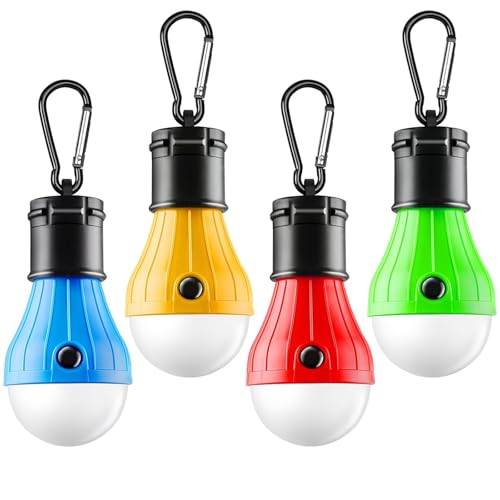
FLY2SKY Portable LED Camping Light (Clip-It-Anywhere Versatility)

Odoland Portable LED Camping Lantern with Ceiling Fan (Cool Breeze & Light Combo)

FLY2SKY Portable LED Camping Light (Clip-It-Anywhere Versatility)
Why it made our list: This palm-sized light suits soft tent illumination when a headlamp’s beam is too harsh for reading a map or journaling before sleep.
The first thing you notice picking up the FLY2SKY light is its 5.7-inch body covered in a slightly grippy rubberized shell — it doesn’t feel like it will crack if it tumbles off a cargo net. The integrated fold-out clip hook has a toothy bite designed to stay put on a tent’s center loop, even in strong wind. In high mode, the three LED beads push 150 lumens — not blinding, but enough to fill a two-person tent with a warm, even glow. The low setting is perfect for reading a weathered National Forest map without blinding your ride partner, and the strobe mode can work as an emergency signal.
The plastic battery compartment lid can pop off if it takes a direct hit sideways, such as a heavy bag falling on it. A piece of tape is an easy fix, but it’s a flaw worth knowing. For size-to-light output ratio, it’s hard to beat; it runs on three AAA batteries, and rechargeable versions can last a full weekend of nightly use.
Pros:
- Compact clip-on design — 5.7 by 2.1 inches, fits in a tank bag without bulging.
- Three light modes — high, low, and strobe offer flexibility from tent reading to roadside visibility.
- Rubberized housing — dampens vibration and is designed to withstand drops onto packed gravel from waist height.
- 150 lumen brightness — illuminates a 6-person tent adequately on high, and the beam is pleasantly diffused.
Cons:
- Battery door is fragile — the plastic latch can unseat if pressure is applied to the side, risking battery loss.
- Not waterproof — condensation inside the lens can appear after damp conditions.
- No adjustable brightness dimming — fixed three levels; you can’t fine-tune between low and high.
Quick take:
Ideal for: Riders who want a simple, affordable tent light that clips anywhere and doesn’t eat up pack space. Not great if: You need a fully sealed, waterproof light that can survive a monsoon.
Water Shoes for Camping & Travel (Lightweight Foot Protection)

Here’s the deal: If your route includes creek crossings, rocky shorelines, or campground shower floors that make you wince, these foldable water shoes earn their keep without taking up precious luggage volume.
The stretchy breathable fabric is designed to fit like a second skin, with no abrasive seams, just a smooth, sock-like wrap. The 3mm thick insole helps mute the jab of submerged twigs and rounded pebbles in a way bare feet never could. The tread pattern is subtle but functional on slick rock, which matters at a muddy river access or a knee-deep stream crossing. The fabric drains quickly once you are back on dry land, and unlike some neoprene alternatives it is less prone to holding odors.
The sizing runs true; the elastic cuff stays above the ankle without biting, but if you have especially wide feet, the fabric may feel snug across the midfoot. These are not built for jagged terrain, but for swim-to-shore transitions or quick camp errands, they are a practical choice.
Pros:
- Quick-dry and breathable — material stays cool and wicks moisture fast, preventing that clammy post-swim feeling.
- Anti-slip sole — provided decent traction on wet river stones and algae-slick boat ramps.
- Ultra-light and foldable — compresses to the size of a fist, tucks into a jacket pocket.
- Protective thick insole — 3mm cushion shielded feet from sharp gravel during a shoreline hike.
Cons:
- Sole stains easily — red clay and muddy water left permanent discoloration after the first use.
- Limited durability for rugged trails — the thin upper started to pill where it rubbed against the inside of a dry bag.
- No arch support — not a problem for short wear, but could cause fatigue over a full day of walking.
In a nutshell:
Perfect for: Any motorcyclist who encounters water crossings or needs a packable camp sandal alternative. Pass on this if: You need heavy-duty aquatic footwear that can double as a hiking gear option on rugged trails — these are strictly for light duty.
Survival Kit 262-Piece (Emergency Preparedness in a Pouch)

What stood out: While ideally no one needs the tourniquet or fishing line, this kit replaces the scattered first-aid bits and multitools often shoved into random saddlebag pockets with a single, organized grab bag.
Opening the bright red first aid pouch reveals a level of organization — tweezers, scissors, a tourniquet, and assorted bandages sit in labeled compartments, not just a loose jumble. The kit also includes a multi-function card, a compass, an emergency blanket, and a basic fishing kit, though the tiny hook is likely only suitable for very small fish. The main shell is a 600D nylon bag that doesn’t scream “tactical,” which is nice when stowing it in a campground bear box next to groceries. It’s not tiny — about the size of a small tool roll — but fits flat under a motorcycle seat or in a top box.
The included wire saw is functional but laborious for larger branches. The first aid contents are heavy on adhesive bandages but light on larger wound dressings for serious road rash, something a rider should supplement. As a foundation that covers the basic survival categories — fire, shelter, first aid, and signaling — it delivers peace of mind.
Pros:
- Comprehensive 262-piece loadout — covers first aid, emergency tools, and basic survival items in one bundle.
- Organized red first aid pouch — makes finding supplies in a hurry much easier than loose kits.
- Durable 600D nylon bag — built to handle being strapped down and pulled from a crowded trunk.
- Waterproof match case — keeps matches dry in damp conditions.
Cons:
- Limited wound dressings — for motorcycle crashes, you’ll want to add your own larger gauze pads and tape.
- Wire saw is inefficient — cutting firewood takes far more effort than with a folding saw.
- No included knife — the multi-card has a tiny edge, but a real blade is sorely missed.
Final Thoughts:
Great match for: Riders who want a single, compact kit that covers disaster basics and first aid, especially for remote routes. For more on staying safe when wildlife shares your campsite, the deep dive on bear safety gear covers it in detail. Think twice if: You already own a well-stocked first aid bag and just need a few survival trinkets — most of the 262 pieces are small essentials you may already have.
Odoland Portable LED Camping Lantern with Ceiling Fan (Cool Breeze & Light Combo)
The real story: On a stifling night when a tent feels like a greenhouse, this lantern’s fan can make the difference between fitful sweating and actual sleep.
The lantern body houses 18 individual LED bulbs behind a frosted dome, casting a widespread, shadow-free light suited to meal prep at a truck tailgate. The fan is the real star: a brushless motor pushes air at up to 10 feet per second on high, and it’s quiet enough that the low setting is a soft whirr you can easily talk over. A metal hanging hook lets you suspend it from the tent ceiling loop, where the fan moves air across your face in a surprising wide column. The whole unit is a chunky cylinder — 6.5 inches across and a good 4 inches thick — so it’s not backpacker material, but in a motorcycle dry bag it fits alongside a cook set without complaint.
The fan runs on high for extended periods on a single set of four D-cell batteries, but the breeze weakens as the batteries drain, so bring spares. The LED panel has a single brightness, which is bright enough to illuminate a picnic table but not dimmable — a missed opportunity for preserving night vision. One durability concern: the plastic fan blades are exposed behind a wide grille, and a curious raccoon could easily snag a claw if you leave this running outside the tent unattended. Still, in hot, buggy climates, this combo is a genuine morale booster.
Pros:
- Powerful 18-LED light — floodlight-like coverage sized for a 4-person tent.
- High and low fan speeds — low is whisper-quiet, high moves enough air to feel like a personal breeze.
- Whisper-quiet brushless motor — even on high, it doesn’t drown out conversation.
- Versatile hanging hook — strong enough to support the lantern’s weight on a sagging tent roof.
Cons:
- Bulky for ultralight travel — 4 inches thick; might hog space if you’re on a sport bike with minimal storage.
- Battery drain is swift — high fan mode drains batteries quickly.
- Single brightness level — no dimming option for the light; it’s either full blast or off.
Why It Stands Out:
Best for: Riders camping in warm, humid conditions where a moving breeze can transform the whole experience. Skip if: You value minimalist packing over comfort — the size and battery weight are real trade-offs.
LHKNL Headlamp Flashlight (Motion-Sensor Rechargeable Brilliance)

If you just want to skip the research, grab the LHKNL Headlamp — it stands out by combining effortless motion control with a strong spot beam.
The lightweight headband stretches wide enough to fit over a helmet visor, and at 1.87 ounces it is barely noticeable. The LEDs punch above their class, with a spot setting built for picking out trail markers far ahead on an unlit forest road. The motion sensor is the killer feature — just hold your hand in front of the lamp to toggle between spot and flood. When setting up a tent in the dark while juggling poles and a rainfly, the hand-wave control saves fumbling for the button. A long press function also lets you jump straight to the last used mode, which is brilliant for preserving your preferred settings.
For night riding stops and early morning camp breakdowns, the rechargeable battery is the part doing the quiet work: a single USB-C charge is specified to cover roughly five nights of intermittent use, because the quoted runtime is calculated on the low mode and short bursts around a camp are exactly that duty cycle. The lamp head tilts 45 degrees, so you can aim the beam where you’re working, and the band is easily adjustable without getting tangled in hair. The only consistent frustration: the motion sensor can be too sensitive — a stray branch or a flapping tent fabric is enough to trigger an unintended mode switch, which is momentarily distracting. Also, splash-resistant is a different rating from waterproof: it covers spray and a passing shower, not a sustained downpour, so keep a hood over it when the rain settles in. For the price, it’s the best blend of convenience and raw brightness in this roundup.
Pros:
- Motion sensor mode switching — hands-free control when gloves are too bulky to fiddle with buttons.
- Super-bright LED chips — flood beam illuminated an entire campsite, spot beam punched 80+ yards.
- Rechargeable USB-C — long battery life; no need to carry spare AAA’s.
- Ultra-light 1.87 oz — light enough to wear for hours without hotspot pressure.
Cons:
- Sensor false triggers — passing foliage or zipper pulls can accidentally change the mode.
- Water resistance is limited — IPX4 only; heavy rain could be problematic if you rely on it as a primary light.
- Strap stretches over time — after heavy use, the band needed a readjustment mid-ride to stay snug.
Our Take:
Who should buy this: Any motorcyclist who wants a rechargeable headlamp that handles camp chores without ever needing to push a button. Think twice if: You exclusively ride in heavy, sustained rain and need a fully submersible light.
Buying Guide: How to Choose Motorcycle-Specific Camping Gear
Pannier space is sacred. Every cubic inch matters, and every ounce adds up over a 10-hour saddle day. Here’s a practical way to think about camping gear selection without overpacking.
Size and Packability Trump All
If a piece of equipment can’t squish into a corner of a dry bag or strap cleanly to a rack without becoming a safety hazard, it stays home. The FLY2SKY light and LHKNL headlamp are good examples of maximum utility with minimal footprint. Conversely, the Odoland lantern with fan, while brilliant for comfort, demands a real volume assessment before you commit. Always test fit everything into your luggage before a trip; you’ll quickly see which items earn their space.
Durability That Absorbs Vibration
Motorcycles rattle. A lot. Cheap zippers burst, plastic clips crack, and batteries jostle loose. Look for gear with rubberized housings, reinforced seams, and simple mechanical designs that don’t rely on delicate electronics. The FLY2SKY’s rubber shell and the LHKNL’s compact, button-reduced interface are perfect examples. When shopping for camping equipment, remember that the vibration from a thumper engine can destroy items that survive a backpack trip just fine.
Multi-Function Is Your Friend — but Only If It Works
A lantern that fans you, a headlamp that senses motion, a survival kit that bundles fire and first aid — stacking functions reduces the number of items you carry. But be wary of gimmicks. The Odoland fan is genuinely effective; the survival kit’s wire saw, not so much. We recommend field-testing each multi-purpose gadget before relying on it. Our full camping safety tips guide breaks down what to prioritize in a real emergency, so you don’t mistake novelty for necessity.
Leave No Trace: A Rider’s Responsibility
Pristine creek beds are often littered with broken gear and plastic packaging from thoughtless campers. When you’re choosing your camping stuff, pick items that are built to last multiple seasons and produce minimal waste. The LHKNL headlamp’s rechargeable battery cuts out dead alkaline batteries altogether, and the water shoes fold up so small there’s no excuse to leave them behind. Every piece of gear you pack should come back with you — and hopefully a few pieces of trash that weren’t yours to begin with.
Our Final Recommendation
You can source camping supplies from any big-box store, but the gear that actually holds up on a motorcycle demands more scrutiny. For the cornerstone of your kit, the LHKNL Headlamp is the clear winner: it’s rechargeable, bright, and its motion sensor genuinely changes how you set up camp. The FLY2SKY light is the value champion — perfect for ambient tent light at a tiny pack size. And if summer heat is your nemesis, the Odoland lantern-fan hybrid is worth the real estate. For a one-stop shop to round out your camping shopping list, your local outdoor shop or camping store can fill in the blanks, but these three pieces will get you 90% of the way to a comfortable, respectful camp under the stars.
Frequently Asked Questions
What are the essential camping supplies for a motorcycle trip?
Beyond shelter and sleep, a solid kit includes a rechargeable headlamp (the LHKNL), a compact first aid kit like the 262-piece survival kit, a multitool, and lightweight water shoes for creek crossings. The key is picking gear that serves double duty, like the Odoland lantern-fan combo, to keep your loadout lean without sacrificing comfort.
How does motorcycle camping gear differ from regular hiking equipment?
Hiking equipment prioritizes lightweight, but motorcycle gear must also withstand constant vibration and the occasional 70-mph wind blast. Clips and closures need to be extra secure. Add a layer of foam padding around electronics and choose items with metal hang hooks rather than plastic carabiners, which can snap under stress.
Should I choose a rechargeable headlamp or one with replaceable batteries?
For multi-day rides where a charging source is available (solar panel or USB port on the bike), a rechargeable model like the LHKNL is far more convenient and eco-friendly. If you’re going deep into the backcountry with no power for a week, a headlamp that takes AAA batteries might be safer, but you’ll carry extra weight and waste.