Is Amtrak Safe? The Risks That Actually Matter
Contents
Most travelers fixate on the wrong kind of danger when they ask whether Amtrak is safe. They picture catastrophic derailments or sensational crimes, but the actual threats are far more mundane—and far more preventable. The moments that make the best travel stories are almost always the ones where something went wrong, and what separates a story from a disaster is what was already in place before it happened. Preparation doesn’t prevent adventure—it just gives you better options when it shows up. That same philosophy applies to rail travel: Amtrak’s safety isn’t a yes-or-no question; it’s a planning framework you build before the wheels ever start turning.
Key Takeaways
- Amtrak’s fatal accident rate is among the lowest of any major transportation mode—roughly 0.03 deaths per billion passenger-miles, compared to over 1.1 for automobiles.
- Personal safety on board hinges on situational awareness and a few simple precautions, not on systemic gaps in security.
- The most common safety issues—late-night station arrivals, unattended luggage, slippery steps—can be neutralized with a clear pre-trip mission plan and a few calculated gear choices.
The Real Safety Landscape of Rail Travel
By the Numbers: How Rare Are Amtrak Accidents?
When you strip away media noise and look at cold data, rail travel stands as one of the safest ways to move across the country. The National Transportation Safety Board tracks passenger fatalities per billion passenger-miles, and Amtrak consistently posts numbers that rival or beat commercial aviation. For context, U.S. highways see about 1.11 deaths per 100 million vehicle miles traveled. Amtrak’s average hovers near 0.03 fatalities per billion passenger-miles. High-profile events like the 2015 Philadelphia derailment or the 2017 Washington state crash were devastating, but they remain statistical outliers—and they directly accelerated the deployment of Positive Train Control, an automated speed-enforcement system now active on nearly all Amtrak-owned trackage.
This doesn’t mean accidents never happen. Freight-train collisions, grade-crossing incidents, and track defects still cause regional headaches, but the risk to an individual passenger is vanishingly small. If you map your route the way a rider charts a motorcycle trip (checking history, noting elevation changes, and identifying chokepoints), you’ll see that serious accidents on long-distance corridors are rare.
The Safety Culture Behind the Rails
What makes those numbers stick is a stringent safety management system that often goes unnoticed. Every Amtrak conductor, engineer, and dispatcher operates under federal hours-of-service limits, mandatory drug and alcohol testing, and recurrent simulator-based training. Equipment inspections for the Viewliner and Superliner fleets occur on fixed mileage and time cycles, with wheel profiles, brake shoes, and door mechanisms checked at every major terminal layover. It’s a rhythm built on redundancy, much like a rider’s checklist before a long day: tire pressure, chain tension, brake pads, fuel map. If anything feels off, you don’t roll.
Beyond Derailments: Everyday Safety on Amtrak
Station Security and Your Personal Bubble
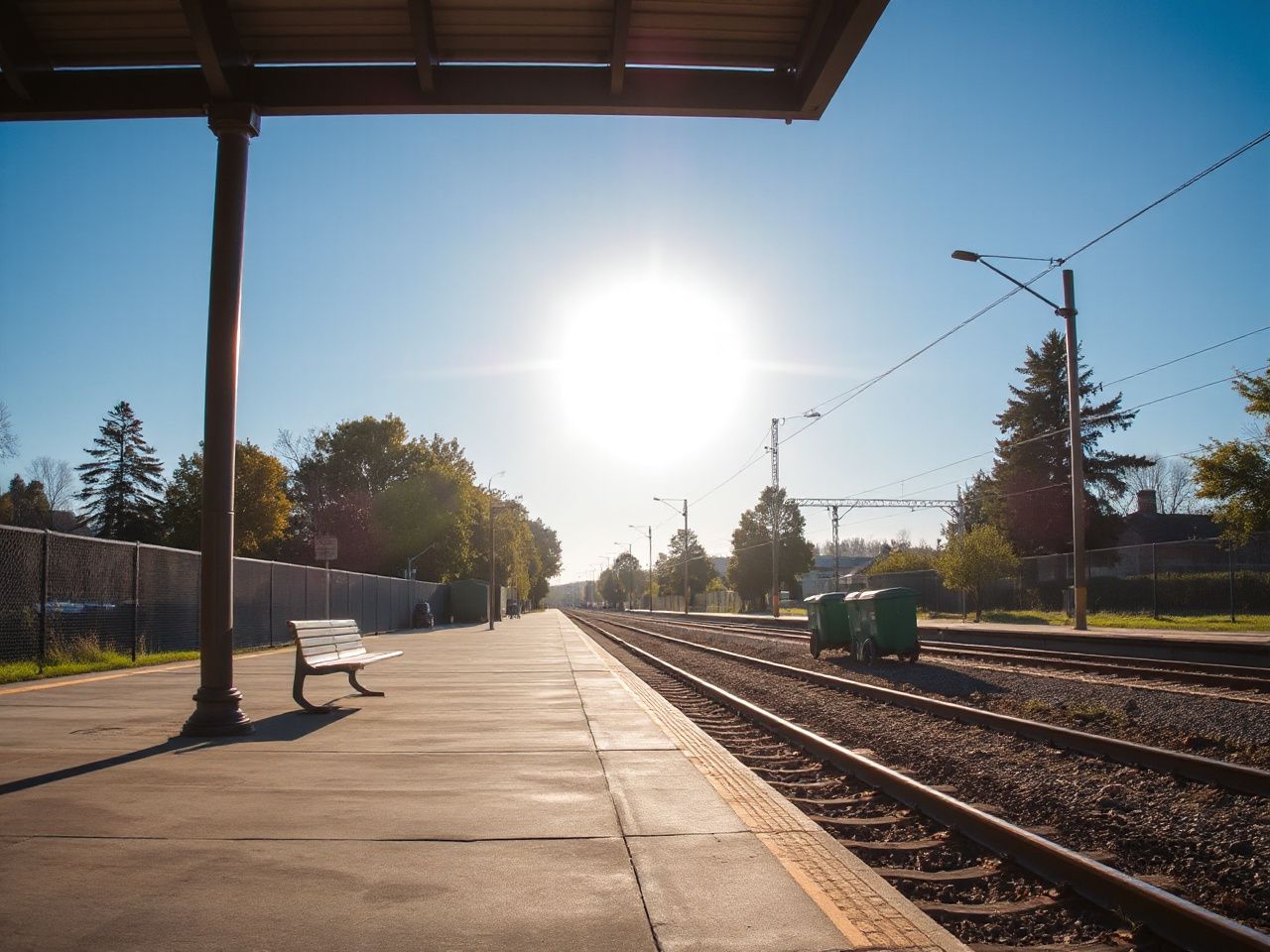
Not all Amtrak stops look the same. A major hub like Chicago Union Station or Washington Union Station has a constant police presence, surveillance cameras, and well-lit waiting areas. A flag stop in rural Montana might be a concrete platform with a single overhead bulb. Sweating the big accident stats won’t help you if you’re caught off guard at a deserted depot at midnight. The fix is simple: research your arrival time. If you’re pulling in late, pre-arrange a ride or have a hotel within walking distance. Keep your phone charged and know exactly where you’ll wait. Treat every station like a fuel stop on a cross-country ride: scan for exits, notice who’s around, and stay alert until you’re through the door.
While you might enjoy solving an Amtrak option crossword to pass the time, treating your route research like a puzzle with variables—weather windows, connecting train buffers—pays safety dividends. Cross-reference Amtrak’s status tracker with local forecasts and alternate transportation options long before you board.
Onboard Theft and Scams
Inside the cars, petty crime follows opportunity. Bags left unattended in luggage racks can disappear at long station stops. A well-worn move to watch for: someone offering to “watch your stuff” while you visit the café car, only to vanish at the next whistle. Lock zippers together with a small TSA cable lock, keep wallets and phones in a front pocket or neck pouch, and never stash critical documents in an overhead bin. Sleeper-car passengers get a locked door, but coach travelers need to think like backpackers. Using a thin steel mesh net over luggage on overnight ferries is a reliable security concept. If it takes more than ten seconds to access, it’s not worth the effort.
Additionally, onboard cleanliness is a form of safety. Shared spaces like bathrooms can harbor germs or become slip hazards. For a detailed breakdown of what to expect and how to stay hygienic, our guide on Amtrak bathrooms in 2026 covers everything from cleaning schedules to the best times to use the facilities.
Health and Hygiene in Transit
Respiratory bugs love recycled air and proximity. Long-distance coaches recirculate air through HEPA-grade filters, but that doesn’t stop a coughing seatmate from turning Row 12 into a petri dish. Pack a small hygiene kit: hand sanitizer with at least 60% alcohol, a pack of disinfectant wipes for tray tables and armrests, and a few N95 masks in case you’re seated near someone visibly ill. Food safety is another variable. The café car’s reheated items are generally safe, but sealed snacks are advisable on overnight legs—stomach upsets are a particular kind of misery when the next rest stop is a swaying lavatory.
Building Your Safety Brief: A Mission Planner’s Approach
Step 1: Intelligence Gathering on Your Route
Every solid trip starts with a deep dive into the operational environment. For Amtrak, that means pulling more than just a schedule. Study the route’s historical on-time performance on the Amtrak Status Maps archive. Check track ownership: lines owned by freight railroads (like the BNSF transcon or Union Pacific’s Sunset Route) can face congestion that strands you for hours, sometimes in areas with spotty cell service. Note the terrain. Mountain passes such as the Moffat Tunnel or the Cascades can experience weather shutdowns any time of year. Make a “bail-out” list: stations along the way where you could get off, find shelter, and regroup if things go sideways. On a motorcycle journey, the equivalent is marked fuel stops every 100 miles. For rail, it means knowing which stops have a heated waiting room or a 24-hour diner within walking distance.
Step 2: Pre-Departure Contingency Planning
Packing for safety isn’t about fear—it’s about options. A go-bag rides in a daypack at your feet, never stowed overhead. Inside: a compact first-aid kit with pain relievers, antihistamines, bandages, and any personal meds in original bottles; a headlamp with fresh batteries; a multi-tool without a blade longer than 2 inches (to stay TSA-compliant for station lockers); a portable battery pack capable of three full phone charges; a printed copy of your ticket, itinerary, and emergency contacts; and a small water bottle with a built-in filter. Program the Amtrak police tip line (1-800-331-0008) and the non-emergency numbers for local police at major stops into your phone ahead of time. Carry a compact weather radio because cell towers fail and train windows don’t open for a good look at the sky.
Step 3: In-the-Moment Situational Awareness
Once aboard, run a quick recce. Walk the full length of your coach and the adjacent cars shortly after departure. Mentally note the emergency window exits: look for the red handle and the pictogram showing how to remove the gasket. Count rows to the nearest exit, especially if you’re traveling at night. Keep your shoes on during station stops—hot coffee spills, broken glass, and hurried passengers in clogs are a bad mix. If something feels wrong—a passenger becoming aggressive, a strange odor, an unattended bag—notify a crew member silently via the Amtrak app’s text-a-tip function or speak to a conductor in the next car. On a bike, you pull over the instant the handling goes soft. On a train, you can’t pull over, but you can always change seats or cars.
Step 4: Post-Arrival Safety
Disembarking is the moment raw statistics fade and personal risk spikes. Passengers often step onto a dark, unfamiliar platform with no ride and dead phone batteries. Pre-load your rideshare app and confirm a driver is available for the expected arrival window, or book a taxi before you lose cell signal. Have a printed map or a screenshot of the station area. Walk with purpose directly to a well-lit pickup zone. In the same way that understanding fire behavior prevents a campsite disaster, knowing your mental escape route from platform to public street ensures you’re never caught flat-footed. For a deeper dive into that risk-management mindset, the principles in the complete guide to a safe camping fire translate surprisingly well to rail travel: you assess surroundings, control variables, and always have an extinguishing plan.
Emergency Protocols: When Things Go Sideways
Derailment or Collision Survival
In the extraordinarily unlikely event of a derailment, physics favors the prepared. Secure loose items the moment you sit down—laptops, glass bottles, and hard-shell luggage become high-speed projectiles during rapid deceleration. If you feel unusual lateral shaking or an emergency brake application, adopt a brace position: feet flat on the floor, back against the seat, arms crossed in front of your face. Windows on Amtrak’s Superliner and Amfleet cars are made of multi-layer safety glazing that resists shattering, but if an exit is needed, the red-handled emergency releases are designed for untrained hands. Listen for crew commands. In almost every past incident, the greatest injuries came from passengers panicking and attempting to evacuate into tracks still active with electricity or adjacent traffic.
Medical Emergencies Onboard
Amtrak conductors receive basic first-aid and CPR training, and many long-distance trains carry automated external defibrillators (AEDs) in the lounge or crew quarters. The chain of response is straightforward: alert any crew member immediately, state the car number and seat location clearly, and be ready to describe symptoms. If you’re the one in distress—chest pain, severe allergic reaction, acute asthma—inform your seatmate and give them specific instructions to fetch the conductor. Keep your medical information and emergency contacts on a card in your wallet, not just in your phone. Carry a small laminated card with your blood type, allergies, and medications.
Evacuation and Escape
Train windows aren’t like bus windows. They require a deliberate process: pull the rubber gasket, then push the pane outward. Familiarize yourself with the diagram the moment you sit down. In tunnels or on elevated structures, stay inside the car until explicitly directed by crew or first responders. The environment outside the train—high-voltage third rails, rocky embankments, freezing rivers—can be more dangerous than the stalled car itself. On a motorcycle, you never bail unless the alternative is certain impact. The same rule applies here.
Frequently Asked Questions
How safe is Amtrak compared to flying?
Amtrak’s fatal accident rate per billion passenger-miles is remarkably similar to that of commercial airlines—both register fewer than 0.05 fatalities. The total number of air travel passenger deaths in the U.S. has been near zero in most recent years, while Amtrak fatalities tend to involve grade-crossing collisions with vehicles or pedestrians, not passengers on board. For the traveler, the statistical difference is negligible.
Is Amtrak safe for women traveling alone?
Yes, with appropriate precautions. Solo female travelers should choose seats near the conductor’s office or in a car with steady foot traffic, avoid isolated vestibules, and pre-book a roomette on overnight runs if budget allows. Amtrak’s text-tip service provides a discreet way to report harassment, and conductors will reseat or remove problematic passengers without question. Treat it like any urban public space: confident, aware, and in control of your environment.
What precautions should I take on overnight Amtrak routes?
Secure your compartment or seat area with a personal lock for luggage, use a doorstop alarm in sleeper rooms for an extra layer, and keep phone, wallet, and ID on your body—never on the nightstand. Dim your phone screen when the lights go out to avoid advertising what you’re carrying. A small, battery-operated motion sensor that clips to your bag can provide an alert if disturbed.
Are Amtrak stations dangerous at night?
Large urban stations are generally well-patrolled and busy at all hours, but smaller unmanned stops can feel uncomfortable after dark. Research your station’s closing hours and amenities in advance. If you must wait, stay within sight of security cameras or other passengers, and keep your phone light ready. Whenever possible, schedule arrivals for daylight hours—a tactical scheduling choice that dramatically reduces risk.
Does Amtrak have security screening like airports?
No, Amtrak does not use routine physical screening or X-ray checkpoints. Instead, it relies on random patrols by K-9 units, plainclothes officers, and a behavior-detection program. This lighter touch means you should remain extra vigilant about your own belongings and surroundings, since the external screening net is far looser than what you’d encounter at an airport.