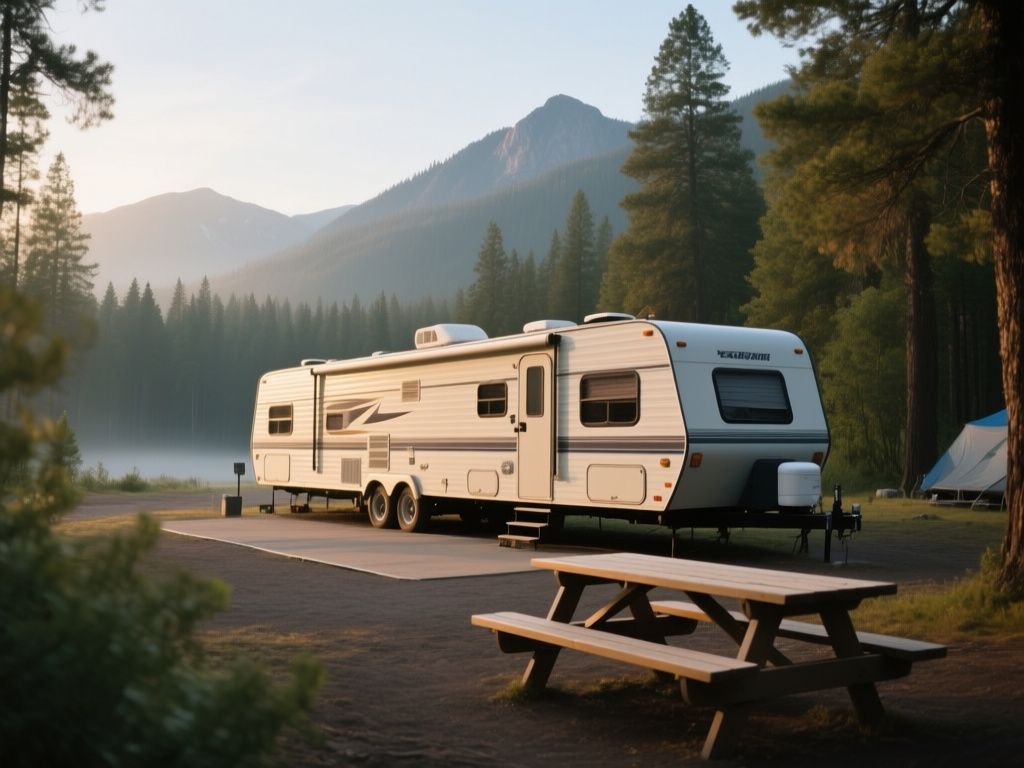
National Park Camper Length Restrictions: Complete Guide
Contents
Most people think bigger is better when it comes to camping on the road. They buy the longest rig they can afford, assuming more space means more freedom. Many motorcyclists pull into national parks only to discover their setup simply will not fit. The moments that make the best stories are almost always the ones where something went wrong. Preparation does not prevent adventure — it just gives you better options when it shows up. Understanding national park camper length restrictions before you leave saves you from turning around at a ranger station with a line of cars behind you.
Key Takeaways
- Most national parks enforce a maximum combined vehicle length of 27 to 40 feet, but many campgrounds have shorter limits around 21 feet for individual sites.
- Motorcycle campers with small trailers or sidecars often fit where larger RVs cannot, but you must still check each park’s specific restrictions — they vary widely.
- Always verify length limits on the official NPS website and call the ranger station for your specific campsite, because online lists can be outdated.
Why National Park Camper Length Restrictions Matter for Slow Travelers
When living on the road, your vehicle functions as your home. Every foot of length changes where it is possible to park, how to navigate switchbacks, and whether staying in a particular park for a week is feasible or moving on is necessary. National park camper length restrictions are not arbitrary rules — they exist because many roads and campsites were designed decades ago for smaller vehicles. Switchbacks on Going-to-the-Sun Road in Glacier National Park, for example, require a combined vehicle length under 21 feet. If arriving with a 25-foot trailer, entry will be denied.
For motorcycle travelers, this is both a challenge and an advantage. A typical touring bike with a small trailer measures around 15 to 18 feet total. That fits into most parks, but you still need to check each one. Some parks like Yosemite and Zion have specific restrictions for trailers that are shorter than the overall vehicle limit. Riders with sidecars are sometimes denied at a walk-up campground because their setup exceeded the 20-foot site limit, even though the park allowed 27-foot RVs in the main lot.
How National Park Camper Length Restrictions Work
Understanding the structure of these restrictions helps you plan without stress. The National Park Service (NPS) does not have a single nationwide rule. Each park sets its own limits based on road width, turn radius, and campsite dimensions. Here is how they typically break down:
Park-Wide Vehicle Length Limits
Many parks post a maximum combined vehicle length for all roads and campgrounds. This number usually ranges from 27 to 40 feet. For example, Grand Teton National Park allows vehicles up to 40 feet, while Acadia National Park caps at 35 feet. But these are general limits — individual campgrounds within the park may have tighter restrictions. A park that allows 40-foot RVs on main roads might only have a few sites that can actually accommodate them.
Individual Campsite Length Limits
This is where most people get caught. A campground might advertise a 40-foot limit, but each specific site has its own dimensions. Pull-through sites are longer. Back-in sites are shorter. Some sites have trees or rocks that reduce usable space. The NPS website lists site-specific lengths for many campgrounds, but you have to dig into the details. For motorcycle campers, a site listed as 21 feet might still work if you park the bike separately, but a site at 18 feet will be tight.
Trailer and Towed Vehicle Restrictions
Some parks treat trailers separately. Olympic National Park, for instance, limits trailers to 21 feet regardless of the tow vehicle. Other parks, like Sequoia & Kings Canyon, restrict combined vehicle length to 22 feet on certain roads. If you tow a trailer behind a motorcycle, your total length matters. A bike that is 8 feet long with a 6-foot trailer equals 14 feet — that fits most places, but you still need to verify. Sidecars add width but not much length, though some parks also have width restrictions of 8 feet.
Step-by-Step: How to Check Restrictions Before You Go
Do this before every trip; it takes about 15 minutes. Here is the process:
Step 1: Measure Your Exact Setup
Do not guess. Measure from the front of your motorcycle to the back of your trailer or cargo box. Include any protruding accessories like mirrors, luggage racks, or spare tires. Write this number down. Keep a laminated card with your total length in your tank bag. When booking a site, check it against the card.
Step 2: Visit the Official NPS Page for Your Park
Go to nps.gov and search for the specific park. Look under “Plan Your Visit” then “Camping” or “Fees & Passes.” Most parks have a table listing campgrounds and their length limits. For example, Yellowstone National Park lists individual campground limits ranging from 20 to 40 feet. Bookmark this page and check it before every trip because limits can change seasonally due to construction or maintenance.
Step 3: Call the Ranger Station Directly
This step is crucial. Online information can be months old. Call the park’s main number and ask for the campground office. Say something like, “I am planning to camp with a motorcycle and a small trailer. My total length is 14.5 feet. Can you confirm which sites in [campground name] will accommodate that?” Rangers appreciate specific questions. They will often tell you about sites that are not listed online.
Step 4: Check Road Restrictions for Access
Some parks have road restrictions that apply even if your campsite is large enough. Glacier National Park‘s Going-to-the-Sun Road requires vehicles under 21 feet (including trailers) between certain dates. Rocky Mountain National Park‘s Trail Ridge Road has a 35-foot limit. If your setup is longer than the road allows, you cannot reach your campsite. Check these before you book.
Common Scenarios for Motorcycle Campers
Here are the most common situations you will encounter:
Scenario 1: Motorcycle Without a Trailer
A solo motorcycle with saddlebags and a top case typically measures 7 to 9 feet. You will fit in almost any campsite. The main concern is width if you use panniers that stick out. Most parks allow up to 8 feet wide, and standard motorcycles are under 4 feet. You are safe here, but always check for walk-in or hike-in sites that do not allow any vehicles.
Scenario 2: Motorcycle With a Small Cargo Trailer
A motorcycle trailer adds 5 to 8 feet of length. Total length usually falls between 12 and 17 feet. You will fit in most campgrounds that allow RVs, but you may be restricted from some smaller sites. Even a site listed as long enough can be too tight for the turn-in with a trailer. Always ask.
Scenario 3: Motorcycle With a Sidecar
Sidecars add about 3 to 4 feet of width but only about 1 to 2 feet of length. Your total length might be 10 to 12 feet. Width becomes the issue. Some parks have width restrictions of 8 feet, and a motorcycle with a sidecar is usually under 6 feet. However, some older campgrounds have narrow roads where wider vehicles struggle. Check for width limits as well.
Park-by-Park Breakdown: Length Limits for Major National Parks
This list is compiled from official NPS data as of 2026. Always verify before traveling, but this gives you a starting point:
Western Parks
- Yosemite National Park: Maximum combined vehicle length 35 feet on main roads. Individual campgrounds vary: Upper Pines allows up to 35 feet, but some sites are shorter. Trailers limited to 35 feet.
- Grand Canyon National Park: South Rim campgrounds allow up to 30 feet for RVs. Mather Campground has sites up to 30 feet. Desert View Campground allows up to 40 feet. North Rim campground limits are 30 feet.
- Zion National Park: Watchman Campground allows up to 40 feet for RVs, but some sites are shorter. The Zion-Mount Carmel Tunnel restricts vehicles over 11 feet 4 inches tall — not length, but important for tall trailers.
- Glacier National Park: Going-to-the-Sun Road requires vehicles under 21 feet (including trailers) from late May to mid-September. Fish Creek Campground allows up to 35 feet, but many sites are shorter.
Eastern Parks
- Acadia National Park: Maximum vehicle length 35 feet on park roads. Blackwoods Campground allows up to 35 feet, but some sites are 25 feet. Seawall Campground allows up to 35 feet.
- Shenandoah National Park: Skyline Drive has a 35-foot limit for RVs. Mathews Arm Campground allows up to 30 feet. Big Meadows allows 35 feet. Some sites are shorter.
- Great Smoky Mountains National Park: No campgrounds with hookups, but most frontcountry sites allow up to 30 feet. Elkmont Campground has sites up to 35 feet. Cades Cove Campground allows up to 35 feet.
Desert and Southwest Parks
- Joshua Tree National Park: Black Rock and Cottonwood campgrounds allow up to 35 feet. Jumbo Rocks and other group sites allow up to 25 feet. Roads are narrow in some areas.
- Bryce Canyon National Park: Sunset Campground allows up to 40 feet, but some sites are 30 feet. North Campground allows up to 40 feet. The main road has no length restriction, but some viewpoints have limited turnaround space.
- Arches National Park: Devil’s Garden Campground allows up to 30 feet for RVs, but many sites are 18 to 22 feet. The entrance road has no length restriction.
What Happens if You Ignore the Restrictions
Riders can get tickets, get turned away, and get stuck. Here is what can happen:
Denied entry at the gate: If your vehicle exceeds the park-wide limit, you will be turned away. You might lose your reservation fee. Some parks offer refunds if you cancel before arrival, but not always.
Unable to fit in your site: If you arrive and your setup is too long for the site, you may have to park elsewhere in the campground or leave. Some parks allow overflow parking, but you will be separated from your gear.
Damage to your vehicle: Trying to squeeze into a tight site can scratch your trailer or motorcycle. Sidecases are often scraped against trees in these tight spaces. It is not worth the risk.
Fines: Rangers can issue citations for exceeding length limits. Fines vary by park but can be $100 to $500. In Glacier National Park, driving a vehicle over 21 feet on Going-to-the-Sun Road during restricted hours can result in a ticket and being required to turn around.
How to Choose a Campsite That Fits Your Setup
When you book a campsite, do not just look at the maximum length. Look at the site-specific dimensions. Here is the process:
- Go to the campground’s page on nps.gov.
- Scroll to the site list or map. Many parks have a PDF showing each site’s length.
- Compare your total length to the site length. Subtract 2 feet for maneuvering room.
- Read recent reviews on sites like Campendium or recreation.gov. Campers often post photos and notes about site dimensions.
- If you are unsure, call the campground directly. Rangers can tell you which sites are best for your setup.
For motorcycle campers, you have an advantage. Your setup is small enough that you can often fit in sites listed as “tent only” if the site has a parking spot. But do not assume — check the rules for that specific site.
Planning Your Route Around Length Restrictions
If you are on a long tour, you need to plan your route so you do not get stuck. Here is how to do it:
Map out your parks in advance. A spreadsheet helps, with columns for park name, campground name, site length limit, road restrictions, and notes. Check each one before you leave.
Build in buffer days. If a park has tight restrictions, plan to arrive early in the day so you can find an alternative if needed. Keep a list of nearby state parks or national forests that allow longer vehicles.
Use recreation.gov for reservations. Most national park campgrounds use this system. It shows site-specific lengths. Filter by your length to see available sites.
Consider dispersed camping. National forests and BLM land often have no length restrictions. If your setup is too long for a national park, you can camp nearby and drive into the park for day visits. This is a common strategy for motorcycle travelers.
Frequently Asked Questions
What is the most common length restriction in national parks?
The most common park-wide limit is 35 feet for combined vehicle and trailer length. However, individual campsites within the park often have limits of 25 to 30 feet. For motorcycle campers with trailers, the most restrictive limits are on scenic roads like Going-to-the-Sun Road in Glacier, which requires vehicles under 21 feet. Always check the specific campground and road restrictions for your destination.
Can I camp in a national park with a motorcycle and a small trailer?
Yes, in most parks, as long as your combined length does not exceed the park’s limit. A motorcycle with a small trailer typically measures 12 to 17 feet, which fits within most park-wide limits. However, you must check individual campground site lengths, as some sites are too short for even small trailers. Call the ranger station to confirm your specific site will work.
Do national park camper length restrictions apply to motorcycles without trailers?
Motorcycles without trailers are usually under 9 feet long and fit in almost all campsites. However, some parks have restrictions on width for roads or tunnels. For example, the Zion-Mount Carmel Tunnel has a height restriction of 11 feet 4 inches, which does not affect most motorcycles. Always check the park’s vehicle policy page for any specific motorcycle rules.
How do I find the exact length limit for a specific campsite?
Visit the campground’s page on recreation.gov or nps.gov. Look for a site map or PDF that lists each site’s maximum length. Many parks provide this information. If it is not online, call the park’s main number and ask for the campground office. Rangers can tell you the exact length for each site. You can also read recent camper reviews on sites like Campendium for real-world measurements.
What should I do if my setup is too long for a park I want to visit?
First, check if there are nearby state parks, national forests, or BLM land with fewer restrictions. Many parks have adjacent public lands where you can camp with a longer setup. For example, near Yosemite, the Sierra National Forest has dispersed camping with no length limits. You can camp there and drive into the park for day trips. Alternatively, look for private campgrounds outside the park that accept longer vehicles.