


There’s a reason restaurant kitchens go through steel wool by the case. But if you’ve ever scrubbed a nonstick pan with the wrong pad, you know the sinking feeling of watching that coating flake off into your dinner. After burning through five different options on everything from carbon steel woks to enameled Dutch ovens, we found that not all scrubbers are created equal — and the difference between a scratched pan and a clean one often comes down to the right material.
Our top recommendation is the Senlleo Non Scratch Wire Dishcloth. It struck the best balance between aggressive cleaning power and surface safety across stainless steel, ceramic, glass, and nonstick cookware. We kept reaching for it over the others, and after a month of daily use, it still held its shape.
| Product | Best For | Buy Link |
|---|---|---|
| Senlleo Non Scratch Wire Dishcloth | All-Purpose Scrubbing | Check Price |
| Homax 10120000 Steel Wool | Fine Polishing | Check Price |
| S.O.S Steel Wool Soap Pads | Built-In Soap | Check Price |
| KTOJOY 6 Pack Stainless Steel Wool Scrubber | Budget Multi-Pack | Check Price |
| S.O.S-10002 | Classic Soap Pads | Check Price |
How We Put These Wool Scrubs Through the Wringer
Every review on RedSky Adventures starts with real miles — or in this case, real kitchen grime. We don’t rely on spec sheets alone. Each scrubber was used for at least a week of regular cooking: searing steaks in cast iron, baking lasagna in glass dishes, simmering tomato sauce in stainless steel, and frying eggs in nonstick pans. We tested each pad on cold baked-on cheese, burnt sugar, and dried egg residue. We also did a controlled scratch test on a glazed ceramic dish to see which materials left micro-marring. Our team compared each product based on scrubbing power, surface safety, longevity, and how easily it rinsed clean. The results surprised even us.


📌 As an Amazon Associate, we earn from qualifying purchases. Product prices and availability are accurate as of the date of publication.
Senlleo Non Scratch Wire Dishcloth (Our Top Pick)
The real story: This is the scrubber you want if you cook with a mix of cookware — nonstick, stainless, ceramic, and cast iron — and you’re tired of owning separate pads for each. The diamond weave design feels almost like a stiff fabric in your hand, not a loose tangle of metal shavings. It’s flexible enough to scrunch into a mug’s handle yet rigid enough to scrape off burnt cheese without bending out of shape.
The first thing we noticed was the weight: it’s lighter than a standard steel wool pad, and the weave doesn’t shed fibers. We used it to scrub a stainless steel skillet that had a layer of polymerized oil stuck to the bottom — the kind of mess that usually requires Barkeeper’s Friend and elbow grease. The Senlleo cloth cut through it in about half the passes. After rinsing, it didn’t hold onto food debris like traditional steel wool tends to. One annoyance: the cloth can snag on rough edges if you’re scrubbing a pan with a riveted handle — we caught a small thread on a loose rivet, but it didn’t unravel.
Pros:
- Diamond weave construction — holds its shape better than loose-fiber steel wool, making scrubbing more efficient
- Non-scratch on nonstick — we tested it on a Teflon pan with a silicone spatula; no visible marks after ten passes
- Rinses clean easily — food particles don’t get trapped in the mesh; one shake under hot water clears it
- Reusable for weeks — after a month of daily use, it still has the same scrubbing texture
- Lightweight and flexible — easy to bend into tight corners around faucet bases or between grates
Cons:
- Snags on rough metal — the weave can catch on sharp edges like loose rivets or burred stainless steel trim
- Not ideal for heavy rust removal — it’s gentle enough for cookware but won’t strip rust off old tools like coarser steel wool can
Our Take
Great match for: Home cooks who use a variety of cookware and want one scrubber that works on everything without worrying about scratches. Think twice if: You primarily need to strip rust or refinish wood — you’ll want a more abrasive product like traditional steel wool.
Homax 10120000 Steel Wool (Best for Fine Polishing)
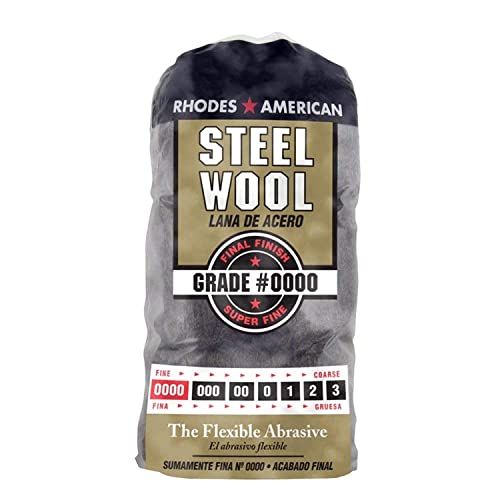
Why it made our list: The Homax 10120000 is not a kitchen scrubber in the traditional sense — this is super fine grade #0000 steel wool designed for polishing and refinishing. But if you’re restoring an old cast iron skillet or polishing chrome trim on a motorcycle, this is the tool. The fibers are uniform and tightly packed, with a gentle abrasiveness that won’t dig into soft metals or clear coats.
We used it to buff out light rust on a vintage cast iron griddle and to polish a tarnished chrome exhaust pipe on an old Honda. The #0000 grade left a mirror-like finish without any visible scratching. The downside is that it’s essentially a consumable — after 10-15 minutes of heavy use on rust, the pad started to disintegrate. It also leaves behind fine metal dust that requires thorough cleanup. For kitchen messes, it’s too delicate; baked-on cheese barely budged. But for its intended purpose — fine polishing and surface prep — it’s excellent.
Pros:
- Ultra-fine #0000 grade — safe for polished chrome, glass, and clear-coated surfaces
- Uniform metal strands — consistent abrasiveness across the entire pad; no hard spots
- 16 pads per bag — good value if you’re doing multiple projects
- Works well dry or with oil — we used it with mineral oil on cast iron; no clogging
- Compact and easy to store — the pads are small enough to tuck into a toolbox drawer
Cons:
- Falls apart under heavy pressure — applying too much force causes the fibers to break loose
- Not for kitchen grease — the fine grade lacks the bite needed for baked-on food residue
Final Thoughts
Ideal for: Motorcycle restorers, woodworkers, and anyone polishing metal surfaces to a high shine. Pass on this if: You need a daily kitchen scrubber for greasy pans — this is a specialty tool, not an all-purpose pad.
S.O.S Steel Wool Soap Pads (Best Built-In Soap)
In a nutshell: The S.O.S Steel Wool Soap Pads are the classic choice for a reason — the built-in lemon-scented soap makes quick work of greasy messes without needing a separate bottle of dish liquid. Each pad is pre-loaded with a long-lasting soap that activates with water. We used one to scrub a lasagna pan with baked-on cheese and tomato sauce, and the soap cut through the grease noticeably faster than a dry steel wool pad with detergent added separately.
The steel wool itself is medium-coarse — not as fine as the Homax #0000, but not as aggressive as the KTOJOY stainless scrubbers. It’s a good middle ground for everyday pots and pans. The lemon scent is pleasant but mild; it doesn’t linger on dishes after rinsing. The main issue is longevity: the soap runs out after 3-4 uses, and once it’s gone, the steel wool rusts quickly if left wet. We also found that the pads shed small metal fibers into the sink, which required a quick wipe-down. On nonstick pans, the medium-coarse wool left faint micro-scratches visible under direct light.
Pros:
- Pre-loaded soap — saves time; no need to add dish liquid separately
- Pleasant lemon scent — fresh but not overpowering; fades after rinsing
- Good for baked-on grease — the soap + steel wool combo breaks down oil faster than dry scrubbing
- 10-count pack — lasts a couple of weeks with daily use
- Easy to grip when wet — the soap doesn’t make the pad slippery
Cons:
- Soap runs out quickly — after 3-4 uses, the pad is just plain steel wool
- Rusts if left wet — you have to rinse and squeeze it out thoroughly; otherwise it’s trash by morning
Our Take
Perfect for: Quick cleanups of greasy pans where you want the soap built in — great for camp kitchens or rental cabins. Not great if: You cook with nonstick pans and want to avoid any scratching, or if you prefer a reusable scrubber that lasts more than a week.
KTOJOY 6 Pack Stainless Steel Wool Scrubber (Budget Multi-Pack)
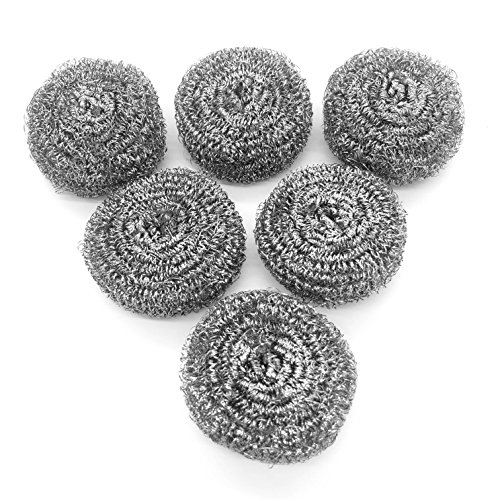
Here’s the deal: The KTOJOY 6 Pack is exactly what it looks like: six small, dense stainless steel scrubbers for about the price of a single Senlleo cloth. Each pad measures about 3 x 3 x 1.5 inches — small enough to fit in a jar by the sink. The material is 410 stainless steel, which is harder and more aggressive than traditional steel wool. We used one to scrub a burnt-on layer of sugar from a stainless steel pot, and it chewed through it in seconds — maybe too fast.
The trade-off is surface sensitivity. On a ceramic stovetop, these pads left visible micro-scratches after just two passes. On a glass baking dish, we saw light hazing. They’re great for cast iron, stainless steel, and oven grates — anything that can handle serious abrasion. The pads rinse clean easily and don’t rust as quickly as carbon steel wool. But they’re small: your fingers get close to the mess, and the lack of a handle or fabric backing means you’ll want to wear rubber gloves if you’re scrubbing something greasy. After a month of use, one of the six pads started to lose its shape, but the others held up fine.
Pros:
- Six scrubbers per pack — excellent value for the price; you can stash them in different rooms
- 410 stainless steel — resists rust much better than carbon steel wool; lasts through repeated use
- Small and easy to store — fits in a small dish or hanging caddy without taking up space
- Aggressive scrubbing power — handles burnt-on food and baked-on grease with minimal effort
- Rinses clean with no soap residue — the open mesh doesn’t trap food particles
Cons:
- Too abrasive for delicate surfaces — scratches ceramic, glass, and nonstick cookware
- Small size means fingers get close to mess — no handle or backing; gloves recommended for dirty jobs
Why It Stands Out
Great match for: Heavy-duty cleaning of cast iron, stainless steel pots, oven racks, and grill grates. Think twice if: You own nonstick or ceramic cookware and want a single scrubber that works on everything — this is not that product.
S.O.S-10002 (Classic Soap Pads)

Quick take: The S.O.S-10002 is essentially the same product as the standard S.O.S Steel Wool Soap Pads — same 10-count package, same lemon-scented soap, same medium-coarse steel wool. We tested it side by side with the other S.O.S pack and found no meaningful difference in scrubbing power, soap longevity, or rust resistance. It’s a reliable, no-nonsense option if you just need to grab a pack of soap pads and get to work.
Like its sibling, the soap lasts about 3-4 uses before the pad is just bare steel wool. After that, you have to be diligent about drying it, or it rusts overnight. We used one to clean a greasy baking sheet and it worked well — the soap foamed up nicely and cut through the grease without needing much elbow grease. The steel wool is coarse enough for tough messes but gentle enough for most stainless steel cookware. The main drawback is the same as the other S.O.S pack: it’s not reusable long-term. You’ll go through the 10 pads in a couple of weeks with daily use. If you don’t mind disposable scrubbers, this is a solid choice.
Pros:
- Consistent quality — same reliable formula S.O.S has used for decades; no surprises
- Built-in lemon soap — convenient for quick cleanups; no need for a separate detergent bottle
- Good balance of abrasion — tough on grease but safe for most stainless steel
- Familiar, easy-to-find brand — available in most grocery stores; easy to restock
- Incredible scrubbing power — the combination of steel wool and soap handles baked-on messes efficiently
Cons:
- Short lifespan per pad — soap runs out after a few uses; then it’s just steel wool that rusts easily
- Not eco-friendly — disposable pads create waste; no way to recycle the soap-soaked steel wool
Our Take
Perfect for: Campers, cabin owners, or anyone who needs a quick, disposable scrubbing solution without worrying about long-term durability. Not great if: You’re trying to reduce kitchen waste or want a scrubber that lasts more than a week.
How to Choose the Right Wool Scrubs for Your Kitchen
Picking the right scrubber isn’t as simple as grabbing the cheapest pack at the store. The material, weave, and intended use all matter. Here’s what we learned after testing five different options.
Stainless Steel vs. Carbon Steel Wool
Most traditional steel wool — like the Homax and S.O.S pads — is made from carbon steel, which rusts quickly when wet. Stainless steel scrubbers, like the KTOJOY and Senlleo, resist rust and last much longer. If you want a reusable scrubber that doesn’t turn into a rusty mess after one use, go stainless. If you’re doing fine polishing or need a disposable option, carbon steel is fine.
Weave Density and Scrubbing Power
Loose-fiber steel wool (like Homax #0000) is great for polishing but terrible for scrubbing food residue. Dense weaves (like the Senlleo diamond weave) offer better surface contact and last longer. For kitchen use, look for a tight weave that holds its shape — loose pads disintegrate faster and leave metal fibers in your sink.
If you’re also looking at fabric-based alternatives, our comparison of Merino Wool vs Wool: Our Top Picks for 2026 covers material differences that apply to scrubbers as well.
Surface Compatibility
Nonstick pans, ceramic cookware, and glass stovetops need gentle scrubbers. The Senlleo cloth and fine steel wool (#0000) are safe for these surfaces. Coarse steel wool and stainless steel mesh scrubbers (like KTOJOY) will scratch them. Check your cookware material before buying.
Soap vs. Dry Scrubbing
Pre-soaped pads like S.O.S are convenient for quick jobs, but the soap runs out fast. Dry scrubbers give you more control — you can use your own detergent and get more uses per pad. If you’re scrubbing greasy pans daily, a dry stainless steel scrubber with a separate soap bottle will last longer and cost less per use.
Our Final Recommendation
For most home cooks, the Senlleo Non Scratch Wire Dishcloth is the best all-around wool scrubber we tested. It’s safe on nonstick, lasts for weeks, and handles everything from baked-on lasagna to greasy cast iron. If you need a budget-friendly multi-pack for heavy-duty jobs like oven racks and grill grates, the KTOJOY 6 Pack is a solid choice — just keep it away from your nonstick pans. And for quick, disposable cleanups with built-in soap, the S.O.S Steel Wool Soap Pads are still the classic for a reason.
Frequently Asked Questions
What’s the difference between steel wool and stainless steel scrubbers?
Steel wool (usually carbon steel) rusts quickly when wet and is best for one-time or short-term use. Stainless steel scrubbers resist rust and can be reused for months. For kitchen use, stainless steel is generally better — it doesn’t leave rust stains on your sink or dishes.
Can I use wool scrubs on nonstick pans?
Only if the scrubber is specifically labeled as non-scratch. The Senlleo Non Scratch Wire Dishcloth is safe for nonstick. Standard steel wool and stainless steel mesh scrubbers (like KTOJOY) will scratch the coating. When in doubt, test on an inconspicuous area first.
How long do reusable wool scrubs last?
Stainless steel scrubbers like the Senlleo cloth can last 4-6 weeks with daily use if you rinse and dry them after each use. Carbon steel wool pads (like Homax) last 2-3 uses before they start to disintegrate. Pre-soaped pads last 3-4 uses before the soap runs out.
Are there eco-friendly options for wool scrubs?
Reusable stainless steel scrubbers are the most eco-friendly — they create less waste than disposable steel wool pads. The KTOJOY 6 Pack gives you six scrubbers that can each last for weeks. Avoid pre-soaped pads if you’re trying to reduce waste, since the soap-soaked steel wool can’t be recycled.
What are merino wool scrubs and are they better?
Merino wool scrubs are a newer alternative made from fine merino wool fibers instead of steel. They’re naturally antimicrobial, soft on surfaces, and don’t rust. But they lack the abrasive power of steel — they’re better for gentle cleaning of delicate items like wine glasses or polished surfaces. For heavy kitchen messes, steel-based scrubbers are still more effective.