Free Camping in Illinois: The Only Places It Actually Exists
Contents
Genuinely free camping in Illinois barely exists, and that is the honest answer here. The Illinois Department of Natural Resources charges for every campsite class it operates. The cheapest tier on the state fee schedule is Class D — a walk-in or backpack primitive tent site with no vehicular access — and it still costs $6 per night at the standard rate. The only $0 rates in the entire schedule are discounts for a narrow set of exempt groups.
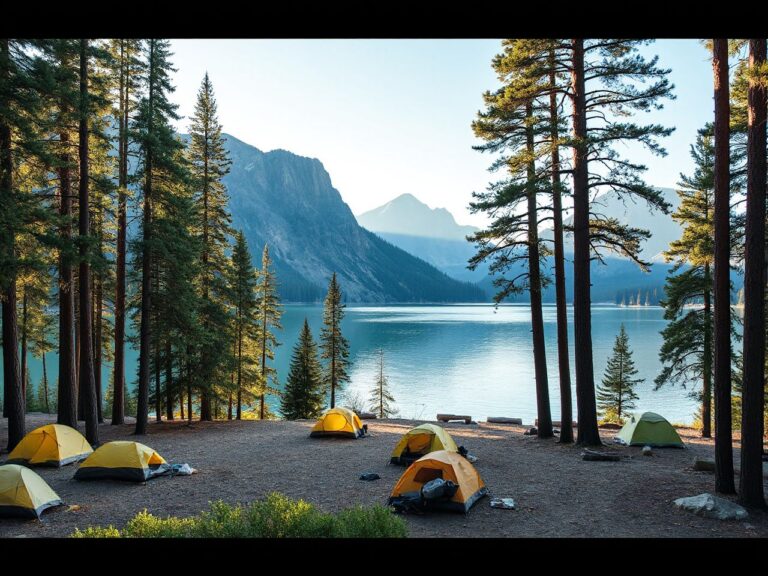
The one place you can legally sleep outdoors in Illinois for nothing is the far southern tip of the state. In Shawnee National Forest, the Forest Service allows primitive camping a quarter mile outside developed areas, any time of year, with no fee. Two of the forest’s developed campgrounds — Turkey Bayou and Tower Rock — charge nothing either. Almost everything else listed online as free camping in Illinois is a $10 Forest Service site, a state park site with a fee, or a rumor nobody checked.
Key takeaways
- $6 a night is the cheapest Illinois DNR campsite class, and the state fee schedule lists no free option for the general public.
- Shawnee National Forest permits free primitive camping a quarter mile outside developed areas, year-round, with no fee.
- Turkey Bayou and Tower Rock are the only two free developed campgrounds in the forest, and neither has drinking water.
- Forest Order 09-08-25-02 caps camping at 14 days in any 28-day period and 28 cumulative days per calendar year.
- Camp Cadiz is not free despite the listings; the Forest Service puts it at $10 a night, cash or check only.
Illinois state parks: cheap, but never free
Separate two things the DNR treats separately. Its camping page states that the department does not charge an entrance fee to any state owned or operated land, so getting onto the land costs nothing. Camping is a different account, and it is charged on every site the state runs.
Here is what the fee schedule says. Class D, walk-in or backpack primitive tent sites with no vehicular access, is $6 per night. Class C, vehicular access without showers, is $8. Class A, with showers, electricity and vehicular access, is $20, built from a $10 camping fee plus a $10 utility fee. Class AA, which adds sewer, is $25 on the same structure of $15 plus $10.
Plenty gets added on top of that. A $10 holiday surcharge applies on Memorial Day, Independence Day and Labor Day weekends, pushing Class A to $30 and Class AA to $35. Six parks carry a premium surcharge as well: Chain O’Lakes, Illinois Beach, Kankakee River, Rock Cut, Starved Rock and Shabbona Lake. Where there is a beach, beach use is $2 a day per person.
Reserving costs more again. The DNR lists a $5 non-refundable reservation fee, requires booking three days ahead, caps a reservation at 14 nights within 30 days, and splits rates into two seasons, 1 May to 30 September and 1 October to 30 April.
So the closest the state comes to free is a $6 walk-in tent pad. The only zero in the document is the line saying discounts equal half the camping fee plus the $10 utility fee, except at Class C and D sites where no fee is charged. Those discounts are for specific exempt groups and apply to Illinois residents only. Qualify for one and Illinois has free camping for you. Otherwise it does not.
Shawnee National Forest is the whole story
Shawnee National Forest spans 289,000 acres in southern Illinois between the Ohio and Mississippi rivers — oak-hickory forest, wetlands, lush canyons and sheer bluffs. Federal land plays by different rules, and this is where the free camping lives. If you will not drive that far south, none of it applies.
The core rule is one sentence. The Forest Service states that primitive camping is allowed a quarter mile outside developed areas within Shawnee National Forest, that there is no fee for it, and that it is allowed any time of year. No fee, no reservation, no closed season.
The attached conditions are not optional. Camp and wash at least 150 feet from any water source, burn dead and down trees only and make sure campfires are completely out, and pack your garbage out. Camping is capped at a 14-day continuous stay, no permanent structures may be built, and it is prohibited in the forest’s 80 designated natural areas, within 150 feet of lakes and streams, and near trails.
What Forest Order 09-08-25-02 requires
The enforceable stay limit sits in a forest order signed on 25 September 2025 by Forest Supervisor Felipe Cano and in effect for five years. It prohibits camping, or establishing, maintaining or occupying any camp or camping equipment, in excess of 14 days in a 28-day period, with no more than 28 cumulative days in a calendar year. The annual ceiling is the half people miss.
The order also sets two location bans. No camping within 150 feet of the shoreline of Cedar Lake, Little Cedar Lake or Kinkaid Lake, and none within a quarter mile of a developed campground or picnic ground. The second is the real constraint on a road-trip plan: you cannot park near a fee campground, move a few minutes down the road and call it dispersed camping.
These are not advisory notices. Violation is punishable as a Class B misdemeanor by a fine of not more than $5,000 for individuals and $10,000 for organizations, by imprisonment for not more than six months, or both.
Common mistake
Assuming the 14-day clock is the only limit. Forest Order 09-08-25-02 sets 14 days in any 28-day period and a separate ceiling of 28 cumulative days in a calendar year. Anyone using Shawnee as a long-term basecamp — two weeks on, two weeks off — is fine for the first two stays and in violation from the third. If free camping is your plan for a whole summer, the annual cap stops you, not the two-week rule.
The two free developed campgrounds
Turkey Bayou Campground, in the Oakwood Bottoms area, is free and open year-round with a 14-day maximum stay. It is also bare: the Forest Service notes that restrooms are not available, that potable water is not available, and that the site frequently floods during heavy rain periods. Check the forecast; a wet week turns this from spartan to unusable.
Tower Rock Campground, on the Ohio River, is the other. No fees are required for the site. It runs 1 May to 15 December, has a vault toilet and has no drinking water. Tower Rock is the more comfortable free option in season; Turkey Bayou is the one still open in January.
Neither can be booked ahead. Arrive with a fallback and enough daylight to find a legal dispersed spot if the campground is full.
Pro tip
Water decides your trip length here, not the stay limit. Neither free campground has potable water, and Shawnee’s rules require you to camp and wash at least 150 feet from any water source, so a creek beside your tent is not a tap. Carry it in jugs and treat days of water as the real cap. Pharaoh Campground at Garden of the Gods is one Shawnee campground the Forest Service does list with drinking water, and that costs $10 a night.
What it costs when it is not free
The Forest Service lists nine developed camping and cabin sites in Shawnee — Bell Smith Springs, Camp Cadiz, Garden of the Gods, Johnson Creek, Oak Point at Lake Glendale, Oakwood Bottoms and Turkey Bayou, Pine Hills, Pounds Hollow and Tower Rock. Two are free. Where the Forest Service publishes a fee — Camp Cadiz, Pine Hills, Pounds Hollow and Pharaoh at Garden of the Gods — it is $10 a night, cash or check.
| Where | Nightly fee | Season | Water and toilets |
|---|---|---|---|
| Primitive camping, quarter mile outside developed areas | Free | Any time of year | None; carry water, pack waste out |
| Turkey Bayou Campground, Oakwood Bottoms | Free | Year-round, 14-day maximum | No potable water, no restrooms; floods in heavy rain |
| Tower Rock Campground, Ohio River | Free | 1 May to 15 December | Vault toilet, no drinking water |
| Camp Cadiz Campground | $10, cash or check | First come, first served; not reservable | 8 people and 2 vehicles maximum |
| Pine Hills Campground | $10 single site | Year-round | No potable water |
| Pounds Hollow Recreation Area | $10, cash or check | 15 March to 15 December | 13 electric and 42 non-electric sites |
| Pharaoh Campground, Garden of the Gods | $10 | Year-round | Toilets and drinking water, 12 sites |
Camp Cadiz deserves its own warning because it appears on free-camping lists constantly. The Forest Service prices it at $10 per night, cash or check only, eight people and two vehicles maximum, first come first served with no reservations. Pounds Hollow allows two tents, eight people and two vehicles per site, runs 15 March to 15 December, and has 13 electric and 42 non-electric sites.
Do not assume the big reservoirs are cheaper. US Army Corps of Engineers campgrounds at Rend Lake run well above Forest Service prices: South Marcum Campground is listed at $16 to $44 per night and Gun Creek at $18 to $30. That is the expensive end of southern Illinois camping, not the budget end.
Free wilderness backpacking, no permit required
Shawnee has seven wilderness areas totalling about 30,000 acres, roughly 10 percent of the forest, and no permits are required to enter or camp in designated wilderness. The Garden of the Gods page repeats it explicitly for that wilderness.
Wilderness restrictions are tighter than elsewhere. Guidance directs you to use established sites away from trails, water and bluff tops, and to bury solid human waste in a cathole 6 to 8 inches deep, at least 200 feet from campsites, trails and water. A separate order signed 29 September 2025 bans groups larger than ten people in Bay Creek, Garden of the Gods and Lusk Creek wilderness, and bans camping with a horse or other pack animal in those same three areas.
Frequently asked questions
Is there free camping in any Illinois state park?
No. The DNR fee schedule charges for every campsite class, from $6 for a walk-in primitive Class D site to $20 for Class A and $25 for Class AA, with a $10 holiday surcharge above that on Memorial Day, Independence Day and Labor Day weekends. The only $0 entries are discounts at Class C and D sites for exempt groups, Illinois residents only.
Do you need a permit for free camping in Shawnee National Forest?
Not for the wilderness areas: the Forest Service states plainly that no permit is required to enter or camp in them. For primitive camping a quarter mile outside developed areas it publishes a no-fee, any-time-of-year rule and names no permit requirement. What you do need is compliance with the forest orders on stay length, location and group size.
How long can you camp for free in Shawnee?
Forest Order 09-08-25-02 allows 14 days in any 28-day period and no more than 28 cumulative days in a calendar year.
Which Shawnee campgrounds are actually free?
Two: Turkey Bayou in the Oakwood Bottoms area, open year-round, and Tower Rock on the Ohio River, open 1 May to 15 December. Neither has drinking water; Turkey Bayou also has no restrooms and floods.
Is Camp Cadiz free?
No, and it is a common error in Illinois free-camping listings. The Forest Service prices Camp Cadiz at $10 per night, cash or check only, first come first served with no reservations.
Can you reserve a free campsite in Illinois?
No. Recreation.gov lists Camp Cadiz under Shawnee National Forest as not reservable, and the free sites have no booking system at all. If you want a guaranteed pitch you are back in the state park system, where a reservation adds a $5 non-refundable fee and must be made three days ahead.