The Biggest Luxury Cruise Ship: What Nobody Tells You
Contents
The biggest luxury cruise ship is not automatically the most luxurious ship. Physical scale can create more restaurants, pools, entertainment zones, and cabin categories, but spaciousness, crew attention, dining access, included services, and guest density may matter more to the person actually sailing. Treat every ranking as measurement- and date-dependent, then compare like with like rather than placing a mass-market megaship beside a smaller specialist luxury vessel without explaining the difference.
That difference matters across Europe. A ship might be enormous and impressive but too large for smaller Mediterranean harbours. Conversely, a compact vessel might reach ports that a megaship cannot. The useful question isn’t just which ship has the largest number; it’s which size fits the itinerary, onboard routine, and level of personal service expected.
Key Takeaways
- Ship size can mean gross tonnage, length, passenger capacity, or crew capacity, and each measure produces a different result.
- The largest cruise ship overall is not automatically a luxury ship; many very large vessels operate as broad resort-style ships.
- Large ships offer extensive public spaces but can bring denser embarkation, longer movement between zones, and more complicated port access.
- Compare the fare with included dining, drinks, shore arrangements, service style, cabin location, and the final onboard account.
What the Biggest Luxury Cruise Ship Actually Means
Size has several meanings
Search results often use “biggest” as if it’s one clear title. It’s not. Rankings may refer to gross tonnage, length, passenger capacity, or crew capacity, and those measurements describe different aspects of a vessel.
Gross tonnage describes enclosed ship volume, not the vessel’s weight. It’s useful for judging how much built space a ship contains, but it doesn’t tell you how many people share the public areas or how much personal service each guest gets.
- Gross tonnage: a volume-based measure of enclosed space.
- Length: the physical distance from end to end, which can affect berth requirements and the feel of movement onboard.
- Passenger capacity: the number of guests a ship can host under a stated occupancy assumption.
- Crew capacity: the scale of the workforce supporting hotel, dining, technical, and guest services.
Passenger figures can vary because sources may assume different occupancy rates. A ship listed as larger under maximum guest capacity might not rank the same under a lower or double-occupancy calculation. Always read the definition beside the figure before treating a ranking as final.
Symphony of the Seas shows why figures need context. Its verified specs list a length of 1,187 feet, a weight of 227,625 tons, and capacity for 5,400 passengers. These figures describe a very large vessel, but they alone don’t prove the experience is intimate, quiet, or conventionally luxurious.
Why the overall largest ship may not be a luxury ship
The largest cruise ship overall isn’t automatically a luxury ship because size and luxury are separate categories. A large vessel can have many public venues and a wide range of activities, operating more like a resort built for a broad guest population.
Royal Caribbean International offers a good example of this through ships like Icon of the Seas and the newer Star of the Seas. Star of the Seas started operating in August and runs routes through the Eastern and Western Caribbean. Just being among the largest doesn’t mean a ship offers the same service level as Explora Journeys, Regent Seven Seas Cruises, or Silversea.
Specialist luxury lines usually ask a different question: how much attention, inclusion, and space does each guest get? Explora I, Seven Seas Explorer, and Silver Nova belong in a different comparison set from a high-capacity family resort at sea. Comparing them makes sense only if their different operating models are clear.
How to Compare a Large Ship With a Specialist Luxury Vessel
Step 1: Define the experience before comparing the vessel
Start by defining what luxury means for the trip. If you want a wide range of entertainment and a visible scale, a large ship might suit. But if quiet public spaces, highly personal service, included dining, or fewer guests sharing venues matter more, a smaller specialist vessel could be a better fit.
Guest density affects how exclusive a ship feels, regardless of its physical size. A vessel can contain enormous public areas and still feel crowded at embarkation, during popular meal periods, or around a major show.
- Check how many dining venues are included rather than counting every venue advertised.
- Separate complimentary services from items carrying an extra charge.
- Look at the cabin location, since distance from lifts, theatres, pool decks, and dining areas changes daily movement.
- Ask how reservations work for restaurants, shows, excursions, and special events.
- Read the cancellation and change terms before treating a fare as the complete cost.
A large ship might spread out its public spaces into different zones. This zoning can reduce direct crowding in one area, but it also means passengers need to navigate a sizable internal route to reach another venue. The deck plan deserves as much attention as the brochure photograph.
Step 2: Compare service and inclusion, not brochure adjectives
Luxury is better judged through practical questions than labels. Find out what the fare covers, which meals need reservations, how drinks are handled, what shore services are included, and how easily staff can solve problems without passing guests through multiple departments.
All-inclusive luxury cruise lines may bundle more into the fare, but the word “included” still needs clarification. A dining package, beverage deal, transfer, excursion, or premium event could be outside the basic fare even on a ship aimed at luxury travelers.
For a clearer understanding of how wording can differ between a luxury product and a larger mainstream operation, see this guide to what booking a Norwegian luxury cruise may leave unclear. The goal isn’t to give a rating but to identify what’s actually been purchased.
Step 3: Match the ship to the people sharing the trip
Passenger capacity influences the practical rhythm of a cruise. More guests might mean more choices and variety, but embarkation, disembarkation, dining reservations, lifts, shore excursions, and returning to the ship can all require more planning.
The guest limit listed for Norwegian Aqua is 3,600. MSC World America can host 6,762 passengers. These numbers shouldn’t be seen as a direct luxury ranking. They highlight why passenger scale must be considered alongside public space, staffing, itinerary, and service design.
Future ships can change the answer quickly. Carnival Cruise Line plans to introduce vessels by 2029 that can carry nearly 8,000 guests. Rankings often have a shelf life. A title accurate at launch may change when another large ship enters service or when a source alters its occupancy method.
What Life on a Very Large Ship Feels Like
Movement and onboard zoning
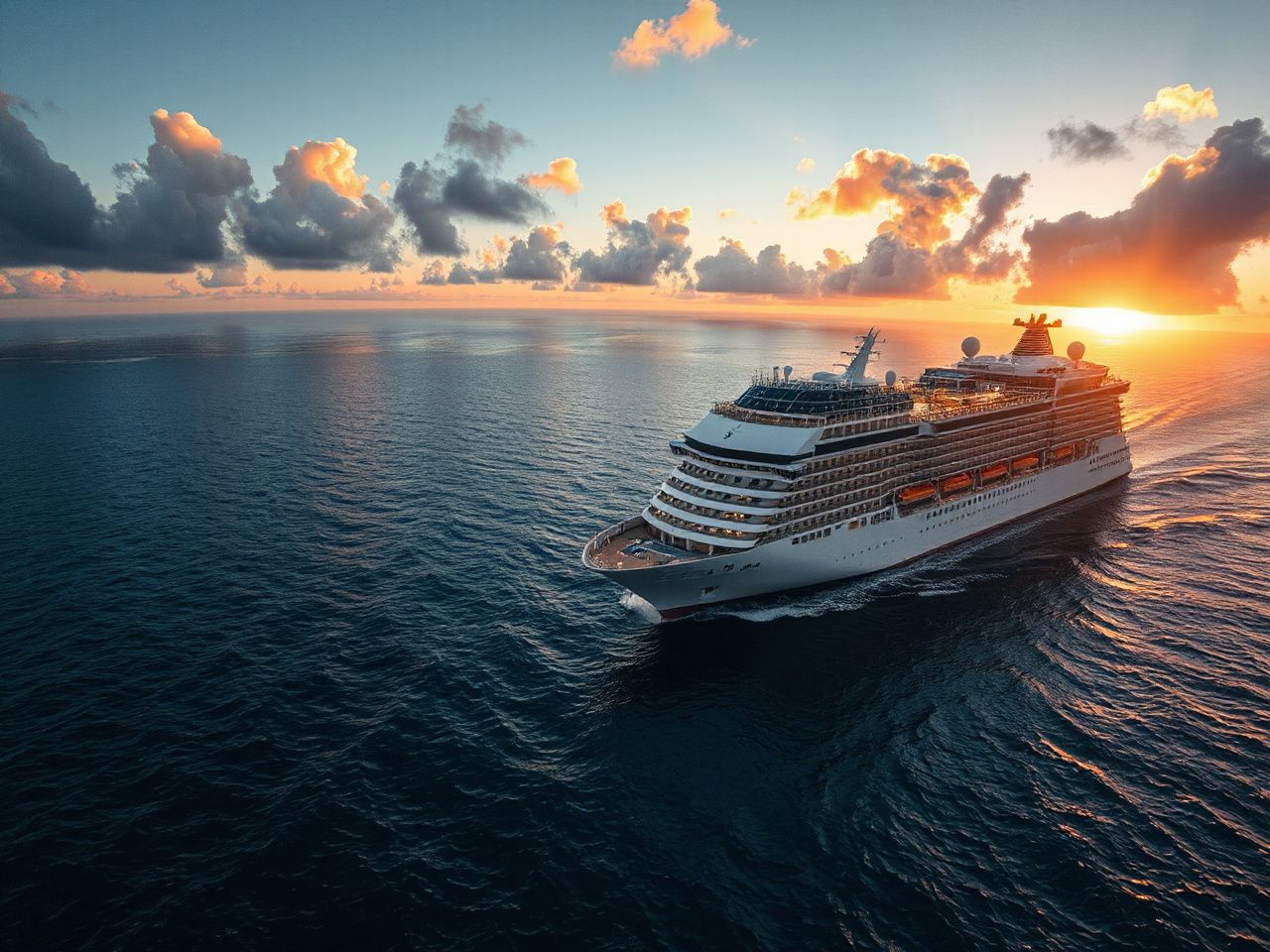
A very large ship functions more like a collection of districts than a single lounge. Public areas might be separated by deck, theme, noise level, or activity. Passengers need to learn the layout rather than rely on memory after the first day.
Large-scale design can be helpful. Families or groups with different interests may divide naturally between entertainment, pools, dining, and quieter areas. The trade-off is movement. A cabin near a venue on a simplified deck plan could still involve lifts, corridors, and level changes.
A large cruise ship rewards passengers who plan their daily route before leaving the cabin. Check the deck plan, note reservation times, and leave room for lifts, queues, and weather-related delays instead of treating the ship like a small hotel.
Dining access and reservations
More restaurants don’t guarantee easy access to every dining room. Popular venues may require reservations, set seating, or specific time windows. Included dining might differ from specialty options. Read the daily schedule and booking rules carefully, just like the menu descriptions.
The same goes for shows and shore excursions. A large ship may offer more choices, but that can lead to scheduling conflicts if activities overlap. A simple route plan helps: book fixed-time events first, group nearby venues, and avoid shore excursions that leave no margin for a late return.
Embarkation, disembarkation, and time in port
Passenger volume affects the port day experience even if the ship has enough space. Embarkation involves document checks, luggage handling, security checks, and moving through terminals. Disembarkation reverses that process and can be influenced by local arrangements, transport options, and customs procedures.
Shore excursions need honest risk assessment. A guided walk through a historic European centre might be manageable for many, but a steep trail, exposed mountain pass, or canyon route demands different footwear, balance, heat tolerance, and confidence. Remember, a large ship doesn’t make activities ashore easier.
Use the itinerary as a practical guide. The guide explains how cruise routes and destination access shape the trip. It’s often more useful than choosing a ship based solely on onboard attractions.
European Port Access, Tenders, and Itinerary Risk
Why ship size can change the route
A very large ship might not fit into some European ports because the berth, channel, turning area, or local terminal can’t handle its size or operational needs. This could mean a different berth, a tender transfer, or a revised itinerary.
A large ship may need a tender to reach a port that a smaller vessel can enter directly. Tendering adds a transfer stage between ship and shore, and access can depend on weather, harbour conditions, local procedures, and the ship’s schedule.
Tender ports require special attention from travelers with mobility equipment, balance issues, or planning strenuous excursions. Boarding a smaller transfer vessel, moving between surfaces, or waiting for a shore transfer can be more demanding than the brochure images suggest.
How to check a Mediterranean or Northern European itinerary
Before booking, inspect each port rather than reading only the destination name. Check the following:
- Berth status: determine whether the ship docks directly or uses a tender process.
- Distance to the town: a port name does not always mean the ship arrives beside the historic centre.
- Shore-excursion demands: read the walking, climbing, transfer, and surface details.
- Weather flexibility: ask what happens if wind or sea conditions prevent tendering.
- Return margin: understand the meeting time and transport plan before leaving the ship.
European port infrastructure varies, so a ship that looks ideal on a route map might not always provide full access to every destination. Smaller ships can sometimes make the port itself the main attraction, while larger vessels may rely on onboard resorts to fill most of the day.
Technical Scale: Propulsion, Water, Waste, and Hotel Services
What passengers should ask
Passengers don’t need to operate ship machinery to ask sensible questions about large-vessel infrastructure. Look for clear info about propulsion, water production and treatment, waste handling, energy use, hotel operations, and procedures for disruptions.
Large ships require coordinated efforts from technical and hotel departments because navigation, power, water, waste treatment, food service, housekeeping, and guest areas all work together. A delay in one system can impact several services, so operational resilience is just as important as the size of the atrium.
Ship size increases the importance of behind-the-scenes coordination because more guest spaces depend on shared technical and hotel systems. Marketing materials may highlight pools and restaurants, but a careful traveler should also look for clear explanations of maintenance, environmental management, and service continuity.
For safety information at sea, check the International Maritime Organization. They develop international standards for shipping safety and environmental responsibilities. The International Labour Organization also offers maritime labor info relevant to crew members.
Environmental questions without pretending to know more than the ship publishes
Large vessels can have a significant environmental impact because they move and serve many people. The responsible comparison is specific: ask what the operator publishes about emissions, fuel use, waste treatment, water systems, and port practices. Don’t accept vague sustainability claims.
Don’t treat a technical label as proof of an identical onboard experience. Different ships may use different systems, operate on various routes, or publish information at different levels of detail. Always compare the actual ship and itinerary, not a fleet-wide phrase that might hide important differences.
Fare, Total Cost, and the Exclusive-Experience Trap
Why the advertised fare can mislead
The advertised fare might not include all services affecting the final cost of a luxury cruise. Dining, drinks, transfers, excursions, internet access, gratuities, special events, and travel changes can all add to the total. The specifics depend on the sailing and fare conditions, so the booking terms are more important than the headline price.
The advertised cruise fare is not necessarily the final cost of a luxury cruise. Compare the complete package line by line, including the services you would otherwise add during the voyage.
A larger ship might seem cheaper initially because it offers multiple fare levels and many optional activities. A luxury line might have a higher headline price but include more services, which other operators charge for separately. The right comparison is the total cost for the same style of holiday, not just the first price shown.
For a detailed look at ship economics and passenger costs, see this complete guide to cruise-ship cost and pricing. It helps distinguish the vessel’s construction and operational costs from the traveler’s final bill.
Common assumptions that lead travellers astray
- “The largest ship must be the quietest.” A ship may have quiet zones while still carrying a large guest population.
- “More restaurants mean easier dining.” Reservations, demand, and inclusion rules determine access.
- “A famous port name means a walk into town.” The ship may use a distant berth, shuttle, or tender.
- “A luxury label includes everything.” Read the fare conditions and service exclusions.
- “A high passenger figure proves poor service.” Capacity alone cannot measure staffing, zoning, or operating standards.
How Rankings Change and How to Make a Sound Choice
Read ranking claims by date and measurement
Rankings can shift when a new large vessel starts service, or if a ship is measured under a different category. Passenger capacity calculations can also affect the results. Star of the Seas and the planned expansion of very high-capacity ships highlight why a permanent-sounding title should be treated carefully.
Cruise-ship rankings are date-dependent because new vessels and different measurement methods can change the result. It’s best to record the measure used beside each ranking you see. Always check the ship’s current operating status and itinerary before making assumptions.
Don’t combine gross tonnage, length, and guest capacity into one informal score. A ship might lead in one category but fall behind in another. The decision should be based on the category that impacts the actual trip: port access, public-space demand, service density, or onboard variety.
A practical decision sequence
- Choose the trip shape: decide if the priority is destination access, onboard variety, quiet service, or a balance.
- Check the ship category: separate mainstream megaships from specialist luxury lines.
- Check the measurement: identify whether the claim uses volume, length, guests, or crew.
- Map the daily movement: review cabin location, dining venues, shows, lifts, and shore departures.
- Test the port plan: identify tenders, distant berths, transfer time, and weather-sensitive calls.
- Calculate the real fare: include the services and excursions you would actually use.
- Assess physical demands: match shore activities to walking ability, balance, footwear, heat exposure, and terrain.
Travellers focused on smaller Mediterranean harbours should read what to look for in small-ship Mediterranean reviews before deciding that physical scale is the main advantage. The most suitable vessel may be the one that reaches the places you value and supports the pace you can safely manage.
Frequently Asked Questions
What is the biggest luxury cruise ship in 2026?
No single answer works without defining “biggest.” Gross tonnage, length, passenger capacity, and crew capacity can produce different leaders. The largest cruise ship overall may not be a luxury ship. Symphony of the Seas is listed at 1,187 feet and can accommodate 5,400 passengers. Those figures describe scale rather than an exclusive service model.
Is the biggest cruise ship also the most luxurious?
Not necessarily. A large ship may operate as a resort at sea, with many venues and activities designed for a broad guest population. Specialist lines such as Explora Journeys, Regent Seven Seas Cruises, and Silversea should be compared through included services, guest density, dining access, and crew attention rather than placed in a single size ranking.
What should I check before choosing a large European cruise ship?
Check the ship’s measurement category, passenger-capacity assumptions, berth arrangements, tender ports, cabin locations, reservation rules, fare inclusions, and shore-excursion demands. A very large vessel might use a different berth or miss a tender port if conditions change. Confirm the practical route, not just the destination names in the itinerary.