The Complete Guide to Planning the World Trip
Contents
Most trip planners start with the best-case scenario: smooth roads, perfect weather, and a bike that never hiccups. This guide starts with the opposite. The moments that make the best stories on a long motorcycle trip are almost always the ones where something went wrong, and preparation does not prevent those moments — it just gives you better options when one shows up. Planning around what fails is what turns a stranded afternoon into a detour worth telling someone about.
When someone asks me about planning the world trip, I don’t ask what bike they ride. I ask what happens when that bike breaks down at midnight in a place where no one speaks English. That’s the real test. And that’s what this guide covers — the route, the gear, and the contingency plans that turn a disaster into a story you’ll tell for decades.
Key Takeaways
- Route planning must include alternative roads for every major segment — expect closures and detours.
- Your bike’s reliability is only as good as your ability to fix it with basic tools and a phone signal.
- Border crossings require paperwork that takes months to secure — start the process at least six months before departure.
Why Most World Trip Plans Fail Before They Start
The biggest mistake I see is riders planning the perfect ride without accounting for the imperfect reality. A route that looks beautiful on a map can turn into a nightmare when a monsoon washes out the only road for 200 miles.
The riders who make it through tough situations are the ones who have a backup plan for their backup plan. Those who don’t are often left waiting for help instead of continuing their journey.
The Contingency Mindset
When I plan the world trip for a client, I start by identifying the worst sections — the ones with the longest gaps between fuel stops, the highest altitudes, the most extreme temperatures. Those sections get the most attention. The easy parts? They take care of themselves.
For example, crossing the Stans (Kazakhstan, Kyrgyzstan, Uzbekistan) means riding through deserts where summer temps hit 110°F (43°C) and winter drops to -20°F (-29°C). Fuel stations can be 150 miles apart. If you haven’t planned for that, you’re not on a trip — you’re on a rescue mission waiting to happen.
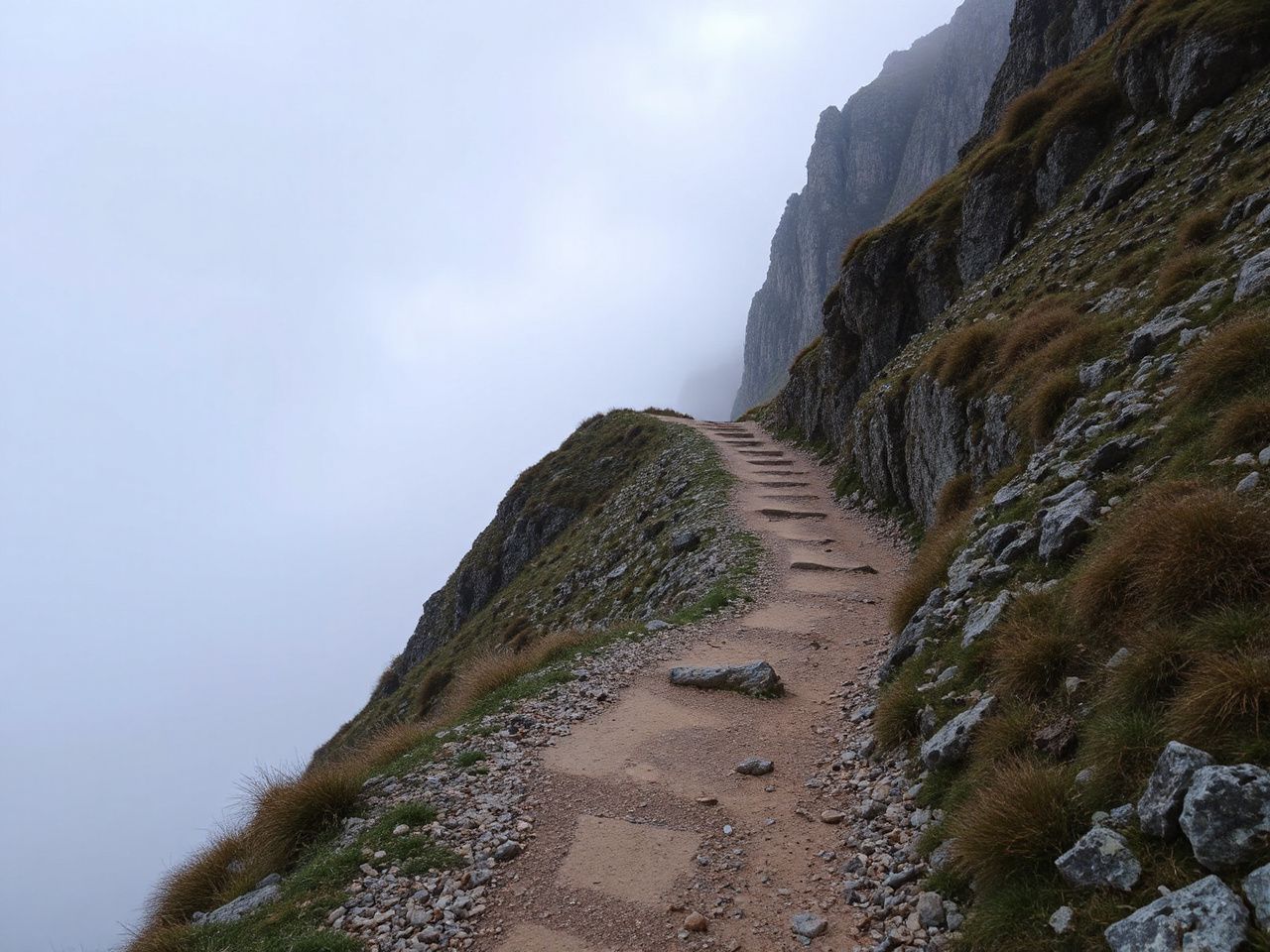
Building a Route That Survives the Worst
A good world route has three layers. The primary route is the one you hope to ride. The secondary route avoids major obstacles. The tertiary route is your emergency exit — the path that gets you to a city with an airport and a mechanic no matter what.
Layer One: The Primary Route
This is the dream ride. For a round-the-world trip, start in Europe (easy logistics, good roads), crossing into Turkey, then through Iran (if visas allow), Pakistan, India, Southeast Asia, Australia, New Zealand, and finally South America before heading home.
But that’s the ideal. Realistically, Iran is a visa gamble. Pakistan’s northern areas are spectacular but require armed escorts in some regions. I’ve had clients stuck at the Wakhan Corridor for two weeks waiting for a permit. The primary route is a guide, not a contract.
Layer Two: The Secondary Route
For every major border crossing, I identify an alternative. If Iran closes, you go through Oman and take a ferry to India. If Pakistan’s security situation deteriorates, you fly from Dubai to Mumbai. These alternatives add cost and time, but they keep the trip moving.
I once had a client who planned to ride through Myanmar. Two weeks before departure, the border closed due to political unrest. His secondary route through Thailand and Laos worked perfectly. He didn’t even miss a day of riding.
Layer Three: The Emergency Exit
This is the most overlooked part of any world trip plan. Every rider needs to know the fastest way to a major city with an international airport from any point on the route. That means having a list of airports with cargo service (for shipping the bike) and hospitals with trauma care.
Marking trauma centers on a map is important. For example, the nearest trauma center from the Pamir Highway in Central Asia is in Dushanbe, Tajikistan — a 12-hour drive on a good day. That knowledge can influence how one rides.
Gear That Doesn’t Fail When You Need It Most
Spending more on a tool kit than on a tent is often wiser. A tent can be mediocre if the tool kit can rebuild a bike on the side of the road.
The Tool Kit
My basic world trip tool kit weighs 8 pounds (3.6 kg) and fits in a small roll bag. It includes:
- Socket set with metric sizes from 8mm to 19mm
- Torx and Allen keys in every size your bike uses
- Tire repair kit with plugs, a reamer, and a small air compressor
- Multitool with pliers, wire cutters, and a knife
- Duct tape (half a roll, flattened)
- Zip ties (50 assorted sizes)
- Emergency wire (10 feet of 14-gauge)
Carrying a spare clutch cable and a spark plug can save more trips than any fancy GPS unit.
Communication and Navigation
Carrying three devices is recommended: a Garmin inReach Mini 2 for satellite messaging, a phone with offline maps (Maps.me or Gaia GPS), and a paper map of each region. The inReach is for emergencies — it sends location to a contact and allows texting for help when there’s no cell signal.
For navigation, I prefer offline maps because they don’t require data. I download maps for every country I’ll visit before I leave. That’s about 50 GB of data for a full world trip. I store it on a 256 GB SD card in my phone.
Border Crossings: The Real Challenge
Riders often obsess over road conditions and weather but the hardest part of any world trip is the paperwork. Border officials in Central Asia may check every document multiple times, causing long delays.
The Documents You Absolutely Need
- Passport with at least 6 months validity and 20 blank pages
- Carnet de Passage — a customs document that allows your bike to enter countries temporarily without paying import tax. This costs around $1,500 and requires a refundable deposit (often $10,000 or more).
- International Driving Permit (IDP) — required in most countries outside the EU and US
- Visa for each country — some require applications months in advance (e.g., Russia, China, India)
- Vaccination records — yellow fever, typhoid, hepatitis A and B
I once helped a rider who arrived at the China-Kyrgyzstan border without a Carnet de Passage. He had to leave his bike at the border, fly to Urumqi, apply for the document, and fly back. That cost him two weeks and $3,000.
For more on preparing for the unexpected, check out our guide on last minute camping tips for a perfect 2026 trip. The same principles apply — plan for the worst, enjoy the best.
Fuel and Food: Staying Alive on the Road
On a world trip, you can’t just stop at a gas station when the tank is low. In Patagonia, fuel stations are 200 miles apart. In Northern Canada, it’s 150 miles. In Central Australia, it’s 300 miles.
Fuel Planning
I calculate fuel range based on my bike’s worst-case consumption — fully loaded, headwind, high altitude. My BMW R1250GS gets about 40 mpg (5.9 L/100km) under those conditions. With a 5.3-gallon (20L) tank, that’s 212 miles (340 km) of range. I add a 2-gallon (7.5L) rotopax for another 80 miles (128 km).
I never let the tank drop below half in remote areas. If I see a fuel station, I fill up. I don’t wait for the next one — it might be closed.
Food and Water
Carrying 3 liters of water and a Katadyn BeFree water filter for refills is advisable. For food, pack Mountain House freeze-dried meals (lightweight, long shelf life) and a Jetboil stove. Also carry peanut butter, tortillas, and trail mix — calorie-dense, non-perishable, and easy to eat on the move.
In remote areas of Mongolia, I’ve gone 4 days without seeing a store. The freeze-dried meals kept me going. The peanut butter kept me sane.
Frequently Asked Questions
How long does it take to plan the world trip?
Planning a round-the-world motorcycle trip takes at least 6 to 12 months. The biggest time sinks are securing visas (some take 3 months), obtaining a Carnet de Passage (4-6 weeks), and preparing your bike. Start the paperwork first — visas and the Carnet — because they have fixed deadlines. The rest can be adjusted as the trip progresses.
What is the best bike for a world trip?
There is no single best bike. The right bike is the one you can fix anywhere. That usually means a middleweight adventure bike (like a BMW F800GS, KTM 790 Adventure, or Honda CRF450L) with simple electronics and a reliable engine. Avoid bikes with complex electronics, custom parts, or rare engines. Parts availability is more important than horsepower.
How much does a world trip cost?
Budget $50 to $100 per day for on-road expenses (fuel, food, accommodation) in developing countries, and $100 to $200 per day in developed countries. A full year on the road costs between $25,000 and $60,000, not including the bike, gear, or shipping costs. Shipping the bike between continents adds $2,000 to $5,000 per leg.
What happens if I get sick on the road?
Travel insurance is non-negotiable. Buy a policy that covers medical evacuation (helicopter or air ambulance) and repatriation (getting you and your bike home). World Nomads or Battleface offer motorcycle-specific coverage. Also carry a personal medical kit with antibiotics, painkillers, and anti-diarrheal medication.
How do I handle language barriers?
Learn 50 key phrases in the local language of each country — greetings, directions, numbers, and emergency terms. Use a translation app like Google Translate (download offline packs before you go). Carry a phrasebook as a backup. Most importantly, learn the hand gestures for “I need a mechanic” and “where is the nearest fuel station?” — these have saved me countless times.