Motel vs Hostel: What You Are Actually Buying
Contents
The honest comparison between a motel and a hostel is not cheap versus expensive. It is a question of what unit of accommodation you are buying. A hostel in its classic form sells you a bed — the standard definition describes renting a bed, usually a bunk, in a dormitory sleeping 4 to 20 people. A motel sells you a room, and that room has one defining structural feature: a door opening straight onto the parking lot.
Everything practical follows from that. Alone, with one bag and an interest in meeting people, the per-bed product is built for you. With a companion, luggage and a car, you are buying a room either way, and the difference falls on privacy and vehicle access. Compare them on unit of sale, door position and house rules.
Key takeaways
- A bed, not a room — the hostel unit of sale is a bed, usually a bunk in a dormitory sleeping 4 to 20 people, so two travellers buy two beds.
- A door onto the parking lot — a motel is defined as a hotel for motorists whose rooms are entered directly from the parking area rather than through a central lobby.
- 21 days at HI New York City, 14 nights at HI Los Angeles Santa Monica — these HI hostels cap how long you may stay per calendar year.
- Bring your own padlock and towel — HI USA gives dorm guests free in-room lockers but you supply the lock, and HI says towels are usually not included.
- $20 per year — HI USA annual membership gives 10 percent off every HI USA stay plus access to over 2,300 hostels.
The comparison is a bed versus a room
Start with what changes hands. A hostel is low-cost, short-term shared sociable lodging where guests rent a bed, usually a bunk bed, in a dormitory sleeping 4 to 20 people. Hostelling International‘s New York City hostel sells dorms in six sizes, from 4-bed to 14-bed, alongside a private 4-bed room and private or family rooms. HI Los Angeles Santa Monica lists 4-bed, 6-bed ensuite, 8-bed and 10-bed ensuite dorms.
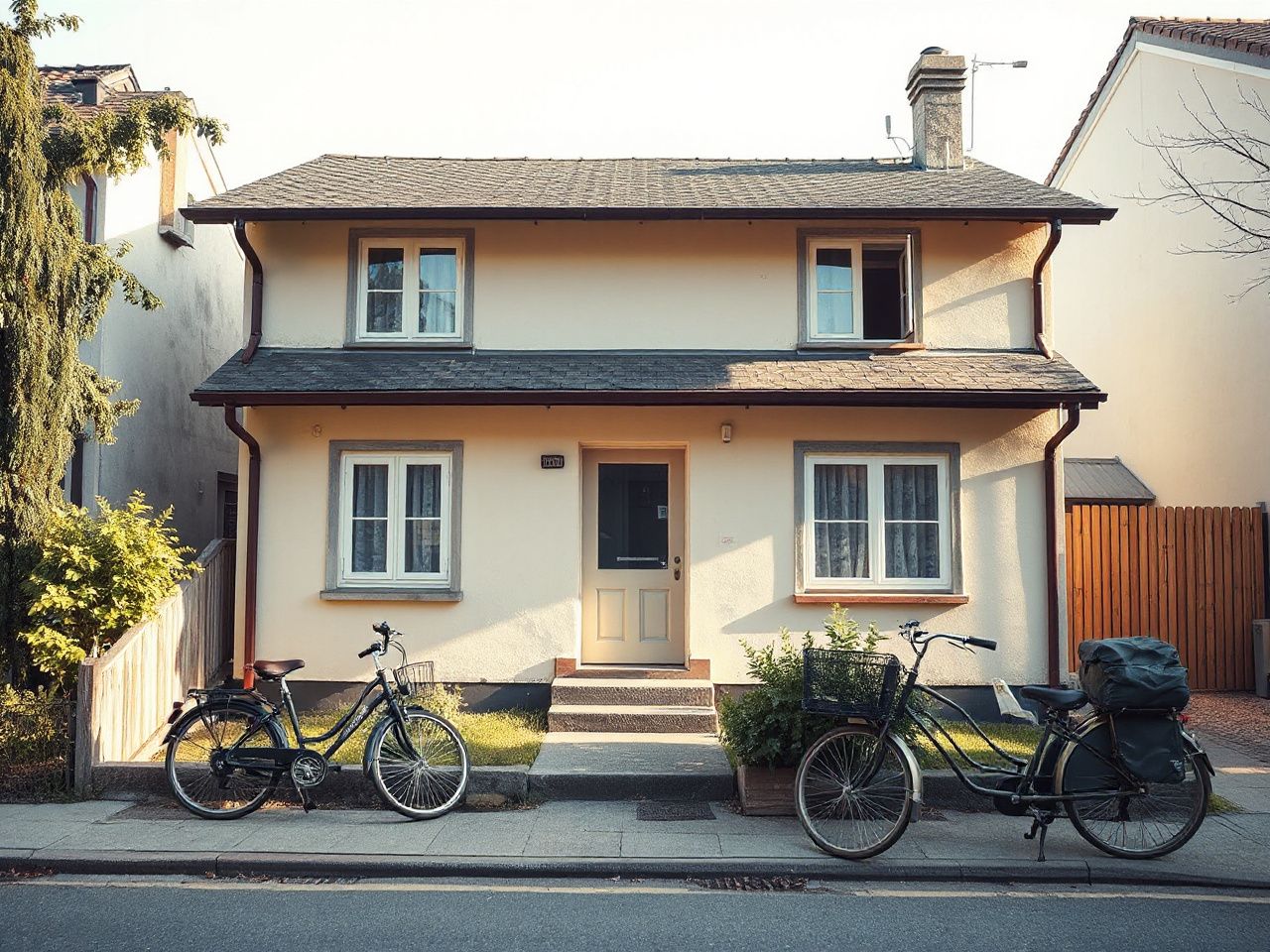
A motel inverts that. Wikipedia defines it as a hotel designed for motorists, usually with each room entered directly from the parking area rather than through a central lobby. The unit is the enclosed room, and its door opens onto the area where vehicles are parked. What a second occupant costs is a question for the individual property, but the space is not subdivided and sold by the sleeping position.
So the comparison flips with the size of your party. One person buying one bed weighs a fraction of a room against a whole one; two people buying two beds own two fractions and still no door they control. Book a private hostel room and the unit becomes a room again, leaving privacy and parking as the real differences.
What a motel actually is
The word compresses “motor hotel”. It was coined at the Milestone Mo-Tel in San Luis Obispo, California, opened in 1925 by Arthur Heineman, who ran the two words together after finding he could not fit “Milestone Motor Hotel” on the rooftop.
The building type was typically single-storey, with rooms opening directly onto a parking lot so suitcases could be unloaded straight from a vehicle. Motels also differ from hotels by location, along highways rather than the urban cores hotels favour, and by orientation, with doors facing outward instead of onto an interior hallway.
The budget reputation is a brand story, not part of the definition. Motel 6, founded in Santa Barbara, California, in 1962 by William W. Becker and Paul Greene, takes its name from rooms initially costing $6, which Wikipedia gives as equivalent to $64 in 2025. Scale is the more useful figure: as of 2024, Motel 6 and Studio 6 together operated approximately 1,500 locations across the United States and Canada.
What a hostel actually is
Hostelling International does not define a hostel by room type. Its own answer is good quality, sustainable accommodation offering a comfortable night’s sleep in a friendly atmosphere at an affordable price. Configuration sits underneath that: HI says its hostels offer shared rooms, single-sex or mixed, and private rooms, while HI USA describes private types sleeping anywhere from one person to an entire family, with or without an ensuite bathroom.
Some properties lean heavily private. HI Sacramento lists five private room types, from a Private Single to a Private Double Queen, against a single dorm of ten beds. HI San Francisco Downtown offers a Private Ensuite Twin for two guests in two beds and a Private Ensuite Queen for two guests in one bed.
The network is old and large. German teacher Richard Schirrmann opened the first youth hostel at Altena Castle on 1 June 1912, and the International Youth Hostel Federation, now Hostelling International, followed in October 1932. Hostelling International describes itself as the largest youth hostel network in the world, citing 58 Member Associations, over 2,300 hostels and 2.63 million members — though its own network page says 57 associations plus affiliates in 2 destinations, so treat that count as approximate. HI states there is no age limit, and that unaccompanied under-18s need a guardian’s permission.
Motel vs hostel at a glance
| What you are comparing | Hostel (Hostelling International) | Motel |
|---|---|---|
| Unit of sale | An individual bed, usually a bunk, in a dormitory sleeping 4 to 20 people; private rooms also sold | A room entered directly from the parking area rather than through a central lobby |
| Design intent | Affordable, good quality, sustainable accommodation in a friendly atmosphere, per HI | Built for motorists, typically single-storey so suitcases unload straight from a vehicle |
| Where it sits | HI USA says rates run higher in big cities such as New York and San Francisco | Along highways rather than in the urban cores favoured by hotels |
| Your vehicle | HI San Francisco Downtown has no parking of its own, only a discounted garage across the street | Doors face outward onto the lot rather than onto an interior hallway |
| North American footprint | HI USA’s directory links fourteen hostel properties, concentrated in Massachusetts and California | Motel 6 and Studio 6 together ran roughly 1,500 locations in the US and Canada as of 2024 |
The rules you accept when you book a hostel bed
Policies attach to the bed. HI New York City sets a maximum stay of 21 days per calendar year, with check-in at 4 p.m., check-out at 11 a.m. and no pets. HI Los Angeles Santa Monica is tighter at 14 nights per calendar year. Those are annual ceilings, not per-booking ones, which matters if you plan repeat visits.
Bedding is not yours to choose. HI says using your own bedding is not permitted, for hygiene reasons, and that linen is always provided, either included in the price or as a small additional cost. Towels run the other way: in most hostels they are not included, so you take your own or hire one.
Security is provided but not completed. HI says the majority of its hostels have lockers or in-room safes for valuables, and HI USA provides in-room lockers free to all dorm guests — but you must bring your own lock, with locks sold at the front desk for a fee.
Pro tip
Run the membership arithmetic before assuming it pays for itself. HI USA membership costs $20 per year and returns 10 percent off every HI USA stay, so the accommodation discount alone needs roughly $200 of stays across the year to break even. Third-party savings tip it sooner on a road trip: HI USA lists 15 percent off Bounce luggage storage and up to 10 percent off DiscoverCars. A lifetime option exists, for U.S. residents only.
How to price the two honestly
Never compare a per-bed figure with a per-room figure. Price the whole party, per night, for the room type you would actually book, and add what the bed does not include: linen if charged separately, a hired towel, a lock, parking if the property has none. HI USA says rates are higher in big cities such as New York and San Francisco and can increase during special events or holidays, so a festival week is not automatically cheap simply because the building is a hostel.
Common mistake
The usual error is treating a dorm bed rate and a motel room rate as the same kind of number. The hostel figure buys one sleeping position in a room that may hold up to fourteen people at HI New York City; the motel figure buys the enclosure. Two people who compare one bed against one room decide the hostel wins easily, then find they need two beds — or a private room, at which point the unit has changed.
Choosing by trip shape, not by label
Solo, light luggage, no car, want company. The hostel bed does what it was designed to do: you pay for one sleeping position rather than a room you cannot fill. HI USA kitchens are equipped for self-catering with pots, pans and dishes, refrigerators and shelves for your food, and appliances such as stoves and microwaves, which turns a longer stay into groceries rather than restaurant meals.
Two people, a car, bags, a late arrival. Here the motel’s structure does the work: rooms entered directly from the parking area, in a format built along highways rather than city centres. A hostel can match the privacy — HI San Francisco Downtown’s Private Ensuite Twin sleeps two in two beds — but not the door onto a lot, and that property has no on-site parking, only a discounted garage across the street.
Long stays, and whether the choice exists. Check the annual cap, then check availability: HI USA’s directory links fourteen hostel properties, while Motel 6 and Studio 6 alone ran about 1,500 locations as of 2024.
Frequently asked questions
Motel vs hostel: which should you book?
Decide by unit of sale rather than by label. One person who can use exactly one bed is buying the product a hostel exists to sell. Two or more people with a vehicle and luggage are buying a room either way, and only the motel brings its defining feature with it: a door opening directly onto the parking area.
Is a hostel always a dormitory?
No. Hostelling International says its hostels offer shared rooms, single-sex or mixed, and private rooms, and HI USA says private types may sleep anywhere from one person to an entire family, with or without an ensuite. HI Sacramento lists five private room types against a single ten-bed dorm.
Can you park at a hostel?
It depends on the property, so check the page for the hostel you are booking. HI San Francisco Downtown has no parking of its own and points guests to a discounted garage across the street. A motel’s relationship with your car is fixed by the format, since rooms are entered directly from the parking area.
Do you need to bring bedding and towels?
Bring a towel, not bedding. HI does not permit guests to use their own bedding, for hygiene reasons, and always supplies linen, either included in the price or as a small additional cost. Towels, HI says, are not included in most hostels, so take your own or hire one.
How long can you stay in a hostel?
Some HI properties set an annual ceiling. HI New York City sets a maximum stay of 21 days per calendar year, with check-in at 4 p.m., check-out at 11 a.m. and no pets. HI Los Angeles Santa Monica caps stays at 14 nights per calendar year.
Is HI membership worth paying for?
It depends how much hostelling you do. HI USA membership is $20 per year for 10 percent off every HI USA stay plus access to the wider network of over 2,300 hostels, so the discount alone repays the fee at about $200 of stays.