The Complete Guide to Choosing a Camping Frying Pan
Contents
I remember pulling over on a gravel shoulder somewhere in eastern Oregon, the smell of burnt eggs wafting from my pannier. I’d bought the cheapest non-stick pan I could find at a big-box store before I left, telling myself it would do. It didn’t. That morning, after scraping carbonized egg off a warped surface with my camp knife, I made a promise to myself. I’ve ridden long enough to know that the gear you skip buying to save money is almost always the gear you regret not having when you need it most. Invest once, invest right.
A reliable camping frying pan becomes the centerpiece of your evening routine after a long day in the saddle. It’s the tool that turns a handful of ingredients into a warm meal, whether you’re boiling pasta, searing a steak, or crisping tortillas for tacos. But not all pans are built for the road, and the wrong one can ruin more than just your dinner.
Key Takeaways
- Material matters most: Hard-anodized aluminum and titanium offer the best balance of weight, durability, and heat distribution for motorcycle travel.
- Size is about fuel efficiency: An 8-inch pan heats faster and uses less fuel than a 10-inch, which matters when you’re carrying canisters.
- Heat management is a skill: Camp stoves run hotter than kitchen burners, so learning to preheat and adjust flame height prevents burning.
- Non-stick coatings degrade fast: Uncoated pans last longer and are easier to maintain if you season them properly.
Why Your Camping Frying Pan Choice Affects Everything
When you live out of saddlebags, every ounce counts. But weight isn’t the only factor. A pan that conducts heat poorly will scorch food on the outside while leaving the inside raw. One that’s too heavy might cause you to leave other essential gear behind. And a pan that’s too large may not fit inside your cook kit or heat evenly on a small backpacking stove.
The camping frying pan you choose determines how much fuel you burn, how long cleanup takes, and how often you eat cold dinners out of frustration. For a slow-travel lifestyle, where you might cook two meals a day for months on end, these small details add up to real comfort or real misery.
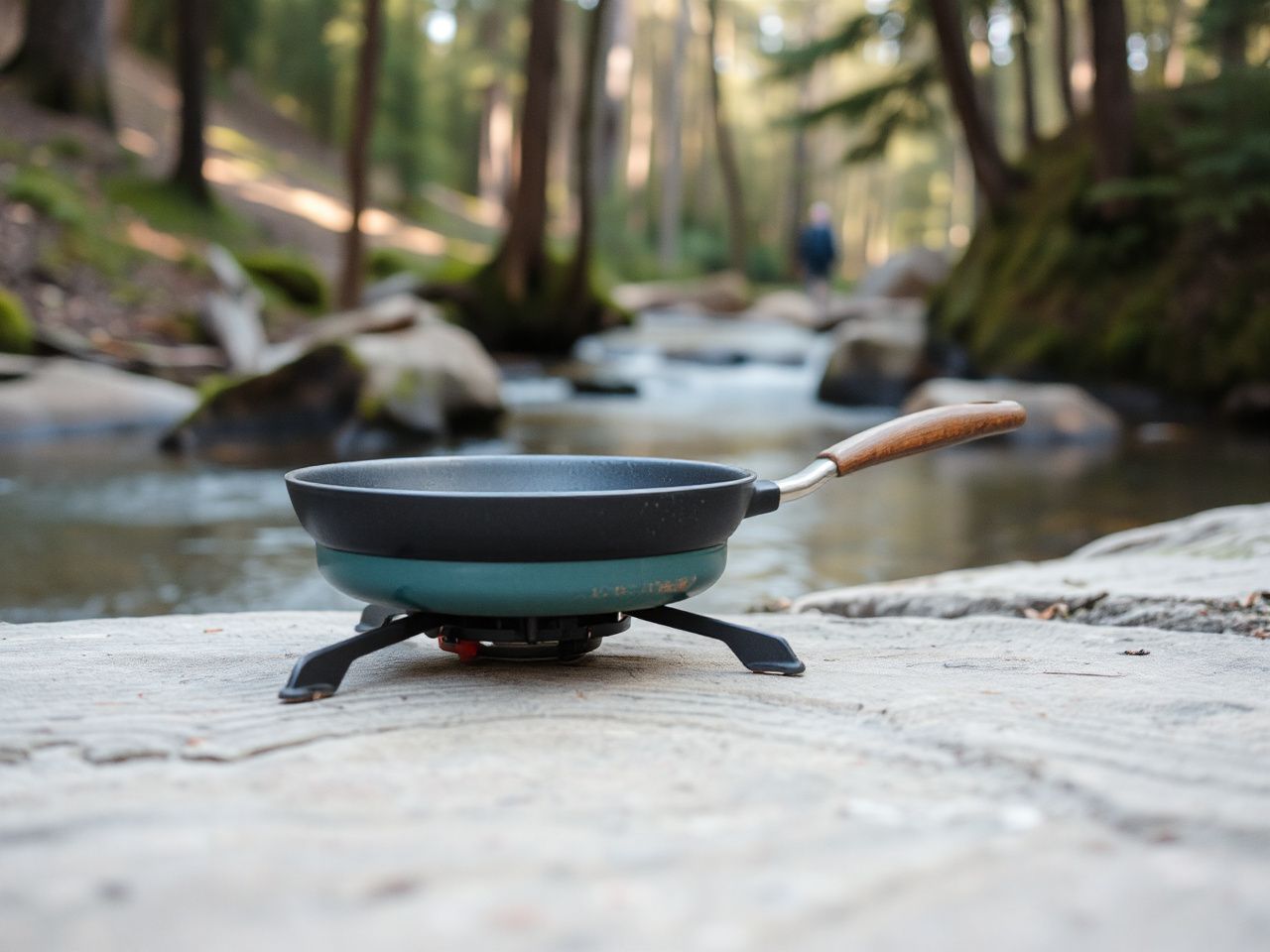
Understanding Pan Materials for Camping
Hard-Anodized Aluminum
Hard-anodized aluminum is the sweet spot for most riders. It’s lightweight, conducts heat almost as well as copper, and resists corrosion better than raw aluminum. The anodizing process creates a hard, non-reactive surface that won’t leach metallic flavors into acidic foods like tomatoes or citrus.
These pans typically weigh between 8 and 12 ounces for an 8-inch model. They heat up quickly and respond fast to flame adjustments, which gives you control over delicate foods like eggs or fish. The downside is that they can be scratched by metal utensils, so stick to wood, silicone, or plastic spatulas.
Titanium
Titanium pans are the ultralight choice, often weighing half as much as aluminum equivalents. A 7-inch titanium frying pan might weigh only 4 ounces. However, titanium has poor heat conductivity. It develops hot spots that burn food unless you constantly move the pan or use a heat diffuser.
For slow travel where you’re not counting every gram, titanium’s weight savings come at the cost of cooking performance. Titanium is fine for quick boiling tasks, where the water itself evens out the temperature, but for actual frying it’s frustrating. The heat spreads unevenly, and you end up with burnt patches and raw patches.
Stainless Steel
Stainless steel pans are nearly indestructible and can handle high heat without warping. They’re also safe for all stove types, including induction. But they’re heavy — a 10-inch stainless pan can weigh over a pound — and they require more oil or fat to prevent sticking.
A small stainless pan is suited for specific tasks like searing meat at high heat, where its weight and heat retention help. But for daily use, the weight penalty isn’t worth it unless you’re cooking for multiple people.
Cast Iron
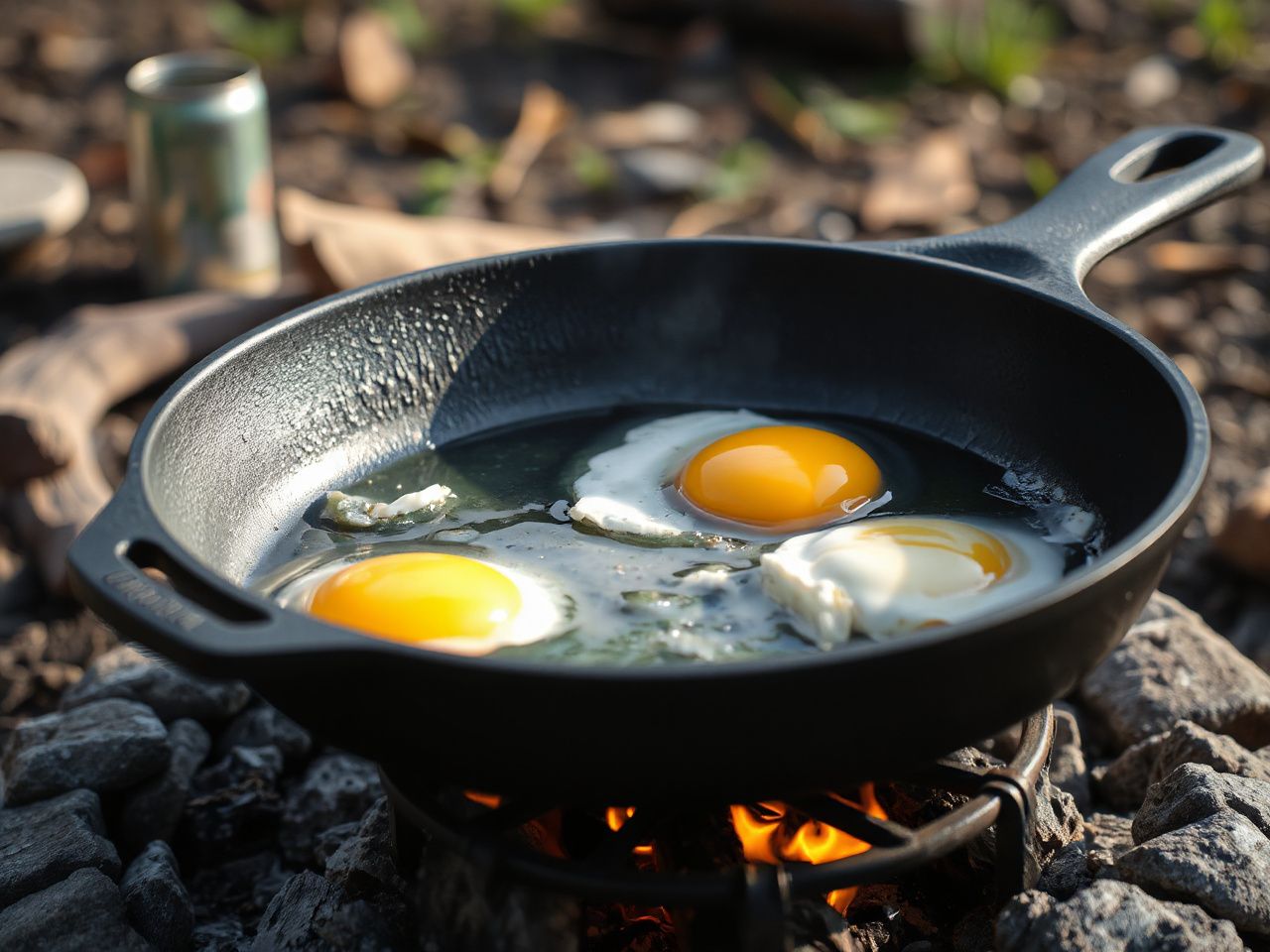
Cast iron holds heat like a bank vault and creates an unmatched sear. But it’s absurdly heavy for motorcycle travel. An 8-inch cast iron skillet weighs around 3 pounds. It also rusts if not dried thoroughly, which is a real pain when you’re in a humid climate or packing wet gear.
If you’re car camping or have a dedicated cooking setup on a large adventure bike, cast iron can work. For most of us, though, it’s better left at home.
Size and Shape Considerations
The most versatile diameter for a solo traveler is 8 inches. It fits inside most standard cook pot sets, heats efficiently on a single-burner stove, and is large enough to cook a full meal of protein and vegetables without overcrowding. Overcrowding lowers the pan’s surface temperature, causing food to steam instead of sear.
A 10-inch pan is useful if you cook for two people regularly. But it requires more fuel to preheat, takes longer to reach cooking temperature, and may not fit in your existing cook kit. I keep an 8-inch hard-anodized pan as my daily driver and only bring a larger one when I know I’ll be cooking for company.
Handle design is critical for packing. Look for a folding or detachable handle that locks rigidly when deployed. A wobbly handle makes flipping food dangerous, especially when you’re using a camp stove on uneven ground. Some pans come with a pot gripper that attaches to the rim, which saves space but can be awkward to use.
Heat Management on a Camp Stove
Camp stoves produce a concentrated flame that’s much hotter than a home gas burner. A home stove burner outputs around 7,000 to 10,000 BTU per hour. A typical backpacking canister stove can output 10,000 to 15,000 BTU, and a liquid fuel stove can exceed 20,000 BTU. That intensity means your pan will heat up fast and stay hot.
To avoid burning food, follow these steps:
- Preheat on low flame: Turn the stove to medium-low and let the pan warm for 30 to 45 seconds before adding oil. This allows the heat to spread evenly across the surface.
- Use the Leidenfrost effect to test temperature: Flick a drop of water onto the pan. If it beads up and skitters across the surface, the pan is hot enough. If it evaporates instantly, it’s too hot.
- Adjust flame height constantly: After adding food, reduce the flame to low. The pan retains enough heat to cook the food without burning the oil.
- Use a windscreen in windy conditions: Wind blows the flame away from the pan, causing uneven heating. A windscreen or natural barrier like a rock wall helps maintain consistent temperature.
One of the best investments I made was a small heat diffuser — a thin metal plate that sits between the stove and the pan. It spreads the flame’s heat across the entire pan base, eliminating hot spots. It adds an ounce of weight but dramatically improves cooking consistency.
Seasoning and Maintaining Your Pan
Uncoated aluminum and stainless steel pans benefit from seasoning, just like cast iron. Seasoning creates a polymerized oil layer that fills microscopic pores in the metal, reducing sticking and preventing oxidation. Here’s how to season a camping frying pan:
- Clean thoroughly: Wash the pan with hot soapy water to remove any manufacturing residues. Dry completely.
- Apply a thin oil layer: Use a high-smoke-point oil like grapeseed, avocado, or flaxseed. Apply a few drops and rub it all over the interior and exterior with a paper towel. Wipe off as much as you can — the layer should be almost invisible.
- Heat until smoking: Place the pan on your stove at medium heat. When the oil begins to smoke, let it smoke for 2 to 3 minutes, then turn off the heat. The smoke means the oil is polymerizing.
- Repeat 2 to 3 times: For best results, repeat the oiling and heating process two more times. The pan will darken slightly and develop a slick surface.
After each use, clean the pan with hot water and a soft sponge. Avoid soap if possible, as it can strip the seasoning. If food sticks, scrub with coarse salt and a bit of water. Dry the pan immediately over low heat to prevent rust or corrosion.
Packing Philosophy for the Long Haul
Your camping frying pan shouldn’t rattle against other gear. I wrap mine in a microfiber cloth or stuff sack, which doubles as a drying towel. If the pan has a non-stick coating, protect it from scratches by placing a silicone pot holder between the pan and any metal utensils.
Pack the pan where you can access it quickly without unpacking everything. I keep mine in a side pannier, right on top of my stove and fuel canister. When I roll into camp at dusk, I can grab the stove, pan, and coffee kit in one trip without digging through clothes or tools.
Slow travel means you’re not in a hurry. Take the time to set up your cooking area properly. Find a flat spot, clear away dry leaves, and arrange your ingredients before you light the stove. Rushing leads to burnt food and wasted fuel. The best moments on the road happen when you stop rushing — when you sit down with a hot meal and watch the light fade, knowing you have everything you need right there in your kit.
Frequently Asked Questions
What size camping frying pan is best for one person?
An 8-inch pan is ideal for solo travel. It heats quickly, uses less fuel, and is large enough to cook a single portion of meat with vegetables. It also fits inside most standard cook pot sets for compact packing. If you occasionally cook for two, a 10-inch pan works but requires more fuel and space.
Can I use a regular frying pan for camping?
You can, but it’s not recommended. Regular frying pans are heavier, have longer handles that are awkward to pack, and often have plastic handles that can melt on a camp stove. They’re also less durable when subjected to the bumps and vibrations of motorcycle travel. A purpose-built camping pan is worth the investment.
How do I clean a camping frying pan without water?
Scrape out food residue with a spatula or paper towel. Then wipe the pan with a damp cloth or use sand and a bit of water to scrub stuck-on bits. Finally, heat the pan over a low flame to sterilize it and burn off any remaining organic matter. This method works well when you’re in a dry environment or conserving water.
Is titanium worth the extra cost for a camping frying pan?
It depends on your priorities. Titanium is lighter and stronger than aluminum, but it conducts heat poorly, leading to hot spots and uneven cooking. If you prioritize weight above all else and don’t mind using more fuel to manage heat, titanium can work. For most riders, hard-anodized aluminum offers the best balance of weight, performance, and cost.