Highest Skiing in Europe: The Ultimate Guide to Top Resorts
Contents
Roughly 80% of skiers who book a “high-altitude” trip in the Alps end up skiing most of their week below 2,500 meters, even if the resort advertises a 3,800-meter lift. The key thing beginners miss is that ‘highest skiing in Europe’ doesn’t mean the whole resort sits at that altitude. Often only a single glacier or a cable car reaches up, while the base village might sit at 1,500m. You need to plan for the weather and altitude effects, not just the ski pass. The true distinguishing factor is whether the slopes are properly groomed on the glacier, and that requires checking the lift and snow reports daily.
Key Takeaways
- Base altitude ≠ ski altitude. Val Thorens has a village at 2,300m but its top lift is only 3,230m. Zermatt’s base is 1,620m but its glacier ski area reaches 3,899m.
- Glacier skiing is not beginner territory. Most high-altitude pistes are red or black. The flat light, hard snow, and exposure above 3,000m punish hesitation.
- Daily lift and snow reports are non-negotiable. A sunny valley day often means a whiteout up top. Glacier grooming stops when avalanche risk spikes.
- Altitude sickness is real and preventable. Spend a night at 2,000m+ before hitting 3,500m, hydrate aggressively, and skip alcohol for the first 48 hours.
What Actually Counts as the Highest Skiing in Europe?
Most resort marketing conflates a lift’s top station with where you actually ski. I’ve stood at 3,883 meters on the Matterhorn Glacier Paradise platform, looked down, and realized the groomed piste below me started 100 vertical meters lower. That gap matters. When a resort calls itself “the highest in Europe,” they usually mean either the village altitude, the highest lift station, or the highest served ski terrain. Those are three different numbers.
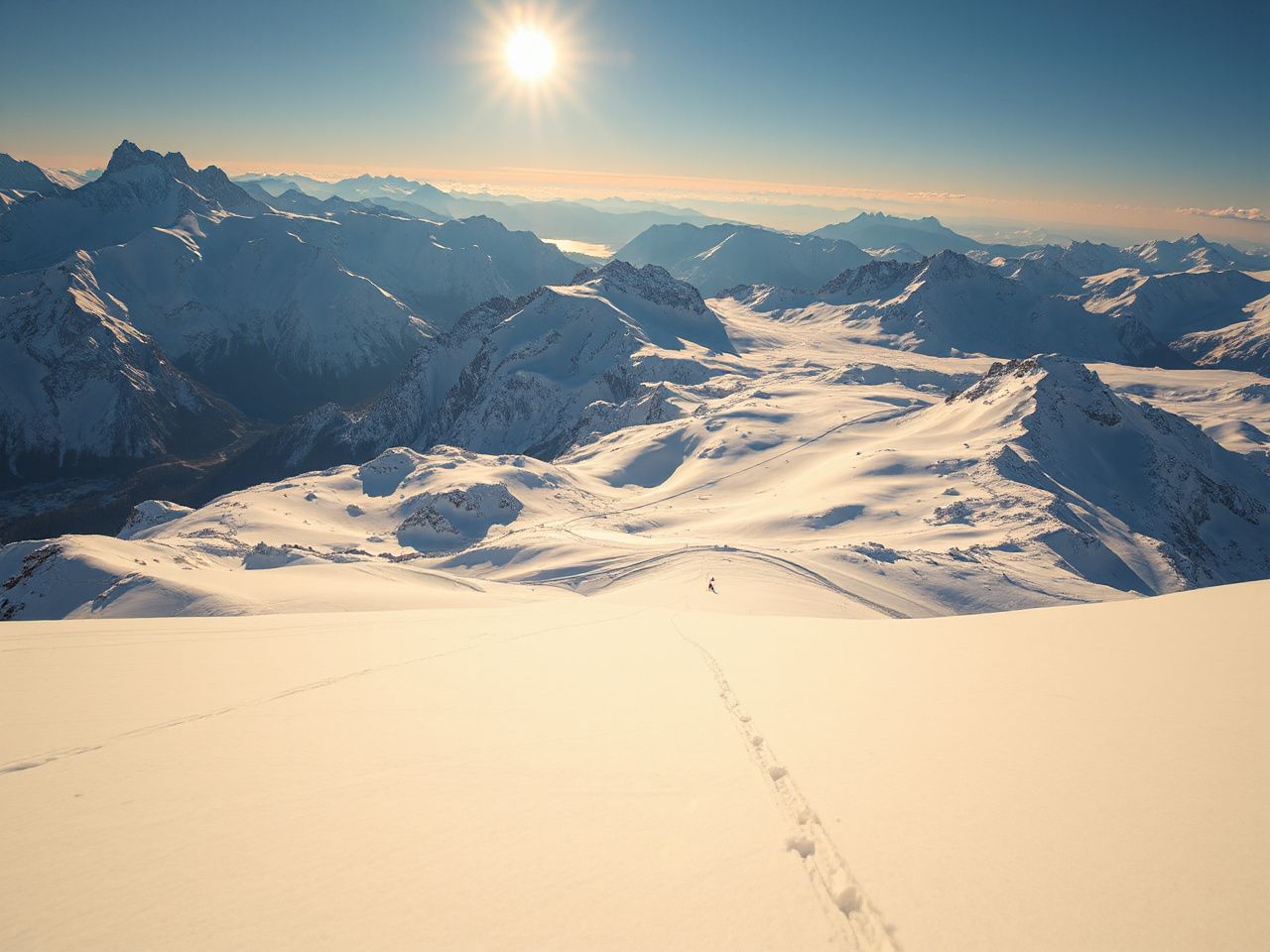
Let’s strip out the marketing. Val Thorens, in France’s Trois Vallées, has the highest base village at 2,300 meters. You can ski from your door at an altitude where many other resorts top out. But its highest lift, the Bouchet drag, reaches only 3,230 meters. Zermatt, on the Swiss side, sits at a humble 1,620 meters. Yet the highest continuous piste in Europe, the Theodul Glacier run, tops out around 3,899 meters near the Italian border. Cervinia on the Italian side shares that same glacier ski area, and its village sits at 2,050 meters. Sölden in Austria runs two glaciers, the Rettenbach and Tiefenbach, with lift-served terrain up to 3,250 meters. Tignes and Les Deux Alpes both have glacier skiing above 3,400 meters, though their base villages sit around 1,650–2,100 meters.
A self-contained fact worth pinning down: the highest lift station in Europe is the Matterhorn Glacier Paradise at 3,883 meters, but that is a sightseeing and transport lift, not a ski lift. The highest skiable point without a traverse or hike is the Gobba di Rollin around 3,899 meters, served by a tow lift from the Theodul Glacier. This is why checking a trail map’s vertical drop figure is more useful than the headline number.
Resort-by-Resort Reality Check
I’ve ridden all of these and can tell you the honest gaps. Val Thorens feels high because you sleep high, but the upper slopes are mostly wide, forgiving reds and blues, with a few blacks off the Cime Caron. Zermatt’s glacier terrain is steeper, narrower, and more exposed, with long traverses back to the main area. Cervinia shares that terrain but has more intermediate-friendly groomers up top. Sölden offers the best lift system on a glacier—you can lap the Rettenbach without ever taking your skis off, and the Tiefenbach Glacier has a proper 3,250-meter summit run. Les Deux Alpes has an entire top sector above 3,000 meters, but the snow can turn to heavy slush by midday in spring.
What about Chamonix? The Aiguille du Midi tram reaches 3,842 meters, and the Vallée Blanche descent starts there. But that is off-piste, unpatrolled terrain requiring a guide, glacier travel gear, and crevasse rescue skills. Calling it “skiing” in the resort sense is like calling a backcountry line a groomer. Same goes for the Grand Motte Glacier in Tignes—the lift reaches 3,456 meters, but only a few groomed runs actually descend from the top. The rest is touring and off-piste.

Planning Your First High-Altitude Ski Trip
If you’ve never skied above 3,000 meters, treat it like a different sport. The air is thinner, the sun is harsher, and the weather can flip from bluebird to whiteout in twenty minutes. I will not recommend a resort I haven’t personally ridden, so this list is short: Val Thorens, Zermatt, Cervinia, Sölden, Tignes, Les Deux Alpes. Each has reliable lift infrastructure, marked glacier pistes, and a base village with altitude-friendly accommodation.
Start by choosing the right time. Late March through early May is the sweet spot for high-altitude skiing in Europe. You get longer daylight, warmer temperatures, and the glacier pistes often hold better snow than mid-winter because they’ve been packed down by thousands of skiers. January and February give you the most powder days, but storms at 3,000 meters mean zero visibility and lift closures for days at a time. Zermatt’s upper lifts are frequently shut down for three consecutive days in January while the village below enjoys sunny, calm weather.
Cost varies wildly. Val Thorens and Zermatt are two of the most expensive ski areas in the Alps. A six-day pass in Zermatt currently runs around 450 Swiss francs, while Cervinia on the other side of the border charges roughly 360 euros for the same period. Sölden and Les Deux Alpes sit in the 300–350 euro range. Lower-altitude resorts like Morzine or La Clusaz might charge 250 euros, but you’re not getting glacier skiing. If budget matters, consider the shoulder season. Our guide to the cheapest time to travel to Europe in 2026 breaks down exactly when lift ticket and lodging prices drop, and those windows often align with the best high-altitude conditions.
Gear Essentials for Skiing Above 3,000 Meters
Most resort skiers arrive with decent goggles, a helmet, and layered clothing. That works at 2,000 meters. Above 3,000, you need three upgrades. First, glacier goggles with a darker lens, category 4. Regular goggles rated category 3 will still let in enough flat-light glare to give you a squinting headache after two hours. Second, a face mask or balaclava with wind protection. The wind at 3,500 meters on an exposed glacier can hit 60 km/h without warning, and exposed skin gets frost-nipped fast. Third, a small backpack with a foam pad. If a lift breaks down or you end up sitting above 3,000 meters for 40 minutes, a foam pad between you and the snow prevents hypothermia far better than just sitting on your skis.
Do not pack a full glacier travel kit—harness, rope, ice screws—for on-piste skiing. That’s gear-list padding, and you won’t use it. The marked pistes on glaciers are groomed and patrolled just like lower runs. What you do need is a fully charged phone with the resort’s emergency number saved, because cell signal drops fast on the back side of a glacier bowl.
Intermediate Tactics for Skiing Above 3,000 Meters
Once you’ve done a few high-altitude days, the real lessons start. Snow on a glacier skis differently. At 3,400 meters in April, the snow often transforms into firn—a dense, granular, re-frozen surface that feels like skiing on packed sugar. It’s fast, edge-grippy in the morning, but by 1 PM it can turn to heavy porridge. Your normal carving technique works, but you need to stay forward on your skis and avoid sitting back, which causes your tips to catch and throw you over the handlebars.
Flat light is the other killer. Above 3,200 meters, the combination of cloud, snow, and a white glacier surface erases all visual definition. You can’t tell where the piste ends and the off-piste begins. It is common for skiers in Les Deux Alpes to follow a groomer into a crevasse field because they lost the edge of the run in a whiteout. Stick to the poles marking the piste. If you can’t see the next pole, stop and wait. Glacier pistes have no trees or rocks to give you a horizon reference.
Lift capacity at high-altitude resorts is a legitimate issue. Zermatt’s Klein Matterhorn lift, which carries skiers from Trockener Steg up to the glacier, has a capacity of about 2,400 people per hour. That sounds fine until you realize that on a sunny April day, 5,000 skiers want to ride it. The line can exceed 45 minutes. Sölden’s two glacier lifts move similar numbers, but the resort spreads crowds better because you can choose between the Rettenbach and Tiefenbach sectors. Val Thorens has no lift capacity problem at its top because the upper slopes are so vast, but the first gondola up from Les Menuires or Méribel can be packed before 9 AM.
Crossing Borders: Zermatt to Cervinia on Skis
The Zermatt–Cervinia link is the only international ski crossing in Europe where you can legally ski from one country to another on a marked piste. You start at the Theodul Glacier, ski down past the Theodul Pass, and end up on Italian slopes above Cervinia. The piste is marked number 7 on the Swiss side and number 1 on the Italian side. It’s a blue-graded run for most of its length, but the altitude and flat sections mean snowboarders need to keep speed or they’ll be walking.
Two things matter here. First, you need a valid passport or national ID. Random checks happen at the Theodul Pass restaurant, and Swiss and Italian police do occasionally ask to see documents. Second, your ski pass must cover both sides. The standard Zermatt pass includes Cervinia, but the inverse is not always true—some Cervinia-only passes stop at the border. Check before you cross, because getting caught without the right pass means a hefty fine and a long bus ride back.
The border itself sits at 3,295 meters. On a clear day, you can see Monte Rosa, the Matterhorn, and half a dozen other 4,000-meter peaks. But if the weather rolls in, that same crossing becomes an exposed, featureless traverse with no shelter halfway. I’ve done it in a whiteout and will never do it again without a compass app ready on my phone.
Advanced Glacier Skiing: Crevasses, Guides, and Off-Piste
Now we get to the part that separates tourists from actual high-alpine skiers. Everything I’ve described so far is on-piste, marked, and patrolled. The moment you step off the groomer onto a glacier, you are in serious avalanche and crevasse terrain. The Swiss avalanche bulletin and the French equivalent, Météo-France, publish daily danger ratings. Above 3,000 meters, even a level 2 (moderate) rating can hide wind-loaded slopes that slide unexpectedly.
Crevasse risk is not theoretical. The Grand Motte Glacier in Tignes has claimed skiers who ducked under a rope to get fresh tracks. The Theodul Glacier in Zermatt has crevasses that open and close from week to week, even in winter. A snow bridge can support 200 kilograms in the morning and collapse at 2 PM when the sun softens it. You cannot see the danger from the piste. The only safe way to ski off-piste on a glacier is with a UIAGM/IFMGA-certified mountain guide who carries a rope, harness, ice screws, and knows the current crevasse patterns.
Summer glacier skiing deserves its own paragraph. From late June to early August, Zermatt runs a handful of pistes on the Theodul Glacier, and Tignes keeps a small area open on the Grand Motte. The snow is usually slushy by 10 AM, the lifts operate from 7 AM for early runs, and the whole operation shuts down by early afternoon because the glacier surface becomes too soft and dangerous. I’ve skied Zermatt in July wearing a t-shirt and sunscreen, and while it’s a novelty, it’s not an experience I’d recommend for more than a day or two. The snow quality is poor, the terrain is limited, and the crowds of summer tourists gawking at the glacier are enormous.
If you’re interested in the broader world of high-altitude riding, ski touring and mountaineering are natural bridges. Sölden’s Tiefenbach Glacier has a touring route that climbs to 3,250 meters with skins, then descends the marked piste. That’s a legitimate introduction to uphill travel without crevasse exposure. Many athletes also use high-altitude glacier slopes for pre-season training, which is why you’ll see national ski teams in Zermatt and Cervinia in October and November.